
Compost vs Peat Moss Lawns: What Works Here
A lawn in Bend can look thirsty even when the irrigation timer is doing its job. Sandy soil drains quickly, dry air pulls moisture from the turf, and many High Desert properties start with thin, compacted, low-organic-matter soil. That is why the compost vs peat moss lawns question matters here: each amendment can help, but they solve different problems.
For most established Central Oregon lawns, quality compost is the better long-term choice. Peat moss can still be useful in a few targeted situations, particularly when starting seed or improving a small planting mix. The right answer depends on whether your lawn needs nutrition and biology, moisture-holding capacity, or a better seed-starting surface.
Compost vs Peat Moss Lawns: The Main Difference
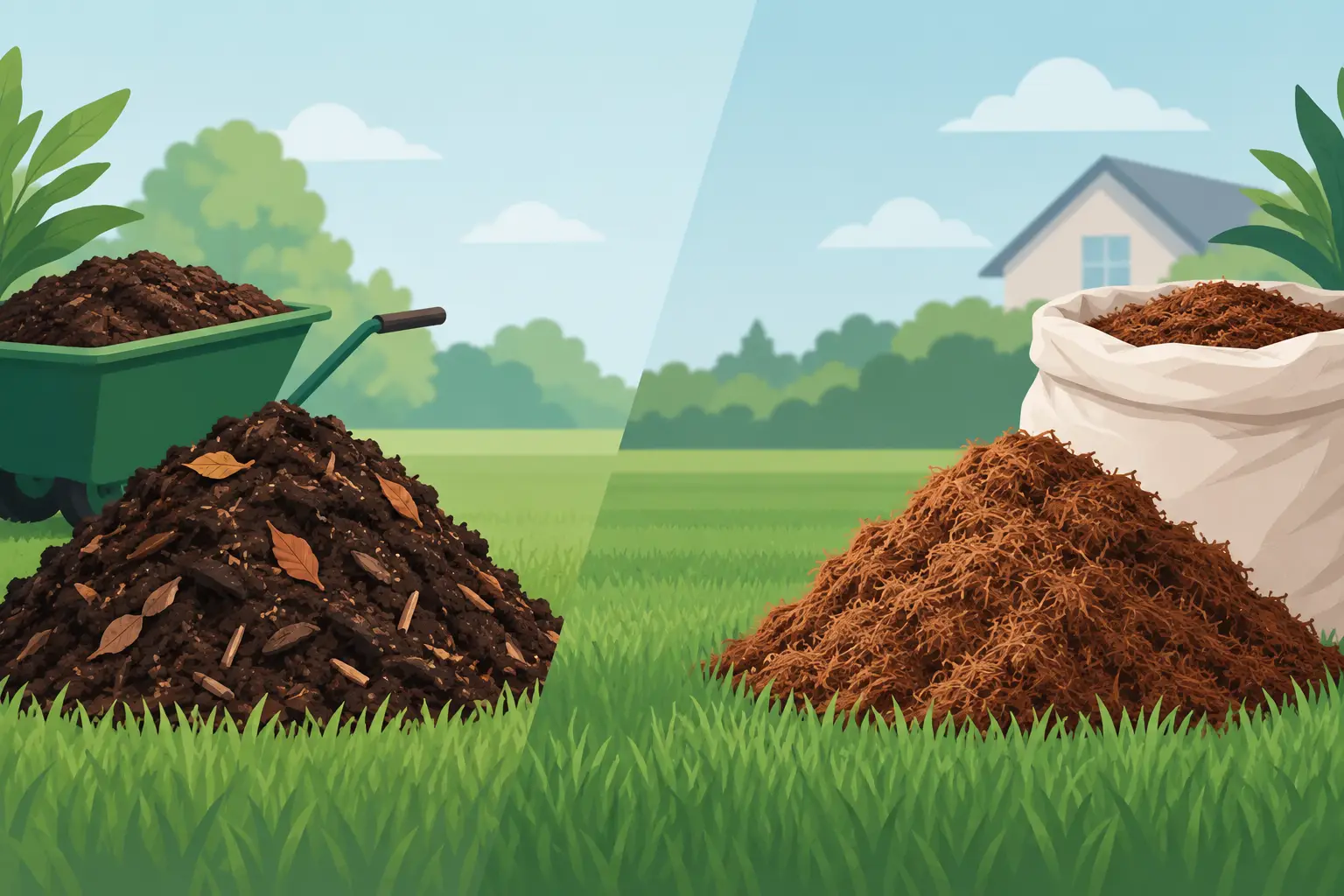
Compost is decomposed organic material that has finished its active breakdown process. Good lawn compost is dark, crumbly, screened, and mature. It adds stable organic matter, supports beneficial soil life, and supplies a modest amount of slow-release nutrients.
Peat moss is partially decomposed moss harvested from peatlands. It is lightweight and exceptionally absorbent, so it can hold significant moisture relative to its weight. It contains very few nutrients, however, and it does not provide the same broad biological benefits as compost.
In plain terms, compost helps build a healthier soil system. Peat moss mainly helps a growing medium hold water. Both can improve soil conditions, but they are not interchangeable.
That distinction is especially relevant in Central Oregon. Our lawns often need more than temporary moisture storage. They need soil that can retain water while also supporting deeper roots, nutrient cycling, and better structure over several seasons.
Why Compost Usually Wins for Established Lawns
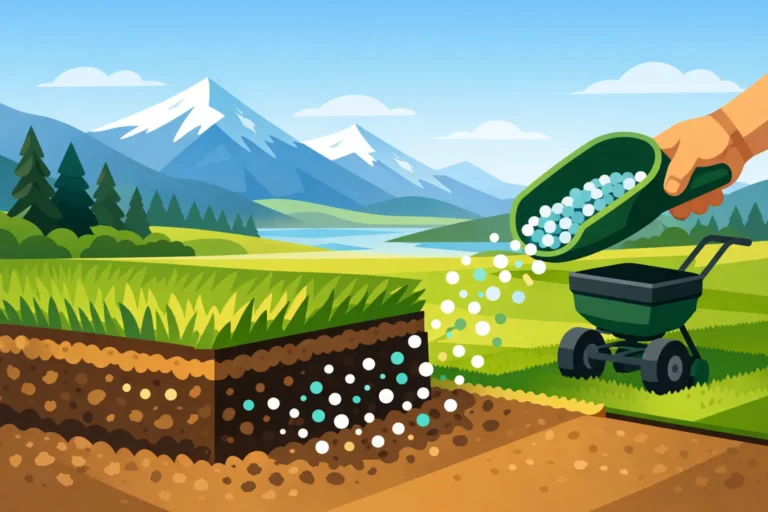
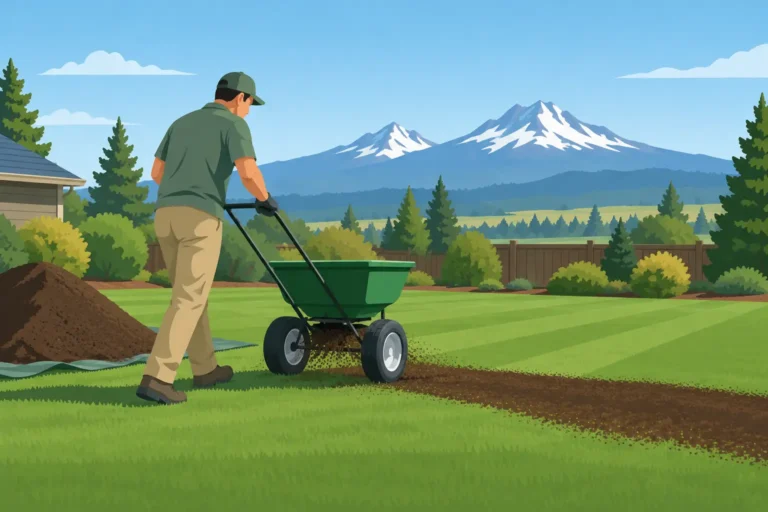
A thin layer of compost spread over existing turf is one of the most practical ways to improve a High Desert lawn without tearing it out. Known as topdressing, this process works material down into the grass canopy and soil surface after aeration or during an active growing period.
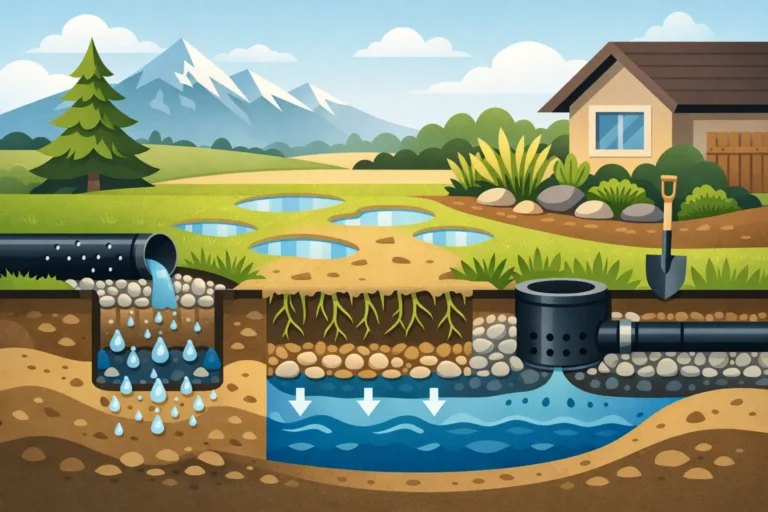
Compost helps sandy soil hold moisture longer between irrigation cycles. It also improves aggregation, meaning soil particles are more likely to form small, stable clusters instead of behaving like loose sand or hard-packed dirt. That creates better pore space for both water and oxygen, which roots need.
The nutrient value matters, too. Compost is not a replacement for a complete fertilizer program when a soil test shows deficiencies, but it contributes organic matter and gentle nutrition without the quick flush of growth that can make turf more demanding. A lawn growing steadily with a strong root system is better prepared for summer heat, irrigation restrictions, and wear from kids, pets, and foot traffic.
Compost also supports soil microbes. Those living organisms help break down organic material and make nutrients more available to plants. In soil that has been disturbed by construction, compacted by traffic, or repeatedly treated as an afterthought, restoring that activity can make a visible difference in turf density and resilience.
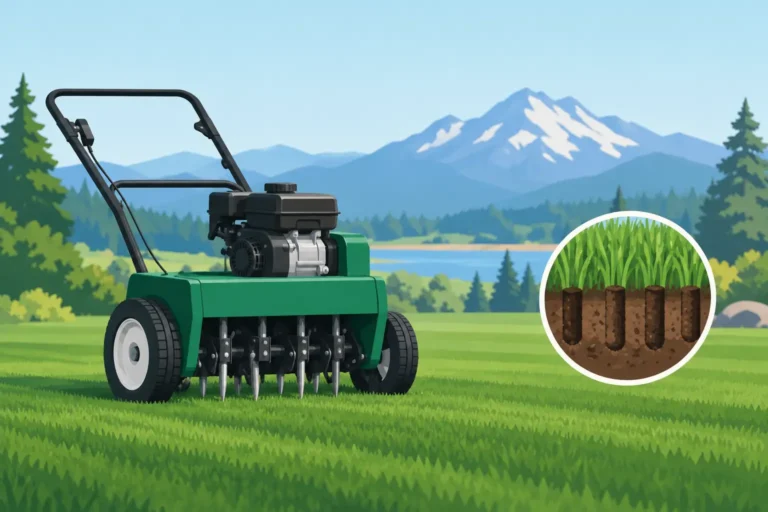
For a typical established lawn, apply about one-quarter inch of screened compost. That is enough to improve the soil without burying grass blades. Water it in after application and allow the material to settle into the canopy. If the lawn has significant compaction, core aerate first so compost can reach farther into the root zone.
Where Peat Moss Makes Sense
Peat moss is not a poor product. It is simply more specialized than many lawn projects require.
Its best use is often during seeding, patch repair, or soil preparation for a new lawn. A light covering of peat moss over newly seeded areas can help hold moisture around germinating seed, which is valuable during Central Oregon’s dry, breezy conditions. It can also create a more forgiving surface for seed in small bare spots where the top layer of soil dries out quickly.
Peat moss can be helpful when blended into a new seedbed with native soil and compost. In that setting, it contributes moisture-holding ability while compost brings nutrients and microbial life. The goal is not to build an entire lawn soil out of peat moss. It is to use a modest amount where its water retention provides a real benefit.
There are trade-offs. Dry peat moss can become difficult to rewet if it is allowed to completely dry out. It is also very light, so it can blow around during windy weather if left exposed. On a broad lawn, it can be harder to apply evenly than compost, and it will not address low fertility or poor soil biology on its own.
Peat moss is naturally acidic as well. Central Oregon soils often lean alkaline, so a small amount may be appropriate, but it should not be treated as a dependable pH correction strategy. A soil test is the right way to determine whether pH adjustment is actually needed.
Environmental Considerations Matter
For homeowners and landscape professionals who prioritize environmentally responsible lawn care, compost generally has another advantage. It puts organic material back to work and can be produced from local green waste, yard debris, and other recovered materials.
Peat develops slowly in wetland ecosystems over very long periods. Harvesting it has environmental impacts, and it is not a rapidly renewable resource. That does not mean peat moss can never be used responsibly, but it is a good reason to reserve it for jobs where its specific qualities are truly useful.
Choosing compost for routine topdressing is usually the more sustainable path. It improves the lawn while supporting a more circular approach to landscape materials.
Choose the Right Material for the Job
If your lawn is established but looks thin, dries out quickly, or has soil that feels lifeless and sandy, start with compost. It is the stronger choice for annual or periodic topdressing, especially after aeration. Pair it with efficient irrigation practices and a region-appropriate fertilizer plan for the best results.
If you are seeding a small patch, repairing dog-damaged areas, or preparing a new lawn from bare soil, peat moss can be useful as a light seed cover or a small part of a blended growing medium. Keep it moist from the beginning and do not apply it so thickly that emerging seedlings struggle to reach sunlight.
For a full lawn renovation, compost should still be the foundation. After removing thatch, loosening compacted ground, or preparing a seedbed, incorporate or topdress with screened compost. Then use peat moss only where extra surface moisture retention will improve seed establishment.
The quality of compost is just as important as the decision to use it. Avoid material that smells sour, contains large woody chunks, or has not fully finished decomposing. Immature compost can tie up nitrogen as it breaks down, while poor-quality material may introduce weed seeds or uneven texture. Look for a clean, mature, screened product suited for lawn use.
Application Timing for Central Oregon Turf
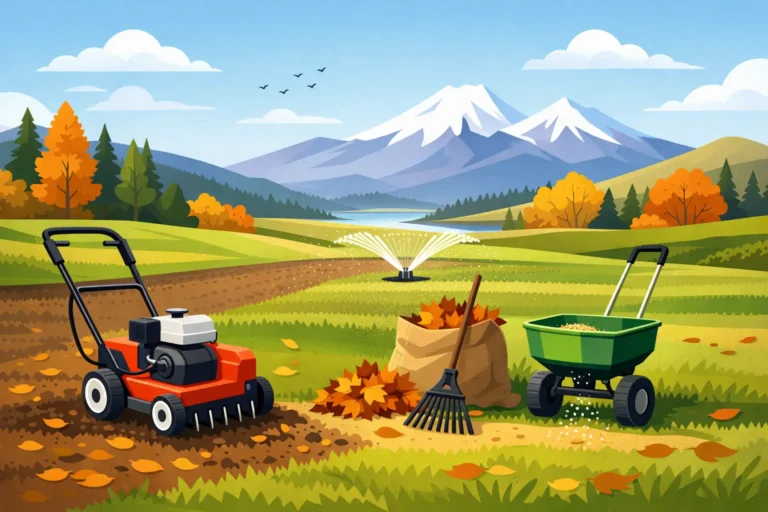
Spring and early fall are usually the most practical times to amend and renovate lawns in our area. Cool-season turf is actively growing, temperatures are less punishing, and the lawn has time to develop roots before peak summer stress or winter dormancy.
Early fall is often ideal for compost topdressing and overseeding because warm soil encourages germination while cooler air reduces moisture loss. Spring can work well, too, provided you can stay ahead of drying winds and give new seed consistent moisture.
Avoid heavy applications during the hottest part of summer. A lawn already coping with heat and water stress does not need the added challenge of being smothered with too much material or pushed into fast, shallow growth. Keep the layer light, irrigate thoughtfully, and let the turf recover gradually.
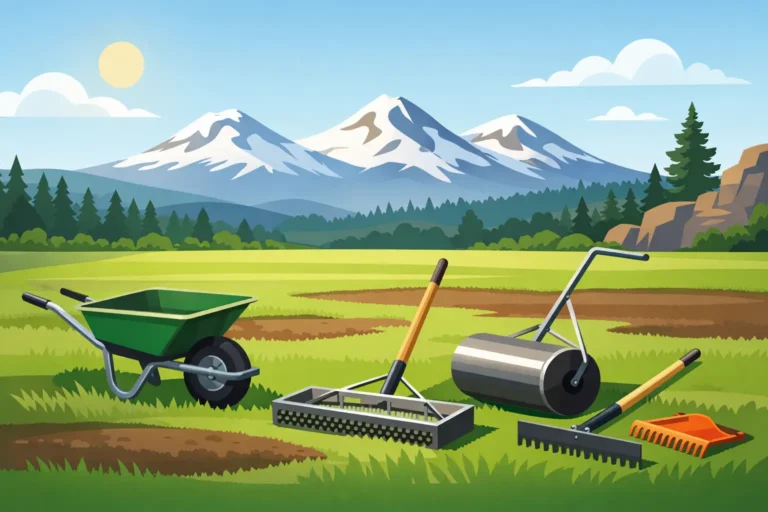
For larger projects, the right equipment makes the job more even and less labor-intensive. A core aerator creates openings for air, water, and compost, while a topdresser can spread material consistently across a broad lawn. Central Oregon Lawn Center can help match the amendment, seed, and rental equipment to the condition of your site instead of asking your lawn to fit a generic program.
A greener lawn here is rarely the result of one product. It comes from building soil that holds water wisely, choosing grass suited to the High Desert, and making small improvements at the right time. Start with what your soil actually needs, and let compost do the steady work of making every future watering count more.