Core Aeration vs Spike Aeration for Bend Lawns
A Bend lawn can look dry and thin even when the irrigation schedule seems right. Often, the issue is not simply water or fertilizer. It is soil that has become tight, compacted, or sealed at the surface. When comparing core aeration vs spike aeration, the difference matters because one method can create lasting room for roots and water, while the other may offer only short-term surface relief.
Central Oregon lawns face a particular combination of challenges: sandy or rocky soils, low organic matter, dry summers, traffic from people and pets, and a relatively short window for active turf growth. Aeration is not a cosmetic lawn chore. Done at the right time and with the right equipment, it can help a lawn use water more effectively, develop deeper roots, and recover more evenly from summer stress.
Core Aeration vs Spike Aeration: What Changes in the Soil?
Both practices put holes in the lawn, but they do it in very different ways.
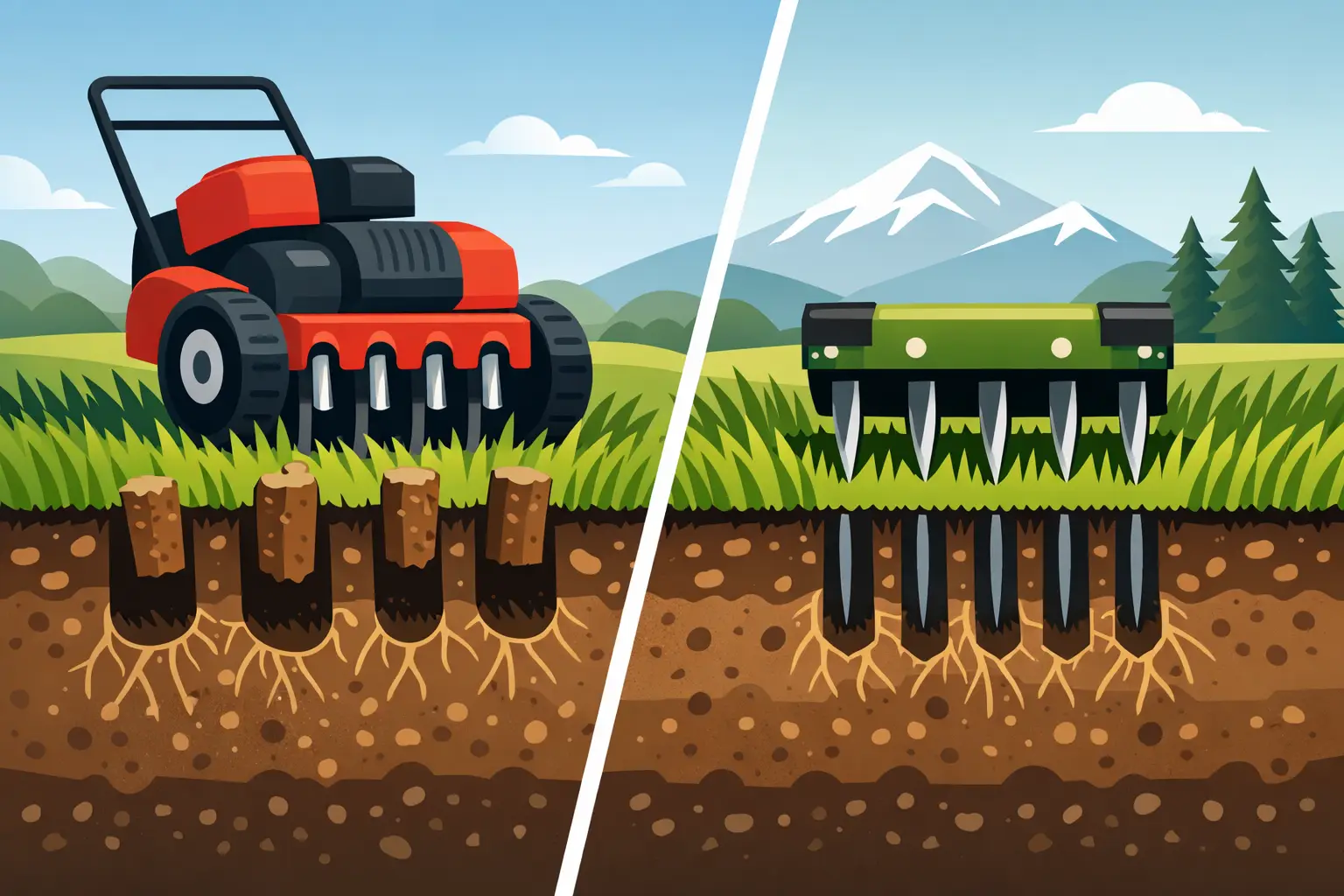
Core aeration, also called plug aeration, uses hollow tines to pull small plugs of soil and thatch from the turf. Those plugs are typically about 2 to 3 inches deep, depending on soil moisture, equipment, and site conditions. Removing soil creates open channels that allow air, water, and nutrients to move farther into the root zone.
Spike aeration uses solid tines, spikes, or even aerator shoes to puncture the ground without removing soil. It can make a lawn look more open at first, but the spike pushes soil sideways and downward. In already compacted ground, that pressure can compact the walls around each hole rather than truly relieving the problem.
That is the central decision in core aeration vs spike aeration. Spike aeration may be useful for light, temporary surface relief. Core aeration is usually the better choice when a lawn needs meaningful improvement in soil structure and root growth.
Why Core Aeration Usually Works Better in Central Oregon
A lawn in the High Desert needs every inch of its root zone working efficiently. Water is too valuable to let it run across a hard surface, pool in low spots, or stay trapped in a shallow layer of soil. Core aeration gives irrigation a pathway downward, where turf roots can use it longer between watering cycles.
It also helps reduce the effects of foot traffic and equipment traffic. A backyard play area, a front lawn beside a frequently used sidewalk, or a commercial property maintained with repeated mowing can all develop compacted zones. Grass in those areas often grows slowly, turns pale, or thins out despite regular care.
When plugs are removed, the remaining holes do not stay empty for long. Soil around them gradually relaxes and the plugs break down on the lawn surface. Their soil organisms and organic material help reintroduce life to the thatch layer. This is why it is best to leave plugs in place rather than rake them away. After a few mowings or irrigation cycles, they typically disappear.
Core aeration also pairs especially well with overseeding and topdressing. Seed has more places to settle into contact with soil, while compost or a quality soil amendment can begin moving into the aeration holes. For lawns with low organic matter or uneven establishment, that combination can be more productive than adding fertilizer alone.
When Spike Aeration Can Still Make Sense
Spike aeration is not completely without value. It can be a practical option for a very small area with mild surface sealing, such as a narrow strip near a patio or a lightly compacted patch that does not justify bringing in larger equipment. It can also be used as a temporary step before watering in an amendment on loose, well-managed soil.
The limitation is depth and lasting impact. A handheld spike tool or aerator sandals will not consistently reach enough of the root zone to correct widespread compaction. They also require significant time and effort for a modest result. For a typical Bend lawn, that effort is often better spent on one well-timed core aeration.
Avoid spike aeration when the soil is extremely dry and hard. The spikes may barely penetrate, and forcing them into the ground can create little more than shallow dimples. Also avoid working saturated soil, which can smear and damage soil structure underfoot or under machine tires.
Signs Your Lawn Needs Core Aeration
Compaction is not always obvious from the surface. One of the simplest tests is to push a screwdriver into moist soil. If it is difficult to get the screwdriver a few inches down, roots may be struggling for the same reason.
Other signs include water running off instead of soaking in, puddling after irrigation, thin turf in high-traffic areas, excessive thatch, and grass that wilts quickly even though it is being watered. A lawn that feels hard underfoot or has roots concentrated near the surface can also benefit from core aeration.
Not every struggling lawn needs aeration first. Poor irrigation coverage, grub damage, shade, soil pH issues, and an unsuitable grass variety can produce similar symptoms. In Central Oregon, an irrigation check is especially worthwhile before increasing water. If one zone is missing areas of turf or applying water unevenly, aeration alone will not solve the underlying problem.
Timing Aeration for Bend and Central Oregon Lawns
For most cool-season lawns in Bend and nearby communities, early fall is the preferred time for core aeration. The soil is still warm enough for root activity, cooler temperatures reduce stress on turf, and fall overseeding has a better chance to establish before the following summer.
Spring can also work, particularly for lawns that need help after winter and have enough time to recover before hot, dry conditions arrive. The key is to aerate while grass is actively growing, not during peak summer drought stress or when the lawn is dormant.
Water the lawn lightly a day or two before aeration if the ground is dry. The goal is soil that is moist enough for tines to pull clean plugs, not muddy. Mark sprinkler heads, irrigation boxes, shallow utility lines, invisible pet fencing, and other hidden obstacles before using rental equipment. A few minutes of preparation prevents expensive repairs.
If you plan to overseed, aerate first, then spread the seed and apply a light topdressing where appropriate. Keep the seeded area consistently moist during germination, then gradually transition to deeper, less frequent watering as roots develop. Choosing a grass seed blend suited to Central Oregon conditions is just as important as the aeration itself.
Getting Better Results After Aeration
Aeration opens the door, but follow-up care determines how much the lawn gains from it. Resume irrigation with a focus on deep soaking rather than frequent shallow watering. This encourages roots to chase moisture into the soil profile instead of remaining near the surface.
Use the open holes to improve the soil, not just puncture it. A thin layer of screened compost or an appropriate organic soil amendment can help build water-holding capacity and biological activity over time. This is particularly useful in sandy soils that drain quickly and struggle to retain moisture.
Mow normally once the lawn is dry enough, but avoid scalping after aeration or seeding. Keep mower blades sharp, and leave clippings when they are not excessive. Clippings return organic material to the lawn and support a healthier soil system without adding unnecessary waste.
For large lawns, compacted renovation areas, or projects that include overseeding and topdressing, properly sized rental equipment makes a real difference. Central Oregon Lawn Center can help homeowners and landscape professionals select equipment and lawn inputs that fit the site, the season, and the goal.
A healthier lawn is not built by forcing more water onto hard soil. Give the root zone room to breathe, feed it with thoughtful inputs, and let each irrigation cycle do more useful work.