Seed Blends vs Sod Lawns in Central Oregon
A bare yard in Bend can look like an easy decision: spread seed or roll out sod. But seed blends vs sod lawns is not simply a question of which option turns green first. Central Oregon’s sandy soils, intense sun, dry air, cool nights, short growing season, and irrigation limits all affect whether new turf becomes a durable lawn or an expensive do-over.
For many High Desert properties, the best choice comes down to your timeline, site conditions, irrigation capacity, and expectations for long-term water use. Sod provides an immediate finished appearance. A regionally appropriate seed blend gives you more control over the grass varieties establishing in your soil. Both can work well when the ground is prepared correctly and watering is managed carefully.
Seed blends vs sod lawns: the real difference
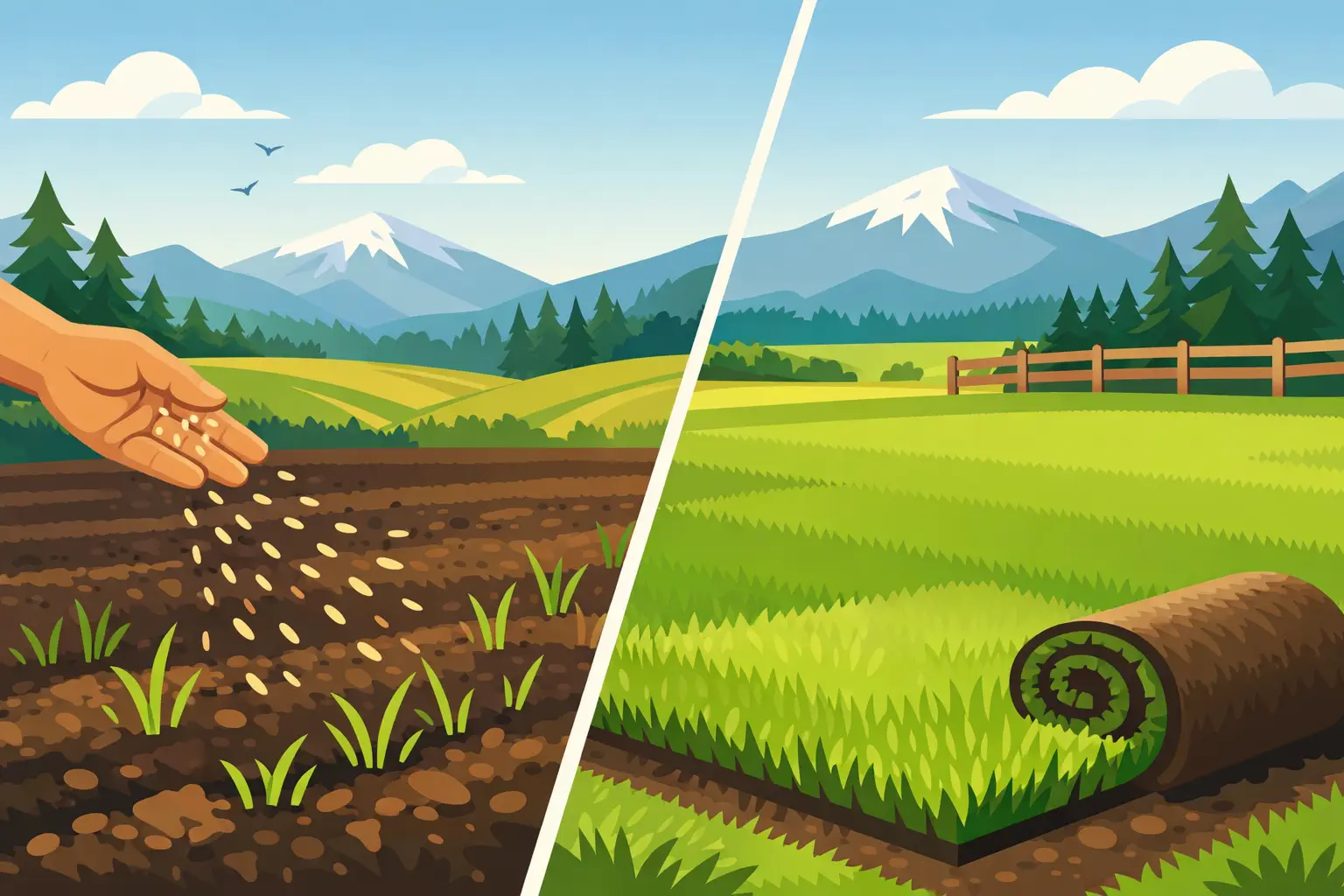
Sod is mature turf that has been grown elsewhere, cut into rolls, delivered, and installed over prepared soil. It gives a property an instant green surface, which is valuable when a new home needs landscaping completed quickly, a rental property has a narrow turnover window, or a steep area needs quick surface coverage.
A seed blend is planted directly into your prepared soil. The blend may contain several compatible turfgrass varieties selected for strengths such as drought tolerance, traffic recovery, color, fine texture, or performance in partial shade. Establishment takes longer, but the grass develops in the conditions where it will live.
That distinction matters in Central Oregon. A lawn that looks great on installation day may still struggle if its roots encounter compacted construction soil, sand with low organic matter, or uneven irrigation coverage. Whether you choose seed or sod, soil preparation and early care determine much of the result.
When sod makes sense
Sod is often the right fit when speed is the priority. A properly installed sod lawn can make a newly finished landscape usable almost immediately, although the roots still need time to knit into the soil. It is also helpful for projects where exposed soil is likely to wash, blow, or become muddy before seed has time to establish.
For busy homeowners and landscape professionals, sod can simplify scheduling. The grass is already dense enough to create a uniform appearance, and it generally suppresses weeds better at the outset than a newly seeded area. If you need a lawn installed for an event, sale, or project completion date, those benefits can justify the higher upfront cost.
The trade-off is that sod needs consistent attention right away. The soil beneath it must be moist and level before installation, and the sod itself must be kept from drying out while roots establish. In Central Oregon’s low humidity and summer sun, sod can lose moisture quickly at seams and edges. A quick install does not mean a low-maintenance install.
Sod also gives you less flexibility in grass selection. The available product may be a quality turf type, but it is not always tailored to the exact sun exposure, soil conditions, traffic level, or water goals of your property. Ask what varieties are in the sod and whether they suit a High Desert lawn before making the purchase decision.
Sod installation is only as good as the base
Rolling sod over hard, unamended ground is one of the most common causes of disappointment. Roots need a welcoming transition from the sod layer into the native soil. If the soil is compacted, hydrophobic, low in nutrients, or uneven, the lawn may root slowly and develop dry patches even when it looked perfect on day one.
Grade the area first, remove debris, loosen compacted soil where needed, and incorporate appropriate organic matter or soil amendments based on the site. A starter fertilizer can support root development, but avoid overapplying nutrients. High Desert lawns benefit from steady establishment, not a sudden flush of weak growth that demands more water.
Why custom seed blends are often the long-term play
Seeding requires patience, but it can be the more adaptable and cost-effective option for larger lawns, renovations, and homeowners who want a specific turf performance. Rather than accepting a one-size-fits-all grass type, you can choose a blend suited to the way the lawn will be used.
A durable family backyard needs different traits than a low-traffic front lawn. A yard with afternoon shade from mature trees may need a different mix than an open, south-facing lot that bakes in July. The right blend can balance improved drought tolerance with the color, density, and recovery you want.
Blends also create some insurance against variable conditions. One variety may perform better in heat, another may handle wear, and another may establish quickly to protect the soil while slower-growing grasses fill in. That diversity can be particularly useful in Central Oregon, where one part of a yard may be windy and dry while another stays shaded and cool.
The main challenge is establishment. Seed must maintain consistent contact with the soil and remain evenly moist during germination. Missing a watering cycle during hot, dry weather can leave thin spots, while overwatering can create runoff, disease pressure, or shallow root habits. Seeded lawns also need protection from foot traffic until young plants are anchored.
Timing matters more than the calendar page
Late summer and early fall are often excellent windows for cool-season lawn seeding in Central Oregon. Warm soil encourages germination, while cooler air reduces stress and water loss. The lawn also has time to begin rooting before winter dormancy.
Spring seeding can work well, especially after the risk of severe cold has passed and irrigation can be managed consistently. The challenge is that young grass may face summer heat before it has built a deep root system. A spring project needs a realistic watering plan and regular observation through the first warm season.
Sod offers more seasonal flexibility because it arrives as established turf, but it should not be installed onto frozen soil or during conditions where watering cannot keep up with drying. Summer sod projects can succeed, yet they demand careful irrigation management from the first day.
Compare the costs beyond installation day
Sod costs more per square foot because you are paying for the grower’s time, harvesting, handling, delivery, and installation labor if you are not doing the work yourself. It can be a sensible investment when immediate coverage is worth more than the added expense.
Seed is typically far less expensive for the material itself, particularly on larger areas. However, the total project cost can rise if the site needs grading, soil improvements, weed control, topdressing, or equipment to prepare the seedbed. The same preparation is often needed for sod, so compare complete project costs rather than only the price of rolls versus bags.
Water is another cost to consider. Both new sod and new seed need frequent, shallow watering during early establishment, then a gradual transition toward deeper, less frequent irrigation as roots grow. Sod does not eliminate that water requirement. It simply gives you visible turf while the rooting process is underway.
For a water-wise lawn over time, grass selection, healthy soil, proper mowing height, and irrigation uniformity matter more than whether the lawn began as seed or sod. A thirsty grass type installed as sod will not become drought tolerant because it was rolled out. Likewise, a well-selected seed blend will still struggle if sprinkler heads leave dry zones or the soil cannot hold moisture.
Match the option to your site
Choose sod when appearance is urgent, you have a well-prepared site, and you can commit to hands-on watering during establishment. It is especially practical for small to medium areas, time-sensitive landscape projects, and places where leaving bare soil exposed is a problem.
Choose a seed blend when you have time to establish the lawn, want more control over turf varieties, are renovating a larger space, or want a mix built around Central Oregon conditions. Seed is also a strong option when you are willing to improve the soil first and follow a measured watering schedule.
For patchy existing lawns, the answer may be neither a full sod installation nor starting from scratch with seed. Aeration, power raking, topdressing, overseeding, and irrigation adjustments can often restore a lawn with less waste and disruption. If the turf has widespread weeds, severe compaction, poor grading, or incompatible grass types, a full renovation may be the better investment.
Give either lawn a healthy start
Before choosing a method, inspect the site honestly. Look for compacted areas near construction activity, low spots that collect water, sprinkler coverage gaps, tree-root competition, and sections that receive harsh reflected heat. Correcting those problems before planting costs less than trying to repair a failing lawn afterward.
Use a soil test when possible, especially on new construction lots and older lawns with recurring issues. Sandy High Desert soil often benefits from thoughtful organic matter and nutrient management, but more product is not automatically better. The goal is better soil structure, stronger roots, and efficient water use.
Central Oregon Lawn Center can help you compare custom seed options, soil amendments, irrigation supplies, and the rental equipment needed to prepare a site properly. Bring in your lawn dimensions, sun exposure, and a few details about your watering setup for practical guidance built around your project.
The best lawn is not necessarily the one that looks finished fastest. It is the one that can put down roots, handle your household’s use, and stay healthy without asking more of Central Oregon’s water than it needs.