Guide to Lawn Sprinkler Winterization in Bend
A Central Oregon freeze can turn a small amount of trapped water into a cracked fitting, split valve, or costly spring repair. This guide to lawn sprinkler winterization is built for Bend-area properties, where cold nights arrive quickly, irrigation systems often run across exposed landscapes, and winter temperatures can stay below freezing long enough to damage anything left full of water.
Winterizing is not simply turning off the controller. The goal is to shut down the water supply, protect the backflow assembly, and remove water from every part of the irrigation system that could freeze. The right approach depends on your system design, but a careful fall shutdown is one of the most practical ways to protect your lawn investment and avoid wasting water next season.
Why Central Oregon sprinkler systems need special attention
Our High Desert climate brings low humidity, sharp overnight temperature drops, and a long dormant period. A warm October afternoon can be followed by a hard freeze that same night. Sandy soils also drain quickly, which can make it easy to assume the irrigation system is empty when the pipes and valves themselves are still holding water.
Above-ground components are especially vulnerable. Pressure vacuum breakers, double-check assemblies, exposed pipe near the house, hose connections, and valve manifolds can all freeze before buried mainlines do. Even underground pipes are at risk if they were installed shallowly, run beneath a driveway, or hold water in low spots.
A properly winterized system starts cleaner in spring, too. You are less likely to find a surprise leak that drives up your water bill or leaves a soggy area in an otherwise dry lawn.
When to winterize your lawn sprinkler system
In Bend and across Central Oregon, plan to winterize before consistent overnight temperatures reach freezing. Do not wait for the first snow. The exact date changes year to year, so use the forecast and the condition of your lawn rather than a date on the calendar.
If you are still watering new seed, sod, or a fall renovation, balance establishment needs with the risk of a freeze. Newly seeded areas may need light, frequent irrigation while temperatures remain mild, but that does not mean every zone must keep running deep into fall. Reduce watering as turf growth slows, watch the overnight forecast closely, and be ready to shut down sooner than expected.
Professionally installed systems are commonly prepared with a compressed-air blowout. Some properties also have manual drain valves or automatic drains. Check what type of system you have before starting. Using the wrong method, or using too much air pressure, can damage fittings, valves, and sprinkler components.
Guide to lawn sprinkler winterization: the practical process
1. Turn off the irrigation water supply
Locate the dedicated irrigation shutoff valve, which is often inside the home, in a crawlspace, garage, basement, utility area, or valve box. Close it fully. This is separate from simply turning off the irrigation controller.
If the shutoff is indoors, make sure it is accessible and clearly identified. A labeled valve saves time if you need to confirm the system is off during a sudden cold snap. Once the water is off, open an appropriate downstream drain or test port, if your system has one, to relieve pressure.
2. Protect the backflow prevention assembly
Your backflow device deserves careful attention because it is usually above ground and contains small passages that can hold water. Follow the manufacturer guidance for your specific assembly. In many cases, this means opening test cocks and positioning isolation valves correctly after the assembly has been drained.
Do not wrap a still-water-filled backflow device and assume it is protected. Insulation can slow a freeze, but it does not remove the water that causes damage. After draining, use an insulated cover designed for the device. Avoid packing it tightly with materials that hold moisture against metal components.
If you are unsure whether you have a pressure vacuum breaker, double-check valve, or another configuration, have the assembly identified before winter. Each style has different valves and test ports, and guessing can lead to a damaged device or a cross-connection concern.
3. Drain or blow out each irrigation zone
Manual drain systems have drain valves at low points in the pipe network. Open them after shutting off the supply, then allow water to drain fully. Automatic drain valves open when the system pressure falls, but they are not foolproof. Debris, poor placement, or a low section of pipe can leave water behind.
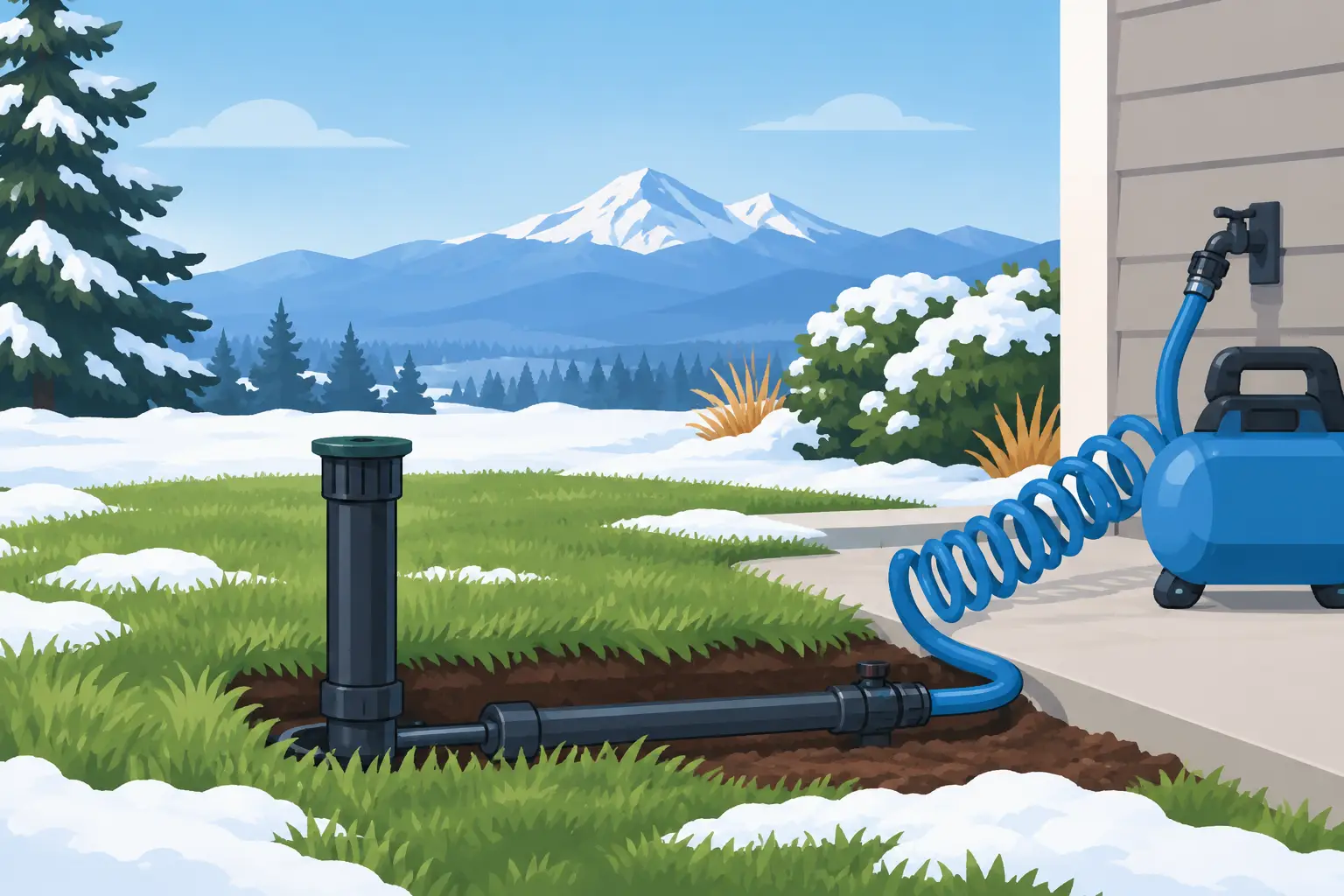
For most Central Oregon systems, a compressed-air blowout offers more complete protection. Air is connected at the proper point in the irrigation system, then each zone is run one at a time until it produces a light mist rather than a steady stream. The purpose is to move standing water out, not to run sprinklers dry for an extended period.
This is where restraint matters. Excessive pressure can crack PVC pipe, damage drip components, or harm valves and sprinkler heads. High-volume air at controlled pressure is safer than trying to force the system clear with a small compressor running too hot. If you do not have the correct equipment and experience, scheduling irrigation winterization is usually less expensive than repairing a broken mainline in spring.
4. Set the controller to off, not just paused
After the system is drained, turn the irrigation controller to the off or rain mode setting. Keep the programming stored so it is easy to restart in spring, but prevent automatic cycles from opening valves during a warm spell.
For smart controllers, verify that seasonal adjustments or weather-based automation cannot start a watering cycle. Remove the hose from any connected faucet and drain hose bibs where appropriate. A forgotten hose connection can trap water at the faucet and create a separate freeze problem.
5. Inspect the system while it is shut down
Fall is a useful time to make notes for spring. Mark broken heads, leaking valves, low-pressure zones, areas with poor coverage, and drip lines that need repair. It is also a good time to consider whether a lawn zone is applying more water than the soil can absorb.
Central Oregon’s sandy soils can benefit from irrigation that is efficient and intentional. If water runs off hard ground or drains below the root zone too quickly, the fix may involve nozzle selection, run times, cycle-and-soak scheduling, or soil improvement rather than simply adding more water. Winter gives you time to plan those upgrades before irrigation season returns.
Common winterization mistakes to avoid
The most common mistake is relying on the controller. Turning it off prevents watering, but it leaves pressurized water in the system. Another is forgetting the backflow assembly, which often freezes first because it is exposed to cold air.
Homeowners also sometimes open every valve without knowing its purpose. That can create problems with backflow components or allow debris into an open line. Take photos of the system before changing valve positions, and label shutoffs, zone valves, and drain points for future reference.
Finally, do not assume all drip irrigation is safe because it is flexible. Drip tubing, filters, pressure regulators, and above-ground emitters can all retain water. Treat drip zones as part of the same winterization job.
When professional help is the better choice
A homeowner with a simple system, clearly labeled drains, and the right equipment may be comfortable handling winterization. A professional is a wiser choice when the system has a complicated backflow assembly, multiple manifolds, drip and spray zones, unknown pipe depths, or no obvious drain points.
Landscapers and property managers may also prefer a professional blowout when they are responsible for several sites. Consistent records, correctly controlled air pressure, and a spring inspection plan reduce the risk of preventable callbacks. For Bend homeowners who want local, practical guidance on irrigation supplies, backflow protection, or preparing for spring lawn improvements, Central Oregon Lawn Center can help point you toward solutions suited to High Desert conditions.
A few careful hours in fall can protect a system built to support your lawn through our dry summers. Before the next hard freeze, walk your property, find the irrigation shutoff, and make sure every part of the system has a clear plan for winter.