Lawn Dormancy Signs for Central Oregon Lawns
A Bend lawn can turn from green to straw-colored surprisingly fast after a stretch of heat, wind, and limited irrigation. Learning the difference between lawn dormancy signs and a lawn that is actually declining can save water, prevent unnecessary treatments, and give your turf a better chance of returning when conditions improve.
In Central Oregon, lawns contend with sandy soils, low humidity, intense sun, cool nights, short growing seasons, and periodic watering limits. Those conditions make dormancy a normal survival response, but they also make it easy to confuse dormant turf with drought damage, poor irrigation coverage, insect activity, or disease.
What Lawn Dormancy Actually Means
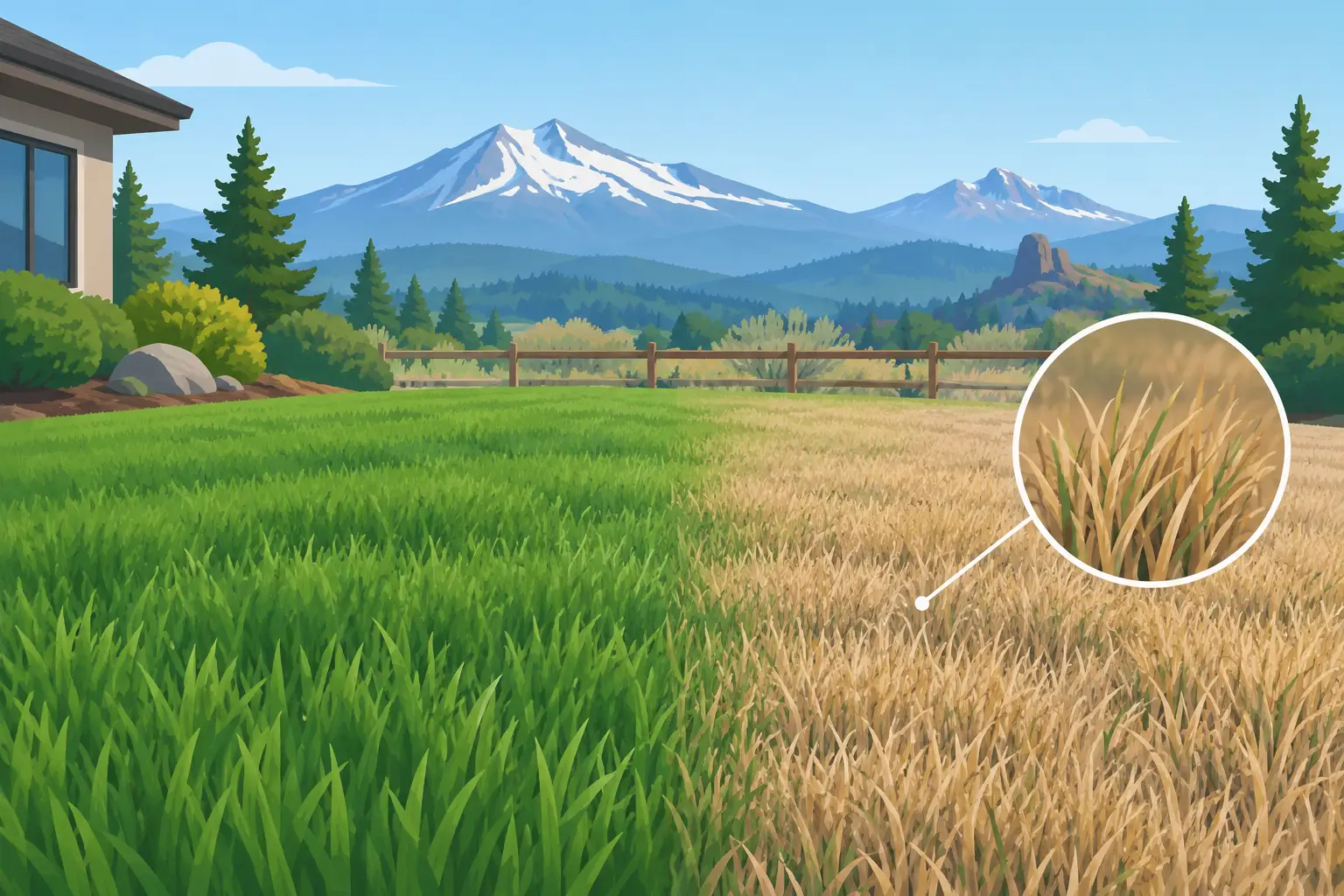
Dormancy is turf’s way of conserving resources when growing conditions are unfavorable. The grass slows or stops top growth, its color fades, and it uses far less water than an actively growing lawn. The crown, roots, and growing points can remain alive even when the blades look dry and tan.
Most lawns in Central Oregon include cool-season grasses such as Kentucky bluegrass, perennial ryegrass, and fescues. These grasses grow best during the cooler parts of spring and fall. When summer heat combines with dry soil, they may enter summer dormancy. They can also go dormant after hard fall frosts and through winter.
Dormancy is not a guarantee of recovery. A lawn that remains dry for too long, especially in sandy soil, can move from resting to dead. The goal is not to force lush growth through every difficult weather period. It is to keep the turf alive, protect the soil, and help it resume growth when temperatures and moisture become favorable.
Common Lawn Dormancy Signs
The clearest lawn dormancy signs are widespread, fairly uniform changes in color and growth. A dormant lawn often shifts from green to dull blue-green, then gray-green, and eventually tan. It may feel dry underfoot, but it should not pull out of the ground easily because the roots and crowns are still anchored.
A simple footprint test can help during summer. Walk across the lawn and look behind you. If footprints remain visible for several minutes, the grass blades lack moisture and are not springing back. This is an early drought-stress signal, and it is the best time to adjust irrigation before the lawn goes fully dormant.
Look for these patterns as well:
- Growth has slowed across most of the lawn, not just in one irregular spot.
- The turf is tan or faded but still firmly rooted when gently tugged.
- Color changes match a hot spell, prolonged dry weather, frost, or a planned reduction in watering.
- The lawn begins to green at the edges or in cooler, better-watered areas after weather moderates.
Uniformity matters. Dormancy generally follows exposure, soil moisture, and season. A lawn that turns brown in random circles, narrow strips, or one isolated zone may have another problem that needs attention.
Summer Dormancy Versus Drought Damage
Summer dormancy is common when Central Oregon lawns receive less water during extended heat. The turf sacrifices leaf color to protect its crown and root system. In many cases, grass can remain dormant for several weeks if it receives enough moisture to keep the crowns alive.
Drought damage occurs when the plant cannot recover from prolonged dehydration. The lawn may look similar at first, but the grass becomes brittle, roots shrink, and crowns die. When temperatures cool and irrigation resumes, dead turf does not green back up.
Check moisture below the surface rather than judging only by the top inch of soil. Central Oregon’s sandy ground can look damp after a short irrigation cycle while the root zone remains dry. Use a screwdriver or soil probe after watering. If it will not penetrate several inches with moderate pressure, your irrigation may be too shallow, too brief, or unevenly distributed.
Winter Dormancy Is Usually Expected
After fall frosts, cool-season turf naturally slows down and loses its rich green color. This is winter dormancy, and it is usually healthy. Mowing demands stop, irrigation needs fall sharply, and the lawn waits for spring soil temperatures to rise.
Do not expect a winter lawn in Bend to perform like a lawn in a mild, rainy climate. Avoid heavy traffic on frozen turf, which can crush brittle grass blades and compact already-challenged soil. If the ground is frozen, watering will not help because water cannot move into the root zone.
Winter desiccation can still be a concern during dry, windy periods with little snow cover. If the soil has thawed and remains dry, a light, occasional winter watering may help established turf. Timing depends on weather, soil conditions, and local watering guidance, so avoid setting a fixed calendar schedule.
When Brown Grass Is Not Dormancy
Dormancy is a practical explanation, not a diagnosis to apply to every brown patch. Before assuming the lawn is resting, inspect the shape of the affected area, sprinkler coverage, soil moisture, and grass roots.
A sharp green-to-brown line often points to irrigation coverage. Spray heads may be clogged, tilted, blocked by plants, or failing to overlap correctly. Brown strips along pavement, fences, and south-facing walls may reflect heat and wind exposure, but they can also reveal poor coverage at the edge of a zone.
Small, expanding circles can indicate disease, particularly if they appear during periods of warm nights and frequent evening watering. Insects and grubs may cause turf to peel back like loose carpet because roots have been eaten. Dog urine creates smaller, distinct patches that may have a dark green ring around a brown center. Herbicide injury often follows a spill, drift, or application pattern.
If the lawn is brown but roots remain white or cream-colored and firmly attached, dormancy is more likely. If the crowns are dry, roots are weak, or turf lifts easily, investigate further before adding fertilizer or increasing water.
How to Care for a Dormant Lawn
A dormant lawn needs restraint as much as it needs care. Heavy fertilizer applications, aggressive mowing, and frequent shallow watering can create more stress than benefit. The right approach depends on whether you are trying to maintain active growth or simply carry turf safely through a dry period.
If water restrictions or your own water-wise goals make full summer green-up impractical, provide enough deep irrigation to keep the lawn alive. Established turf in dormancy generally benefits more from occasional deeper soaking than daily light sprinkling. The exact frequency depends on soil depth, grass type, shade, slope, wind, and irrigation output. Sandy soils may need shorter cycles with soak time between them to prevent runoff and move water into the root zone.
Raise the mowing height before heat arrives. Taller grass shades the soil, reduces evaporation, and supports deeper roots. Keep mower blades sharp and leave clippings on the lawn when they are not excessive. Clippings return organic matter and nutrients without creating a thatch problem when mowing is done regularly.
Hold off on major fertilizer applications during heat stress. Fertilizer encourages growth, and a struggling lawn may not have the moisture or root capacity to support it. Fall is often the better window for rebuilding cool-season turf, especially after summer stress has passed.
Avoid power raking, aerating, or heavy foot traffic while the lawn is fully dormant. Those practices can be valuable at the right time, but they add stress when grass is conserving energy. If compaction and poor water infiltration are recurring problems, plan aeration for an active growth period when the turf can recover.
Help Your Lawn Wake Up in Fall
Cooler nights and more dependable moisture make early fall one of Central Oregon’s best lawn recovery windows. Once the lawn starts showing new green growth, evaluate thin areas instead of rushing to renovate everything. Some sections may rebound with proper irrigation and a modest nutrient plan, while dead or sparse areas may need overseeding.
Prepare compacted or crusted soil so water and air can reach roots. Topdressing with quality compost can improve moisture-holding capacity in sandy soils, but keep the layer light enough that existing grass blades remain visible. Use a grass seed blend selected for Central Oregon conditions rather than assuming a generic mix will handle drought, cold, and traffic equally well.
New seed needs consistent surface moisture, which is different from the deeper, less frequent watering used for established dormant turf. That trade-off is why fall renovation works best when you can give seedlings attention without fighting peak summer heat.
A Better Response Than Panic Watering
A tan lawn can be unsettling, particularly when it changes quickly. But dormancy is often evidence that turf is doing what it is designed to do: reduce demand when the High Desert asks too much of it. Watch for uniform color change, check the root zone, and correct irrigation issues before assuming the worst.
For help sorting out whether your lawn needs a water adjustment, soil improvement, overseeding, or a closer diagnosis, Central Oregon Lawn Center can help you choose a practical, region-appropriate path forward. A lawn that rests wisely through stress is often better positioned to return stronger when the season turns.