Lawn Topdressing Benefits for Central Oregon
If your lawn looks thin by midsummer, dries out fast, or feels uneven underfoot, the issue often starts below the grass blade. In Central Oregon, lawn topdressing benefits go far beyond appearance. Done with the right material and timing, topdressing can improve soil structure, help turf hold moisture longer, and support stronger growth in our dry, sandy, high-desert conditions.
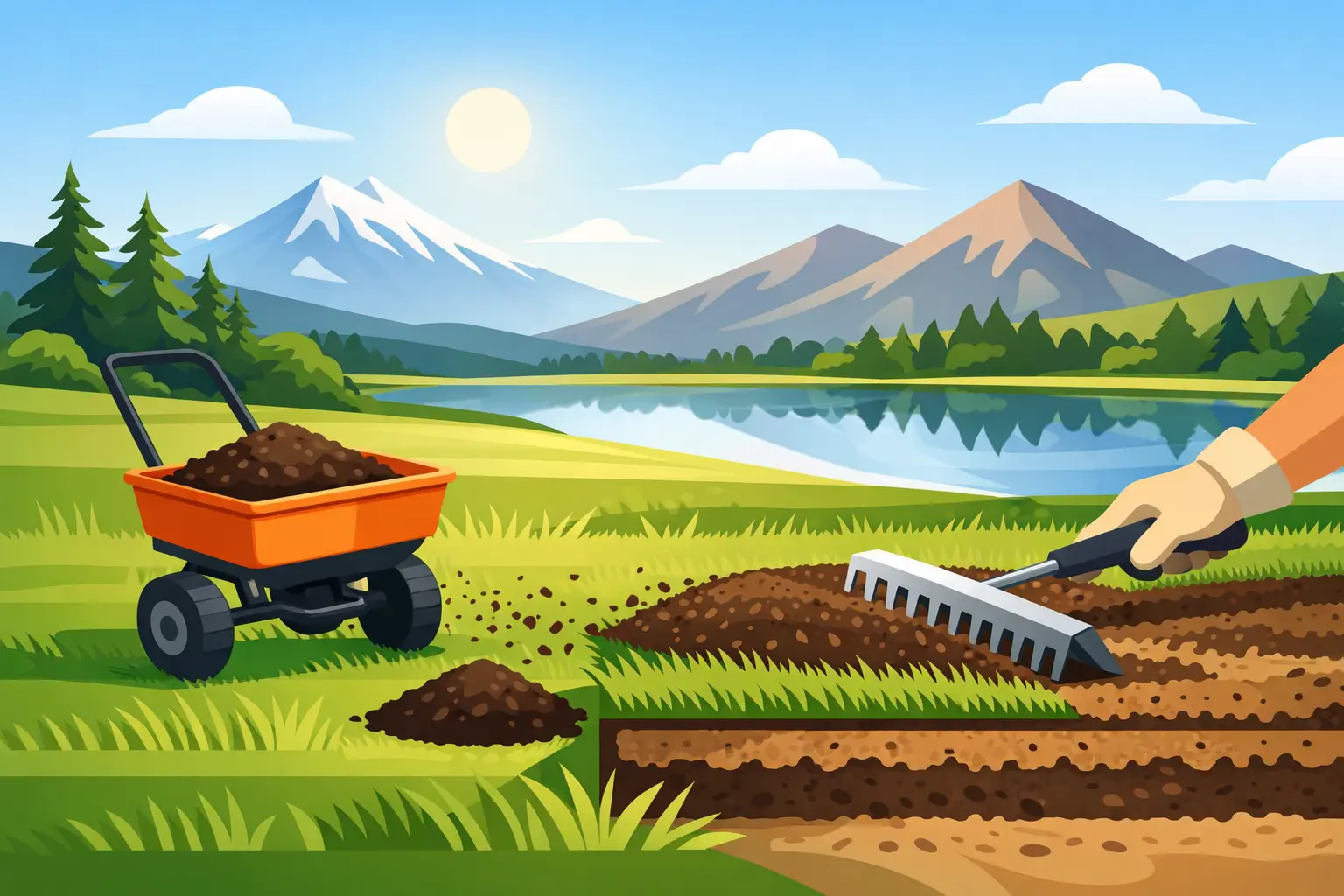
Topdressing is simply the practice of spreading a thin layer of compost, soil blend, or sand-based amendment over established turf. The key word is thin. You are not burying the grass. You are gradually improving the surface and root zone so the lawn performs better over time. For Bend-area homeowners and landscape professionals, that matters because our lawns are asked to do a lot with limited water, fast-draining soils, and a short growing window.
Why lawn topdressing benefits matter here
A lawn in Central Oregon faces a different set of pressures than turf in wetter parts of the country. Native soils are often low in organic matter and can drain so quickly that irrigation moves past the root zone before the grass fully benefits. Add summer heat, low humidity, and water-conscious irrigation habits, and it is easy to end up with turf that survives but never really thrives.
Topdressing helps correct that pattern little by little. A quality compost-based topdressing can increase organic matter near the surface, where a large portion of turf roots and biological activity are concentrated. That means better water retention, more consistent nutrient availability, and improved microbial life. None of this happens overnight, and topdressing is not a magic fix for neglected irrigation or poor mowing practices, but it is one of the most practical ways to improve the growing environment without tearing out the whole lawn.
Another reason topdressing works well in this region is that it supports gradual correction. High-desert lawns often respond better to measured improvements than extreme changes. Instead of adding a heavy layer of soil and hoping for the best, topdressing lets you build better conditions season by season.
The biggest lawn topdressing benefits
The most obvious benefit is healthier soil. When the right amendment is applied in a thin, even layer, it settles into the turf canopy and works into the upper soil profile. Over time, this can loosen compacted areas, improve root development, and create a better balance between drainage and moisture retention.
That balance matters in Central Oregon. Lawns need soil that drains well enough to avoid shallow rooting and disease pressure, but not so fast that every irrigation cycle disappears immediately. Compost-based topdressing can help bridge that gap by increasing the soil’s ability to hold both water and nutrients.
Topdressing also helps smooth minor surface irregularities. If your lawn feels bumpy, mower scalping becomes more likely, especially in summer when turf is already under stress. A thin layer worked into low spots can create a more even surface over time. This improves appearance, but it also helps with mowing quality and irrigation uniformity.
There is also a strong benefit for seed establishment. Topdressing is commonly paired with overseeding because it improves seed-to-soil contact and helps protect seed from drying out too quickly. In a climate where exposed seed can lose moisture fast, that extra cover can make a noticeable difference in germination.
Finally, topdressing can support a denser stand of turf. Denser grass is not just greener. It shades the soil, slows evaporation, competes better with weeds, and generally handles traffic and weather stress more effectively.
Topdressing and water efficiency
For many local property owners, water use is the real concern behind lawn performance. A lawn that needs constant irrigation to stay alive is expensive, frustrating, and not especially sustainable.
This is one of the most practical lawn topdressing benefits. By improving the upper root zone, topdressing can help lawns use irrigation more effectively. Soil with better organic matter tends to hold moisture more evenly, reducing the swing between saturated and bone dry. Grass roots can then access water more consistently, which supports steadier growth and better drought tolerance.
That does not mean you can topdress once and cut irrigation in half. Results depend on your soil, turf type, irrigation coverage, and the material you apply. But when topdressing is part of a larger water-wise lawn program that includes proper mowing height, targeted fertilization, and irrigation adjustments, it often helps lawns stay greener with less stress between watering cycles.
Choosing the right topdressing material
This is where local knowledge matters. Not every topdressing blend is right for every lawn, and generic advice can cause problems in Central Oregon.
Compost is often the best choice when the goal is improving poor sandy soil, increasing organic matter, and supporting biological activity. It is especially useful for lawns that dry out too quickly or struggle with thin, weak growth. The compost needs to be clean, mature, and screened so it spreads evenly and does not introduce weed issues or create clumps.
Sand has its place, but it is not a universal answer. On athletic fields or very specific turf systems, sand may be used to maintain firmness and smoothness. On a typical home lawn, adding sand to the wrong soil can create layering or inconsistent moisture movement if it is not done carefully and repeatedly within a broader soil management plan.
Blended topdressing materials can work well when you need both leveling and soil improvement. The right blend depends on what the lawn is starting with. A drought-stressed lawn in Bend with sandy, low-organic soil may need a different product than a lawn with compaction from pets, kids, or regular foot traffic.
When topdressing works best
Timing matters because the grass needs to recover and grow through the material. In Central Oregon, the best windows are usually spring and early fall, when cool-season turf is actively growing and temperatures are more moderate.
Spring topdressing can help lawns recover from winter wear and prepare for summer stress. Fall topdressing is often ideal for renovation work, especially if you are aerating and overseeding at the same time. The cooler nights and more favorable growing conditions support establishment without the same level of heat stress you get in midsummer.
Topdressing during peak summer heat is usually less ideal unless there is a specific reason and irrigation is managed carefully. Grass is already under pressure then, and unnecessary stress can set it back. Winter applications generally do not offer much benefit because growth is too slow for the lawn to respond well.
Pairing topdressing with aeration and overseeding
Topdressing works well on its own, but it works even better when paired with other renovation practices. Core aeration opens channels into the soil, relieves compaction, and gives topdressing material a place to settle. That improves contact with the root zone rather than leaving everything sitting on the surface.
Overseeding after aeration and before topdressing can also improve establishment. The seed drops into openings, the topdressing helps hold moisture, and the lawn gets a better shot at filling in thin or damaged areas. For many Central Oregon lawns, this combination delivers a more visible result than topdressing alone.
This is also where equipment matters. A small lawn may be manageable with hand tools and careful spreading, but larger properties and professional jobs benefit from using the right rental equipment to apply material evenly and avoid heavy spots.
Common mistakes to avoid
The biggest mistake is applying too much. If the grass is buried under a thick layer, it can struggle for light and air. In most cases, a light application is enough. You should still be able to see a good amount of grass through the material after spreading and brushing it in.
Another common problem is using low-quality material. Unscreened compost, unstable organic matter, or the wrong soil blend can create more issues than it solves. Clumping, weeds, poor drainage, and uneven decomposition are all possible if the amendment is not suited to turf use.
It is also easy to expect instant results. Topdressing is a cumulative practice. Some improvements, like surface smoothing, may show fairly quickly. Others, especially soil improvement and drought resilience, build over repeated applications.
If you are dealing with severe grade problems, active irrigation issues, or heavily compacted subsoil, topdressing alone may not be enough. Sometimes the right answer is a more complete renovation plan.
A practical step toward a better lawn
For Central Oregon lawns, topdressing is not about chasing a perfect showpiece. It is about building a stronger, more resilient turf system that handles our climate better. When done with the right material, at the right time, and for the right reason, topdressing can improve how your lawn looks, how it feels, and how efficiently it uses water.
If you are not sure what your lawn actually needs, that is the point to ask for local guidance. Central Oregon Lawn Center helps homeowners and pros match topdressing materials, seed, and rental equipment to real site conditions, not guesswork. A thin layer applied with a clear plan can change the way your lawn performs season after season.
The best lawn improvements in high-desert country are usually the steady ones, and topdressing is one of the smartest places to start.