When to Overseed Lawns in Bend
If your lawn in Bend thins out every summer, you are not dealing with a random problem. High Desert conditions are hard on turf. Knowing when to overseed lawns in Bend makes the difference between seed that sits there and seed that actually fills in weak spots, improves density, and helps your grass handle drought stress a little better.
In most years, the best window for overseeding in Bend is late summer into early fall. That timing lines up with warm soil, cooler daytime temperatures, and less pressure from extreme heat. Spring can work in some cases, but it is usually the second-best option here. In Central Oregon, timing matters because our growing season is shorter, our soils tend to be sandy and low in organic matter, and water efficiency always needs to be part of the plan.
When to overseed lawns in Bend for the best results
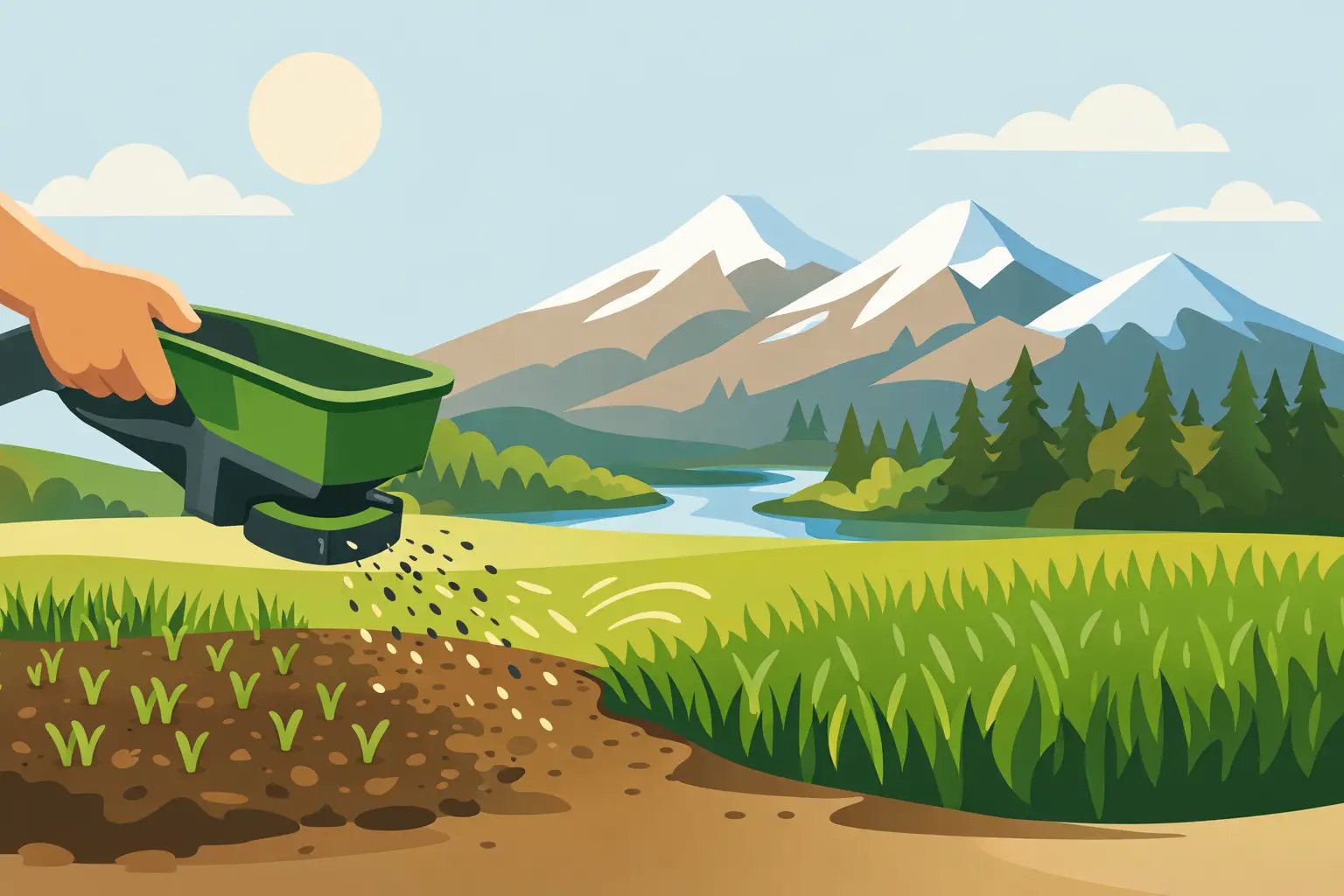
For most Bend lawns, aim to overseed from about mid-August through mid-September. If the weather stays mild, you may have a little flexibility on either side of that range, but early fall is the sweet spot.
There are a few reasons this timing works so well. First, soil temperatures are still warm enough for cool-season grass seed to germinate quickly. Second, the air is cooling down, which reduces stress on new seedlings. Third, weed competition is usually lower than it is in spring, when many annual weeds are trying to establish at the same time.
That combination gives new grass a better chance to develop roots before winter. In Bend, that extra rooting time matters. A lawn that goes into winter stronger is usually in better shape when the next dry summer arrives.
Why fall beats spring in Central Oregon
Spring overseeding is possible, and sometimes it is the right move, especially if your lawn came out of winter with obvious thinning or snow mold damage. But spring in Bend can be inconsistent. Soil can stay cold longer than people expect, nights can dip low, and weather swings can slow germination.
Even when spring seed comes up well, those new seedlings still have to face summer heat and water stress pretty quickly. Fall-seeded lawns avoid that race. They get started under better conditions and usually have a more realistic path to maturity.
That does not mean fall is always perfect. If you wait too long and the first hard freeze arrives before seedlings are established, results can be disappointing. The goal is not just to seed in fall. The goal is to seed early enough in fall for strong establishment.
Signs your lawn is ready for overseeding
A lawn does not need to be completely bare to benefit from overseeding. In fact, overseeding works best when you catch decline early.
Thin areas, weak color, reduced density, and patches that never seem to recover after summer are all good signals. If your lawn feels open underfoot or you can easily see soil between blades, overseeding can help restore a thicker stand. It is also a smart move if you have older turf varieties that are not holding up well under current irrigation limits.
Some homeowners in Bend assume fertilizer alone will fix a tired lawn. Sometimes it helps, but fertilizer cannot create density where grass plants are already gone. Overseeding adds new plants back into the stand, which is what improves coverage over time.
When not to overseed yet
There are times when waiting is the better call. If your irrigation coverage is uneven, fix that first. Seed needs consistent moisture during germination, and poor sprinkler performance can turn an overseeding project into a patchy one.
It is also worth addressing major soil issues before you spread seed. Many Central Oregon lawns struggle with compacted areas, hydrophobic soil, or low organic matter. If seed cannot make good contact with the soil, or if water is running off instead of soaking in, timing alone will not save the project.
How to prepare a Bend lawn before overseeding
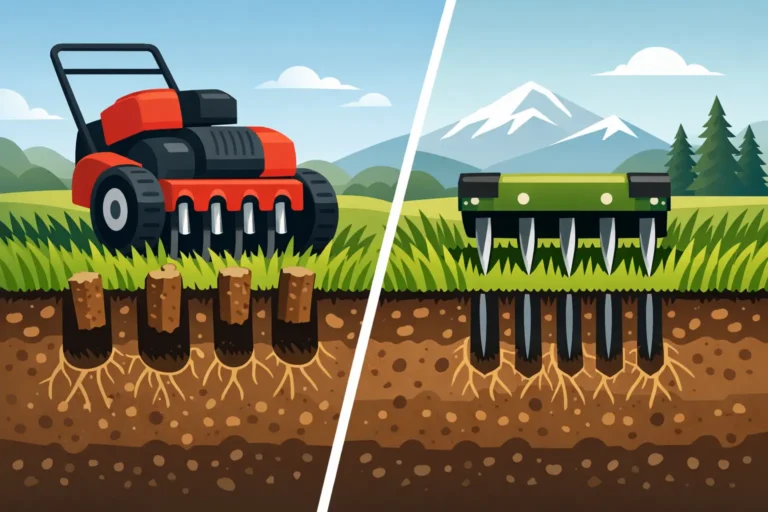
Good overseeding starts with opening up the lawn surface. If thatch is heavy or the turf is matted down, seed will get hung up above the soil instead of settling where it belongs. In many cases, aeration or power raking is the step that makes overseeding worthwhile.
Aeration is often the best fit for established lawns that are compacted but still have decent coverage. It pulls cores, improves air and water movement, and creates openings for seed and topdressing. Power raking is more aggressive and can be helpful if thatch buildup is preventing seed-to-soil contact. Which method makes sense depends on the condition of the lawn.
After that, mow lower than usual and bag the clippings. You are not trying to scalp healthy turf, but you do want seed to reach the soil surface. A light topdressing of compost or a soil-building blend can also help in Bend, where native soils often need more organic matter to hold moisture and support steady growth.
Seed choice matters as much as timing
This is where many lawn renovations go off course. A generic seed mix from a big-box store may not be well suited for Bend’s climate, elevation, or water realities. The best overseeding results usually come from blends selected for Central Oregon conditions, with an emphasis on drought tolerance, wear tolerance, and reliable cool-season performance.
That does not mean there is one perfect blend for every property. A high-traffic backyard, a shaded side yard, and a commercial frontage all ask different things from turf. Seed selection should reflect how the lawn is used, how much irrigation is available, and how much maintenance the owner is realistically willing to do.
Watering after overseeding in Bend
Right after overseeding, the top layer of soil needs to stay consistently moist. Not soaked, not muddy, just evenly damp enough to support germination. In Bend’s dry air, that often means lighter, more frequent watering at the beginning than people expect.
Once the seed germinates and starts to establish, watering should gradually shift deeper and less often. That transition matters. Frequent shallow watering for too long can lead to weak rooting, which is the opposite of what you want in a High Desert lawn.
This is also where irrigation efficiency becomes part of the conversation. If one zone dries out much faster than another, or if heads are misting into the wind, overseeding can expose those problems fast. A quick irrigation check before seeding often saves frustration later.
Spring overseeding in Bend – when it makes sense
If you missed the fall window, spring can still be worthwhile, especially for repairing winter damage or improving a lawn before peak use season. The best spring overseeding timing is usually after soil temperatures begin to warm consistently and the risk of prolonged cold snaps starts to ease.
The trade-off is simple. Spring seeding gives you a recovery opportunity, but it also asks young grass to mature faster before summer stress arrives. That means preparation, seed choice, and irrigation management need to be even tighter.
For some properties, spring is the only realistic option because of project timing, construction delays, or recent landscape work. In those cases, it is better to overseed correctly in spring than to rush a poor fall application. Lawn care in Central Oregon is rarely about one-size-fits-all timing. It is about matching the work to site conditions and the calendar you actually have.
A better approach for tough Bend lawns
If your lawn is extremely thin, uneven, or compacted, simple overseeding may not be enough. Sometimes the right answer is overseeding plus aeration and topdressing. In more severe cases, a partial renovation may be smarter than repeating the same light fix every year.
That is especially true for lawns with underlying soil problems or years of summer stress. A thicker lawn is not just about adding more seed. It comes from improving the growing environment so that new grass can survive and existing turf can compete.
At Central Oregon Lawn Center, this is usually where local guidance saves people time and money. The best timing for overseeding in Bend is still generally late summer to early fall, but the best plan for your lawn depends on the turf you already have, the condition of your soil, and how your irrigation system performs under real-world conditions.
A healthy Bend lawn is rarely built with one product or one weekend fix. It comes from doing the right work in the right season, then giving that new grass a fair chance to establish. If your lawn has been getting thinner every year, this fall may be the right time to change that pattern.