
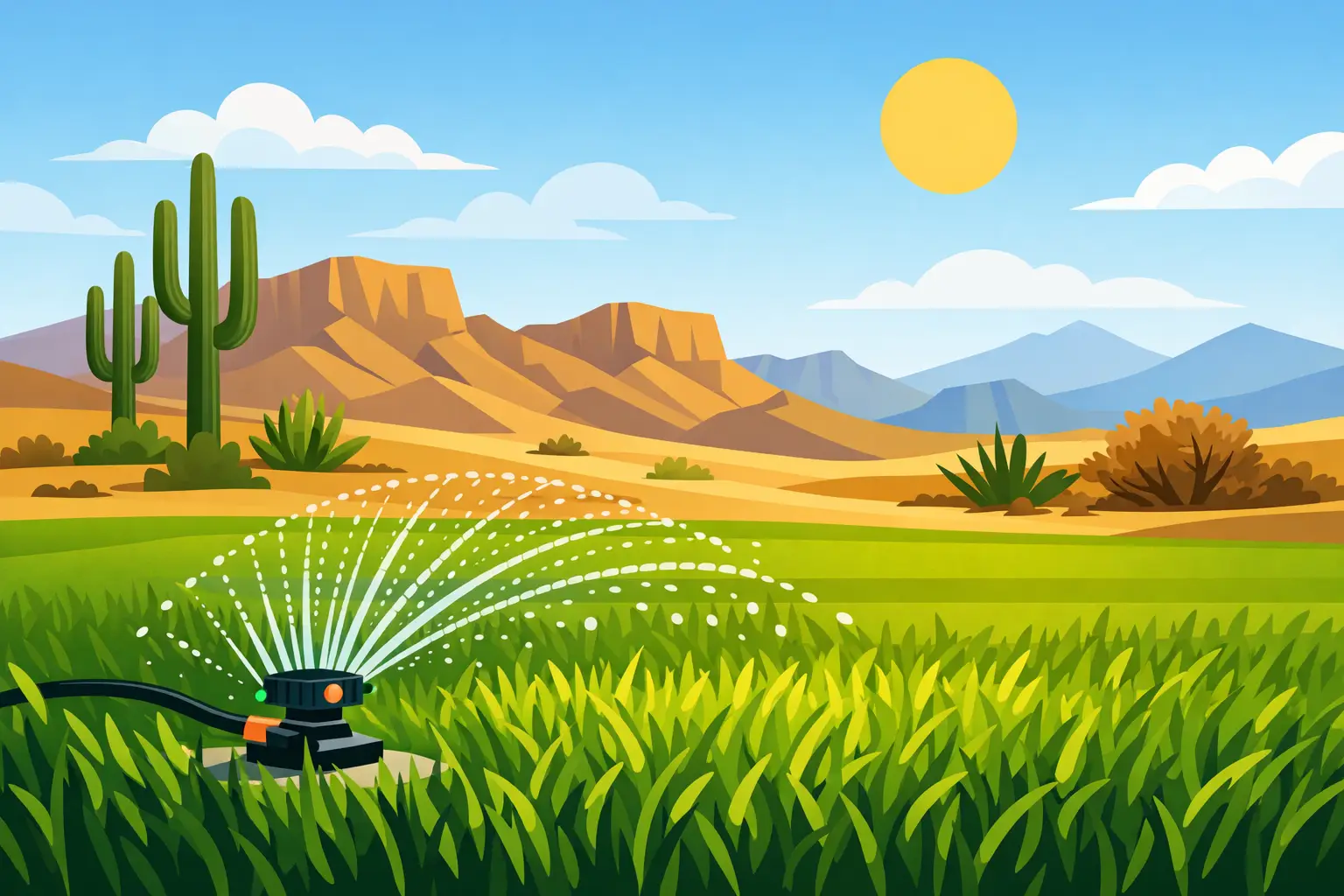
How Often to Water Grass in High Desert
If you live in Bend or anywhere around Central Oregon, you already know a lawn can look stressed fast. A few hot, dry days, some wind, and sandy soil can turn green grass dull and thirsty. That is why so many homeowners ask how often to water grass in high desert conditions. The short answer is deeper and less frequent than most people think, but the real answer depends on your soil, grass type, sprinkler output, and the time of year.
High desert lawns do not respond well to guesswork. Water too often and you encourage shallow roots, disease pressure, and wasted water. Water too little and turf goes off color, thins out, and struggles to recover from summer stress. In Central Oregon, the goal is not just keeping grass alive. It is building a lawn that can handle heat, dry air, and uneven seasonal weather with less water over time.
How often to water grass in high desert climates
For most established lawns in high desert areas, watering two to three times per week is a strong starting point during peak summer. That schedule usually works better than light daily watering because it pushes moisture deeper into the soil and encourages stronger root growth. In cooler spring and fall weather, many lawns need water just one to two times per week, especially if temperatures are mild and nights are cooler.
That said, frequency alone can be misleading. A lawn does not care how many days you irrigate if each cycle is too short to wet the root zone. In Central Oregon, many lawns need roughly 1 to 1.5 inches of water per week in summer, including any rainfall. Because rainfall is limited during the growing season, most of that has to come from irrigation.
The right schedule is usually based on deep soaking, then allowing the upper soil to begin drying before the next watering. That rhythm helps roots chase moisture downward instead of lingering near the surface.
Why high desert lawns need a different watering approach
High desert turf deals with a combination of challenges that make standard lawn advice unreliable. Low humidity increases evaporation. Intense sun heats the soil surface quickly. Wind pulls moisture from both grass blades and the ground. Many local soils are sandy or low in organic matter, so water moves through them faster than it would in heavier soils.
That means the lawn may dry out faster between waterings, but it also means overwatering can happen in a different way. Water may run past the root zone before the grass can use it, especially if sprinklers apply water too quickly or if the soil has become compacted and uneven. A lawn can be thirsty even when you are watering often.
This is where local calibration matters. A broad national recommendation is not enough for a Bend lawn sitting in full sun with reflected heat, pumice-rich soil, and a sprinkler system that has never been audited.
Established lawns vs. new seed and new sod
An established lawn should be watered differently than new turf. Established grass benefits from deep, spaced-out irrigation. New seed is the opposite at first. It needs the surface kept consistently moist during germination, often with short, light cycles once or twice a day depending on temperature and wind. Once seedlings are rooted, that schedule should gradually shift toward deeper, less frequent watering.
New sod also needs more frequent irrigation in the early stage because its root system is limited. The key is to keep the sod and soil underneath from drying out while roots knit into the native soil. After establishment, sod should transition to the same deeper watering pattern as a mature lawn.
Signs your lawn needs water, or is getting too much
A high desert lawn usually tells you what is happening if you know what to watch for. Grass that needs water often develops a bluish-gray cast before it fully browns. Footprints may linger after you walk across it because the blades are not springing back. You may also notice folded or wilted leaf blades during the hottest part of the day.
Too much water looks different. Turf may stay soft and spongy, develop thatch problems faster, or show patchy yellowing even though it seems wet. Fungal issues can also increase when grass stays damp too long overnight or when shallow, frequent irrigation keeps the surface constantly moist.
There is some nuance here. Afternoon wilt alone does not always mean the lawn needs immediate water. In hot weather, grass can show temporary stress during peak heat and recover by evening. If the lawn still looks dull or compressed the next morning, it is more likely asking for a deeper soak.
How long should each watering cycle run?
This is where many schedules break down. The number of minutes depends entirely on your sprinkler output. Spray heads usually apply water faster than rotary heads, and some systems are mixed in ways that create dry spots and puddled spots at the same time.
A practical way to measure output is to place several straight-sided containers across the lawn and run each zone for 15 minutes. Then measure how much water collected. That tells you how quickly your system delivers irrigation and whether coverage is even. Once you know that number, you can estimate how long it takes to apply the weekly amount your lawn needs.
In high desert conditions, cycle-and-soak watering often works best. Instead of one long run time that causes runoff, break irrigation into two shorter cycles with a pause in between. For example, if a zone needs 30 minutes total, you may get better results from two 15-minute cycles. That gives the soil time to absorb moisture rather than letting water spill onto sidewalks or into the street.
Seasonal timing matters more than many homeowners expect
Spring watering in Central Oregon should begin carefully, not aggressively. Cool nights and slower growth mean the lawn uses less water. Starting summer-level irrigation too early can create shallow rooting before the heat arrives.
By mid-summer, when daytime temperatures rise and humidity stays low, watering demand increases. This is usually when two to three deep watering days per week become necessary for established lawns. South-facing lawns, properties with lots of sun exposure, and windy sites may need adjustment.
In early fall, many lawns can begin tapering down again. Grass still needs moisture to stay healthy, but cooler temperatures reduce stress. This is also a valuable season for root development, so deep watering remains helpful even as total volume declines.
Best time of day to water
Early morning is the best window, usually between 4 a.m. and 9 a.m. Watering then reduces evaporation loss and allows blades to dry after sunrise. Evening watering is less efficient and can increase disease pressure if the lawn stays wet overnight.
Midday watering is usually the least efficient choice because of heat, wind, and evaporation. If your system can only run later in the day, shorter spot syringing for severe heat stress is different from a full irrigation cycle, but it should not become your regular pattern.
Soil health changes the watering schedule
A lawn with poor soil structure almost always needs more careful irrigation management. Sandy soils drain quickly and often need closer monitoring. Compacted soils may repel water at the surface or create uneven wetting. Soil low in organic matter dries faster and stores less plant-available moisture.
Improving the soil can reduce water demand over time. Core aeration helps water move into the root zone. Topdressing with compost improves moisture retention and microbial activity. The right fertilizer program supports healthier root growth without pushing excessive top growth that needs more water to sustain.
This is one reason cookie-cutter lawn advice falls short in Central Oregon. Watering is not just about setting a timer. It is tied to soil condition, turf density, and how well your lawn can actually hold and use the water you apply.
A practical baseline for Central Oregon lawns
If you want a simple starting point, use this. In spring, water established lawns about once or twice per week. In summer, move to two or three deeper watering days per week. In fall, reduce back toward once or twice weekly as temperatures drop. Then watch the lawn and adjust.
If your grass dries out within a day, the answer is not always adding more days. You may need longer cycles, better head coverage, reduced runoff, or soil improvements. If the lawn always seems wet and weak, you may need fewer watering days and more depth per cycle.
For homeowners and landscapers who want more precision, Central Oregon Lawn Center can help match irrigation strategy, seed selection, and soil improvement to your site conditions. That usually saves water and produces a stronger lawn than simply turning the controller up each summer.
The best watering schedule is the one that fits your lawn, not the one printed on a generic timer card. Pay attention to how your turf responds, water deeply, and let the roots do the work.