
Water Wise Irrigation for Lawns in Bend
At 3 p.m. in a Bend summer, the lawn that got watered at noon usually tells on itself. You see pale patches, wilted blades, and runoff along the edge of the sidewalk. Water wise irrigation for lawns is not about giving turf less than it needs. It is about giving the right amount, at the right time, in a way Central Oregon soil can actually absorb.
That distinction matters in the High Desert. Between low humidity, sandy or fast-draining soils, intense sun, and seasonal water pressure, lawns here lose moisture differently than they do in milder climates. A watering schedule copied from the Willamette Valley or the Midwest can waste a surprising amount of water in Bend while still leaving the turf stressed.
Why water wise irrigation for lawns looks different in Central Oregon
A healthy lawn in Central Oregon has to work harder. Summer days are hot, nights can cool off quickly, and wind often speeds up evaporation. Many properties also have soil that drains fast or has uneven organic matter, which means water can move past the root zone before the grass has much chance to use it.
That is why the old habit of watering every day for a few minutes rarely delivers good results. Short, frequent cycles keep the surface damp, encourage shallow rooting, and can make turf more dependent on constant irrigation. Lawns watered this way often look fine early in the season, then struggle when heat or watering restrictions tighten up.
A better approach is to build deeper roots and more even moisture in the top several inches of soil. When turf roots grow down instead of hovering near the surface, the lawn handles heat stress better and needs less rescue watering.
Start with the system before changing the schedule
The fastest way to waste water is to assume the sprinkler system is doing what it should. In reality, many lawns are being overwatered in one area and underwatered in another. Before adjusting run times, check how the system is actually performing.
Look for obvious issues first. Tilted heads, clogged nozzles, misting sprays, leaky valves, and heads blocked by grass or plant growth are common in established landscapes. Even one damaged head can throw off coverage enough to create dry spots that tempt you to increase the whole zone.
Pressure matters too. If spray heads are producing a fine mist instead of larger droplets, some of that water is drifting away before it reaches the lawn. If pressure is too low, coverage becomes uneven. Either problem leads homeowners to think their lawn needs more water, when the real issue is poor delivery.
Head spacing and nozzle type also matter. Rotary nozzles, fixed spray heads, and rotor systems all apply water at different rates. Mixing types in the same zone creates uneven watering from the start. On a typical residential lawn, the most efficient setup often depends on the shape of the area, sun exposure, and how quickly the soil takes in water.
How much water does a lawn actually need?
Most established lawns do best with deep, infrequent watering rather than daily light irrigation. In Central Oregon, the exact amount depends on grass type, sun exposure, soil condition, and whether the lawn is newly seeded, newly sodded, or mature.
A mature cool-season lawn in summer often needs roughly 1 to 1.5 inches of water per week from irrigation and any rainfall, but that range is only a starting point. A south-facing lawn on sandy soil may dry out faster. A lawn with improved soil and some afternoon shade may need less. That is why measuring is better than guessing.
A simple catch-can test can tell you how much water each zone is putting down and how evenly it is being applied. Place several straight-sided containers across a zone, run the system for a set time, and compare the results. If one side of the lawn collects much more than another, scheduling alone will not fix it. If the amount is lower or higher than expected, you can adjust with real numbers instead of assumptions.
Smart scheduling beats longer run times
One of the most effective water wise irrigation for lawns strategies is cycle and soak scheduling. Instead of running a zone once for a long stretch, break the watering into shorter cycles with rest time between them. That gives the soil time to absorb moisture and reduces runoff.
This works especially well on compacted areas, slopes, and soils that repel water when they get too dry. For example, instead of watering a zone for 24 minutes all at once, you might run three 8-minute cycles spaced apart. The grass still gets the water, but less of it ends up on pavement or moving below the root zone too quickly.
Timing matters as much as duration. Early morning is generally the best window because evaporation is lower and wind is usually calmer. Watering at night can extend leaf wetness and raise disease risk, while midday irrigation loses too much to heat and air movement.
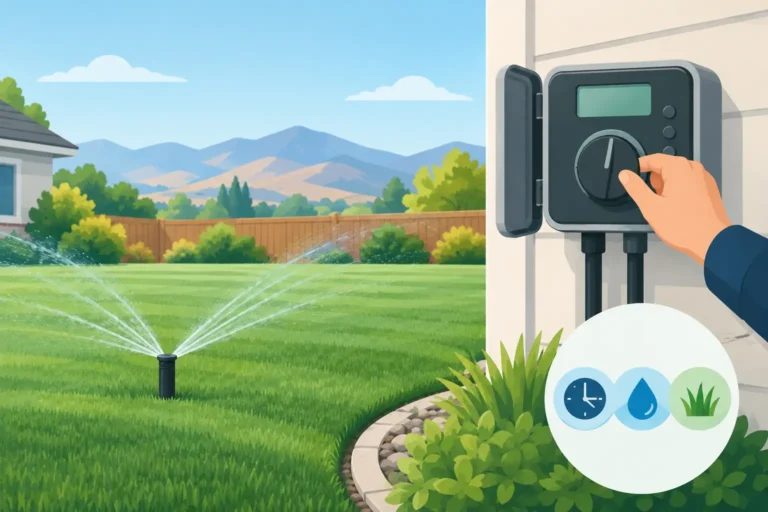
Seasonal adjustment matters too. A schedule that works in June may be excessive in September. Controllers should be changed as weather shifts rather than left on one setting all season.
Soil health is part of irrigation efficiency
Many irrigation problems are really soil problems wearing a sprinkler-system disguise. If the soil is low in organic matter, compacted, or hydrophobic, even a well-designed system will struggle to deliver consistent results.
Improving soil structure helps the lawn hold usable moisture longer. Aeration can reduce compaction and open the soil so water moves into the root zone more effectively. Topdressing with compost can improve water retention and support stronger root development over time. Wetting agents can also help in certain dry, water-repellent soils, though they should be used thoughtfully and for the right conditions.
This is one reason lawn renovation often pays off in lower water demand later. A healthier root zone, region-appropriate grass seed, and balanced fertility make irrigation more productive. You are not just pouring more water onto a weak lawn and hoping it hangs on.
Grass choice changes the watering conversation
Not all lawns need the same irrigation strategy because not all turf varieties use water the same way. Some grass types handle drought stress better, recover faster, or maintain acceptable color with less frequent watering.
In Central Oregon, seed selection should reflect actual site conditions, not just appearance on the bag label. Full sun, pet traffic, irrigation coverage, and soil quality all affect performance. A custom blend suited to local conditions often gives better long-term results than a generic mix chosen for price alone.
That is where local guidance makes a difference. Central Oregon Lawn Center works with homeowners and landscape professionals who need grass and irrigation solutions built for this climate, not for a national average. The right seed blend and the right watering plan support each other.
Common mistakes that raise water use
The biggest mistakes are usually simple. Watering too often is one. So is increasing run times to fix dry spots caused by poor coverage. Another common problem is ignoring sprinkler output after spring startup and assuming last year’s settings still make sense.
Fertilizing heavily in summer can also create more top growth than the lawn can comfortably support under heat stress. That extra growth often increases mowing pressure and water demand. In the High Desert, a steadier, soil-focused approach usually performs better than pushing lush growth at the hottest point of the season.
Mowing too short is another hidden water waster. Taller grass shades the soil, reduces evaporation, and encourages deeper rooting. Scalped turf heats up fast and dries out faster.
When to upgrade, repair, or rethink the layout
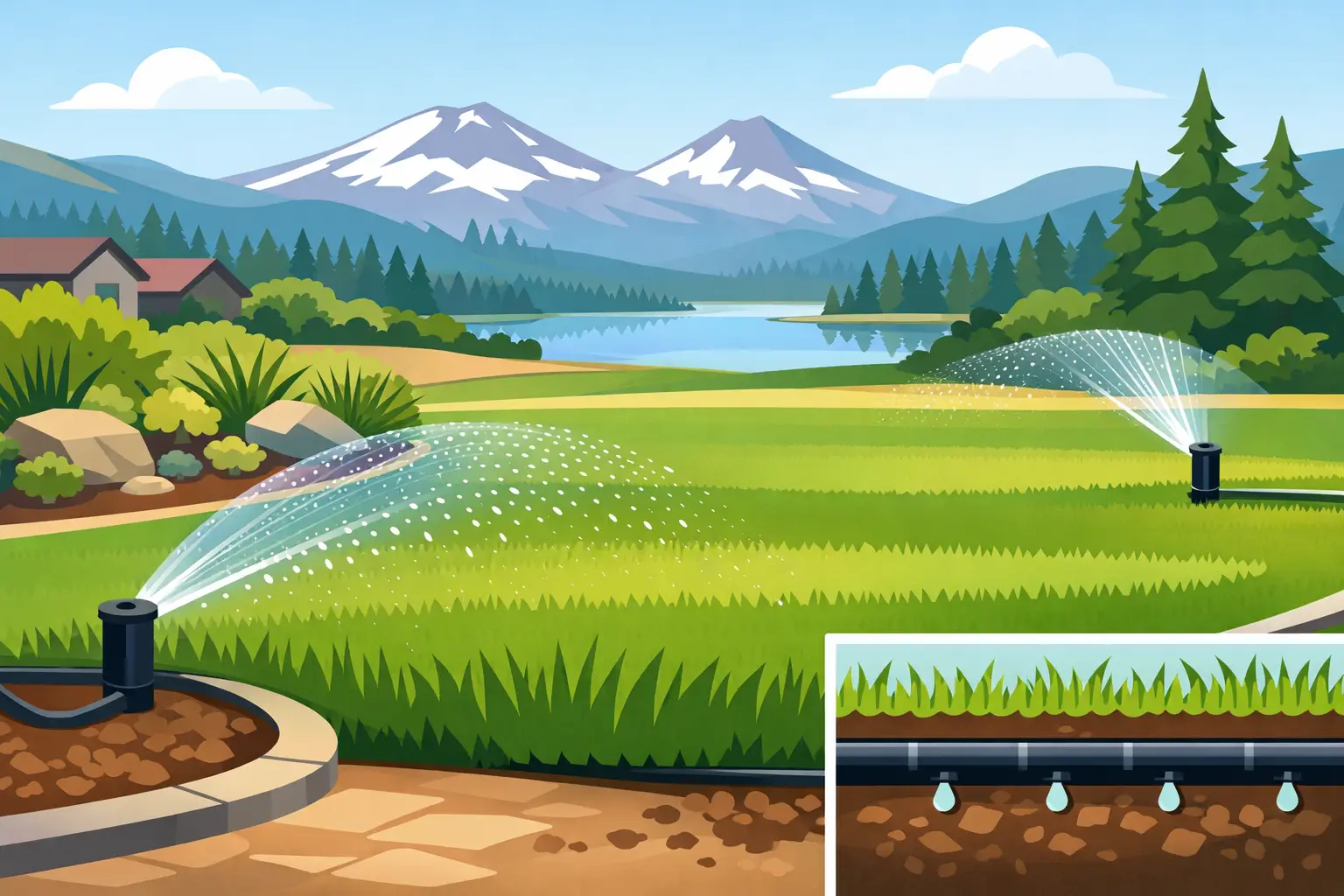
Sometimes efficiency gains come from tuning the system. Sometimes they come from redesigning part of it. Narrow strips near driveways, irregular corners, and sloped sections are often the hardest areas to irrigate well with standard spray patterns. In those cases, nozzle changes, zoning adjustments, or different application methods may be worth considering.
If a lawn has chronic runoff, persistent dry patches, or a history of overwatering with mediocre results, it may be time to step back and look at the whole picture. Irrigation, soil condition, turf type, and site layout all interact. Changing one without the others can help, but coordinated improvements usually deliver more durable results.
For contractors and hands-on homeowners, that might also mean using aeration, topdressing, trenching, or renovation equipment to correct the conditions that make irrigation inefficient in the first place.
A greener lawn in Bend does not come from throwing more water at a dry climate. It comes from paying attention to how water moves through your system, your soil, and your turf, then making practical adjustments that fit the way Central Oregon really grows.