
Bend, Oregon Lawn Care That Actually Works
A lawn can look great in one part of the country and fail fast in Bend, Oregon. That is usually where frustration starts. Homeowners bring in a fertilizer or seed mix that worked somewhere wetter, then wonder why the lawn stays thin, dries out by July, or never really establishes in the first place.
The problem is not effort. It is mismatch. Central Oregon lawns deal with sandy soil, low humidity, intense sun, cold winters, and water limitations that reward the right plan and punish the wrong one. If you want durable turf here, every decision matters a little more – from seed choice to irrigation timing to whether your soil can hold moisture long enough for roots to use it.
Why Bend, Oregon lawns are different
Bend sits in a true High Desert climate, and that changes the lawn-care playbook. The air is dry, the growing season is shorter than many people expect, and daytime heat can pull moisture out of turf quickly even when the soil looked fine a day earlier. Add in wind, compacted areas, and naturally low-organic soils, and lawns often struggle below the surface before they show stress on top.
That is why generic lawn programs tend to disappoint here. A product designed for richer soil and regular summer rain may push top growth without supporting deeper rooting. A cheap seed mix may germinate, but it can fade under drought stress or heavy use. Even irrigation systems that seem to be running enough can underperform if coverage is uneven or water is being applied at the wrong time.
Healthy turf in Bend is less about chasing a perfect green color and more about building resilience. The best lawns here are usually the ones with stronger roots, improved soil structure, and a realistic maintenance plan that fits local conditions.
Start with the soil before you blame the grass
In Central Oregon, weak lawns often begin with weak soil. Many sites have sandy or rocky ground that drains fast and does not hold nutrients well. That sounds helpful until you realize the lawn may be getting water and fertilizer, but not keeping enough of either to support steady growth.
This is where soil amendments matter. Organic matter can improve both water retention and root development, which makes turf more forgiving during hot, dry stretches. That does not mean every yard needs the same fix. Some properties need compost worked in before seeding. Others need topdressing over time to improve performance without tearing everything out.
There is also a trade-off to consider. Fast-draining soil can reduce some disease pressure, but it can also leave turf drought-stressed much sooner. Richer amended soil supports stronger lawns, but if irrigation is poorly managed, even better soil will not solve runoff or oversaturation in certain areas. Good results come from matching the amendment plan to the site, not applying a one-size-fits-all recipe.
Seed selection matters more than most people think
Not all grass varieties belong in Bend. A lawn that looks impressive on the bag may be poorly suited to dry air, cold nights, foot traffic, or limited irrigation. That is why region-specific blends consistently outperform generic mixes.
The right seed depends on how the lawn will be used. A front yard that is mostly for appearance can be managed differently than a backyard with kids, dogs, and constant summer wear. Some blends are chosen for finer texture and appearance. Others are built for durability, recovery, and drought tolerance.
Timing matters too. Spring seeding can work well, but it often runs into rising summer stress before roots are fully mature. Early fall is often a better window for establishment because soil is still warm while daytime temperatures ease up. There is less pressure on young turf, and irrigation demands are usually more manageable.
For renovation projects, this becomes even more important. Overseeding into a tired lawn can help, but only if there is enough seed-to-soil contact and enough room for new plants to establish. In many cases, power raking, aeration, or topdressing makes the difference between patchy improvement and a real reset.
Water wisely, not just more often
When a lawn looks dry in Bend, the first instinct is often to add more water. Sometimes that helps. Often it just hides a larger issue.
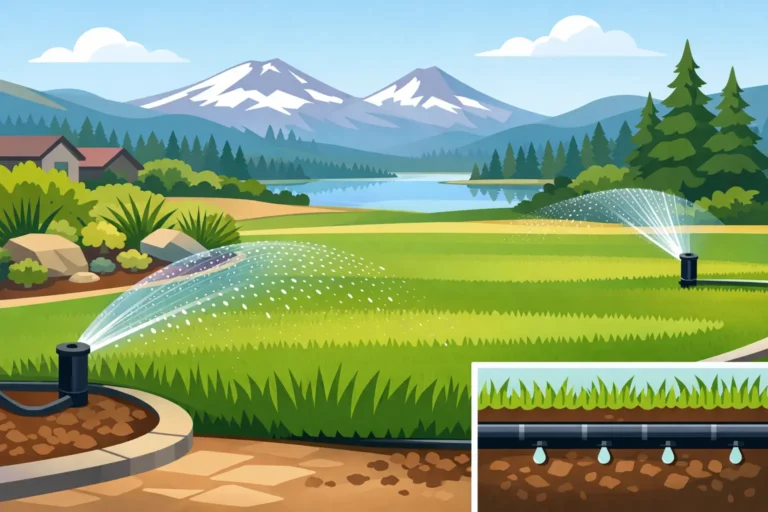
Irrigation problems here are rarely about volume alone. Coverage gaps, poor scheduling, runoff, shallow watering, and clogged or mismatched heads are common. Turf that receives light daily watering may stay green for a while, but it often develops shallow roots that make it more vulnerable during heat or water restrictions.
A better goal is deeper, more efficient watering that encourages roots to grow down. That usually means checking system performance, watering in the early morning, and adjusting schedules based on temperature, wind, and soil conditions rather than following the same timer settings all season.
There is also a practical reality in Bend – water should be treated as a resource, not a workaround. Efficient irrigation is good for the lawn, good for the utility bill, and better for the long-term health of the landscape. In many yards, improving the soil and correcting irrigation uniformity does more than simply increasing runtime.
Feeding a High Desert lawn without overdoing it
Fertilizer should support the lawn, not force it. In Bend, overfeeding can create growth that looks good briefly but demands more water and more mowing while increasing stress during hot periods.
A steadier approach usually works better. Organic and slow-release products help feed turf more gradually while supporting soil biology and root health. That tends to fit High Desert conditions better than aggressive quick-green programs, especially for homeowners who want a healthier lawn without relying on harsh inputs.
It depends on the season, though. Spring feeding can help wake up turf and support recovery from winter. Summer applications need more caution, especially during heat. Fall is often one of the most valuable feeding windows because it helps the lawn strengthen roots and store energy before winter.
If the lawn is pale, thin, or underperforming, fertilizer may be part of the answer. But if the real problem is compaction, poor irrigation, or low-quality seed, fertilizer alone will not fix it. That is one of the most common and most expensive mistakes people make.
Renovation is often smarter than starting over
A struggling lawn does not always need to be removed. Many Bend properties can be improved dramatically through renovation instead of full replacement, and that can save time, material, and water during establishment.
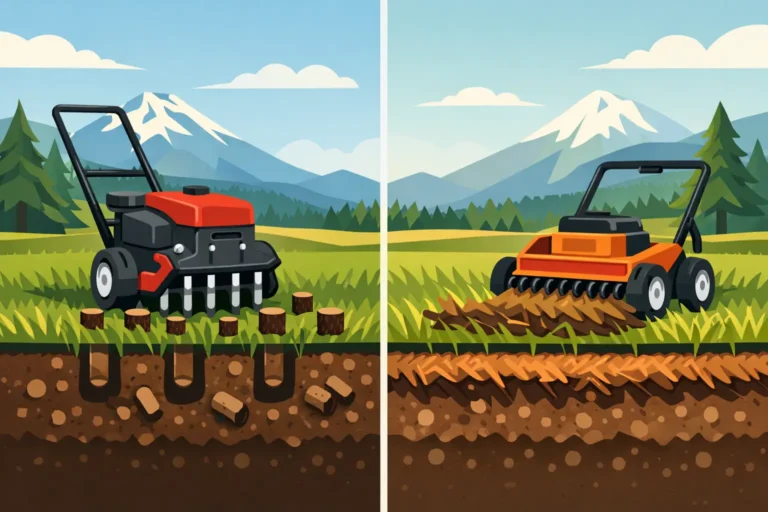
Aeration is one of the best examples. When soil is compacted, roots have a harder time accessing air, water, and nutrients. Core aeration opens the surface and helps the lawn recover more effectively. Add overseeding and a light topdressing, and an average lawn can make real progress in a single season.
Power raking can also help when thatch or dead material is blocking water and seed contact. For larger corrections, equipment like tillers, trenchers, sod cutters, and top dressers can turn a difficult project into a manageable one. That matters for both homeowners taking on a weekend renovation and landscapers who need dependable tools for efficient job completion.
The right choice depends on the condition of the lawn. If more than half the turf is worth saving, renovation is often the better value. If the grade is poor, irrigation is outdated, and the existing lawn is mostly weeds or dead patches, starting over may be more practical.
Local advice beats generic lawn formulas
The biggest advantage in Bend is not a miracle product. It is local knowledge. A lawn-care plan that accounts for Central Oregon weather, soil behavior, and seasonal timing will almost always outperform a national formula designed for average conditions.
That is why customized recommendations matter. One property may need a drought-tolerant seed blend and compost topdressing. Another may need irrigation parts, organic fertilizer, and an aerator rental. A contractor managing multiple sites may need consistent regional inputs that perform predictably across different installs.
At Central Oregon Lawn Center, that local approach is the whole point. The focus is not on selling more products than you need. It is on helping you choose the right products, the right equipment, and the right timing for healthier lawns in the conditions we actually live with here.
Bend, Oregon lawn care is about durability
A successful lawn in Bend, Oregon should do more than look good for a few weeks in spring. It should handle summer pressure, recover from wear, use water responsibly, and come back strong each season. That takes a little planning, but it is achievable when the lawn is built for the region instead of borrowed from another climate.
If your turf has been underperforming, the answer is usually not bigger promises on a bag. It is better alignment between soil, seed, water, and timing. Start there, make improvements that fit your site, and the lawn will usually tell you when you are finally working with Central Oregon instead of against it.