Best Grass for Dog Yards in Central Oregon
A dog yard in Bend has to handle more than an occasional zoomie. It may see daily traffic, compacted paths along the fence, urine spots, dry High Desert air, sandy soil, and a short window for recovery. The best grass for dog yards is not simply the toughest seed on a bag. It is a grass – or more often a locally appropriate blend – that can stay rooted, recover from wear, and use water responsibly in Central Oregon.
For many local homeowners, a durable cool-season blend centered on turf-type tall fescue offers the best balance. But the right answer changes with your dog’s size, activity level, irrigation coverage, shade, and expectations for lawn appearance.
What a Dog-Friendly Lawn Must Handle
Dogs damage turf in a few predictable ways. Repeated running wears down the same routes, especially around gates, patios, and fence lines. Claws can tear shallow roots from thin turf. Compaction from paws and play makes it harder for water and oxygen to move through the soil. Then there are urine spots, which can leave concentrated salts and nitrogen behind in a small area.
Central Oregon adds its own pressures. Our soils are often sandy, low in organic matter, and quick to drain. Low humidity and summer heat pull moisture from turf quickly, while cold winters and a shorter growing season limit how fast damaged areas can fill back in. A grass that looks excellent in a generic national recommendation may not be the most dependable choice here.
The goal is not a lawn that never shows wear. A well-used dog yard should look lived in. The goal is turf with enough density, root depth, and recovery potential that normal use does not turn the yard into dust, mud, or bare soil.
Best Grass for Dog Yards: Start With Tall Fescue
Turf-type tall fescue is often the strongest foundation for a Central Oregon dog lawn. It develops a deeper root system than many common cool-season grasses, which helps it tolerate dry periods and makes it better suited to water-wise management. Modern turf-type varieties also have a finer texture and darker green color than the coarse tall fescue many people remember.
Its biggest advantage is durability. Tall fescue stands up well to traffic when it is established properly and maintained at a sensible mowing height. It is also a bunch-type grass, meaning individual plants grow in clumps rather than spreading aggressively through runners. That characteristic helps it remain durable, but it also means damaged spots do not repair themselves as quickly as bluegrass. Overseeding is part of the maintenance plan, not a sign that the lawn has failed.
For a yard with one or two active medium-to-large dogs, tall fescue is usually a practical choice. It is especially valuable in sunny areas with sandy soil and limited irrigation capacity. Keep it mowed higher than a show lawn – generally around 3 to 4 inches during the growing season – to shade the soil, protect crowns, and encourage deeper roots.
Why a Blend Usually Performs Better Than One Variety
A single grass variety can be excellent, but a blend gives the lawn more ways to handle real-world stress. Different turf-type tall fescue varieties may respond differently to heat, traffic, cold, and disease pressure. Including a measured amount of Kentucky bluegrass can add recovery through underground rhizomes, while perennial ryegrass can provide quick establishment and early color.
The trade-off is water use. Kentucky bluegrass is admired for its ability to spread into worn areas, but it generally needs more consistent moisture to look its best in the High Desert. Perennial ryegrass establishes quickly and tolerates traffic reasonably well, though it is not the deepest-rooted choice for dry sites. A locally selected mix can use each grass for what it does well rather than asking one species to solve every problem.
For many dog yards, a tall fescue-forward blend with a modest amount of bluegrass is a sensible place to start. The exact ratio should reflect sun exposure, irrigation, soil condition, and how much daily wear the lawn receives.
When Kentucky Bluegrass Makes Sense
Kentucky bluegrass is a strong option for homeowners who want a dense, classic lawn and have dependable irrigation. Its spreading growth habit can gradually knit together minor wear and tear, which is useful where dogs create small scuffed areas. It also has good winter hardiness, an advantage in Central Oregon.
Still, bluegrass should not be chosen solely because it repairs itself. It typically has higher water needs than tall fescue, particularly in full sun and fast-draining soil. A bluegrass-heavy lawn can become stressed quickly if irrigation is uneven, restricted, or poorly timed. Stressed turf is more vulnerable to dog traffic and urine damage.
If your dog uses a smaller, regularly irrigated backyard and you want a refined lawn appearance, bluegrass can be part of an excellent mix. If your priority is reduced water demand across a larger sunny yard, tall fescue deserves more weight in the blend.
Grass Alone Cannot Fix a High-Traffic Run Zone
The grass that fails first is often not the wrong grass. It is the grass in the wrong location. A five-foot-wide strip along a fence where a dog runs every day can receive more traffic than living turf can reasonably handle, no matter what seed is used.
Look for the patterns before renovating. If your dog races the same perimeter, cuts a sharp corner near the gate, or waits in one spot by the back door, plan a durable surface there. Mulch is usually not ideal for dogs that may chew or dig, and loose materials can be carried indoors. Depending on the space, compacted pathways, pavers, pet-safe ground cover, or a designated play area may protect the lawn while giving your dog a better route.
This is not giving up on grass. It is using turf where it has a fair chance to thrive. Redirecting one worn path can make the rest of the lawn dramatically easier to maintain.
Build Better Soil Before You Seed
Healthy roots are the first defense against dog traffic. In Central Oregon, that begins with improving sandy, low-organic-matter soil. Compost and appropriate soil amendments can help the root zone hold moisture longer while improving nutrient availability and structure. The objective is not to create heavy, soggy soil. It is to create a more resilient growing environment where grass can recover after use.
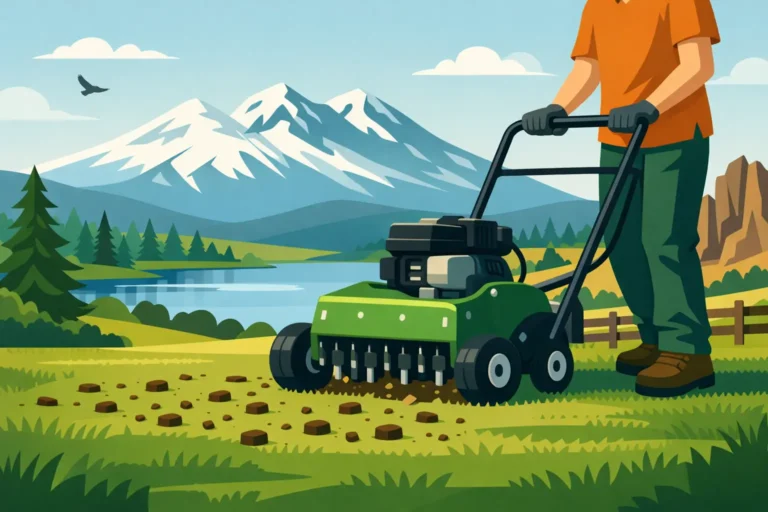
For compacted areas, core aeration is especially valuable. It opens channels for water, air, and roots, helping turf establish deeper and stronger. Following aeration with a light topdressing of quality compost can improve the soil over time without burying the grass.
A soil test takes the guesswork out of fertility and pH. Avoid pushing rapid, weak growth with excessive fertilizer. Controlled, appropriate nutrition supports thicker turf, while environmentally responsible products reduce the risk of unnecessary runoff and overapplication.
Establish the Lawn at the Right Time
Late summer into early fall is often the best seeding window for Central Oregon dog yards. The soil is warm enough for germination, daytime heat is easing, and new grass has time to establish before winter. Spring seeding can work, but young seedlings may face heat and traffic before they have built a strong root system.
Seed-to-soil contact matters as much as seed selection. Remove debris, loosen the top layer where needed, level the surface, and apply seed evenly. A light covering of compost or a suitable seed cover can help hold moisture without burying seed too deeply. Keep the surface consistently moist during germination, then transition gradually to deeper, less frequent watering as roots develop.
Give new turf a protected establishment period. If possible, keep dogs off the seeded area until plants are rooted and have been mowed several times. A temporary run, rotating access to another area, or simple fencing can prevent a promising renovation from becoming a repeat project.
Manage Urine Spots Without Chasing Every Patch
Dog urine does not automatically destroy a lawn. Damage is most likely where a dog repeatedly urinates in the same small area, especially when the grass is drought-stressed. Female dogs often create more noticeable spots because they tend to squat in one location, but any dog can produce concentrated areas.
When practical, watering the spot soon after urination helps dilute salts and reduce stress. You do not need to follow your dog with a hose every time. Focus on predictable favorite areas, and encourage your dog to use a designated spot where watering is easy. Avoid supplements marketed to change urine chemistry unless advised by your veterinarian. They can be unnecessary and may not address the real issue.
If a spot has died, rake away the dead material, loosen the surface, add a little compost if the soil is poor, and reseed with the same blend. Consistent repair is more effective than waiting for bare areas to expand.
A Practical Plan for a Greener Dog Yard
A successful dog lawn usually comes from several small decisions working together: a tall fescue-forward regional blend, improved soil, efficient irrigation, higher mowing, annual overseeding, and a hardscape solution for the most heavily traveled route. That approach respects both your dog’s need for an active yard and Central Oregon’s need for thoughtful water use.
Central Oregon Lawn Center can help match seed, amendments, and renovation equipment to the conditions in your specific yard. Bring in a photo, note where your dog runs and urinates most often, and consider how much sun and irrigation each area receives. The best lawn for your dog is one built for the way your household actually uses it – not one that only looks good before the first set of paw prints.