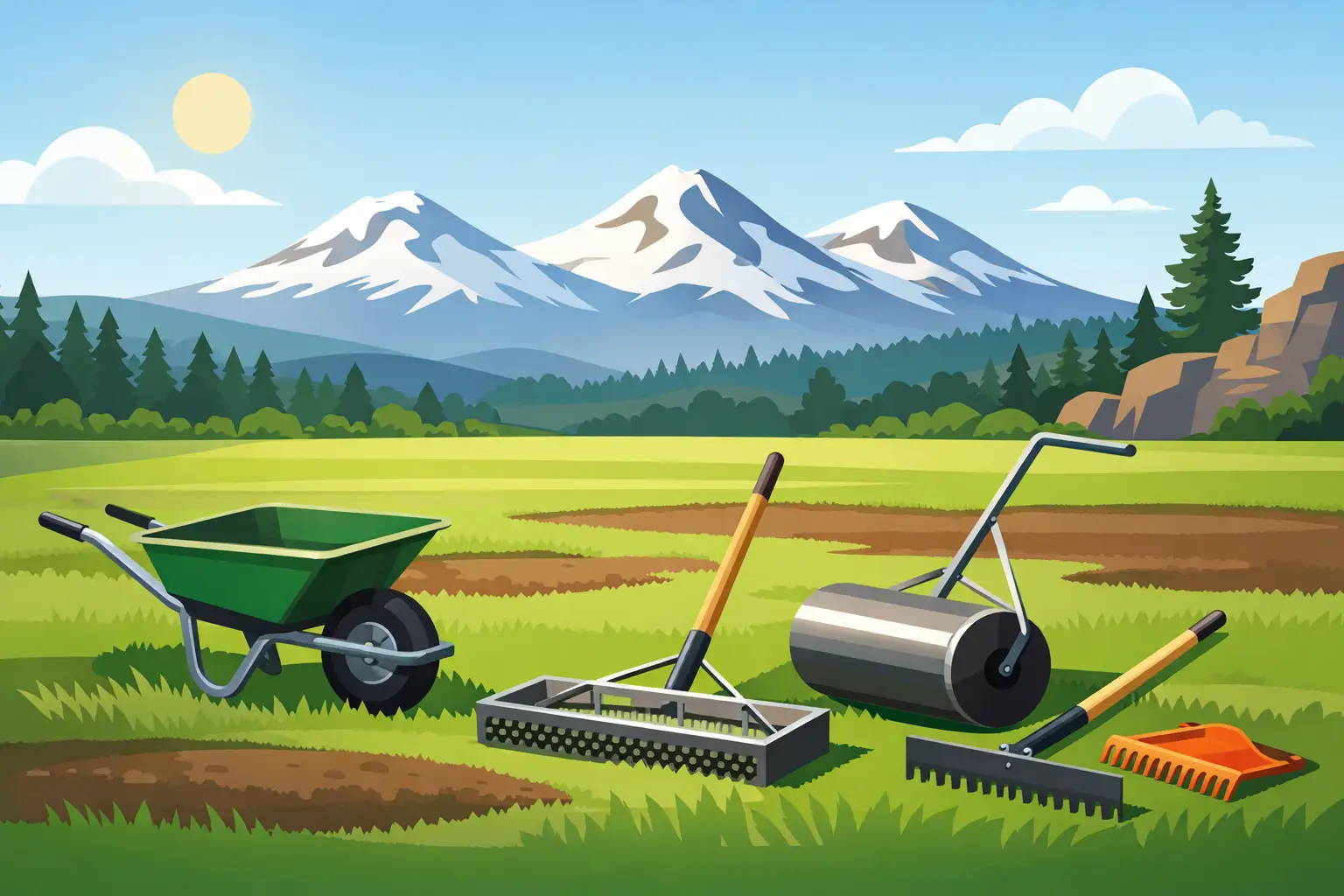
Essential Tools for Lawn Leveling in Central Oregon
A lawn can look green from the street and still waste a surprising amount of water. Low pockets collect runoff, high spots dry out first, and uneven ground makes every mow feel rougher than it should. The essential tools for lawn leveling help you correct those problems without treating your Bend-area lawn like it has the same soil, rainfall, and growing season as turf west of the Cascades.
In Central Oregon, leveling is usually more than a cosmetic project. Sandy or compacted soil, freeze-thaw movement, irrigation repairs, settling around new construction, and pet traffic can all create dips and ridges. The right tool depends on whether you are smoothing minor imperfections, correcting a broad slope, or rebuilding a lawn that needs better soil structure from the ground up.
Start by Finding the Cause of the Unevenness
Before buying material or renting equipment, determine what the lawn is telling you. A shallow dip that appears after winter may only need a light topdressing. A recurring wet spot can point to irrigation overspray, poor drainage, or a settled trench. A sharp depression near a utility line, retaining wall, or foundation deserves closer attention before it is covered.
Walk the lawn after an irrigation cycle and again after rain or snowmelt. Mark low areas with small flags or stakes. A long straight board, string line, or laser level makes it easier to see whether you have isolated hollows or a larger grading problem. For most established lawns, the goal is a smooth, gentle surface that carries water away from buildings while keeping the turf root zone consistently moist.
Do not try to fix a major drainage grade with a few bags of sand. Central Oregon lawns often need organic matter and compatible soil, not a layer that creates a dry, disconnected root zone. If water moves toward the home, pools for days, or crosses a large area, get local guidance before starting.
Essential Tools for Lawn Leveling
The best lawn-leveling setup is not necessarily the biggest one. Hand tools handle small corrections well, while rental equipment saves time and strain on larger renovations. These are the tools most homeowners and landscape professionals reach for first.
A landscape rake for shaping and smoothing
A sturdy landscape rake with a wide head is the everyday workhorse for leveling. Use it to spread topdressing material, pull soil off high edges, break up small clumps, and feather material into surrounding turf. Its broad teeth move material without digging as aggressively as a garden rake.
For a few shallow low spots, apply a thin layer of a screened soil-and-compost blend and work it evenly with the rake. Keep existing grass blades visible rather than burying them under a heavy layer. Several light applications during the growing season are safer for established turf than one deep application.
A leveling rake or lawn lute for a finished surface
A lawn leveling rake, sometimes called a lawn lute, has a flat grid or straight working surface that skims and redistributes material. It is especially useful after the bulk of the mix has been spread. The tool leaves a more even finish than a standard rake and helps prevent small piles that can smother grass.
This is a practical choice for homeowners correcting minor bumpiness and for contractors topdressing larger turf areas. It works best with dry, screened material. Wet native soil tends to cling, while rocky fill can catch and make the finish uneven.
A flat shovel and edging shovel for precise corrections
Shovels still matter, particularly where a lawn meets a patio, walkway, irrigation box, or landscape bed. A flat shovel lets you move soil in controlled amounts, while a square-edged edging shovel helps cut clean boundaries and lift sod when a low area needs more than surface dressing.
If you need to raise a deeper depression, cut and peel back the sod carefully, add and compact the appropriate soil blend in lifts, then replace the sod. This approach is slower than simply covering the grass, but it protects the turf crown and produces a more stable repair.
A wheelbarrow or garden cart for material control
Leveling projects use more material than most people expect. A wheelbarrow or two-wheel garden cart reduces repeated trips and gives you better control when distributing soil across the lawn. On soft or recently irrigated turf, use a lighter load to avoid creating wheel ruts that add another leveling task.
For larger areas, plan where deliveries or staged material will sit before work begins. Keep piles off healthy grass whenever possible, and protect irrigation heads, valve boxes, and shallow utility areas from traffic.
A soil probe and basic irrigation tools
A soil probe is not a traditional grading tool, but it is one of the most useful diagnostic tools for High Desert lawns. It shows whether a low spot is wet only at the surface or whether the root zone stays saturated. It can also reveal compaction, shallow soil over construction debris, or dry zones caused by poor sprinkler coverage.
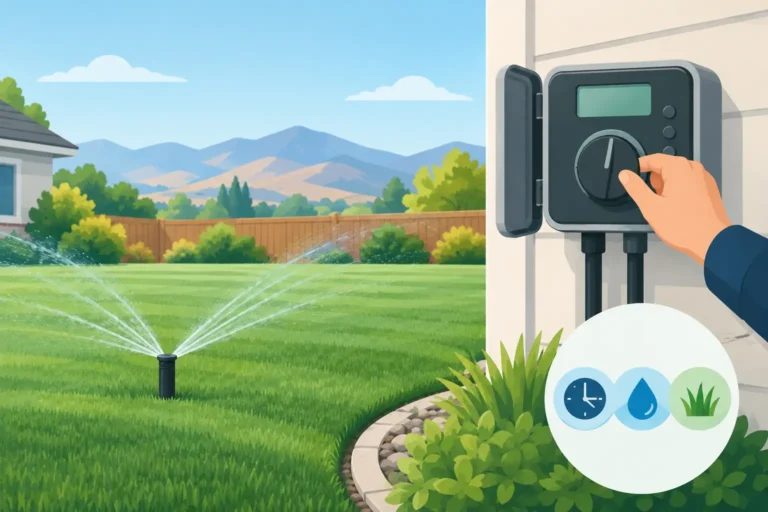
Pair it with simple irrigation checks: catch cups, a screwdriver for adjusting heads, and replacement nozzles when needed. Leveling without correcting uneven irrigation can leave the same pattern of stressed turf and soft, saturated pockets.
When Rental Equipment Makes Sense
Hand tools are effective for small corrections, but they become inefficient when the lawn is compacted, heavily thatched, or being renovated across a broad area. This is where equipment rental can make a better result possible without purchasing machines that may only be used once or twice a year.
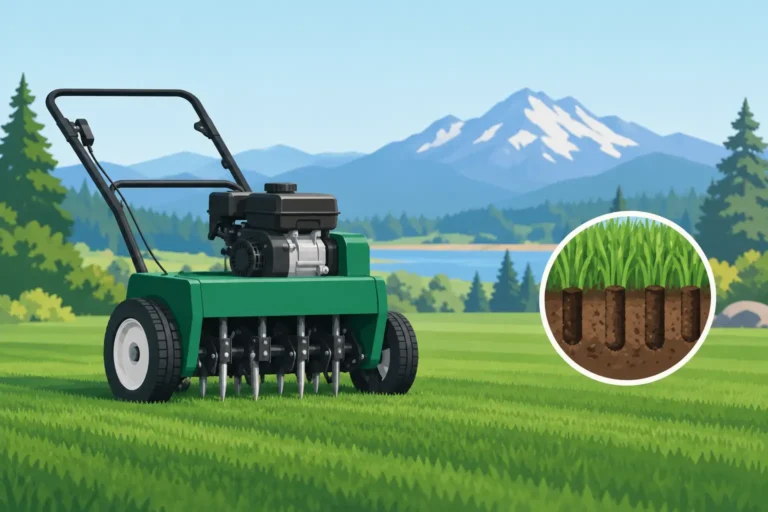
Core aerator
A core aerator removes plugs of soil, improving air movement and helping water enter compacted ground. Aeration is valuable before topdressing because it creates channels for compost and fine soil to work into the root zone. On Central Oregon sites with dense soil or high foot traffic, this step can be as important as the surface leveling itself.
Avoid aerating bone-dry ground. Water lightly in advance so the machine can pull clean cores, but do not work on wet soil that will smear and compact under the equipment.
Power rake or dethatcher
If a lawn has a thick thatch layer, topdressing can sit above the soil instead of improving it. A power rake removes excess thatch and helps expose the surface before overseeding or applying a leveling mix. It is a more aggressive tool than a simple rake, so adjust it carefully. Overworking a thin, drought-stressed lawn can create more recovery work than the project requires.
Topdresser
A topdresser applies a controlled, even layer of material over a lawn. It is one of the most efficient tools for a sizable lawn that needs widespread smoothing, compost incorporation, or overseeding preparation. The real advantage is consistency: an even application makes it easier to avoid burying existing turf in some areas while leaving others untouched.
A topdresser is not the right answer for deep holes or a severe grade. Repair those areas first, then use the machine to blend the finished surface across the lawn.
Sod cutter and tiller
For a lawn with extensive settling, poor soil, or major renovation needs, removing sod may be the honest starting point. A sod cutter lifts turf cleanly for relocation or disposal. A tiller can then incorporate amendments and help reshape the soil profile before new seed or sod goes down.
Tilling has trade-offs. It can bring up rocks and weed seeds, disturb soil structure, and create settling if the ground is not properly firmed afterward. In many established Central Oregon lawns, aeration and topdressing are less disruptive choices. Use a tiller when the root zone itself needs rebuilding, not simply because the surface has a few bumps.
Choose Leveling Material That Supports Turf
The material you spread matters as much as the tool used to spread it. Straight sand can improve surface smoothness in certain turf systems, but it is rarely the default answer for a residential High Desert lawn. Sandy native soils may already drain quickly and hold limited nutrients and moisture. Adding more sand without a plan can make drought stress worse.
A screened topdressing blend with quality compost and compatible soil is often a better fit. It can improve surface grade while adding organic matter, supporting soil biology, and increasing the root zone’s ability to hold water. The exact blend should reflect your current soil, grass type, irrigation capacity, and how much correction is needed.
After spreading, drag the material smooth, water it in lightly, and keep the surface consistently moist while grass grows through. If you are overseeding, choose a seed blend suited to Central Oregon’s short growing windows, cold winters, and water-wise expectations. Timing is usually more forgiving in early fall or spring than during the hottest part of summer.
A Better Leveling Plan Uses Less Water
A level lawn is easier to irrigate efficiently because sprinkler water reaches the turf more evenly and fewer areas require extra runtime. That does not mean every lawn should be perfectly flat. A subtle slope away from structures is purposeful, and some sites need drainage features that should not be erased for the sake of appearance.
For homeowners, the most successful projects usually begin with a small test area and a thin application of the right material. For landscapers and grounds crews, a clear grade check, proper material staging, and the right rental equipment can keep a renovation on schedule. Central Oregon Lawn Center can help match soil amendments, seed, and equipment to the conditions you are actually working with.
Take the time to level with the lawn’s long-term health in mind. A smoother surface, deeper roots, and more even irrigation will serve your property far better than a quick cover-up that returns as the next dry season arrives.