
Aerator Rental Review for Central Oregon Lawns
A useful aerator rental review starts with a question that matters more than the brand of machine: will core aeration solve the problem your lawn actually has? In Bend and across Central Oregon, lawns often struggle because of compacted soil, sandy ground with little organic matter, uneven irrigation, and a short growing window. A plug aerator can make a meaningful difference, but only when the lawn has enough moisture, active roots, and a practical follow-up plan.
For many homeowners and landscape professionals, renting a core aerator is a better choice than buying one. These machines are heavy, seasonal, and built for a demanding job. Renting gives you access to commercial-grade equipment for the weekend project when it counts, without storing, servicing, or transporting a machine the rest of the year.
Aerator Rental Review: What a Good Machine Should Do
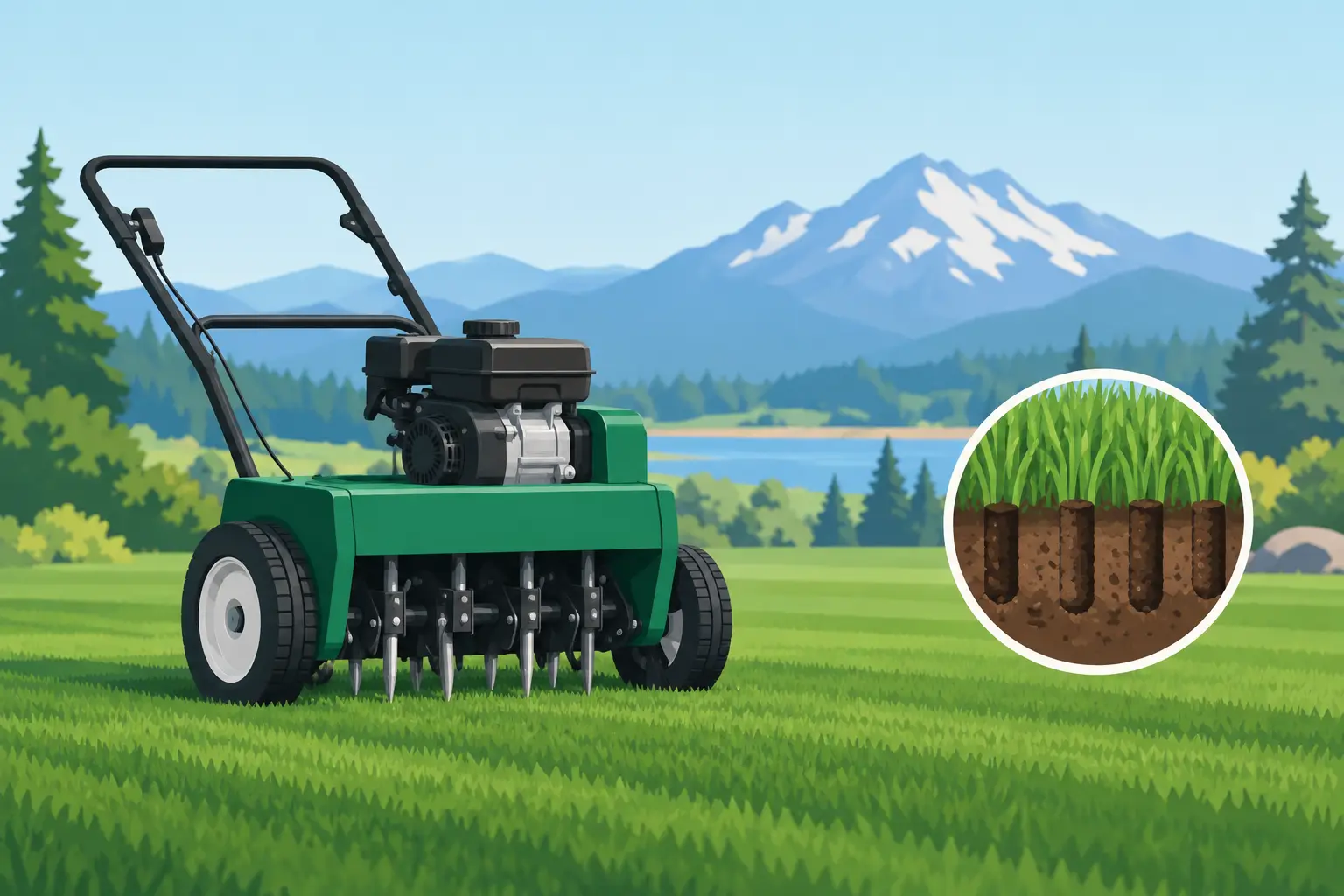
The right rental aerator removes small plugs of soil rather than simply poking holes in the surface. This is called core aeration or plug aeration. The open channels help water, oxygen, and nutrients move into the root zone, while the pulled cores gradually break down and return soil and organic material to the lawn.
That distinction matters. Spike aerators can be useful for light surface work, but they may compress soil around each hole, especially where the ground is dry and dense. For a Central Oregon lawn that has seen foot traffic, pets, mower traffic, or seasons of shallow watering, a true core aerator is generally the more effective rental.
A quality rental machine should have enough weight to penetrate soil, durable hollow tines, simple depth engagement, and a reliable drive system. It should also be sized for the property. A compact walk-behind unit is manageable for many residential lawns, while larger areas may justify a heavier self-propelled model or a plan that divides the work over two days.
The trade-off is physical effort. Even well-maintained walk-behind aerators are not casual garden tools. They are loud, heavy, and can pull hard when the tines are engaged. The best rental experience comes from choosing a machine that matches the lawn size and being honest about whether the turf, terrain, and access points are manageable for the operator.
When Renting an Aerator Makes Sense
Renting makes the most sense for an established lawn with visible compaction or poor water infiltration. If irrigation runs and water quickly puddles, rolls away, or struggles to soak in, aeration may help. The same is true when turf thins in high-traffic areas despite reasonable watering and fertilizing.
It is also a smart step before overseeding. Aeration creates pockets where seed can settle closer to the soil, improving seed-to-soil contact. This is especially helpful during lawn renovation, when a thin or patchy lawn needs more density without the expense and disruption of starting over with sod.
However, aeration is not a cure-all. It will not correct a poorly designed irrigation system, remove thatch that is excessively thick, repair a lawn damaged by grubs, or make poor soil fertile overnight. A lawn growing in very sandy High Desert soil may need compost, an appropriate soil amendment, and a fertilizer program along with aeration. If the real issue is drought stress or inadequate sprinkler coverage, renting a machine first may only add work without improving results.
For newer lawns, wait until turf is established and rooted well enough to handle the process. For lawns with serious weeds, address the weed pressure before adding seed through aeration. And if the ground is rock-hard from prolonged dry weather, do not expect even a commercial aerator to pull clean plugs without preparation.
The Best Timing for Central Oregon Turf
Timing is the difference between a productive aeration rental and a frustrating afternoon spent bouncing across dry soil. In Central Oregon, early fall is often the strongest window for core aeration and overseeding. Warm soil supports germination and root activity, while cooler air reduces stress on existing turf. There is also time for new grass to establish before winter.
Spring can work, particularly for lawns that need relief from compaction after winter or heavy use. The challenge is that spring conditions can be unpredictable, and weed germination is often more active. If you aerate in spring, focus on restoring soil access and healthy roots rather than forcing rapid growth with excessive fertilizer.
Avoid aerating when the lawn is bone dry or muddy. Water the lawn deeply one to two days before your rental period so the soil is moist enough for tines to penetrate and pull plugs. It should feel damp several inches below the surface, not slick or saturated. On sandy soil, that moisture may drain quickly, so check conditions instead of assuming a brief sprinkler cycle was enough.
How to Get Better Results From a One-Day Rental
Before picking up the machine, mow the lawn slightly shorter than normal and remove sticks, toys, hoses, and other obstacles. Mark sprinkler heads, shallow irrigation lines, landscape lighting, valve boxes, and any other buried or low-profile features. An aerator can damage these components, and a hidden sprinkler head can damage the machine as well.
Start with a perimeter pass, then work in straight overlapping rows. For compacted areas, making a second pass at a different angle can be worthwhile. This is especially effective along paths, gates, play areas, and the routes where mowers or wheelbarrows regularly travel. Do not feel obligated to double-pass every square foot if the lawn is large. Prioritize the areas that need it most.
Leave the soil plugs on the lawn. They may look messy for a few days, but they break apart with irrigation, weather, and mowing. Raking them up removes the very material that helps improve the surface layer of the soil.
If you plan to overseed, spread seed immediately after aerating, then apply a light compost topdressing if recommended for your lawn. Central Oregon lawns benefit from seed varieties selected for drought tolerance, cold winters, and local irrigation realities. Generic seed mixes may establish quickly but perform poorly once summer heat, dry air, and watering limits arrive.
Water consistently after overseeding, keeping the seed zone moist until germination. Then gradually shift toward deeper, less frequent irrigation as roots develop. This is where aeration delivers its long-term value: better water movement encourages roots to grow down rather than staying dependent on frequent shallow watering.
Rental Costs, Effort, and Practical Trade-Offs
The cost of an aerator rental is usually easier to justify when compared with purchasing a machine that may be used once a year. Still, the rental rate is not the only cost to consider. You may need a suitable vehicle or trailer for transport, help loading and unloading, fuel, and enough time to complete the job without rushing.
Ask about the machine’s working width, transport weight, tine condition, operating instructions, and whether a trailer is available. A narrow machine may fit through backyard gates but take longer on a large lawn. A wider unit can save time but may be difficult to maneuver around landscape beds, slopes, or tight corners.
Sloped lawns deserve extra caution. Core aerators are heavy, and turning or traversing a slope requires control. On a steep grade, it may be safer to aerate in careful passes or hire a professional with the right equipment and experience. Rental equipment is a practical solution, not a reason to take unnecessary risks.
At Central Oregon Lawn Center, the value of a specialty rental is not just access to the machine. It is the chance to pair the project with local guidance on seed, organic fertility, topdressing, and irrigation adjustments that support lasting results.
What to Do After Aerating
Aeration opens the door, but what happens next determines whether the lawn improves. Continue normal mowing once the turf is dry enough, keeping blades sharp and avoiding overly short cuts. A modest application of an appropriate fertilizer can support recovery, but more is not always better. Overfeeding can create soft, thirsty growth that is poorly suited to High Desert conditions.
Watch irrigation closely over the next few weeks. If water begins soaking in more evenly, resist the urge to water longer just because the lawn looks better. The goal is to use that improved infiltration to build deeper roots and reduce waste. Adjust run times based on weather, soil moisture, and how the lawn responds.
A rented aerator is most valuable when it is part of a larger plan: improve soil structure, choose grass suited to Central Oregon, water with purpose, and give new seed time to establish. A few clean plugs pulled at the right time can be the start of a lawn that needs less water, handles traffic better, and stays healthier through the season.