
Best Organic Fertilizer for Bend Lawns
A lawn can look fine in May and struggle hard by July in Bend. That is the reality of High Desert turf care. Dry air, sandy soil, intense sun, and irrigation limits all put pressure on grass, which is why choosing the right organic fertilizer for Bend lawns is less about chasing fast green-up and more about building a lawn that can actually hold up through the season.
Organic feeding works well here, but only when it matches local conditions. Bend lawns usually need more than nitrogen. They often need better soil structure, steadier moisture retention, and a feeding approach that supports root growth instead of pushing a flush of top growth that burns through water. That is the difference between a lawn that stays reasonably resilient and one that turns thin, pale, or patchy as summer settles in.
Why organic fertilizer makes sense in Bend
In Central Oregon, the soil itself is often part of the problem. Many lawns are established in sandy or low-organic-matter soils that drain quickly and do not hold nutrients for long. Synthetic fertilizers can make grass green fast, but they do not do much to improve the soil underneath. In some cases, they can push quick blade growth that increases mowing and water demand.
Organic fertilizers work differently. They feed the soil as well as the lawn, adding carbon-based material that supports microbial activity and improves nutrient cycling over time. That slower release is useful in Bend because grass is already managing drought stress, temperature swings, and a shorter growing season. A steadier feeding pattern is often more practical than a heavy shot of nutrients all at once.
That said, organic is not magic. If a lawn has compacted soil, poor irrigation coverage, or severe nutrient deficiencies, fertilizer alone will not fix it. The best results usually come when organic feeding is part of a broader plan that includes soil amendment, aeration when needed, and smarter watering.
What to look for in organic fertilizer for Bend lawns
Not every organic product is a good fit for High Desert turf. Some are too mild for lawns that are already stressed and underfed. Others work well, but only when the soil has enough microbial activity and moisture to break nutrients down.
For most Bend lawns, a good organic fertilizer should provide moderate nitrogen for steady color and growth, along with ingredients that support root development and soil health. Products made from natural meals, composted poultry materials, biosolids, humates, or other organic sources can all play a role, depending on the lawn and the time of year.
The key is balance. You want enough nutrition to improve vigor, but not so much that the lawn surges upward and demands extra irrigation. In Bend, that usually means avoiding a more-is-better approach. Slow, consistent feeding tends to produce better long-term turf performance than aggressive applications.
It also helps to pay attention to whether the product is truly organic-based or simply marketed with natural language. Some fertilizers blend organic inputs with synthetic nutrients. That can be useful in certain situations, especially on weak lawns that need a quicker response, but it is not the same as a fully organic program.
Soil health matters as much as fertilizer
A lawn in Bend often fails from the ground up. If the root zone is shallow, dry, or low in organic matter, even a quality fertilizer will have limited impact. Grass roots need a place to hold moisture and access nutrients over time. Sandy soils lose both too quickly.
That is why soil amendments are often part of a successful organic lawn program. Compost, humic substances, and other soil-building materials can help improve moisture retention and support better root function. Over time, that can reduce the feast-or-famine cycle many Bend lawns experience between irrigation events.
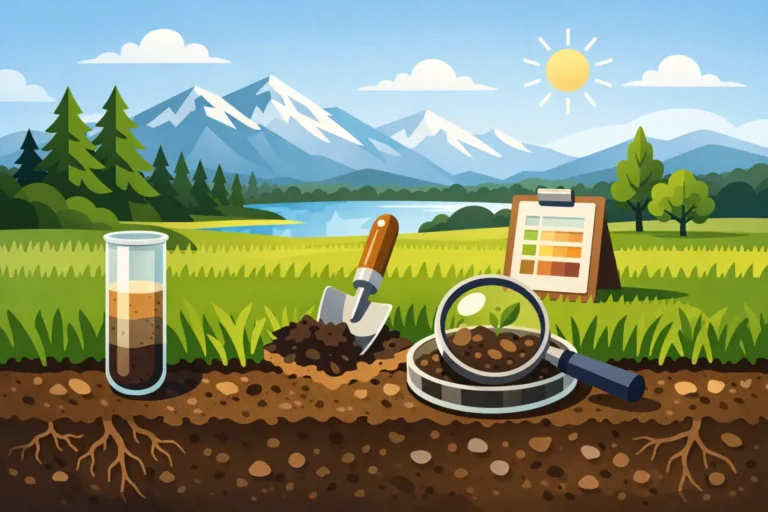
If your lawn is thinning despite regular feeding, it is worth looking below the surface. Hard soil, dry spots, and weak rooting are often signs that aeration or topdressing would do more good than simply adding another bag of fertilizer. In established lawns, organic fertilizer works best when the soil can actually make use of it.
When to apply organic fertilizer in Bend
Timing matters more than many homeowners realize. Because organic nutrients rely on soil biology and moisture to become available, applications should line up with active lawn growth and reasonable soil temperatures.
In Bend, spring is usually the first important feeding window, but not the earliest possible day on the calendar. If the ground is still cold and the lawn is barely waking up, nutrients may not move efficiently. A spring application makes the most sense once growth has started and the lawn can actually use the feed.
Early summer can be another appropriate time, though rates should be sensible. Feeding too heavily as heat and dryness build can create extra stress if irrigation is inconsistent. In many cases, a lighter summer approach is better than a strong push.
Fall is often the most rewarding season for organic fertilizer for Bend lawns. Cooler temperatures and more favorable growing conditions allow grass to recover, root, and thicken without the same level of summer stress. For many lawns, fall feeding helps more than a heavy midsummer application ever will.
Watering and organic feeding need to work together
A common mistake in Central Oregon is treating fertilizer and irrigation as separate issues. They are connected. Organic fertilizers depend on moisture to activate soil life and move nutrients through the root zone. At the same time, overwatering can waste both water and nutrients.
The goal is consistent, efficient irrigation. Deep, well-timed watering encourages deeper roots and helps the lawn use the nutrients you apply. Shallow, frequent watering tends to promote weaker rooting and uneven performance, especially in sandy soils.
Coverage matters too. If your irrigation system leaves dry edges or inconsistent zones, the lawn may respond unevenly no matter how good the fertilizer is. Before blaming the product, it is worth checking sprinkler performance, run times, and whether water is actually reaching the full root zone.
Organic vs. synthetic in High Desert conditions
There is a reason some people still prefer synthetic fertilizer. It is fast, predictable, and often delivers quick color. For a lawn that needs immediate improvement before an event or listing, that short-term response can be appealing.
But in Bend, fast green does not always equal durable turf. A synthetic-heavy approach can create a cycle where the lawn looks good briefly, then struggles more when heat, irrigation pressure, or soil limitations catch up. Organic programs usually build slower, but they tend to support steadier performance and healthier soil over time.
For some properties, the best answer is not purely one or the other. It depends on lawn condition, maintenance goals, and timing. A newly renovated lawn, a heavily used area, or a site with poor soil may need a more tailored approach than a simple all-organic schedule. The important part is choosing inputs based on how Bend lawns actually behave, not on generic national advice.
Signs your lawn may need more than fertilizer
If grass stays pale, thin, or uneven after feeding, the issue may be deeper than nutrition. Bend lawns commonly struggle with compaction, shallow root zones, poor seed selection, and irrigation mismatch. In those situations, adding more fertilizer often leads to disappointment.
A lawn renovation may be the better investment if the stand is sparse or full of weak grass varieties that are not suited to High Desert wear and drought. Overseeding with a region-appropriate blend, followed by proper soil prep and organic feeding, can produce much better results than trying to revive a lawn that was never well matched to the site.
This is where local guidance matters. Central Oregon Lawn Center works with homeowners and professionals who need solutions based on actual Bend conditions, not shelf labels written for completely different climates. Sometimes the right recommendation is fertilizer. Sometimes it is aeration, topdressing, overseeding, or irrigation correction first.
Choosing the best path for your lawn
The best organic fertilizer for Bend lawns is the one that fits your soil, your grass, and your watering reality. For some lawns, that means a steady seasonal organic program with soil-building amendments. For others, it means addressing compaction or dry soil first so the fertilizer can do its job.
If you want a lawn that handles summer better, start by thinking beyond color. Look for stronger roots, better moisture retention, and more even growth through the season. In Bend, those are the real signs that your fertilizer program is working.
A greener lawn is great. A lawn that stays healthier with less stress and fewer inputs is better, and that is usually where organic care earns its place.