Trencher Rental for Irrigation Lines
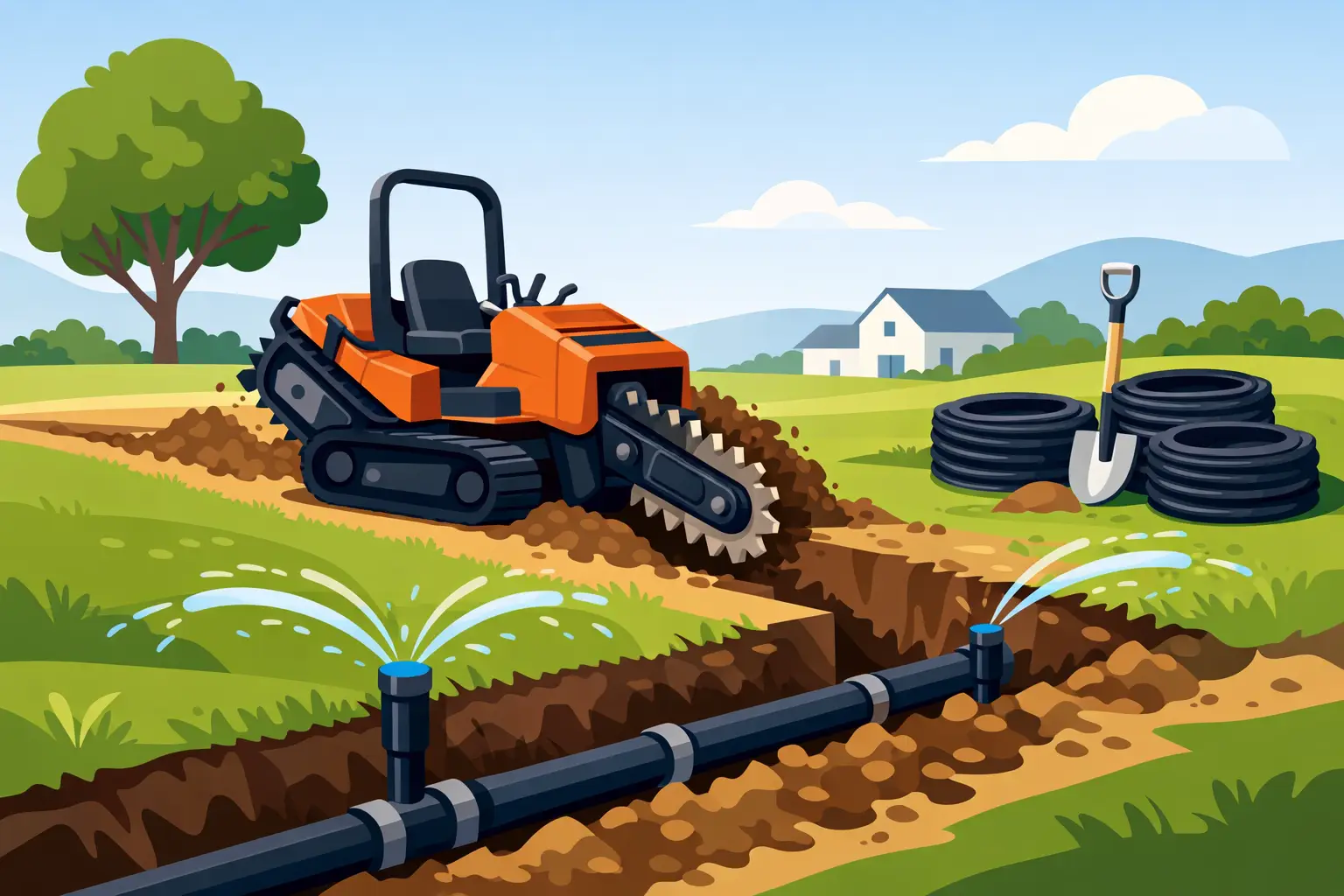
If you have ever tried to cut irrigation pipe trenches by hand in Central Oregon, you already know how quickly a simple weekend project can turn into hard, slow work. Trencher rental for irrigation lines makes sense when you need clean, consistent trenches without spending days fighting compacted soil, rock, and dry ground that does not give easily.
For homeowners adding a new sprinkler zone and for landscapers trying to stay on schedule, the real question usually is not whether a trencher helps. It is whether renting one is the right move for the specific site, soil conditions, and irrigation layout you are working with. Around Bend and the surrounding High Desert, that answer depends on more than just trench length.
When trencher rental for irrigation lines makes sense
A trencher earns its keep when the job is long enough, the soil is firm enough, or the deadline is tight enough that hand digging becomes the expensive option, even for do-it-yourself work. If you are installing a full lawn irrigation system, extending lines to a new planting area, replacing aging lateral lines, or adding sleeves under future landscape zones, a rental can save a great deal of labor.
It is especially useful when you need a steady trench depth. Irrigation lines that wander too shallow can become vulnerable to damage from edging, aeration, or later landscape work. Trenches that vary too much in depth also make installation slower because you end up reworking sections that should have been done once.
That said, renting is not always the best answer. Small repair jobs, short runs in tight side yards, or areas with dense tree roots may still be faster with a shovel and trenching spade. A machine is efficient, but only where it has room to work and where the soil conditions fit the equipment.
Central Oregon soil changes the job
This is where local experience matters. Central Oregon landscapes often combine sandy soils, volcanic rock, compacted subgrade, and dry top layers that harden significantly during hot stretches. In some neighborhoods, a trencher will move cleanly through the ground. In others, buried rock can slow progress or force adjustments to the route.
Dry soil can also be deceptive. A yard may look easy to cut until the machine starts bouncing across a baked surface. If the ground is extremely hard, lightly moistening the trench path beforehand can improve cutting, but you do not want saturated soil either. Mud slows the machine, sticks to components, and creates a mess around the trench line.
This is one reason timing matters. Spring and early fall are often the most forgiving seasons for irrigation trenching. Mid-summer projects are still common, but the ground is usually harder and dustier, and that can add wear, cleanup, and operator fatigue.
Choosing the right trencher for irrigation work
Not every trenching machine fits every irrigation job. For most residential irrigation lines, you are looking for a trencher that can cut narrow, manageable trenches suited to pipe installation without overexcavating the yard. A trench that is wider than necessary means more backfill, more surface disturbance, and more finish work afterward.
Walk-behind trenchers are often a good fit for residential lawn and landscape projects because they can maneuver through gates and around tighter spaces better than larger ride-on machines. They are also easier to control when the trench route curves around planting beds, patios, or existing irrigation zones.
Larger units can be the better choice for long, open runs or commercial work, but more machine is not always more efficient. A large trencher in a small backyard can create unnecessary damage, especially if access is limited or the route passes close to established turf and ornamentals.
If you are not sure which size fits your project, it helps to know the trench length, intended pipe depth, width of access gates, and whether you will be crossing areas with roots, gravel, or heavier traffic compaction.
How deep should irrigation lines be?
Depth depends on the system design, pipe type, and where the line is located, but many residential irrigation lines are installed in shallow to moderate trenches rather than at the depths used for utility service. The goal is usually to protect the pipe from routine surface activity while still keeping the installation practical and serviceable.
For many lawn irrigation systems, consistency matters as much as exact depth. A trench that stays uniform is easier to pipe, easier to backfill, and less likely to create future weak points. If one section is barely covered and another is much deeper than planned, pressure fittings, swing joints, and pipe layout can become harder to manage.
You also need to think beyond today’s installation. Will the area be aerated later? Will the lawn be renovated? Could edging or future planting work disturb a shallow lateral line? Those are practical questions in Central Oregon landscapes, where renovation and irrigation upgrades often happen in phases.
Before you rent, plan the trench route carefully
A trencher is fast once it is moving, but mistakes happen even faster when the route is not planned. Mark sprinkler heads, valves, sleeves, wire paths, and any obstacles before the machine arrives. Call for utility locates well ahead of the rental date. Even on a straightforward irrigation project, underground surprises can turn a productive day into a costly one.
It also helps to think about the sequence of the work. If you are renovating turf, amending soil, or reshaping planting beds, trench first whenever possible. Cutting trenches through a finished lawn or freshly prepared surface creates extra repair work you could have avoided.
For water-wise landscapes, trench planning also gives you a chance to separate hydrozones intelligently. Turf, low-water shrubs, and seasonal planting beds should not always be on the same schedule. If you are opening the ground anyway, it is worth designing the system so irrigation supports healthier plants and avoids unnecessary water use.
What to expect on rental day
If this is your first trencher rental for irrigation lines, expect a learning curve, but not a steep one if you receive proper operating guidance. The machine does the heavy cutting, but the operator still needs to control pace, alignment, and depth. Going too fast can produce rough trenches and added strain on the equipment. Going too slow in rocky soil can create chatter and uneven cuts.
You should also expect cleanup. Trencher spoils pile along the trench line, and while that is far easier than hand digging, it still requires management during pipe installation and backfilling. In lawn areas, keeping spoils organized helps protect surrounding turf and makes final grading much easier.
Footing matters too. Dust, loose soil, and uneven terrain can make operation awkward if you are tired or rushing. Good boots, gloves, eye protection, and a clear work area make a noticeable difference over the course of the day.
Renting vs. hiring out
There is no one-size-fits-all answer here. Renting is often the better value when you are comfortable laying out the irrigation system, have straightforward access, and want to control the schedule yourself. It is also a smart option for professionals who already know the installation process and simply need dependable equipment for the day.
Hiring out may make more sense when the site has utility conflicts, steep grades, extensive roots, or a complicated irrigation redesign. The same is true if the project includes troubleshooting pressure issues, zoning changes, valve relocation, or repairs to an older system that was never mapped clearly.
The trade-off is simple. Renting saves money when the project is organized and manageable. Hiring out can save money when inexperience, rework, or site complications would otherwise slow the job and increase the chance of damage.
Getting better results from the trench
Good trenching is not just about getting pipe underground. It is about leaving the site in a condition that supports long-term irrigation performance and a clean finish. Keep trench lines as direct as practical, but do not force a route that cuts through roots, hardscape pinch points, or future problem areas. A slightly longer path is often the better path.
Backfill matters as much as excavation. Large rocks left against the pipe can create wear points over time. Soil should be returned carefully and compacted enough to reduce settling without crushing components or creating low spots in the lawn.
If you are trenching through existing turf, save time for repair. Even a well-operated trencher disturbs the surface. In Central Oregon, fast recovery depends on proper soil preparation, appropriate seed or patching strategy, and irrigation scheduling that matches our dry climate instead of fighting it.
For homeowners and contractors alike, this is where a local equipment and supply partner can make the project smoother. Central Oregon Lawn Center works with customers who need not only the right rental equipment, but also practical advice on irrigation supplies, lawn recovery, and water-wise installation choices that fit our region.
A trencher can turn a backbreaking irrigation project into a manageable one, but the best results come from matching the machine, the route, and the timing to the ground you are actually working with. In Central Oregon, that local judgment is often the difference between getting it done and getting it done right.