
Why Is My New Grass Dying? Central Oregon Fixes
A new lawn can look promising on Saturday and thin, pale, or crispy by the following weekend. If you are asking, “why is my new grass dying,” the answer in Bend is rarely just that it needs more water. Young turf in Central Oregon is establishing itself in sandy soil, dry air, wind, intense sun, and a short growing window. The right correction depends on whether the grass is drying out, staying too wet, failing to root, or simply not suited to the site.
Young Grass Is Vulnerable Before Its Roots Are Deep
New seed and new sod both need consistent moisture, but they behave differently. Seedlings have tiny roots close to the surface, so they can dry out quickly when a warm afternoon and afternoon wind pull moisture from the top inch of soil. Sod arrives with more leaf area and an existing root system, but it still needs to knit into the soil beneath it. If the soil below the sod is dry, compacted, or uneven, the roots may never establish properly.
The High Desert adds another challenge: soil can appear wet at the surface while moisture has moved quickly beyond the shallow roots that new grass depends on. Conversely, frequent irrigation can keep the surface constantly soggy, limiting oxygen around the roots and encouraging disease. Healthy establishment is a balance between keeping the root zone evenly moist and allowing the soil to breathe.
Why Is My New Grass Dying in Central Oregon?
The watering schedule does not match the lawn’s stage
The most common issue is watering too little, too much, or at the wrong intervals. Newly seeded areas generally need light, frequent watering until germination and early root development. The surface should stay damp, not puddled. Once seedlings are up and becoming established, gradually shift toward less frequent, deeper watering to encourage roots to follow moisture downward.
New sod needs a deeper soak immediately after installation, followed by consistent watering that keeps both the sod and the soil underneath moist. Lift a corner after several days if possible. The soil beneath should feel moist, and early white roots should begin moving into it. If the sod lifts easily or feels dry below, it has not received enough water where it counts.
Do not rely only on a timer. Runoff, sprinkler coverage, slope, wind, and soil texture all affect what reaches the lawn. Check several areas by hand, especially edges, sunny strips near pavement, and sections farthest from the sprinkler head.
Sandy or compacted soil is working against the roots
Central Oregon soils often drain quickly and may contain little organic matter. That means they do not hold water and nutrients as effectively as a richer loam. A new lawn can dry out between irrigation cycles even when the lawn was watered recently.
Compaction creates the opposite problem. Water may pool on top, then run off rather than soak in. Roots struggle to push through dense soil, leaving grass vulnerable to heat and drought stress. Before seeding or laying sod, loosening the topsoil and incorporating an appropriate soil amendment can make a major difference. After the lawn is established, core aeration and topdressing can improve soil structure without starting over.
Seed timing or seed selection is off
Grass seed has a narrow window for successful establishment. Cool-season turf performs best when soil temperatures support germination without the pressure of summer heat. Spring seeding can work, but a late start may leave seedlings immature when hot, dry weather arrives. Early fall is often an excellent establishment period because the soil is warm while daytime stress is easing.
The seed blend matters, too. A generic mix selected for wetter climates may not have the drought tolerance, traffic tolerance, or recovery ability needed for a Central Oregon yard. A locally appropriate blend is worth more than a bargain bag when it reduces reseeding, water demand, and frustration later.
Wind, heat, and reflected sun are drying the lawn faster than expected
New grass near south-facing walls, driveways, rock beds, and fences can struggle even when the rest of the lawn looks fine. Those surfaces reflect heat, and exposed sites lose moisture quickly in Central Oregon’s low humidity. Wind can be just as damaging, especially on open lots and newly built properties without established trees or windbreaks.
If damage is limited to hot or exposed areas, adjust irrigation coverage rather than treating the whole lawn the same way. A brief extra cycle in the morning may help during establishment, provided it does not create runoff. Lightly raking away heavy debris, correcting sprinkler gaps, and keeping foot traffic off stressed areas can also protect young plants.
Fertilizer, herbicides, or pet traffic caused damage
New grass is easy to burn. Too much fertilizer, especially a fast-release product applied to dry soil, can damage roots and create brown streaks. Weed-and-feed products and many herbicides are also poor choices for newly seeded lawns because young turf is sensitive to them.
Dog urine, concentrated foot traffic, mower turns, and equipment tires can create small but noticeable dead patches before the lawn has rooted. These problems usually have a pattern: damage appears in paths, corners, or spots where a product was spilled or applied unevenly. Treat the cause first, then repair thin areas once the lawn has recovered.
Read the Symptoms Before Making a Big Change
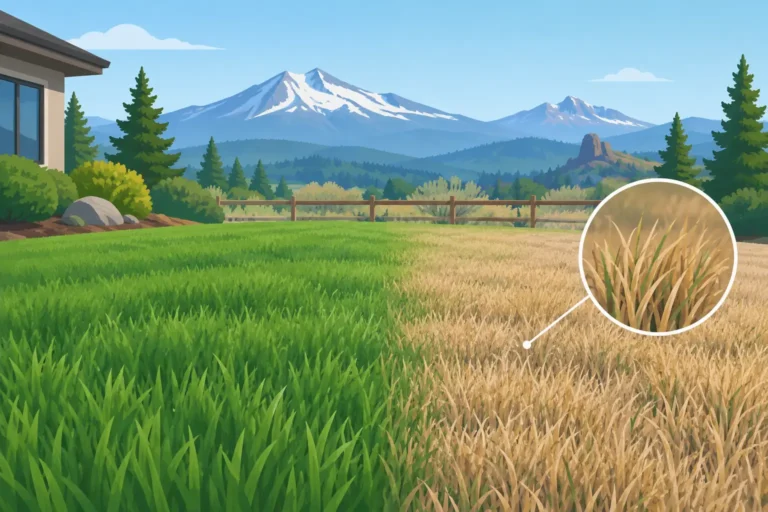
Color and pattern offer useful clues. A uniformly gray-green lawn that quickly turns tan often points to drought stress or missed sprinkler coverage. Grass that is yellow, thin, and soft in persistently wet areas may be dealing with poor drainage, shallow roots, or disease pressure. Brown edges around a lawn are often an irrigation pattern issue, while scattered circular patches may need a closer look at watering, soil, or pet activity.
Try a simple soil check before changing your entire schedule. Push a screwdriver or soil probe into the lawn after watering. If it only enters an inch or two, the soil may be compacted or the water may not be infiltrating. If it sinks easily but the top layer is dusty by afternoon, the soil is likely draining too fast for the current schedule.
For sod, pull gently on a few pieces. Resistance means roots are starting to anchor. For seed, look closely at the crown of the plant. If the base is still green and the roots are holding soil, the lawn may be stressed but recoverable. Do not reseed immediately just because leaf tips are brown. Give the area the correct moisture and a few days to respond.
How to Help New Grass Recover
Start by correcting irrigation coverage and duration, not by adding more products. Water early in the morning so leaves can dry after the irrigation cycle. For seed, keep the upper soil surface consistently damp until the young plants are established, then reduce frequency gradually while increasing soak time. For sod, water deeply enough to moisten the soil beneath it, then taper frequency as it roots in.
Avoid mowing until seedlings are established enough to reach roughly 3 to 4 inches, or until sod has rooted firmly. Use a sharp mower blade and remove no more than one-third of the grass height. Cutting too short exposes young roots to more heat and moisture loss. In Central Oregon, maintaining a slightly taller mowing height helps shade the soil and supports deeper roots.
If the soil is poor, address it thoughtfully. A quality compost topdress or locally appropriate soil amendment can improve moisture retention and microbial activity, but do not bury seedlings under a heavy layer. Thin, failing areas may need light overseeding after the underlying issue is fixed. Seed will not solve an irrigation gap, compacted soil, or a sprinkler head that misses half the lawn.
Hold off on aggressive fertilizer, weed control, and heavy traffic while the lawn is establishing. If nutrition is needed, use a product appropriate for young turf and apply it at the recommended rate. More fertilizer will not make weak roots establish faster.
Prevent the Same Problem on the Next Patch
Before repairing bare spots or installing another section of sod, prepare the site for the lawn you want to keep. Level low spots so water does not pool, loosen compacted ground, and make sure irrigation reaches the entire area. Consider the microclimate as well. A shaded backyard, an exposed sunny side yard, and a strip beside a driveway may need different irrigation adjustments even though they are part of the same property.
For larger renovations, the right equipment can save significant time and improve results. A power rake can remove heavy thatch and debris, an aerator can open compacted soil, and a topdresser helps apply material evenly. Central Oregon Lawn Center can help homeowners and landscape professionals match seed, soil products, irrigation supplies, and rental equipment to the conditions they are actually working with.
A struggling new lawn is not necessarily a lost lawn. Check the moisture below the surface, study the pattern of the damage, and make one targeted correction at a time. That patient approach gives young grass its best chance to build the deep roots it needs for a healthy High Desert lawn.