
Is Organic Lawn Fertilizer Worth It in Bend?
A lawn in Bend can look green one week and stressed the next, even when it is getting regular water. Sandy soil, dry air, intense summer sun, and a short growing season give turf very little margin for error. So, is organic lawn fertilizer worth it for a Central Oregon lawn? Often, yes – especially when the goal is to improve the soil beneath the grass rather than push fast top growth that demands more water.
Organic fertilizer is not a shortcut, and it is not the right answer to every lawn problem. But for homeowners and landscape professionals working with High Desert soil, it can be a practical long-term investment in healthier turf, stronger roots, and more efficient water use.
Why Central Oregon Lawns Need More Than a Quick Green-Up
Many lawns in our area are growing in soil with low organic matter and limited ability to hold moisture or nutrients. Water can move through sandy ground quickly, taking soluble nutrients with it. A conventional fast-release fertilizer may produce a noticeable burst of color, but that response can be temporary. It may also encourage tender top growth before the lawn has built the root system needed to handle heat, traffic, or an irrigation interruption.
Organic lawn fertilizers work differently. Their nutrients are generally released as soil microorganisms break down natural materials. That slower process supports steadier feeding rather than a dramatic surge. Just as important, many organic programs contribute organic matter that improves soil structure over time.
That matters in Bend, Redmond, Sisters, and surrounding communities. Better soil structure means more room for roots, improved moisture retention, and less dependence on perfect irrigation timing. Fertilizer alone will not turn poor soil into rich loam, but the right organic product used consistently can move a lawn in the right direction.
Is Organic Lawn Fertilizer Worth It for Your Yard?
It is worth it when you are managing for durable turf, not just immediate color. Organic fertilizer tends to make the most sense for established lawns with thin, tired, compacted, or sandy soil, as well as newer lawns you want to establish with strong roots from the beginning.
It can also be a good fit if children, pets, pollinators, and nearby waterways factor into your product choices. “Organic” does not mean a product is harmless in any amount, so application rates still matter. However, slow-release organic nutrient sources generally present less risk of the quick flushes and nutrient leaching associated with some highly soluble products.
The payoff is usually gradual. Expect improved color, density, and resilience over a season or two, particularly when fertilizer is paired with proper mowing, irrigation, aeration, and overseeding. If you need a dark-green lawn for an event next weekend, organic fertilizer may not give you the fast cosmetic result you want. For a lawn that needs to survive Central Oregon summers with fewer headaches, it is often the better strategy.
What You Are Really Paying For
Organic products can cost more per bag than conventional lawn fertilizers. That upfront difference is real, and it is reasonable to weigh it against your lawn budget. The comparison gets more useful when you look beyond bag price.
A quality organic fertilizer may help reduce the need for repeated corrective treatments by supporting root growth and soil biology. A lawn with deeper roots is better able to use the water already available in the root zone. Over time, that can mean fewer stress-related thin spots and a better chance of recovering from heat, foot traffic, and winter damage.
Still, organic fertilizer is not automatically more economical in every situation. A severely nutrient-deficient lawn may need a carefully selected, targeted nutrient application before a slower organic program can fully carry the load. The best approach is based on the soil, grass type, irrigation setup, and the result you are trying to achieve.
The Trade-Off: Slow Release Requires Patience
The main trade-off is timing. Organic fertilizers depend on biological activity, and soil microbes are less active in cold conditions. In Central Oregon, that means an early-spring application may not create an instant response if the soil is still cool.
For cool-season turf, feeding is generally most productive when the grass is actively growing. Late spring can be useful after the lawn has started moving, while late summer and early fall are especially valuable windows for root development, recovery, and overseeding. Avoid pushing heavy fertilizer during the hottest, driest stretch of summer. Even organic fertilizer cannot compensate for heat stress or inadequate irrigation.
Application also needs to be even. Use a properly calibrated spreader and follow the product label rather than assuming more fertilizer will create a better lawn. Overapplication wastes money and can still cause problems, including excess growth, thatch concerns, and unnecessary nutrient movement.
Organic Fertilizer Works Best as Part of a Lawn Plan
A fertilizer program should support the lawn system, not substitute for it. If water is running off before it soaks in, the soil is compacted, or the grass is being cut too short, fertilizer cannot solve the underlying issue.
For many High Desert lawns, the strongest results come from combining organic fertilizer with a few practical habits:
- Mow cool-season grass high enough to shade the soil and protect roots. Scalping exposes the crown, dries the surface faster, and invites weeds.
- Water deeply enough to encourage roots to move downward, then adjust frequency for weather, soil, and local watering restrictions. Daily shallow watering often creates shallow roots.
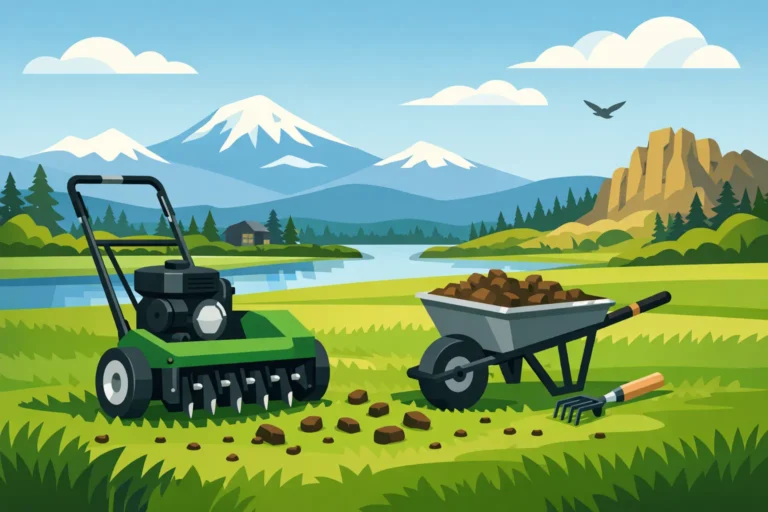
- Aerate compacted turf so water, air, and nutrients can reach the root zone. Core aeration is particularly helpful before overseeding or topdressing.
- Add compost or an appropriate soil amendment where organic matter is low. This can improve water-holding capacity in sandy areas more effectively than fertilizer alone.
- Overseed thinning lawns with a grass blend selected for Central Oregon conditions. Fertilizer helps existing grass, but it cannot fill empty space without seed.
These practices are not extras for a struggling lawn. They are the work that allows fertilizer to do its job well. Central Oregon Lawn Center can help match organic fertilizer, seed, amendments, and rental equipment to the condition of your turf instead of sending you home with a one-size-fits-all program.
How to Choose an Organic Lawn Fertilizer
Start by looking at the nutrient analysis on the bag. The three numbers represent nitrogen, phosphorus, and potassium. Established lawns typically need nitrogen most often, but the best ratio depends on your soil and whether you are maintaining turf, establishing seed, or repairing damage.
Look for a product designed for lawns rather than a general garden fertilizer. Lawn-specific formulas are built around the nutrient needs of turf and are often easier to apply evenly with a broadcast spreader. Some organic fertilizers also include beneficial ingredients such as humic substances, compost-based materials, or micronutrients. These may be useful, but they are not a replacement for addressing compaction, poor irrigation coverage, or low-quality soil.
A soil test is especially helpful if your lawn repeatedly looks pale, grows poorly despite fertilizing, or has uneven performance from one area to another. High pH soils are common in dry regions and can affect how available certain nutrients are to grass. Testing prevents guesswork and helps avoid applying nutrients your lawn does not need.
Do Not Confuse “Natural” With a Complete Plan
Product labels can be confusing. “Natural,” “organic-based,” and “organic” do not always mean the same thing, and some products blend organic ingredients with synthetic nutrients. That does not make them bad products. A blended fertilizer can be a sensible choice when a lawn needs both an immediate response and longer-term feeding.
The key is to choose intentionally. If your priority is rebuilding sandy soil and supporting a low-input, water-wise lawn, a fully organic slow-release product may be the better fit. If you are renovating a heavily worn lawn or correcting a specific deficiency, a targeted blended approach may produce better results. The label, the timing, and the lawn condition matter more than a marketing claim on the front of the bag.
When Organic Fertilizer May Not Be the First Fix
If grass is brown because irrigation coverage is poor, fertilizer will not bring it back. If a lawn is thinning because of shade, heavy traffic, grub damage, or a dull mower blade, feeding alone will not solve the problem either.
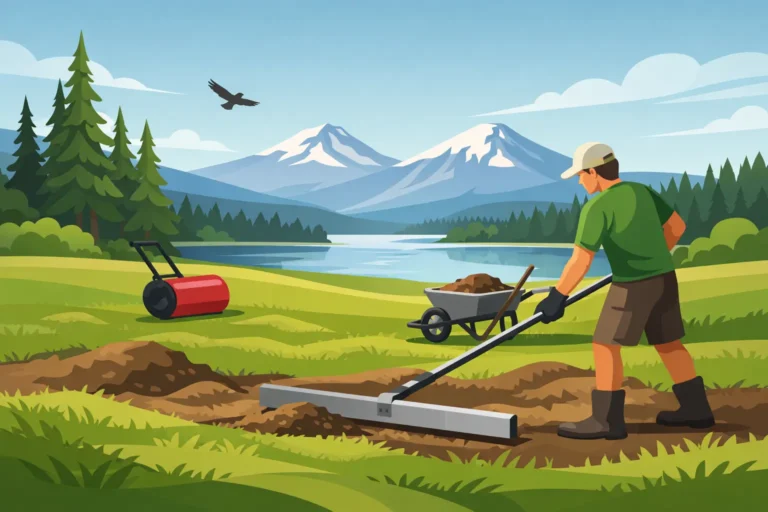
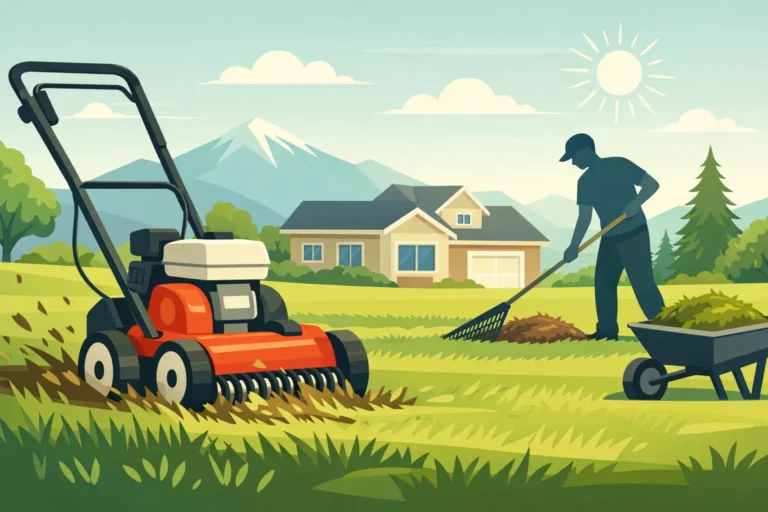
Likewise, a newly seeded area needs consistent moisture and good seed-to-soil contact before nutrient choices become the main concern. In a renovation, power raking, aeration, topdressing, and using an appropriate seed blend may deliver a bigger improvement than changing fertilizer products alone.
The practical question is not whether organic fertilizer is universally better. It is whether it fits the condition of your lawn and the kind of lawn care you want to practice. For many Central Oregon properties, steady soil improvement is a better use of effort than chasing a fast green-up that fades when summer gets demanding.
Before your next application, take a close look at the lawn after irrigation. Check whether water is soaking in, whether roots are shallow, and whether thin areas are caused by soil, seed, shade, or traffic. Those observations will point you toward a fertilizer program that supports a healthier lawn instead of simply making it look better for a few weeks.