
Hydroseed vs Sod Installation in Central Oregon
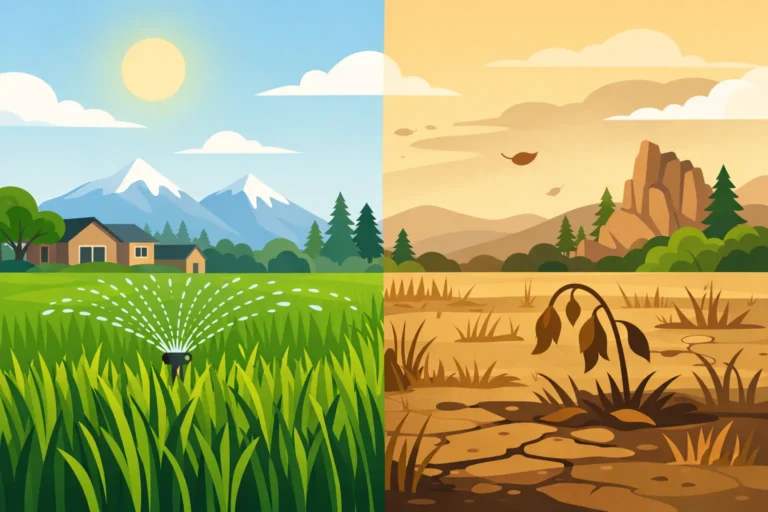
A new lawn can look dramatically different six weeks from now depending on how it starts. When weighing hydroseed vs sod installation, Central Oregon homeowners and landscapers need to consider more than speed and appearance. Our dry High Desert climate, sandy soils, intense summer sun, spring winds, and short establishment window all affect whether seed or sod will hold up after the first season.
Both methods can produce healthy turf when the site is prepared correctly and irrigation is managed well. The better choice comes down to your timeline, budget, site conditions, and willingness to provide close attention during establishment.
Hydroseed vs Sod Installation: The Main Difference
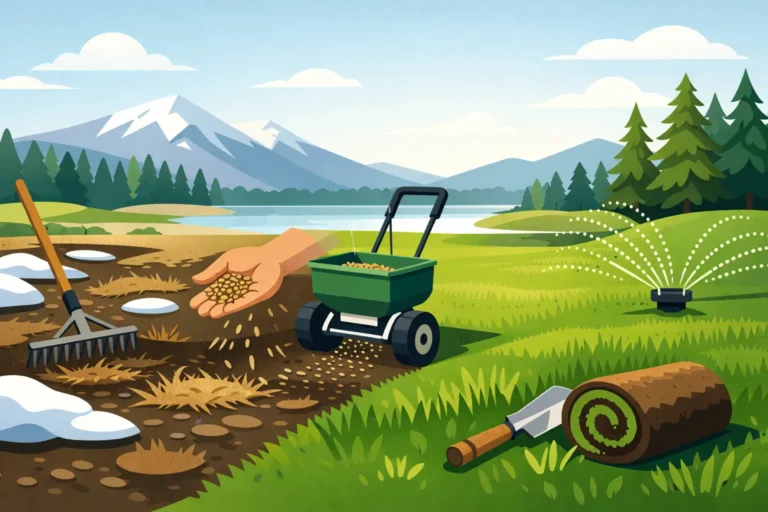
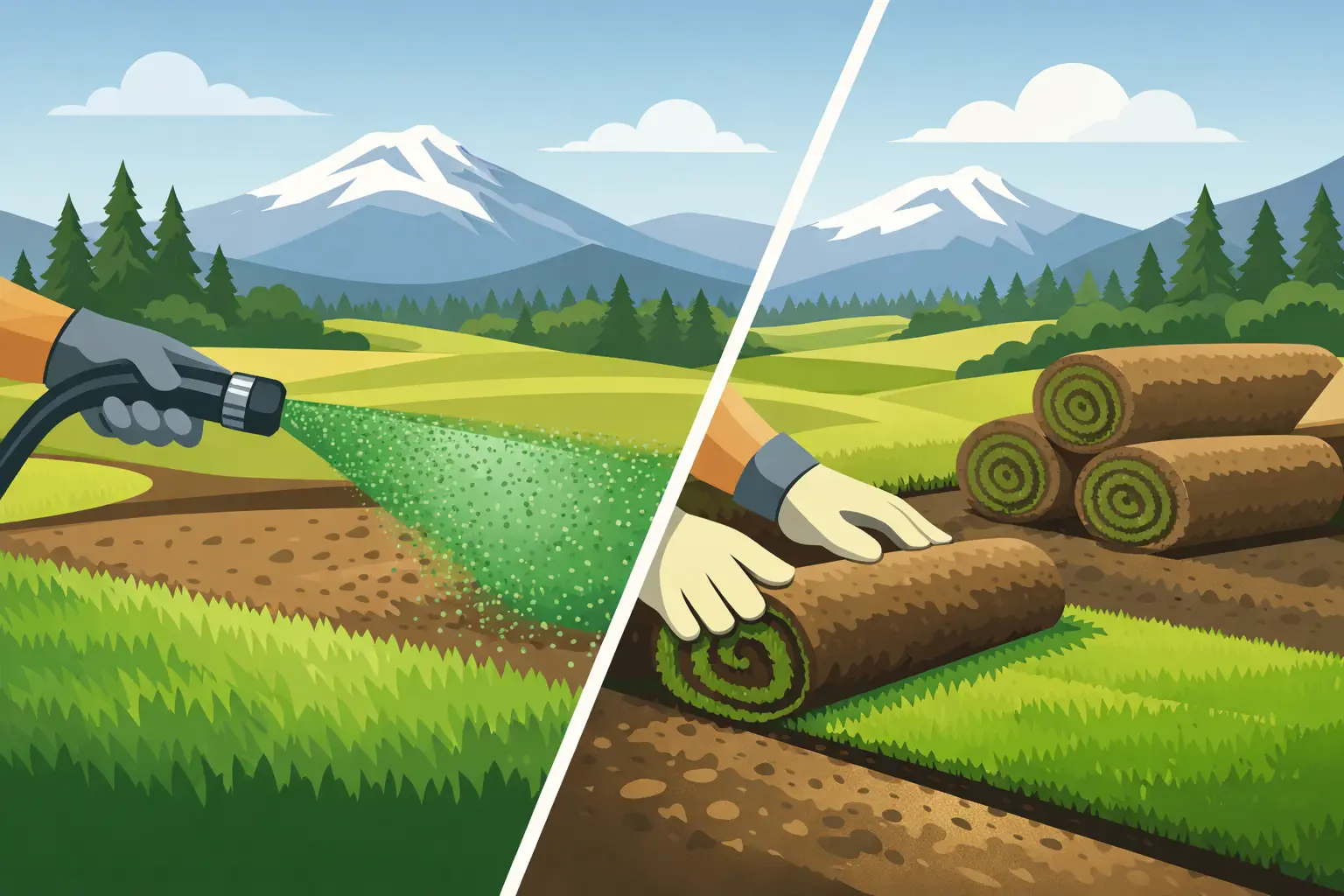
Hydroseeding applies grass seed in a slurry of water, mulch, fertilizer, and sometimes soil amendments or tackifier. The mulch helps hold moisture at the soil surface, protects seed from wind, and makes coverage easier to see. It is especially useful for broad areas, slopes, and properties where traditional dry seeding would be difficult to distribute evenly.
Sod installation uses mature turf that has been grown elsewhere, harvested in rolls or slabs, and laid over prepared soil. It creates an immediate green surface, which is why it is appealing for homes going on the market, new construction projects, and spaces that need a finished look quickly.
That immediate appearance does not mean sod is instantly established. Its roots still need to knit into the soil below. Hydroseed takes longer to look finished, but it develops directly in the soil where it will live. Neither method is a shortcut around soil preparation or proper irrigation.
When Hydroseed Makes Sense
Hydroseeding is often the practical choice for larger lawns, acreage, open commercial areas, and slopes. The upfront cost is generally lower than sod, particularly when covering a substantial area. It also gives you more flexibility with grass selection, which matters in Central Oregon where a generic lawn mix may not be the best fit for sun exposure, irrigation capacity, soil conditions, or expected traffic.
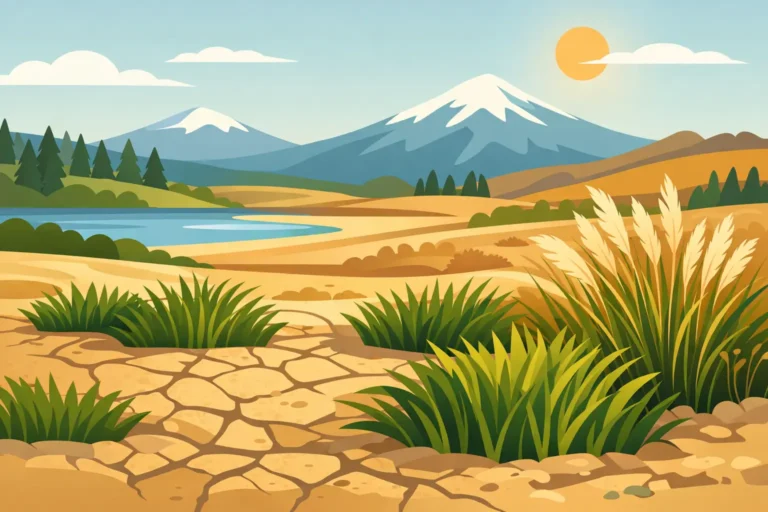
A locally appropriate blend can include turf types selected for drought tolerance, cold hardiness, repair potential, and a realistic maintenance level. That matters more than choosing a lawn by its label photo. A lawn that requires constant water to stay dark green may be a poor long-term fit for a High Desert property.
Hydroseed does require patience. Depending on temperatures and the seed blend, germination may begin within a week or two, but full coverage takes time. Early growth can look uneven before the lawn fills in. Wind can also be a challenge in exposed areas if mulch coverage is too light or irrigation is inconsistent.
The biggest advantage is the opportunity to build the lawn from the soil up. Before hydroseeding, you can incorporate compost or other soil amendments, correct grade issues, and create a better root zone. For sandy, low-organic-matter soils common around Bend, that preparation can have a larger impact on long-term lawn performance than the seeding method itself.
Hydroseed needs steady early moisture
Freshly hydroseeded ground must stay consistently moist during germination. That usually means light, frequent irrigation rather than long, deep cycles at first. Once seedlings are established, watering should transition gradually toward deeper, less frequent applications that encourage stronger roots.
Do not let the surface repeatedly dry out during germination, but do not keep the area saturated either. Oversaturated soil can lead to runoff, seed movement, poor oxygen around roots, and weak establishment. A well-programmed irrigation system is a major part of hydroseeding success.
When Sod Is Worth the Investment
Sod is a strong option when timing and immediate coverage matter. It can stabilize bare soil quickly, reduce dust and erosion, and provide an instant finished appearance. For a smaller front yard, a highly visible landscape, or a project that cannot wait through the seed establishment period, sod may justify the higher cost.
It is also useful for areas where loose seed may wash, blow, or be disturbed. A properly installed sod lawn gives the site a protective cover right away. That can be valuable along a slope, near active construction, or where children and pets make it difficult to protect a seeded area.
Still, sod should not be laid over compacted native ground and expected to thrive. If the soil below is hard, dry, poorly graded, or lacking organic matter, the sod may initially look good but struggle once its original root mass is depleted. The roots need loose, moist, well-prepared soil beneath them.
Sod also needs more water than many people expect during its first few weeks. The goal is to keep the sod and the soil directly below it moist enough for roots to connect. Edges, seams, and areas near pavement often dry out first. Checking moisture beneath a corner of a sod piece is more useful than judging the lawn by its surface color alone.
Sod is not ready for regular use on day one
A new sod lawn may look ready for a backyard gathering, but foot traffic can shift seams and compact soft soil before roots take hold. Give it time to anchor. Lightly pull up a corner after a couple of weeks. If it resists lifting, rooting is underway. Until then, limit traffic and avoid aggressive mowing.
Cost, Labor, and Long-Term Water Use
In most cases, hydroseeding costs less per square foot than sod. It may also be more efficient for large spaces because application is fast and there are no individual rolls to transport, place, trim, and seam together. However, the lower initial price should be weighed against the added time required for careful watering, weed monitoring, and protecting the new seedlings.
Sod has a higher material and installation cost, especially when delivery, labor, soil preparation, and waste from trimming are included. It can reduce the waiting period, but it does not necessarily reduce the work. Poorly installed sod can develop gaps, dry edges, uneven rooting, and costly replacement areas.
Long-term water use depends less on whether the lawn began as seed or sod and more on the grass blend, root-zone preparation, mowing height, and irrigation habits. A drought-tolerant lawn grown in amended soil and watered deeply can use water more responsibly than a thirsty variety installed as sod. Establishment watering is temporary. The goal after that period is a durable lawn that performs well with an efficient schedule.
Soil Preparation Decides More Than the Installation Method
The most common mistake with both hydroseed and sod is treating soil preparation as optional. Central Oregon soils often drain quickly and may lack the organic matter needed to retain moisture and support steady nutrient availability. New construction sites can also contain compacted subsoil, rocks, and grade issues that make irrigation uneven.
Start by removing debris, perennial weeds, and large rocks. Then correct the final grade so water moves away from the home without creating low spots. Loosen compacted ground where needed, add appropriate soil amendments, and work them into the upper soil profile rather than leaving them as a thin layer on top.
Finish with a smooth, firm seedbed. It should not be fluffy or deeply rutted, but it also should not be packed hard. For sod, level soil helps each piece make consistent contact with the ground. For hydroseed, it helps prevent seed and mulch from collecting in low areas after irrigation or rain.
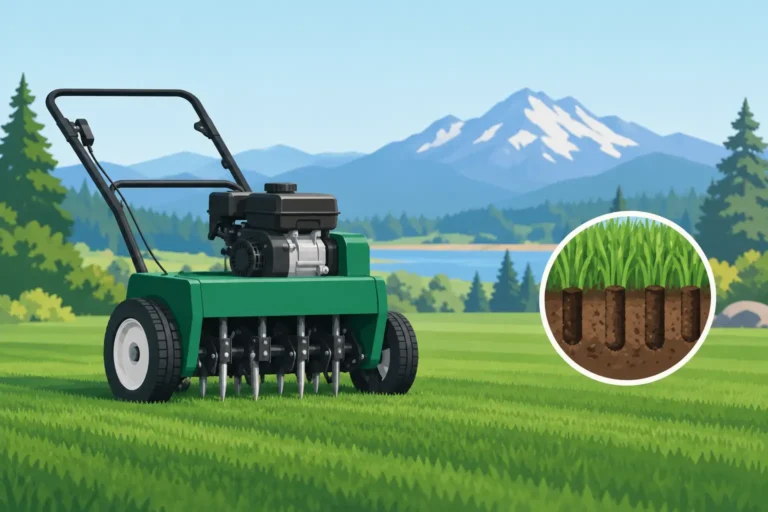
If you are renovating an existing lawn rather than starting from bare ground, equipment can make the work more effective. A power rake can remove thatch and weak turf, an aerator can relieve compaction, and a top dresser can help distribute compost or soil amendments evenly. Central Oregon Lawn Center can help match the right equipment and lawn inputs to the size and condition of your project.
Choosing the Right Option for Your Property
Hydroseed is usually the better fit if you are covering a large area, want a custom grass blend, have time for establishment, or want to keep initial costs manageable. Sod is often the better fit if you need immediate visual impact, need fast surface coverage, or are working with a smaller, high-visibility lawn.
Consider these practical questions before ordering either one:
- Can your irrigation system provide reliable, frequent watering during establishment?
- Is the soil properly graded, loosened, and amended for healthy rooting?
- Do you need a finished look immediately, or can you wait for seed to fill in?
- Is your lawn mix suited to Central Oregon sun, cold, water availability, and expected use?
There is no single right answer for every Bend-area property. A carefully prepared, well-watered hydroseeded lawn can become dense and durable. A properly installed sod lawn can deliver fast results without sacrificing long-term health. The best lawn is the one built around your actual site, not the one that simply looks fastest on installation day.