
Which Fertilizer Suits New Grass in Bend?
New grass has one job before it looks lush: build a root system that can handle Central Oregon’s dry air, sandy ground, summer heat, and a limited irrigation budget. If you are asking which fertilizer suits new grass, the best answer is usually a starter fertilizer with modest, controlled nitrogen and enough phosphorus to support early rooting – but only after considering your soil test, seed or sod type, and planting season.
A fast green-up is not the goal. Grass pushed too hard with nitrogen can grow top-heavy, require more water, and struggle when conditions turn hot or irrigation is interrupted. For Bend-area lawns, the right fertilizer helps new turf establish steadily and efficiently rather than creating a short-lived burst of color.
Which fertilizer suits new grass in Central Oregon?
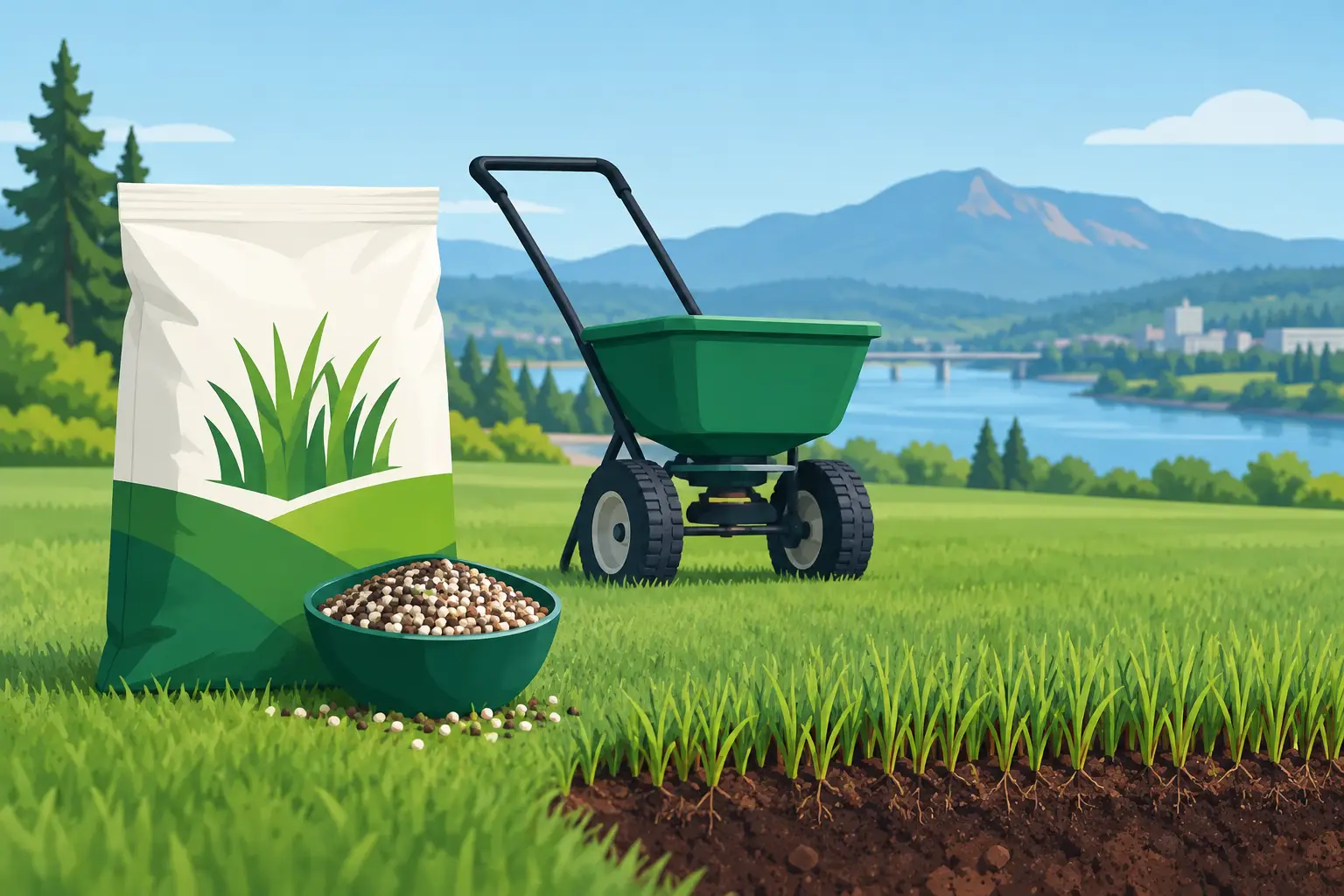
For most newly seeded lawns, a quality starter fertilizer is the appropriate place to begin. Starter products are formulated with a balanced nutrient profile that supports early root development, often with a higher middle number in the N-P-K analysis. Those three numbers represent nitrogen, phosphorus, and potassium.
Nitrogen supports green leaf growth. Phosphorus is especially useful during establishment because it supports root growth and early plant development. Potassium contributes to overall plant health and stress tolerance. The exact ratio matters less than choosing a product designed for new turf and applying it at the labeled rate.
That said, Central Oregon soils can vary widely from one property to the next. Many local yards have sandy, rocky soils with low organic matter, while others have imported topsoil or a history of repeated fertilizer applications. A soil test removes the guesswork. If phosphorus levels are already high, adding more is unnecessary and can create environmental concerns. If a test reveals low fertility or an unfavorable pH, you can correct the actual limitation instead of applying a generic product and hoping for the best.
For new sod, the decision may be slightly different. Sod arrives with roots already formed, but those roots still need to knit into the soil below. A starter fertilizer can help where a soil test supports its use, especially if the soil was prepared before installation. The larger priority with sod is firm soil contact and consistent moisture during its first weeks.
Start with soil preparation, not a fertilizer bag
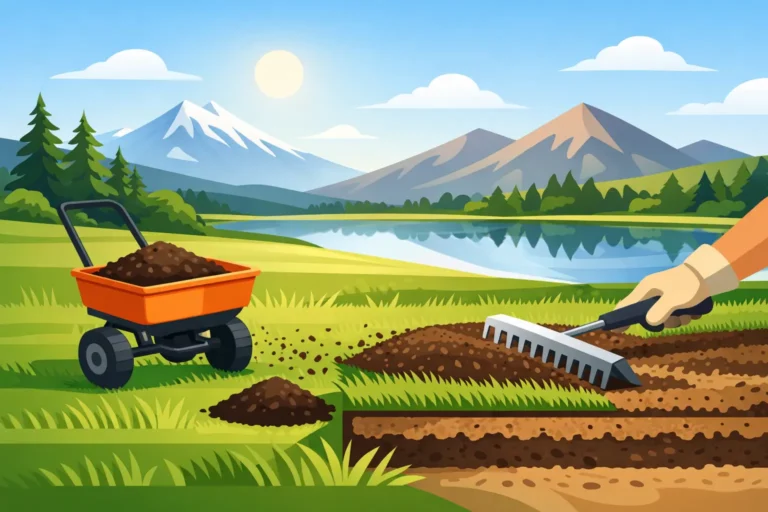
Fertilizer cannot compensate for compacted soil, poor grading, or an irrigation system that leaves half the lawn dry. New grass performs best when the soil is loosened, leveled, and amended as needed before seed or sod goes down.
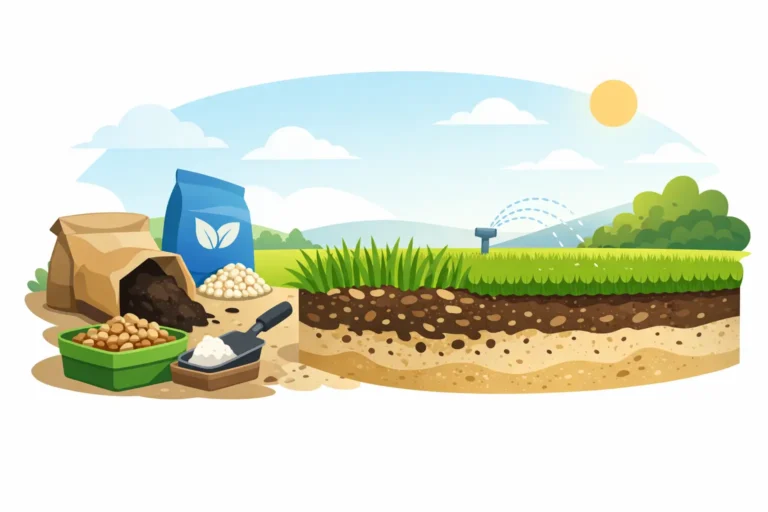
In the High Desert, organic matter is often the missing piece. Compost or a suitable soil amendment can improve moisture retention in sandy soil while helping roots access nutrients more evenly. It also supports better soil structure over time, which matters far more than a single heavy fertilizer application.
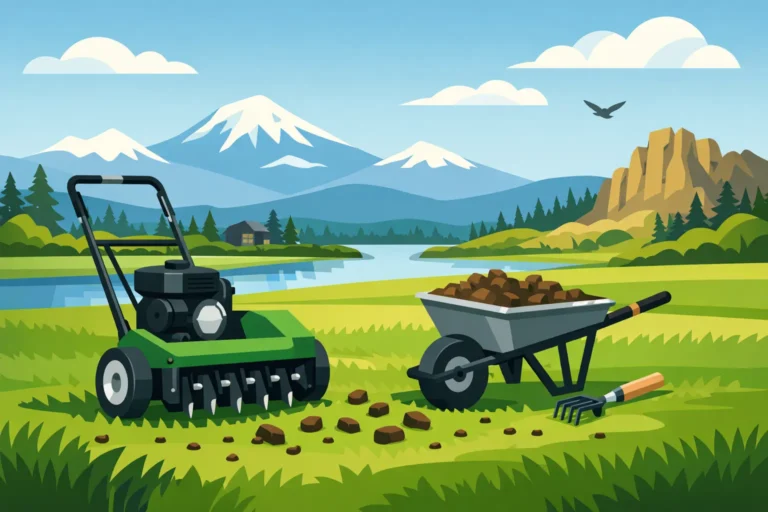
Before seeding, remove rocks and debris, address serious compaction, and create a smooth surface that will not collect water in low spots. A core aerator, tiller, or power rake may be useful depending on whether you are starting from bare soil or renovating a thin, tired lawn. For larger projects, using the right rental equipment can make preparation more consistent and save considerable time.
If you amend the soil, blend materials into the upper few inches rather than leaving a sharp layer between amended soil and native ground. Roots tend to follow the easiest path. A gradual transition encourages them to grow down into the soil profile, where they will be better prepared for dry weather.
Use a starter fertilizer carefully
Apply starter fertilizer close to planting time, ideally worked lightly into the soil before seeding or spread as directed immediately after seeding. The goal is to place nutrients where developing roots can reach them, not to pile fertilizer directly on young plants.
Always use a calibrated broadcast spreader. Hand spreading often causes streaks, and excess fertilizer can damage tender seedlings. Sweep or blow granules off driveways, sidewalks, and patios so they do not wash into stormwater systems.
Organic and slow-release fertilizers can be a smart fit for Central Oregon lawns, particularly for homeowners who want to build healthier soil and avoid a sharp surge of growth. They generally feed more gradually and are less likely to cause the dramatic flush associated with quick-release products. The trade-off is that they often work more slowly, especially in cool spring or fall weather when microbial activity is lower.
A conventional starter fertilizer may provide more immediate nutrient availability, which can be helpful during establishment. It also requires more precision. Too much, too soon, can increase mowing, water demand, and salt stress in already challenging soils. The best choice depends on the product, the soil test, your establishment timeline, and how reliably you can irrigate.
Timing matters as much as the fertilizer
Late summer and early fall are often excellent times to seed cool-season lawns in Central Oregon. Soil remains warm enough for germination, while daytime temperatures are less punishing than midsummer. New grass has time to develop roots before winter dormancy.
Spring seeding can also work, but it may require closer attention as the lawn approaches summer heat. Seedlings that germinate late in spring have less time to mature before hot, dry conditions raise their water needs. If you seed in spring, avoid the temptation to compensate with extra fertilizer. Consistent moisture and proper mowing will do more for survival than a second heavy feeding.
After the initial starter application, wait until seedlings are established and have been mowed a few times before considering another light application. Follow the fertilizer label and let the grass tell you what it needs. Pale color, slow growth, and thin coverage can indicate a nutrient issue, but they can also point to uneven watering, cold soil, poor seed-to-soil contact, or insufficient sunlight.
Water new grass for roots, not just germination
New seed needs frequent, light irrigation at first so the surface stays consistently moist. Once germination is underway and roots begin to develop, gradually transition to less frequent, deeper watering. That shift teaches roots to move down rather than staying near the surface.
This is especially important in Bend and surrounding communities, where low humidity can dry the top layer of soil quickly. Check the soil rather than relying on a fixed timer schedule. A windy afternoon, shaded yard, sandy site, and south-facing slope can all need different irrigation adjustments.
Avoid applying fertilizer to dry, stressed turf and then turning on the water only briefly. Granular fertilizers need to be watered in according to label directions, but soaking the lawn can move nutrients beyond the root zone in sandy soils. Water long enough to wet the active root area, then adjust based on weather and soil moisture.
Common mistakes that slow down new lawns
The most common mistake is choosing a high-nitrogen “weed and feed” style product for a newly seeded lawn. Weed-control ingredients can interfere with germination or harm young grass, while too much nitrogen produces weak, thirsty top growth. Keep weed control separate from establishment until new turf is mature enough for the product you are considering.
Another mistake is fertilizing because the lawn looks thin before the seed has had time to fill in. Cool-season grass spreads and thickens gradually. If there are bare areas, first determine whether the seed washed away, birds found it, irrigation missed the spot, or soil crusted over after planting. Reseeding a small area is often more useful than applying more fertilizer.
Finally, do not mow too low. Begin mowing when new grass is tall enough to be trimmed without pulling plants from the soil, and remove no more than one-third of the blade at a time. A slightly taller mowing height shades the soil, supports deeper roots, and helps new turf use water more efficiently.
A healthy new lawn begins with a realistic plan: prepare the soil, select seed suited to the High Desert, fertilize based on actual needs, and water with purpose. If you are unsure whether your site needs a starter blend, an organic option, or a specific amendment, Central Oregon Lawn Center can help you match the right materials to your soil and your lawn’s first season.