Organic Fertilizer vs Synthetic Fertilizer
If you have ever spread fertilizer in Bend, watched your lawn green up fast, and then wondered why it faded just as quickly, you are asking the right question. The debate around organic fertilizer vs synthetic fertilizer matters more in Central Oregon because our sandy soils, dry air, short growing windows, and irrigation limits make every input work harder.
For some lawns, synthetic fertilizer delivers the quick response people want. For others, organic fertilizer builds the kind of soil that handles heat, drought, and stress better over time. The better choice depends on your lawn, your expectations, and how you want to manage water, soil health, and seasonal recovery.
Organic fertilizer vs synthetic fertilizer in Central Oregon
In a mild, moisture-rich climate, fertilizer mistakes can sometimes be covered up with extra rain or a longer growing season. That is not how High Desert turf behaves. Here, fertilizer decisions show up quickly in color, root depth, irrigation demand, and how well the lawn holds on through summer.
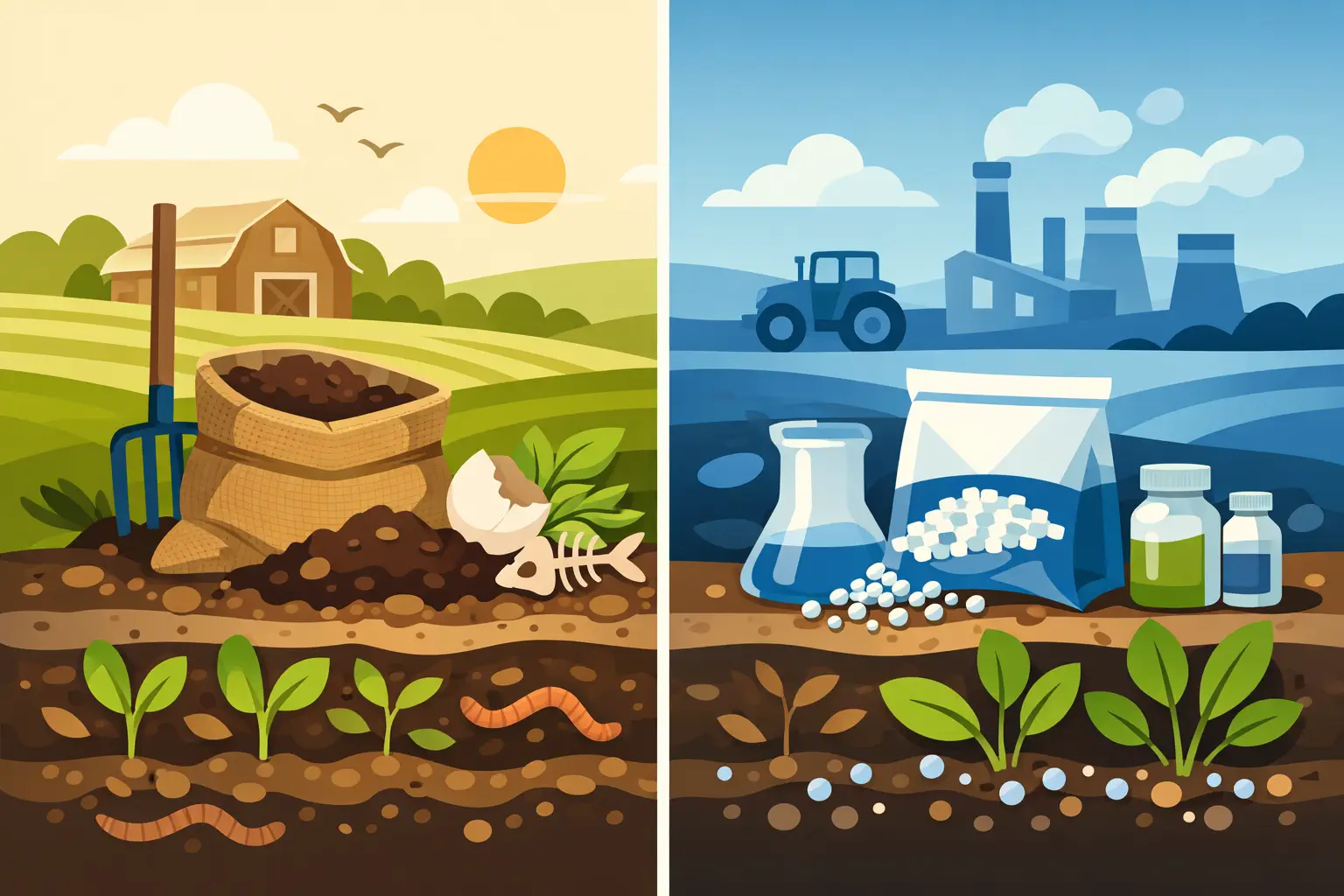
Organic fertilizers are made from natural sources such as composted materials, manure-based inputs, feather meal, bone meal, or plant-based ingredients. They feed the soil food web as much as the grass itself. Synthetic fertilizers are manufactured to deliver nutrients in immediately available forms, usually with a precise N-P-K analysis that gives predictable, fast results.
Neither category is automatically right or wrong. What matters is how each one performs in local conditions.
How organic fertilizer works
Organic fertilizer releases nutrients gradually as soil microbes break the material down. That slower release is a real advantage in Central Oregon, where quick flushes of growth can create more mowing, more thirst, and more stress once heat or irrigation inconsistency kicks in.
The bigger benefit is what happens below the surface. Organic inputs can improve soil structure, increase microbial activity, and help sandy or tired soils hold moisture and nutrients more effectively. In many local lawns, that is a major part of the problem. Homeowners often focus on feeding the grass blade, when the real issue is that the soil cannot hold onto what the lawn needs.
A lawn fed organically may not turn dark green overnight. But over time, it often develops steadier growth, better root development, and improved resilience during dry spells. That is especially valuable in neighborhoods dealing with limited watering schedules or areas where turf is competing with heat-reflective hardscape.
How synthetic fertilizer works
Synthetic fertilizer is designed for speed and precision. The nutrients are readily available, so turf can respond quickly with visible green-up and active growth. For a lawn that is pale, depleted, or trying to recover from wear, that fast response can be useful.
Synthetic products also make it easier to target specific nutrient ratios. For landscapers managing multiple properties or homeowners trying to correct a known deficiency, that consistency can be an advantage. When timing matters, especially during a short spring or early fall recovery window, synthetic fertilizer can help get turf moving.
The trade-off is that quick top growth does not always mean stronger long-term performance. In dry climates, pushing too much fast growth can increase water demand, create more stress between irrigations, and raise the risk of burn if the product is misapplied or not watered in properly. On sandy soils, nutrients can also move through the profile faster than many people expect.
The biggest differences that show up on local lawns
The most noticeable difference between organic and synthetic fertilizer is speed. Synthetic wins that category almost every time. If your goal is rapid color before an event or a fast recovery response, it is hard to ignore.
But the more important difference in Central Oregon is how each approach affects the whole system. Organic fertilizer tends to support soil improvement, which can help turf perform better under drought pressure and irregular weather. Synthetic fertilizer tends to feed the plant more directly, which is efficient in the short term but does less to improve the underlying soil.
There is also a management difference. Organic programs usually reward patience and consistency. Synthetic programs demand tighter timing and more attention to water, application rate, and seasonal stress.
That is why the question is not simply which fertilizer is stronger. It is which one fits your lawn and your management style.
When organic fertilizer makes more sense
Organic fertilizer is often the better fit for homeowners who want healthier soil, steadier growth, and a more environmentally responsible lawn care routine. It is especially useful for lawns with thin topsoil, compacted areas, or poor moisture retention. Those conditions are common across Central Oregon, where native soils and construction disturbance often leave turf with very little to work with.
It also makes sense for families who prefer lower-risk products around kids and pets, or for property owners trying to reduce runoff and support long-term landscape health. If your lawn has struggled despite regular feeding, an organic approach can address the reason it struggles rather than just the symptom.
This is also a good match for renovation work. When paired with quality compost, topdressing, and the right grass seed blend, organic fertilizer can help establish a more durable lawn that does not need to be pushed as hard every season.
When synthetic fertilizer makes more sense
Synthetic fertilizer can be the right tool when you need a quick correction or a highly controlled feeding plan. If a lawn is clearly nutrient-deficient, thin coming out of winter, or trying to rebound after traffic damage, synthetic inputs can deliver faster visible improvement.
For professionals maintaining commercial properties or large residential sites, that predictability matters. It allows for more precise scheduling and response. Synthetic products can also be useful during key seasonal transition periods, when turf needs a timely push and there is not much room for delay.
That said, synthetic works best when it is used carefully. In our climate, overapplication shows up fast. Too much nitrogen can create lush growth that looks good for a moment but struggles once summer pressure builds.
The water question matters more than most people think
In Central Oregon, fertilizer choice and irrigation strategy are tied together. A lawn that is pushed into rapid, tender growth often needs more consistent water to stay healthy. If that water is not available, the grass can quickly cycle from green to stressed.
Organic fertilizer generally supports slower, more balanced growth, which can help lawns use water more efficiently over time. It is not magic, and it will not fix poor irrigation coverage, but it often works better with a water-wise lawn care plan.
Synthetic fertilizer can still be part of a responsible program, but it needs to be matched to actual irrigation capacity. If your sprinkler system has dry spots, runoff, or uneven distribution, aggressive synthetic feeding may expose those weaknesses instead of solving them.
A blended approach is often the smartest one
For many High Desert lawns, this is not an either-or decision. A blended strategy often gives the best outcome. Organic fertilizer can build soil health and support stronger turf over time, while selective synthetic applications can provide targeted help during recovery periods or seasonal stress points.
That kind of plan is practical for both homeowners and contractors. It respects the reality that lawns sometimes need immediate help, while still investing in better soil function and reduced long-term input dependence.
The key is avoiding the common mistake of using fertilizer as a substitute for diagnosis. If the lawn is struggling because of poor seed selection, compaction, thatch, weak irrigation coverage, or shallow rooting, changing fertilizer alone will not solve it.
Choosing the right fertilizer for your lawn
If you want quick color and tight nutrient control, synthetic fertilizer may be the better fit. If you want better soil performance, steadier growth, and a lawn that handles local stress more naturally, organic fertilizer often makes more sense.
If your property has sandy soil, inconsistent moisture, and recurring summer stress, organic products deserve serious consideration. If you are managing a short turnaround, correcting a deficiency, or supporting a heavily used lawn, synthetic fertilizer may have a clear role.
The best results usually come from matching the product to the season, the soil, and the condition of the turf. That is why local guidance matters. What works in the Willamette Valley or the Midwest does not always translate to Bend. At Central Oregon Lawn Center, that is exactly where region-specific advice makes the difference.
A healthy lawn in Central Oregon is rarely the result of one bag of fertilizer. It comes from building a system that fits the climate, the soil, and the way you actually care for your yard.