
A Guide to Lawn Soil Testing in Central Oregon
A lawn in Bend can look thirsty even after the sprinklers run, or stay thin no matter how carefully it is fertilized. Often, the issue is not the grass seed or the fertilizer bag. It is the soil underneath. This guide to lawn soil testing explains how Central Oregon homeowners and landscape professionals can find out what their soil needs before spending time, water, and money on the wrong fix.
High Desert soils are rarely simple. Many properties have sandy, low-organic-matter soil that drains quickly and struggles to hold nutrients. Newer homes may also have compacted construction soil, while older landscapes can vary dramatically from one side of the yard to the other. A soil test turns those unknowns into useful information.
Why Lawn Soil Testing Matters Here
A soil test measures the conditions that affect how turf uses water and nutrients. The most useful lawn tests typically report soil pH, organic matter, available phosphorus and potassium, and sometimes calcium, magnesium, sulfur, and micronutrients. Some labs also include salinity or soluble salts, which can be especially helpful where irrigation water, pet use, or past fertilizer applications may have contributed to salt buildup.
Without a test, lawn care becomes guesswork. Adding fertilizer to soil that already has sufficient nutrients can encourage excess top growth, increase watering needs, and create runoff concerns. Applying lime when soil pH is already high can make nutrient availability worse. In much of Central Oregon, the better answer is often improved soil structure and steady organic matter, not more product.
Testing also supports a water-wise lawn. Soil with better structure holds moisture in the root zone longer, helping turf handle dry stretches between irrigation cycles. That does not mean every lawn needs the same amendment. Results, lawn history, turf type, and irrigation practices should shape the recommendation.
Guide to Lawn Soil Testing: Getting a Good Sample
A laboratory can only analyze the soil you send, so the sample matters more than most people realize. Do not collect one scoop from a convenient spot and treat it as a picture of the entire yard. Take several small cores across an area that has been managed the same way, then combine them into one representative sample.
For an established lawn, sample from the surface down about 4 inches, where most turf roots and fertilizer activity occur. Remove grass thatch, mulch, rocks, and surface debris first. A clean trowel, hand auger, or soil probe works well. Avoid galvanized containers, which may affect certain micronutrient readings. Mix the collected soil in a clean plastic bucket, then place the amount requested by the lab into its sample bag or a clean container.
Keep distinctly different areas separate. A sunny front lawn, a shaded side yard, and a spot that regularly receives pet traffic should not be combined. The same is true for patches where fill dirt was added during construction or where grass consistently struggles. Label each sample clearly so the results remain useful.
Try not to test immediately after applying fertilizer, compost, lime, or other amendments. Waiting several weeks produces a more representative reading. Soil should be slightly moist but not muddy. If the ground is frozen or covered in snow, wait until it can be sampled properly rather than forcing a poor sample.
What to Request From the Lab
Ask for a standard lawn or landscape soil analysis, not only a pH test. At a minimum, request pH, organic matter, phosphorus, potassium, and a recommendation based on turfgrass use. If your lawn has drainage problems, recurring brown areas, or a history of heavy fertilizer use, ask whether a salinity test is appropriate.
It helps to provide context with the sample. Tell the lab whether the lawn is established or newly seeded, whether it receives irrigation, and what you have applied in the last year. A test recommendation written for a vegetable garden may not fit a cool-season turf lawn that needs durable roots and measured growth through a short growing season.
For contractors and property managers, testing separate sites can prevent a common problem: applying one broad fertilizer program across properties with entirely different soil conditions. The up-front testing cost is usually small compared with wasted material, callbacks, and extra irrigation.
How to Read Common Soil Test Results
Soil pH
Soil pH affects whether grass roots can access nutrients already present in the soil. Most cool-season lawn grasses perform well in slightly acidic to near-neutral soil, generally around pH 6.0 to 7.0. A result outside that range does not automatically call for a fast correction. It depends on how far off the reading is, which nutrients are low, and whether the lab identifies a specific concern.
Central Oregon soils can lean alkaline, especially where native soil has little organic matter or where irrigation water contributes minerals over time. If pH is high, adding lime is not the answer. Organic matter, appropriate fertilizer forms, and patient soil-building practices may be more useful. Sulfur can be recommended in some cases, but it should be applied according to a soil test recommendation and allowed time to work. Overcorrecting pH can create a new set of problems.
Organic Matter
Organic matter is one of the most meaningful numbers for High Desert lawns. It helps sandy soil retain water and nutrients, supports beneficial soil biology, and improves the crumbly structure roots prefer. Low organic matter is common and is not a sign that you have failed. It is simply a starting point.
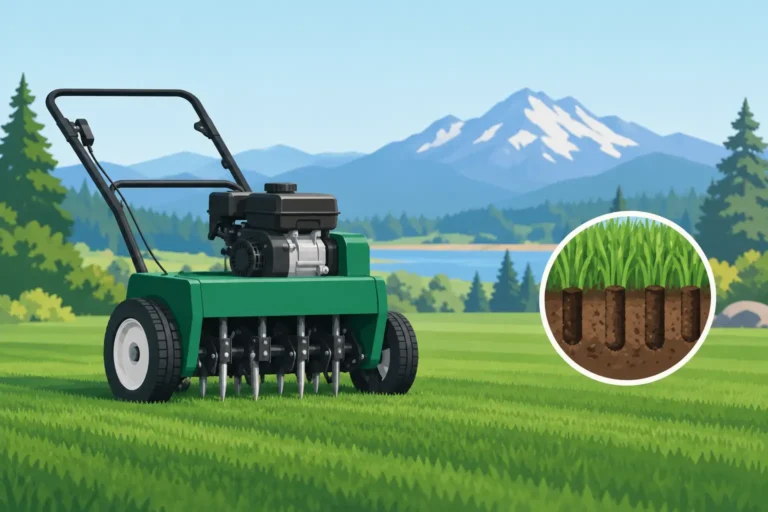
For many lawns, a light topdressing of quality compost after aeration is a practical way to improve this number gradually. The key word is light. Heavy layers can smother turf, interfere with mowing, and create drainage issues. Repeated thin applications, combined with leaving short grass clippings on the lawn when practical, usually make more sense than one oversized application.
Phosphorus and Potassium
Phosphorus supports root establishment, while potassium is associated with overall stress tolerance and plant function. New seed and renovation projects may have different needs than an established lawn, so do not assume a starter fertilizer belongs everywhere. Excess phosphorus can move beyond the lawn and contribute to water-quality concerns, which is why soil-test-based application is the responsible approach.
Potassium recommendations also deserve context. Low potassium may justify a targeted application, particularly on a heavily used lawn or one under drought stress. But potassium is not a substitute for correct watering, proper mowing height, or better soil structure.
Turning Results Into a Central Oregon Lawn Plan
Start with the most limiting factor instead of trying to fix every number at once. If organic matter is very low, improving it may do more for lawn performance than chasing minor micronutrient adjustments. If pH is substantially high or low, address that carefully before expecting fertilizer to perform at its best. If nutrients are low, choose a fertilizer rate and timing that match the lab report and the season.
Spring is a useful time to test because it gives you direction before the main growing period. Fall testing is equally valuable, especially if you are planning aeration, topdressing, overseeding, or a renovation. Avoid treating a test as a one-time event. Retest every two to three years for an established lawn, or sooner after major soil work, repeated poor performance, or a significant change in irrigation water or management.
A healthy lawn does not need to be pushed into rapid growth. In Central Oregon, deeper roots, appropriate grass selection, and efficient irrigation often matter more than chasing a darker color with frequent fertilizer. Custom seed blends and measured amendment programs can help turf stay more resilient while using water responsibly.
When a Soil Test Is Not the Whole Answer
A good test is powerful, but it does not diagnose every lawn issue. Thin grass may come from shade, dull mower blades, compacted soil, shallow irrigation, grubs, poor seed-to-soil contact, or an irrigation system that is missing part of the lawn. Brown edges along pavement can be heat stress or uneven coverage rather than a nutrient deficiency.
If the test looks reasonable but the lawn still performs poorly, examine irrigation distribution and root depth. Dig a small plug after watering to see how deeply moisture actually reaches. Check whether sprinklers overlap and whether the soil is compacted beneath the surface. Aeration, power raking, topdressing, or overseeding may be the more relevant next step than another fertilizer application.
Bring your soil test results, a few notes about your irrigation schedule, and photos of problem areas to Central Oregon Lawn Center. Local guidance can help translate lab numbers into a practical plan for your particular lawn, whether that means an organic amendment, a targeted fertilizer, a seed recommendation, or the right equipment for renovation.
The best lawn-care decision is often the one made before a bag is opened. Test the soil, make one thoughtful improvement at a time, and give the roots a better place to grow.