Core Aeration vs Dethatching in Bend
If your lawn looks thin, feels hard underfoot, or seems to repel water no matter how carefully you irrigate, the question usually is not whether it needs help. It is whether core aeration vs dethatching is the right next step. In Central Oregon, that choice matters more than many homeowners expect because our lawns deal with compacted soils, dry air, short growing windows, and irrigation habits that can either support recovery or make stress worse.
A lot of lawns in Bend and surrounding communities are not failing for one simple reason. They are dealing with a few overlapping issues at once. Soil compaction can limit air, water, and root growth. Thatch can block moisture from reaching the soil surface. Drought stress can make both problems more obvious. That is why the best answer is not always one service over the other. It depends on what is happening below the grass blades.
Core aeration vs dethatching: what is the difference?
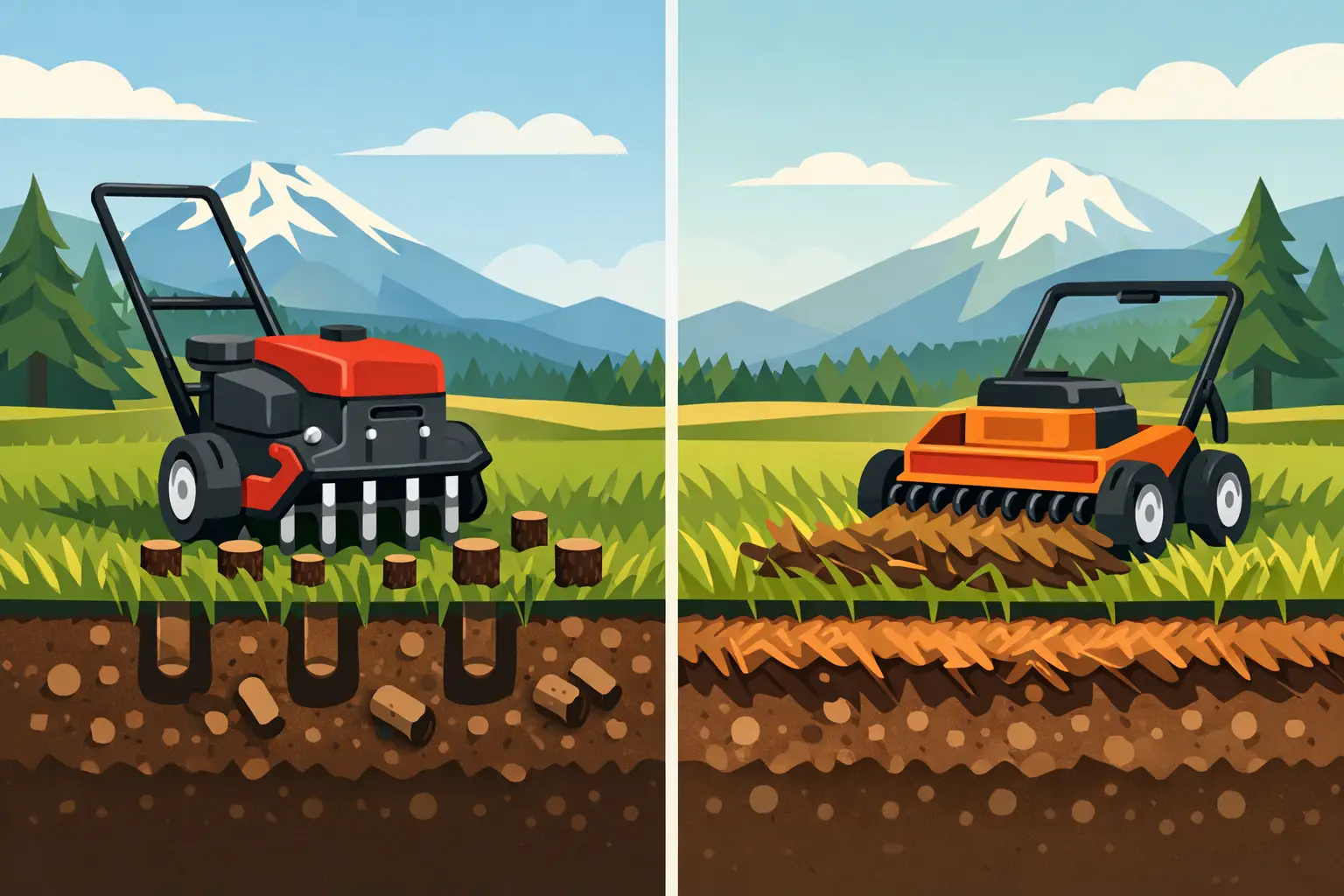
Core aeration removes small plugs of soil from the lawn. Those open channels let water move into the root zone, improve oxygen flow, and reduce compaction. In Central Oregon, this is often the bigger issue, especially in lawns with heavier foot traffic, newer construction soil problems, or years of shallow watering.
Dethatching removes the layer of dead stems, roots, and organic debris that builds up between the green grass and the soil surface. A small amount of thatch is normal and can even help insulate the lawn. The problem starts when the layer gets thick enough to interfere with water penetration, fertilizer contact, and new growth.
The two services sound similar because both are renovation tools, but they solve different problems. Aeration works in the soil. Dethatching works at the surface.
How to tell which one your lawn needs
The easiest way to decide between core aeration vs dethatching is to inspect the lawn by feel and by cross-section.
If the ground feels hard and dense, especially when you try to push a screwdriver or soil probe into it, compaction is likely part of the problem. Water may run off, puddle briefly, or require long irrigation cycles before the lawn actually benefits. Grass roots in compacted lawns are often shallow, which makes the turf more vulnerable during hot, dry spells.
If you pull back a small section of turf and see a spongy brown layer sitting above the soil, that points to thatch. When that layer reaches around half an inch or more, it can start acting like a barrier. Water may sit in the thatch instead of moving into the soil. Seed-to-soil contact becomes harder during overseeding. Disease pressure can also increase because the surface stays damp while the roots below still struggle.
Some lawns have both issues. That is common in established turf that has been fertilized regularly but watered shallowly, or lawns with a lot of Kentucky bluegrass and limited soil improvement over time.
Why Central Oregon lawns often need aeration first
In the High Desert, compaction tends to be a bigger long-term obstacle than heavy thatch. Many local lawns start with sandy or disturbed soils, but that does not automatically mean they stay loose and root-friendly. Construction traffic, repeated mowing patterns, pets, and regular use can still compress the surface. Add low humidity and inconsistent watering, and roots often stay closer to the top than they should.
That makes core aeration especially valuable here. It improves water infiltration, which is a major advantage when every irrigation cycle counts. It also gives roots a better chance to grow deeper, helping turf handle summer stress with less dependence on frequent watering.
For many Bend-area homeowners, aeration provides the best return because it addresses both lawn performance and water efficiency. For landscapers and property managers, it is often the foundational service that supports fertilization, overseeding, and seasonal recovery.
When dethatching makes more sense
Dethatching is the better choice when the lawn has a clearly defined surface layer that is keeping moisture, nutrients, and seed from reaching the soil. You might notice the lawn feels springy when you walk on it, or that irrigation seems to wet the top but not improve the overall vigor of the grass.
This can happen in lawns with aggressive spreading grasses, overfertilization, or a history of frequent light watering. In those cases, dethatching can reset the surface and make the lawn more responsive to follow-up care.
There is a trade-off, though. Dethatching is more disruptive than many people expect. It can leave the lawn looking rough for a short time because it physically pulls material out of the turf canopy. That is not a reason to avoid it when it is needed, but it is a reason to time it carefully and plan for recovery.
Can you do both?
Yes, and sometimes that is the right call. If a lawn has heavy thatch and compacted soil, dethatching and core aeration can work together as part of a broader renovation plan. In that situation, dethatching usually comes first so the surface layer is opened up, followed by aeration to improve the root zone.
After that, overseeding, topdressing, and the right fertilizer program can make a significant difference. This is where local conditions matter. Central Oregon lawns benefit from renovation steps that build soil structure, support drought tolerance, and make better use of limited water. Generic programs often miss that point.
Still, doing both is not always necessary. If thatch is minimal and compaction is the bigger issue, skip the extra disruption and aerate. If the soil is reasonably open but the surface layer is thick, dethatching may be enough. The goal is not to throw every service at the lawn. The goal is to solve the actual problem.
Best timing in Central Oregon
Timing matters because lawns need enough active growth to recover. In our region, spring and early fall are usually the best windows for both services, though the exact timing depends on weather, turf type, and irrigation.
Spring can be a strong option when the lawn is coming out of winter and you want to improve water movement before summer stress arrives. Early fall is often even better for renovation work because soil temperatures remain favorable while daytime heat starts to ease. That gives roots a chance to recover and strengthen before winter.
Mid-summer is usually not ideal for aggressive dethatching, especially if the lawn is already under drought stress. Aeration can also be harder on turf in peak heat unless irrigation and recovery conditions are well managed. In a short growing season, you want to set the lawn up for success, not stack stress on top of stress.
What results should you expect?
After core aeration, do not expect a dramatic overnight cosmetic change. The biggest benefits happen below the surface. Over the following weeks, the lawn should absorb water more evenly, respond better to fertilizer, and develop healthier root growth. Over time, that often translates to better color, improved density, and less stress during hot weather.
After dethatching, the lawn usually looks messier at first because a lot of dead material has been removed. Once it recovers, you should see better water penetration, cleaner seed-to-soil contact, and more active growth from the crown of the plant. If overseeding is part of the plan, dethatching can improve establishment.
Neither service is a cure-all. If irrigation coverage is uneven, soil nutrition is off, or the grass variety is poorly suited to local conditions, those issues still need attention. Good renovation work creates opportunity. It does not replace the basics.
Equipment and practical considerations
For homeowners, the biggest challenge is often choosing the right machine and using it at the right depth. An aerator that removes solid tines instead of soil cores will not provide the same benefit. A dethatcher set too aggressively can tear up a lawn that only had minor surface buildup.
That is why local guidance matters. At Central Oregon Lawn Center, we work with homeowners and professionals who need more than a general recommendation. They need to know what works in Bend-area soils, what timing makes sense for the season, and whether a rental aerator, power rake, seed blend, or soil amendment fits the job.
If you are deciding between the two, start with the lawn you actually have, not the service that sounds more familiar. A compacted lawn needs breathing room. A thatch-heavy lawn needs the surface opened up. And some tired lawns need both, followed by smarter watering and region-specific inputs.
The good news is that struggling turf in Central Oregon is often fixable when the diagnosis is right. A healthier lawn usually starts with one honest question: is the problem in the soil, on the surface, or a little of both?