How to Level a Bumpy Lawn in Central Oregon
A lawn can look healthy from the street and still feel like a washboard underfoot. Low spots collect irrigation water, mower scalps expose dry soil, and raised areas turn a simple walk across the yard into an ankle-twisting exercise. Knowing how to level a bumpy lawn starts with identifying what caused the uneven ground, especially in Central Oregon, where sandy soils, freeze-thaw cycles, and irrigation patterns can all shift the surface over time.
Leveling is not always a matter of spreading a few bags of soil. A shallow dip in otherwise healthy turf can often be corrected with careful topdressing. Larger humps, settled trenches, or drainage-related depressions may need more extensive repair. The right approach protects the grass you already have while improving soil structure and making better use of every drop of irrigation water.
Find Out Why Your Lawn Is Bumpy
Walk the lawn slowly when it is dry and the grass is mowed to a moderate height. Look for patterns rather than treating every dip as a separate problem. A long low strip may point to a settled irrigation line or an old trench. Depressions near downspouts, patios, or lawn edges can signal drainage and grading issues. Small, scattered bumps may be related to animal activity, roots, compacted soil, or winter heaving.
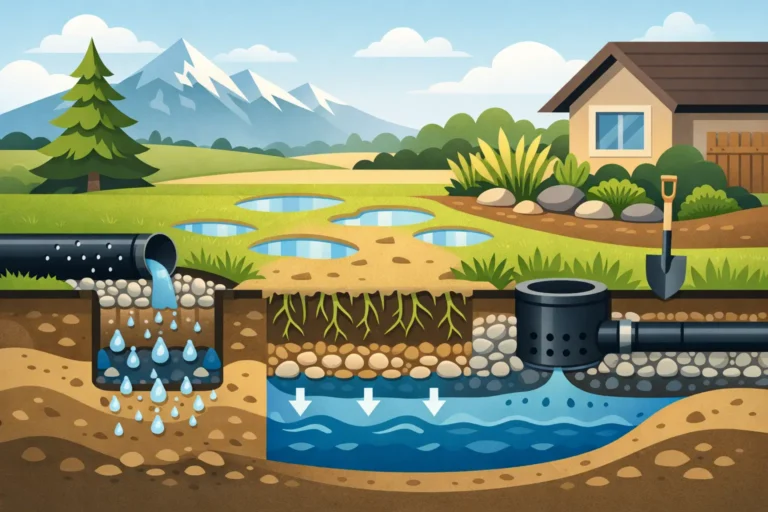
Central Oregon lawns often sit on fast-draining, sandy native soils. That is helpful when spring moisture is abundant, but it can also make soil settle around repaired irrigation lines or beneath areas that receive repeated watering. If water pools in the same place after a normal irrigation cycle, leveling alone may not solve the issue. Check sprinkler coverage, runoff, and whether the low area is receiving more water than the surrounding lawn.
Before adding soil, mark the problem spots with small flags or landscape-safe marking paint. Lay a straight board across a dip to see its true depth. This prevents a common mistake: filling what looks like a low spot but is actually a raised area around it.
When to Level a Bumpy Lawn
For most established Central Oregon cool-season lawns, late spring and early fall are the best windows for leveling and overseeding. The ground is workable, temperatures are less punishing, and grass has time to recover. Early fall is particularly useful because cooler nights reduce stress while soil remains warm enough for seed germination.
Avoid major leveling work during the hottest, driest stretch of summer. Freshly covered turf and new seed demand consistent moisture, which can conflict with water-wise lawn care goals when temperatures are high. Avoid working saturated soil, too. Wet soil compacts easily, and ruts from a wheelbarrow or equipment can create a new unevenness problem.
Choose the Right Repair Method
The depth and cause of the bump determine the method. For shallow low spots up to about 1 inch deep, topdressing is usually the least disruptive solution. Spread a thin layer of a screened, turf-friendly soil blend over the area, then work it down through the grass with the back of a rake or a leveling tool. Grass blades should remain visible after each application.
Do not bury healthy turf under a thick layer all at once. A gradual approach is easier on the lawn and gives you better control over the finished grade. Deep areas may need two or three applications spaced a few weeks apart while the grass grows through the material.
For dips deeper than 1 to 2 inches, cut and lift the sod if it is in good condition. Use a flat shovel to make clean cuts around the area, carefully roll the sod back, and add soil beneath it until the grade matches the surrounding lawn. Firm the soil lightly, replace the sod, and water it in. This preserves the established turf rather than forcing you to reseed a large patch.
Large humps require the opposite process. Remove soil from the high point rather than adding excessive material around it. If roots are causing the rise, do not cut major tree roots simply to flatten the lawn. Root pruning can damage or destabilize a tree. In those locations, a gradual transition, a mulch bed, or a different landscape treatment may be the safer long-term answer.
Use a Soil Blend That Supports Turf
The material you spread matters as much as the technique. Straight sand can worsen drought stress and nutrient-holding problems in many High Desert lawns. Heavy clay topsoil can create a layer that drains differently from the native sandy soil below it. That mismatch may leave roots sitting in wet soil after irrigation, even when the rest of the lawn dries quickly.
A screened topdressing blend with organic matter is often a better choice. It smooths the surface while improving moisture retention, microbial activity, and nutrient availability. The goal is not to replace all of your native soil in one project. It is to build a healthier root zone gradually, especially where turf has thinned or compacted.
If the lawn has poor color, weak growth, or hard ground beneath the bumps, consider aerating before topdressing. Core aeration removes small plugs of soil, allowing water, oxygen, and organic matter to move deeper into the root zone. Follow with a light topdressing so the material can work into the aeration holes. This combination is particularly effective on compacted lawns that shed water instead of absorbing it.
For larger renovations, a power rake or sod cutter may be more efficient than hand tools. Central Oregon Lawn Center can help homeowners and landscape professionals match rental equipment and soil amendments to the scale of the job, rather than overworking a lawn that only needs a light correction.
Step-by-Step: Level Shallow Low Spots
Start by mowing the lawn slightly lower than usual, but do not scalp it. Rake away loose clippings, leaves, and debris so the topdressing reaches the soil surface. Water the lawn a day before the project if the ground is very dry, then let the surface dry enough to walk on without leaving footprints.
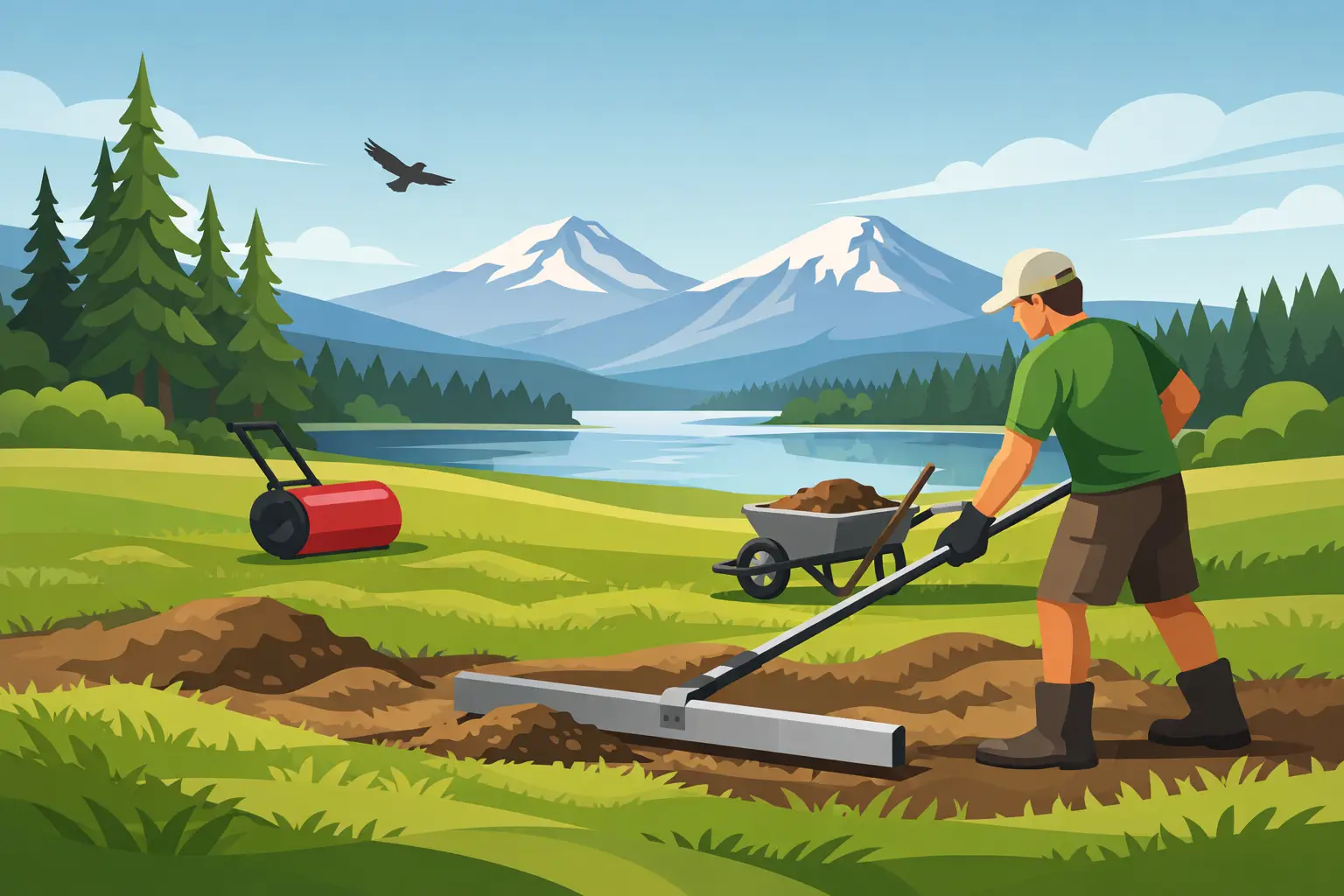
Use a wheelbarrow to place small piles of screened soil blend across the low areas. Spread each pile with a rake, lawn lute, or the back side of a landscape rake. Work from the edges toward the center of the depression and feather the material into the surrounding grade. Check your progress with a straight board as you go.
Keep each application to about one-half inch where grass is still growing. Brush or rake the blend so grass tips remain above the surface, then water lightly to settle the material. Resume normal mowing only once the turf is dry and standing upright. If the spot is still low after the lawn has grown through, repeat the process rather than adding a deep layer immediately.
Repair Deep Settling and Bare Areas
A deeper hole needs a little more investigation. If the area follows an irrigation route, turn on the system and check for leaks, broken fittings, or overspray that may be eroding soil. Repair the source before rebuilding the lawn surface. Filling a leak-related depression without fixing the irrigation issue means the problem will return.
Once the cause is addressed, remove and save healthy sod where possible. Fill the area with soil in shallow lifts, lightly firming each layer. The repaired area should sit slightly higher than the surrounding lawn before sod goes back down because loose soil will settle. Replace the sod, press it into good contact with the soil, and water deeply enough to moisten the root zone without creating runoff.
If turf is too damaged to save, level the area, apply a locally appropriate grass seed blend, and cover seed lightly with fine compost or topdressing material. Keep the surface consistently moist during germination, then transition gradually to deeper, less frequent watering as roots develop. A seed blend suited to Central Oregon’s short growing season and dry summers will establish more reliably than a generic mix selected for wetter regions.
Protect the Grade With Better Watering
Many bumpy lawns are made worse by irrigation, not neglect. Short, frequent watering encourages shallow roots and can keep low spots overly wet. It can also create runoff on compacted areas while dry zones receive too little moisture. After leveling, review your sprinkler system before assuming the lawn needs more water.
Run each zone long enough for moisture to reach the root zone, then allow the surface to dry appropriately between watering cycles. If water begins to run off, use cycle-and-soak scheduling: apply a shorter cycle, pause to let water absorb, then run a second short cycle. This is a practical way to work with Central Oregon’s sandy soils and sloped yards without wasting water.
Check sprinkler heads after the repair. A tilted head, clogged nozzle, or poorly aimed spray can wash away fresh soil and recreate a depression. Correct coverage is one of the most effective ways to protect your work.
Know When Leveling Is Not the Full Fix
Some uneven lawns need professional evaluation before more soil goes down. Call for help if the ground is sinking near a foundation, retaining wall, septic component, utility line, or large tree. Persistent standing water, sudden new depressions, and major settling may indicate an issue beyond ordinary lawn maintenance.
For the typical yard, though, patient topdressing, appropriate soil amendments, and smarter irrigation can make a noticeable difference in a single growing season. Start with the smallest effective repair, watch how the lawn responds, and build healthier soil as you level. A smoother lawn is not just easier to mow and safer to use – it is also easier to water wisely in the High Desert.