
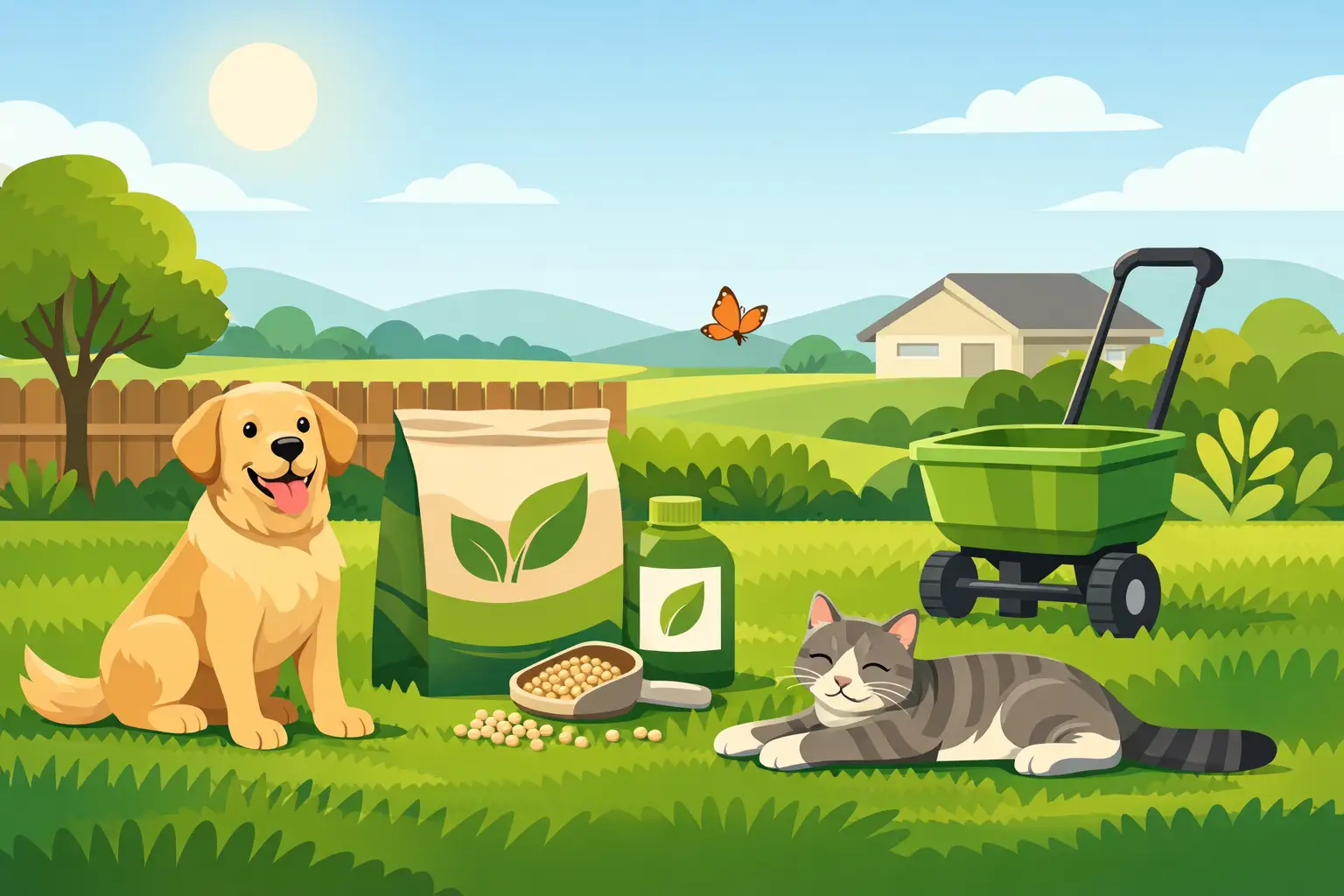
Pet Safe Lawn Fertilizer Options
If your dog treats the backyard like a racetrack and your lawn is already fighting Central Oregon heat, dry air, and sandy soil, fertilizer choice matters fast. The best pet safe lawn fertilizer options are not just about avoiding harsh ingredients – they also need to feed turf steadily, support soil health, and fit the realities of High Desert lawn care.
That is where many homeowners get stuck. A bag says natural or organic, but that does not always mean it is the right fit for kids, pets, irrigation schedules, and our short growing season. A safer lawn plan comes from understanding how fertilizer works, what pets are actually exposed to, and which products make sense for your specific turf and soil.
What pet safe lawn fertilizer options really mean
A pet-safe fertilizer is not one magic product category. It usually means choosing fertilizers with lower risk ingredients, fewer irritating additives, and application practices that reduce exposure while the product is being watered in and absorbed.
For most lawns, the bigger concern is not the grass after the fertilizer has been properly applied and watered in. It is the window right after spreading, when granules are still on the surface, or when a liquid application has not dried yet. Dogs can lick paws, eat spilled granules, or roll in a freshly treated area. That is why product choice and timing matter just as much as the label.
In Central Oregon, there is another layer to the decision. Because our soils are often low in organic matter and tend to drain quickly, quick-release synthetic fertilizers can push a fast green-up but fade fast, especially with heat and irrigation pressure. Slower, soil-building options are often a better long-term fit for both lawn performance and household peace of mind.
The best types of pet safe lawn fertilizer options
Organic and natural-based fertilizers are usually the first place to look. These products often rely on ingredients like feather meal, bone meal, blood meal, composted poultry manure, or plant-based nutrient sources. They tend to release nutrients more gradually than many conventional fertilizers, which helps support steady growth instead of a flush of top growth that demands more water.
That slower release can be especially useful in Bend and surrounding areas, where lawns already face drought stress and summer wear. A moderate feeding program helps turf build resilience without forcing soft, thirsty growth.
There are trade-offs, though. Some organic fertilizers have a strong smell that can attract dogs, especially products with animal-based ingredients. A fertilizer may be safe when used correctly, but if your dog is likely to dig or eat anything interesting, the safest product on paper can still become a problem in practice.
Mineral-based fertilizers can also be part of a pet-conscious plan. Some products use naturally derived minerals and a simpler ingredient profile without herbicides or pesticides mixed in. These can work well when you want more predictable nutrient analysis than some organics provide, but still want to avoid combo products that increase risk.
The products many pet owners should approach carefully are weed-and-feed blends, insecticide-fertilizer combinations, or heavily fragranced treatments. Even when the fertilizer portion is not the issue, the added herbicide or pesticide changes the safety picture. If you have pets, separating fertility from weed and pest control is usually the smarter route.
Why Central Oregon lawns need a different approach
A lot of national lawn advice assumes heavier soils, more humidity, and longer feeding windows than we have here. In Central Oregon, lawns often grow in sandy or rocky soils with low natural fertility. Water moves through quickly, organic matter is limited, and summer conditions can turn stress into dormancy fast.
That means pet safe lawn fertilizer options should do more than provide nitrogen. The best programs also help improve soil biology, root development, and moisture retention. Fertilizers paired with soil amendments often outperform high-analysis products used alone.
For example, if a lawn is thin because the soil cannot hold water or nutrients well, adding more fertilizer is only a partial fix. A gentler feeding program combined with organic matter or a soil-conditioning amendment usually creates a safer and more durable result. You get less surge growth, better root support, and fewer swings between green-up and burnout.
How to choose the right fertilizer for your lawn and pets
Start with behavior, not just ingredients. If your dog ignores the lawn after treatment, you have more flexibility. If your dog eats grass, licks surfaces, or goes after any granular product with a scent, that narrows the field. In those cases, low-odor products and careful watering-in are worth prioritizing.
Next, think about your lawn goal. If you are maintaining an established lawn, a slow-release organic or natural fertilizer is often a good match. If you are renovating damaged turf or trying to establish seed, you may need a starter fertilizer with a more targeted nutrient profile. That does not automatically make it unsafe, but it does mean application accuracy matters more.
It also helps to read beyond the front label. Look for whether the product is designed for lawns only, whether it contains herbicides, and whether there are reentry instructions for pets. Many responsible products are safe once watered in and dry, but that waiting period is still part of the process.
For local homeowners and contractors, this is where region-specific guidance matters. A fertilizer that performs well in a wet spring climate may not deliver the same results in a High Desert lawn under irrigation restrictions.
Application matters as much as the fertilizer itself
Even the best product can become a problem if it is applied carelessly. Spilled granules on hard surfaces should be swept up right away, not blown into planting beds or left where pets can find them. If you are using a spreader, calibration matters. Overapplication does not just waste money – it increases the amount of material sitting on the lawn and raises the chance of paw or mouth contact.
Watering in is usually the key step. It moves granules off the surface and into the soil where the nutrients belong. For most pet households, that also shortens the exposure window. If you apply liquid fertilizer, keep pets off the lawn until it has dried fully and any label instructions have been followed.
Timing helps too. Feed when you can give the lawn a quiet window, not ten minutes before kids and dogs head outside. Early day applications often work better than evening rush treatments, especially when you can monitor irrigation and make sure the product is settled before the yard is back in use.
Common mistakes with pet-safe lawn care
One mistake is assuming more natural always means worry-free. Some organic fertilizers are very attractive to dogs because they smell like food. Another is trying to fix poor soil with repeated fertilizer applications alone. In Central Oregon, that usually leads to a lawn that greens up briefly but stays dependent on extra water and frequent feeding.
A third mistake is using combo products for convenience. Fertilizer plus weed killer sounds efficient, but it removes control from the process. When pets are part of the equation, separating lawn tasks usually gives you safer timing and better results.
Finally, do not overlook storage. A product that is safe when properly applied can still be dangerous if the bag is left open in a garage or shed. Keep all lawn materials sealed and out of reach.
A practical feeding plan for pet households
For many local lawns, a steady seasonal program works better than aggressive feeding. That might mean applying a slower-release fertilizer during active growth periods, improving soil with organic amendments as needed, and avoiding unnecessary summer stress applications when heat and water demand are already high.
If your lawn is struggling, soil testing can save a lot of guesswork. You may not need a stronger fertilizer. You may need better pH balance, more organic matter, improved irrigation coverage, or a grass variety better suited to the site.
For homeowners managing these decisions on their own, and for landscapers balancing performance with client safety concerns, tailored product selection matters. Central Oregon Lawn Center helps customers match fertilizers, seed, and soil amendments to local conditions instead of relying on generic national programs.
A greener lawn and a pet-friendly yard can absolutely coexist. The key is choosing fertilizer with the same care you use for seed, irrigation, and mowing height. When the product fits your lawn, your soil, and the way your pets use the yard, lawn care gets simpler – and a lot less stressful. That is usually the point where better results start to last.