Slow Release vs Liquid Fertilizer for Lawns
A Bend lawn can look thirsty even when the sprinkler has been running faithfully. Sandy soil drains quickly, dry air pulls moisture from turf, and a short growing season leaves little room for guesswork. When weighing slow release vs liquid fertilizer, the better choice is not simply the one that promises faster green-up. It is the one that feeds your lawn at the right pace without wasting nutrients or pushing growth that demands extra water.
For many Central Oregon properties, slow-release fertilizer is the dependable foundation. Liquid fertilizer has a useful role too, especially when turf needs a timely correction or a careful boost. Knowing when each product makes sense helps homeowners and landscape professionals spend less time chasing color and more time building durable, water-wise turf.
Slow Release vs Liquid Fertilizer: The Core Difference
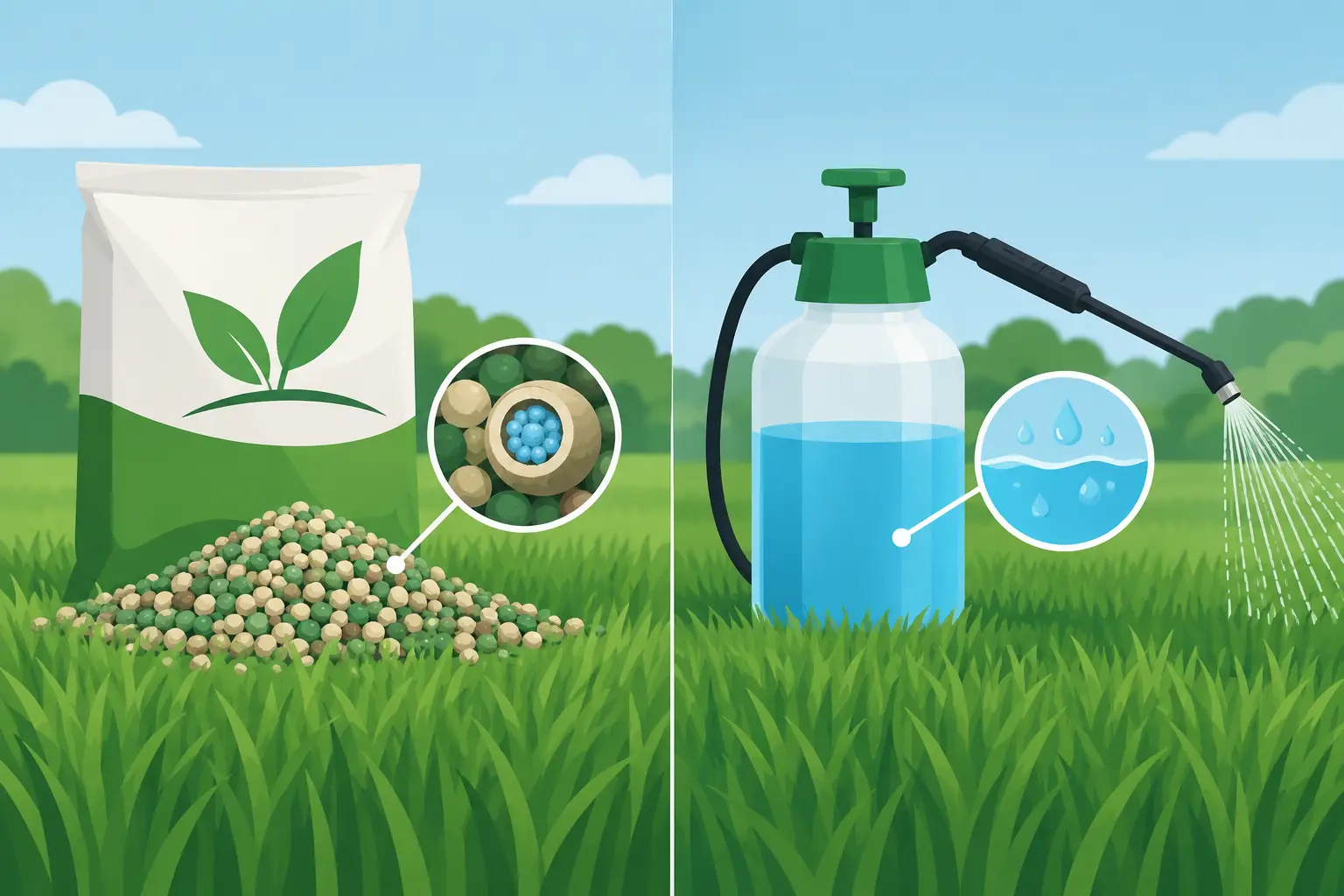
Slow-release fertilizer provides nutrients gradually over several weeks or months. Depending on the product, nutrients may be coated for controlled release, bound to organic materials, or made available as soil microbes break them down. Rather than creating a quick surge of growth, it offers a steadier feeding pattern.
Liquid fertilizer is mixed with water and applied through a sprayer or, in some cases, through an irrigation system designed for fertilization. Because nutrients are already dissolved, they become available quickly. Some can be absorbed through leaf tissue, while the rest moves into the root zone with water.
Neither approach is automatically better. A lawn with thin color after a stressful event may benefit from a liquid application. A lawn that needs consistent seasonal nutrition, especially in free-draining High Desert soil, often benefits most from a slow-release program.
Why Central Oregon Lawns Need a Different Approach
Fertilizer decisions are tied closely to soil and water management here. Many local lawns are established on sandy or low-organic-matter soils. Those soils can struggle to hold both moisture and nutrients, particularly nitrogen. Apply too much fast-acting fertilizer, then irrigate heavily, and some of that nutrient can move past the active root zone before the lawn uses it.
High daytime temperatures, low humidity, wind, and water restrictions add another layer. Fast growth may look impressive for a week, but it also creates more mowing, more water demand, and a lawn that can be less prepared for heat or missed irrigation cycles. The goal is not maximum growth. It is even, resilient growth supported by healthy soil and a deep root system.
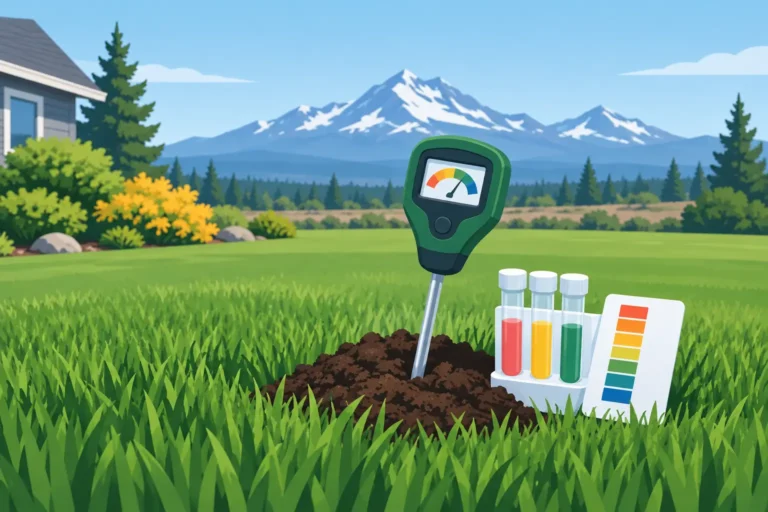
This is why soil testing matters before selecting any fertilizer. A test can show whether the lawn actually needs nitrogen, phosphorus, potassium, iron, or an adjustment in soil pH. Fertilizer cannot correct compacted soil, poor irrigation coverage, excessive thatch, or a weak grass variety on its own.
When Slow-Release Fertilizer Is the Better Fit
Slow-release fertilizer is often the practical choice for established Central Oregon lawns because it reduces the boom-and-bust pattern common with quick-release feeding. It gives grass a measured supply of nutrients as it grows, instead of encouraging a flush of tender top growth all at once.
A quality slow-release product can be particularly helpful in spring, when turf is waking up but nighttime temperatures are still cool. It supports recovery and color without forcing more growth than the roots can support. It also works well after aeration and overseeding, provided the product is appropriate for new seed and applied at the recommended rate.
For homeowners who prefer fewer fertilizer applications, slow release is generally easier to manage. Granular products can be applied with a properly calibrated spreader, then watered in according to the label. Coverage and calibration are critical. Overlapping passes or guessing at the setting can leave stripes, create excess growth, and waste product.
Organic and organically based slow-release fertilizers can be a strong fit for customers focused on soil health. They typically feed soil biology as well as turf, helping build a more active root-zone environment over time. Results may be less immediate than with synthetic quick-release products, but that slower response is often an advantage in a water-wise lawn plan.
Benefits of a steady feeding schedule
Slow-release fertilizer is not maintenance-free, but it can make maintenance more predictable. It usually means fewer applications, less risk of a sudden growth spurt, and a lower chance of nutrients leaching through sandy soil when irrigation is managed correctly. It is especially useful for lawns that are already reasonably healthy and need consistent seasonal care rather than emergency intervention.
The trade-off is patience. If your lawn needs a visible response before an event, or if a nutrient issue needs prompt attention, slow-release fertilizer may not deliver the speed you want.
Where Liquid Fertilizer Earns Its Place
Liquid fertilizer is valuable when timing and precision matter. It can provide a quick response during active growth, making it useful for a lawn that has lost color after heat stress, a heavy mowing cycle, or a period of uneven nutrition. It is also a practical way for professionals to apply targeted nutrients over large areas with calibrated spray equipment.
Foliar applications can be especially useful for micronutrients such as iron. A carefully selected liquid iron treatment may improve green color without the aggressive top growth associated with applying a large amount of nitrogen. That can be helpful when the lawn is pale but you do not want to increase water demand.
Liquid products also allow for flexibility. A landscape crew can adjust rates based on turf conditions, and a homeowner with the right equipment can apply a light, even treatment. Still, “liquid” does not mean “set it and forget it.” Application rates, weather, spray coverage, and irrigation all affect results.
Avoid applying liquid fertilizer to drought-stressed grass in the heat of the day. Turf that is wilted, dormant, or struggling with poor irrigation coverage needs water management first. Fertilizer added to a stressed lawn can increase demand on roots that are already under pressure. Apply during cooler parts of the day when the lawn is actively growing, and follow the product label for watering instructions.
The trade-off: speed requires attention
The biggest advantage of liquid fertilizer is quick availability. Its biggest drawback is that it usually does not last as long as a slow-release granular feeding. That means more frequent applications may be needed to maintain results. If a liquid product is high in readily available nitrogen, overapplication can also lead to excess growth, mowing demand, and inefficient water use.
For that reason, liquid fertilizer often works best as a supplement to a sound long-term program, not as the only source of nutrition for every lawn.
Choosing Based on Your Lawn Goal
Start with the condition of the lawn, not the fertilizer aisle. If your turf is established, reasonably dense, and you want dependable feeding with fewer applications, choose a slow-release fertilizer suited to the season. If you need a quick, targeted response during active growth, a liquid product may be the right tool.
A blended approach can make sense. Many successful lawn programs use slow-release fertilizer for the primary feeding and reserve liquid applications for color correction or specific nutrient needs. That approach avoids relying on repeated quick fixes while still giving you flexibility when conditions change.
New lawns and renovations deserve special attention. Seedlings need appropriate nutrition, but too much fertilizer can be counterproductive. Use a starter fertilizer only when soil test results or establishment needs justify it, keep irrigation consistent during germination, and transition to a balanced maintenance plan as the new turf develops roots.
Apply Fertilizer Around Irrigation, Not Against It
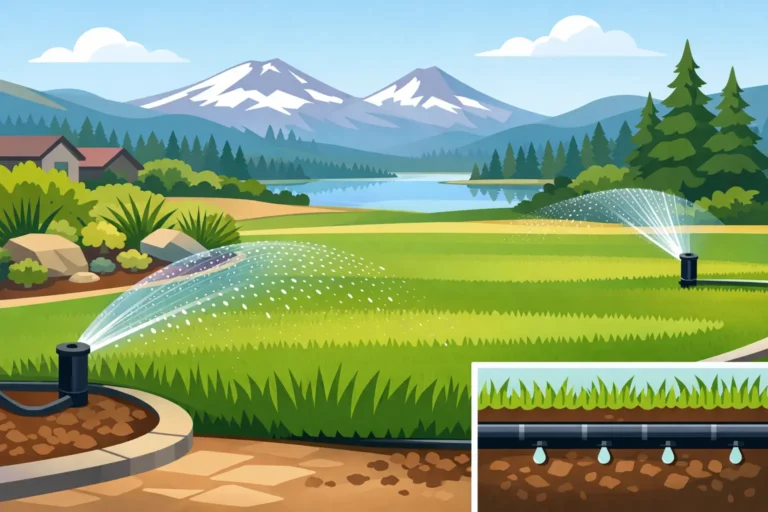
Even the right fertilizer performs poorly with uneven watering. Before feeding, check irrigation coverage. Look for dry spots, runoff, overspray, and zones that receive much more water than others. A simple catch-cup test can reveal whether one part of the lawn is getting twice the water of another.
For granular slow-release products, water in as directed so nutrients move into the root zone. For liquid products, follow label instructions closely because some are intended to remain on foliage briefly while others should be watered in. Do not fertilize immediately before a major storm or when runoff is likely.
Mow at an appropriate height, keep mower blades sharp, and leave short clippings on the lawn when practical. Those clippings return a modest amount of nutrients and organic matter to the soil. Aeration and topdressing can also improve how well sandy or compacted soils hold moisture and nutrients, making every fertilizer application more effective.
A healthier Central Oregon lawn is built through small, well-timed decisions: a soil test, efficient irrigation, grass suited to the site, and fertilizer applied for the season rather than the sales shelf. If you are unsure which option matches your soil, turf type, and water schedule, the team at Central Oregon Lawn Center can help you build a plan that supports greener grass without asking more from your water supply than your lawn truly needs.