Irrigation Technology for Central Oregon Lawns
A Bend lawn can look fine in the morning and show drought stress by late afternoon. Low humidity, intense sun, wind, sandy soil, and a short growing season all put pressure on turf. The right irrigation technology helps homeowners and landscape professionals respond to those conditions with precision rather than simply running sprinklers longer.
That distinction matters. Overwatering does not create a stronger High Desert lawn. It can encourage shallow roots, wash nutrients below the root zone, and leave water sitting where it does little good. Underwatering, meanwhile, thins turf and makes it easier for weeds, heat, and foot traffic to take over. A well-designed system delivers water evenly, at the right pace, when the lawn can actually use it.
Why Central Oregon Needs Smarter Irrigation
Central Oregon soils often drain quickly. That is helpful when a lawn is saturated after a storm, but it also means irrigation water can move past active roots before the turf has a chance to use it. A long sprinkler cycle may look generous, yet much of that water can be lost to deep percolation or runoff from compacted areas.
The goal is not to make grass dependent on daily watering. It is to build a deeper, more resilient root system by watering thoroughly and allowing the soil to dry moderately between cycles. The exact schedule depends on grass type, sun exposure, slope, soil preparation, and the age of the lawn. New seed and sod need frequent, light watering at first. Established turf needs a different approach, usually fewer watering days with enough run time to reach the root zone.
Irrigation equipment cannot correct poor soil or weak turf on its own. But when it works alongside appropriate grass seed, soil amendments, and sensible mowing, it can reduce water demand while keeping a lawn healthier through summer.
Irrigation Technology That Makes a Real Difference
Not every upgrade needs to involve a complete system replacement. In many Central Oregon yards, the biggest gains come from correcting coverage, improving control, and matching the watering method to the landscape.
Smart controllers adjust to real conditions
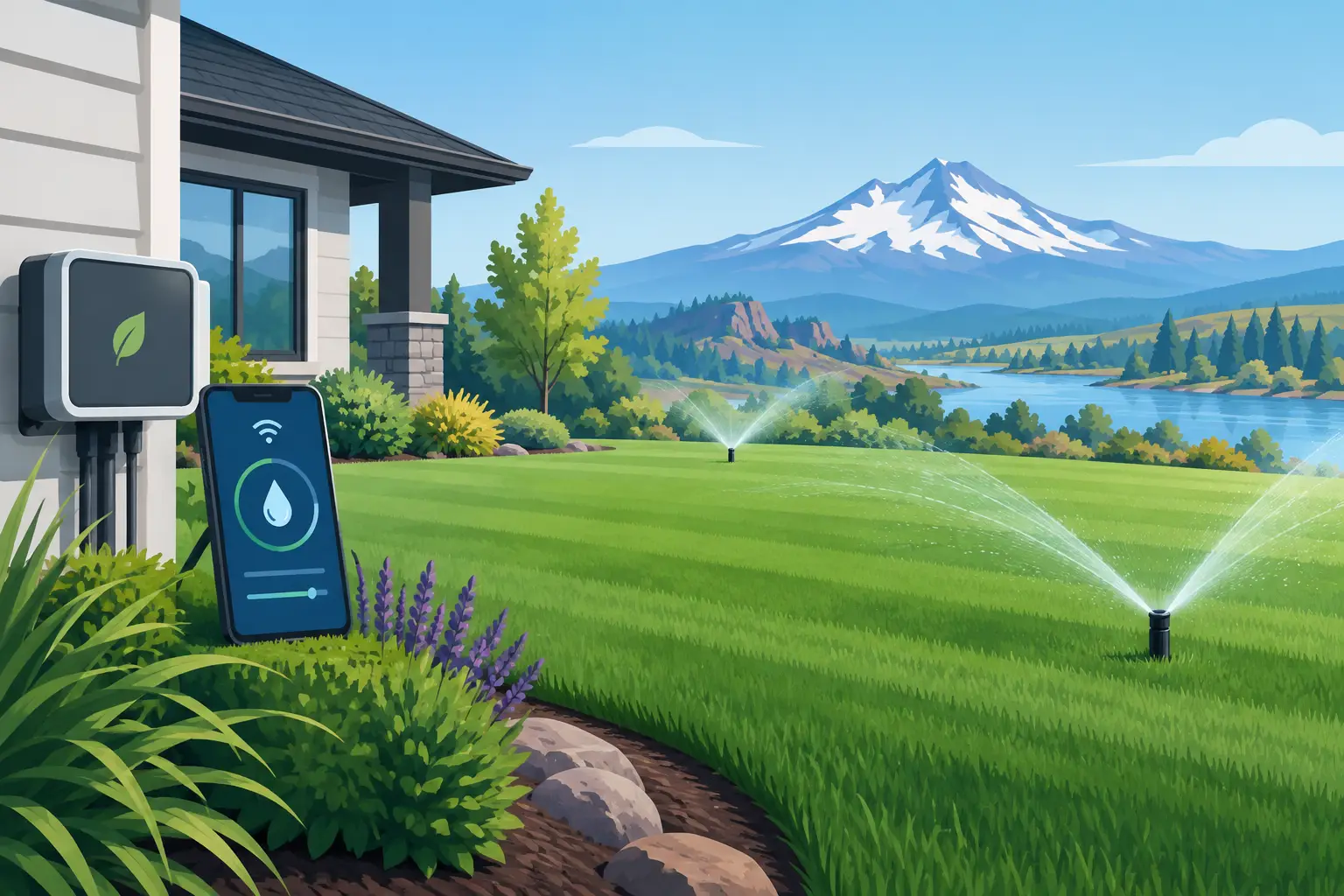
A smart irrigation controller can use local weather information, seasonal adjustments, and programmed plant needs to avoid watering as if every week were the same. Instead of leaving a fixed July schedule running into September, the controller can reduce watering as temperatures cool and day length shortens.
This technology is useful, but it is not hands-off forever. A controller needs correct programming, working valves, and realistic run times. It also needs a homeowner or landscape crew to check whether the lawn is actually receiving even coverage. Treat it as a better decision-making tool, not a substitute for inspection.
For properties with multiple zones, use the controller to separate needs. A sunny front lawn, a shaded side yard, shrub beds, and a vegetable garden should not all receive the same schedule. Grouping areas with similar water requirements prevents thirsty turf from dictating how much water everything else gets.
Pressure-regulated sprinkler heads improve uniformity
Sprinkler heads operate best within a specific pressure range. When pressure is too high, water can turn into a fine mist and drift away in the wind. When it is too low, the spray may not reach its intended distance. Either problem creates dry spots, wet spots, and the temptation to increase run time for the entire zone.
Pressure-regulated heads help maintain more consistent output. Paired with properly matched nozzles, they can create better head-to-head coverage, meaning one sprinkler’s spray reaches the next sprinkler. That overlap is essential for uniform watering, particularly on exposed Bend properties where wind can quickly reveal weak coverage.
If one part of the lawn is always brown while another stays soggy, do not assume the answer is more water. Check for clogged nozzles, tilted heads, broken risers, mismatched spray patterns, or landscaping that blocks the spray.
Drip irrigation belongs in beds, not turf
Drip irrigation delivers water slowly near plant roots. It is an excellent choice for trees, shrubs, perennials, and garden beds because it limits evaporation and keeps water off foliage. In a dry climate, that targeted delivery can be a significant advantage.
Drip is generally not the best fit for a traditional lawn. Turf roots spread across a broad area, and evenly watering grass with drip tubing can be difficult to manage. For lawn areas, properly designed spray or rotor zones are usually more practical. For landscape beds, drip keeps water focused where it belongs and makes it easier to avoid watering bare ground or pathways.
Rain and soil moisture sensors prevent unnecessary cycles
A rain sensor pauses scheduled irrigation after measurable precipitation. While Central Oregon does not rely on frequent summer rain, this inexpensive device can still stop waste during spring storms and changing fall weather.
Soil moisture sensors take the idea further by measuring conditions below the surface. They can be especially helpful in lawns with varied soils, shade patterns, or areas that have been renovated with compost and topdressing. The trade-off is that placement and calibration matter. A poorly placed sensor may reflect one unusually wet or dry pocket rather than the condition of the whole zone.
Program for Soak Cycles, Not Marathon Watering
Sandy soil absorbs water quickly, but compacted or sloped areas may shed it faster than expected. Rather than running one long cycle, use cycle-and-soak scheduling. This means applying water in shorter intervals with a break between them, allowing moisture to move into the soil before the next cycle begins.
For example, a zone that needs 30 minutes of watering may perform better as three 10-minute cycles separated by 30 to 60 minutes. The right timing depends on your sprinkler precipitation rate and soil conditions, so this is not a universal formula. The practical test is simple: if water runs down the sidewalk, pools near heads, or leaves muddy patches, the zone is receiving water faster than the ground can accept it.
Early morning is usually the best watering window. Wind is often lower, evaporation is reduced, and grass blades have time to dry after irrigation. Watering late in the evening can leave turf wet overnight, which is not ideal for lawn health even in a dry climate.
Use Seasonal Adjustments Before the Lawn Shows Stress
A common mistake is waiting for the lawn to fade before changing a schedule. By then, turf may already be stressed. Smart controllers can make seasonal changes automatically, but manual controllers need regular attention as spring turns to summer and summer turns to fall.
During establishment, seed and sod need consistent surface moisture. Once roots are established, gradually extend the time between waterings and increase depth. This encourages roots to follow moisture deeper into the soil. Lawns that receive shallow daily watering often become more vulnerable during heat, equipment problems, or watering restrictions.
In mid-summer, inspect irrigation at least once a month. Run each zone and look for leaks, damaged heads, clogged nozzles, overspray onto pavement, and areas hidden by growing plants. A small leak or stuck valve can waste a surprising amount of water over a season.
Better Turf Reduces the Work of Your System
Efficient irrigation starts below ground. Adding organic matter through compost and regular topdressing can improve moisture retention in sandy soils while supporting healthier root growth. Aeration can relieve compaction so water enters the soil more evenly. These steps can make a lawn more forgiving when hot, dry weather arrives.
Mowing also affects irrigation performance. Keep mower blades sharp and avoid cutting too short. Slightly taller grass shades the soil, reduces evaporation, and helps turf handle summer stress. It is a simple change that can reduce the pressure to water more often.
If a lawn has recurring thin spots, reconsider whether the existing grass variety is suited to the site. A custom seed blend selected for Central Oregon conditions can provide better drought tolerance and recovery than a generic mix. Sometimes the best irrigation upgrade is not another device but a lawn that needs less help to begin with.
For homeowners and professionals, the useful question is not, “How many minutes should I water?” It is, “Is this system applying water evenly and helping this lawn develop stronger roots?” Bring that question, along with photos or a zone layout, to Central Oregon Lawn Center for practical guidance tailored to your property. A few targeted adjustments can protect your water budget and give your lawn a better chance through the High Desert summer.