
Lawn Salinity Guide for Central Oregon Turf
A lawn can look thirsty even when it is getting plenty of water. In Central Oregon, that is often the first clue that salts may be building up around the roots. This lawn salinity guide explains how to separate a salt problem from ordinary drought stress, what to test, and how to make corrections without wasting water or applying products your lawn does not need.
Salinity is not a sign that you have done everything wrong. It is a soil and water chemistry issue that can develop gradually, especially where irrigation is essential for keeping turf green through a dry High Desert summer. The right response depends on your irrigation water, soil drainage, fertilizer habits, and the specific grass growing in your yard.
What Lawn Salinity Means
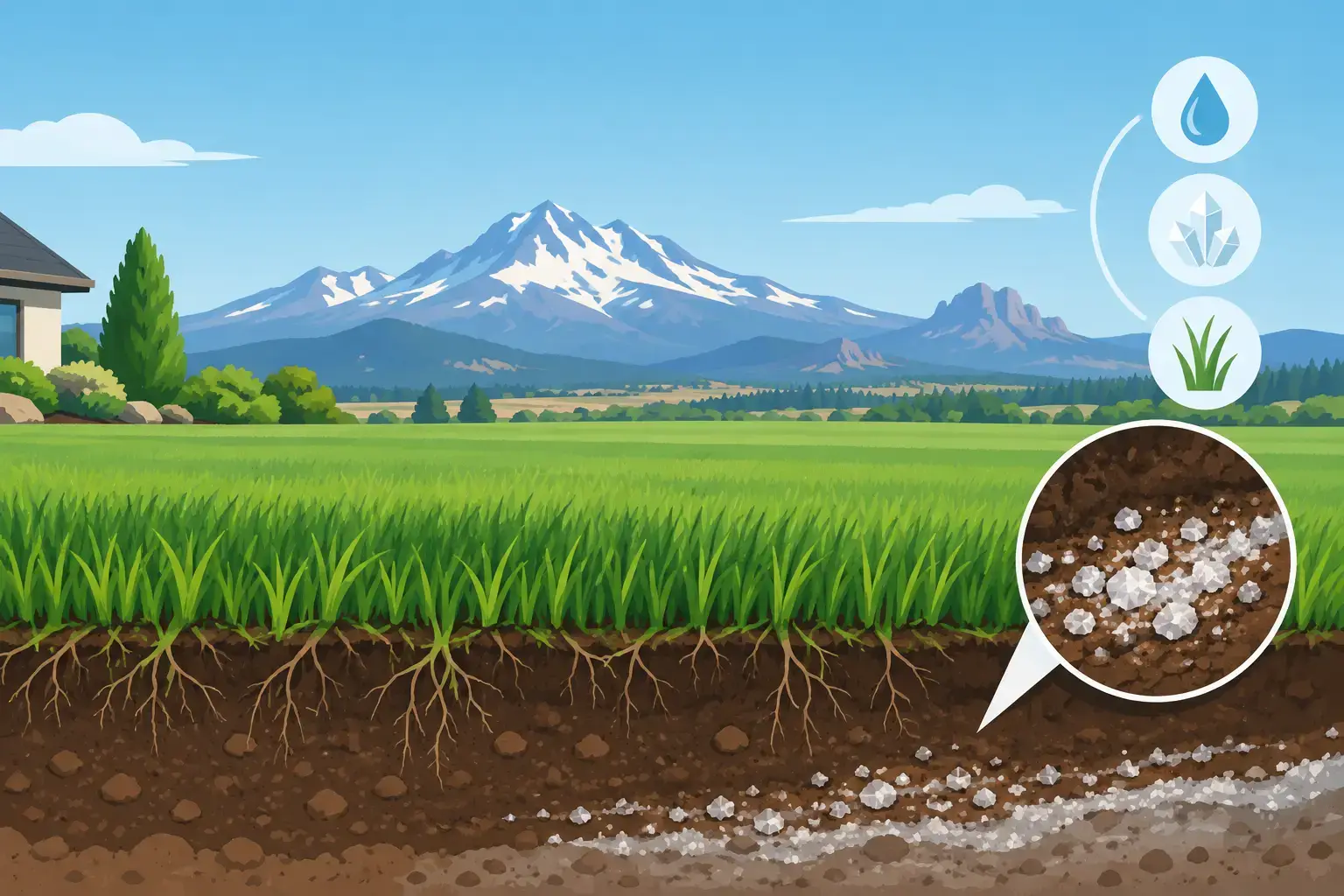
Salinity refers to dissolved salts in soil water. These can include calcium, magnesium, sodium, chloride, sulfate, and bicarbonates. Plants need small amounts of several of these minerals, but too much total salt makes it harder for turf roots to pull in water.
That is why salt stress can resemble drought stress. The soil may be moist, but the grass still cannot access enough water to stay healthy. Leaf tips brown, growth slows, and thin areas appear. During hot or windy weather, the symptoms can become much more obvious because the lawn is already working harder to replace moisture.
A related but different concern is sodicity. Sodic soil has excessive sodium relative to calcium and magnesium. Sodium can cause soil particles to disperse, reducing pore space and water movement. In Central Oregon’s variable soils, this may show up as poor infiltration, surface crusting, or water that puddles rather than soaking in. A soil can be saline, sodic, or both, and each condition calls for a different plan.
Signs Your Lawn May Have a Salt Problem
Salt damage rarely appears as a perfectly even problem across the whole lawn. Look closely at patterns. White crust on the soil surface, along pavement edges, or near sprinkler overspray can point to salt accumulation. Brown leaf margins and tips, weak recovery after watering, and patches that stay thin despite regular care are also common signals.
Pay attention to where the damage occurs. Turf next to sidewalks, driveways, and streets can be affected by winter de-icing products. Areas at the bottom of a slope may collect runoff. Spots with poor sprinkler coverage can accumulate salts because they do not receive enough water to move salts below the root zone. Conversely, an area that stays wet but performs poorly may have drainage or sodium-related structure issues.
These symptoms are not proof by themselves. Grubs, fungus, compacted soil, irrigation gaps, dog damage, and fertilizer burn can create similar-looking turf. Treating the wrong problem can make matters worse, particularly if you add more fertilizer to grass that is already stressed by salt.
Start With Soil and Water Testing
The most useful lawn salinity guide begins with measurements, not guesses. Ask for a soil test that reports electrical conductivity, often shown as EC, along with pH and sodium-related measurements such as sodium adsorption ratio, or SAR. EC indicates the concentration of dissolved salts. SAR helps identify whether sodium may be affecting soil structure.
For the clearest picture, take separate samples from a healthy part of the lawn and a struggling part. Sample at root depth, generally several inches deep, and avoid collecting immediately after fertilizer application. Comparing the results helps show whether the issue is localized or site-wide.
If the lawn is irrigated with well water, testing the water matters just as much. Well water quality can differ significantly from one property to another in Central Oregon. A water test can identify salinity, sodium, bicarbonates, and other factors that influence how your soil behaves over time. Municipal water can also contribute minerals, though the impact depends on local water quality and the amount used.
Do not assume that a high pH reading alone means salinity. Central Oregon soils are often naturally alkaline, and alkalinity and salinity are related but not interchangeable. A complete test prevents expensive guesswork.
Correct Salt Stress Without Wasting Water
When a test confirms excess soluble salts and the soil drains well, the usual correction is leaching: applying enough irrigation water to move salts below the active root zone. This is not the same as watering more often. Frequent, shallow irrigation can leave salts near the surface where grass roots are most active.
Leaching works best when applied deliberately. Water needs to move through the soil, not simply run off the surface or collect in low spots. Sandy soils can drain quickly, but dry or compacted ground may initially repel water. In that case, use cycle-and-soak irrigation: run shorter cycles, pause to let water infiltrate, then repeat. This approach is often more effective than one long cycle and reduces runoff.
The trade-off is real. Central Oregon water is valuable, and applying extra water without a confirmed need is neither economical nor environmentally responsible. Use leaching only when tests, symptoms, and drainage conditions support it. If water restrictions are in place, prioritize irrigation efficiency first and get local guidance before scheduling a corrective flush.
After leaching, return to a deep, infrequent watering pattern that suits your soil, grass type, and weather. Monitor root-zone moisture rather than relying on a fixed calendar. A simple irrigation audit can reveal clogged nozzles, tilted heads, uneven precipitation, and overspray that leave some areas salt-stressed while others are overwatered.
When Gypsum Helps – and When It Does Not
Gypsum is widely recommended for troubled soil, but it is not a universal salt remedy. It provides calcium, which can help displace sodium in sodic soils when the soil test indicates a sodium issue and there is adequate drainage and water to carry the displaced sodium away.
Gypsum will not magically remove all salts, fix poor sprinkler coverage, or replace leaching where soluble salts are the primary concern. Applying it to a lawn without a sodium-related problem may add cost with little benefit. Test first, then match the amendment to the result.
Build Soil That Handles Irrigation Better
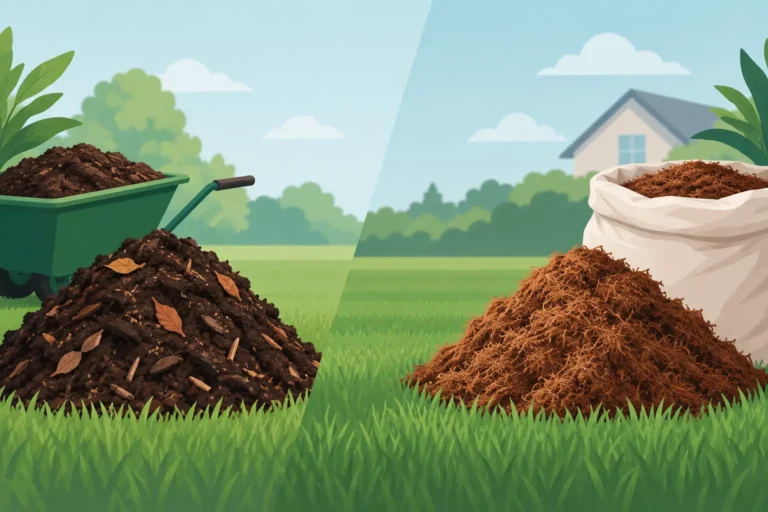
Healthy soil does not prevent every salinity issue, but it gives turf a better chance to tolerate stress. Organic matter improves moisture retention, encourages biological activity, and can support better soil structure. For many Central Oregon lawns, a light topdressing with screened compost during the appropriate growing season can be useful, especially on sandy ground with low organic matter.
Choose compost carefully. Some composts and manures contain elevated salts, so more is not always better. Ask about the product’s quality and use an appropriate rate rather than burying turf under a heavy layer. The goal is to improve the root zone gradually while allowing grass blades to remain exposed.
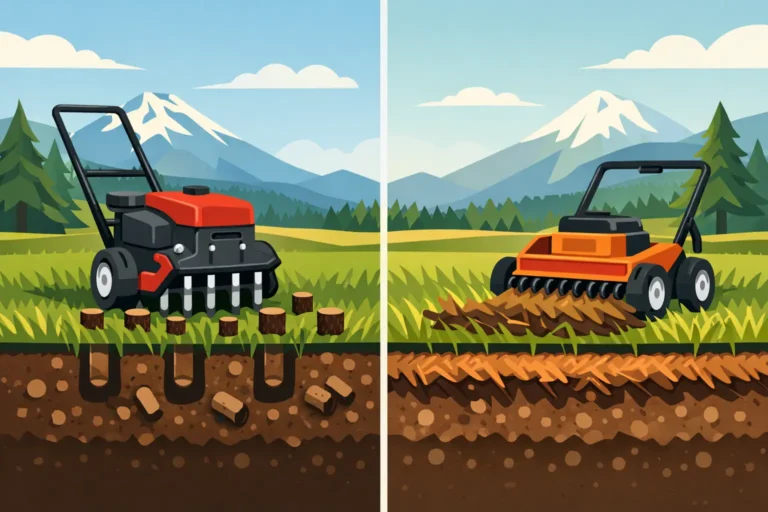
Core aeration can also help when compaction is preventing water from entering the soil. It is not a direct salinity treatment, but better infiltration makes an evidence-based leaching plan more likely to work. Aeration is most helpful when the lawn is actively growing and can recover, not when turf is severely heat-stressed.
Fertilize With Restraint
Fertilizer salts can contribute to root stress when products are overapplied, spilled, or applied to dry turf without sufficient follow-up irrigation. This does not mean lawns should go unfed. It means fertilizing should be based on soil needs, turf growth, and the season.
Use measured applications, sweep granules off hard surfaces, and avoid pushing fast growth during periods of heat or drought stress. Slow-release and organic nutrient sources can be a practical fit for many lawns, but they still need to be selected and applied correctly. A lawn recovering from salinity usually benefits more from balanced care than from a heavy dose of quick nitrogen.
If a section is badly damaged, correct the soil and irrigation issue before reseeding. New seed is especially vulnerable in a salty root zone. Once conditions improve, a region-appropriate grass blend and steady establishment watering give renovation work a much better chance of success.
A Practical Plan for Central Oregon Lawns
Start by checking irrigation coverage and looking for pattern-based symptoms. Then test the affected soil and, when applicable, your irrigation water. Use the results to decide whether you need improved drainage, targeted leaching, a sodium correction, adjusted fertilization, or a combination of these steps.
For homeowners and landscape professionals, the key is avoiding one-size-fits-all fixes. High Desert lawns already contend with dry air, sandy soil, wind, short growing windows, and water-conscious irrigation. Salinity management should support those realities, not fight them.
If you are seeing persistent brown areas despite careful watering, bring your test results and a clear description of the site to Central Oregon Lawn Center. A locally grounded recommendation can help you choose the right amendment, seed, irrigation adjustment, or equipment for a healthier lawn that uses water wisely.