
Why Is My Grass Turning Brown in Bend?
You look out the window and the lawn that was green two weeks ago now has straw-colored patches, dull edges, or whole areas that seem to be fading fast. If you are asking, why is my grass turning brown, the answer in Central Oregon is rarely just one thing. Our High Desert climate puts turf under pressure from heat, dry air, sandy soil, irrigation gaps, and short recovery windows, so brown grass is usually a signal that something in the system needs attention.
The good news is that brown does not always mean dead. In many cases, grass is stressed, dormant, or thinning because it is not getting what it needs at the right time. The key is figuring out whether you are dealing with drought stress, irrigation problems, soil limitations, disease, pet damage, traffic, or a mix of several factors.
Why is my grass turning brown in Central Oregon?
In Bend and surrounding communities, lawns face conditions that are much tougher than the average lawn-care article assumes. Low humidity pulls moisture out of the soil quickly. Summer heat can build fast. Many properties have native soils that drain too quickly or lack the organic matter needed to hold water and nutrients. Add irrigation restrictions or uneven sprinkler coverage, and brown turf can show up even when you feel like you are watering enough.
That is why local diagnosis matters. A lawn in the Midwest may brown for very different reasons than a lawn in Central Oregon. Here, the pattern of the damage often tells the story. If the lawn browns in wide areas, water stress is usually the first thing to check. If you see small circular patches, disease, dog spots, or sprinkler distribution problems may be involved. If the turf is brown only where people walk or where snow sat late, compaction or seasonal damage may be playing a role.
The most common causes of brown grass
Drought stress is at the top of the list. Grass in our region often dries out from the top down and from the edges inward. You may notice a bluish-gray cast before full browning sets in, and footprints may remain visible longer after walking across the lawn. That means the blades are not springing back because the plant is short on moisture.
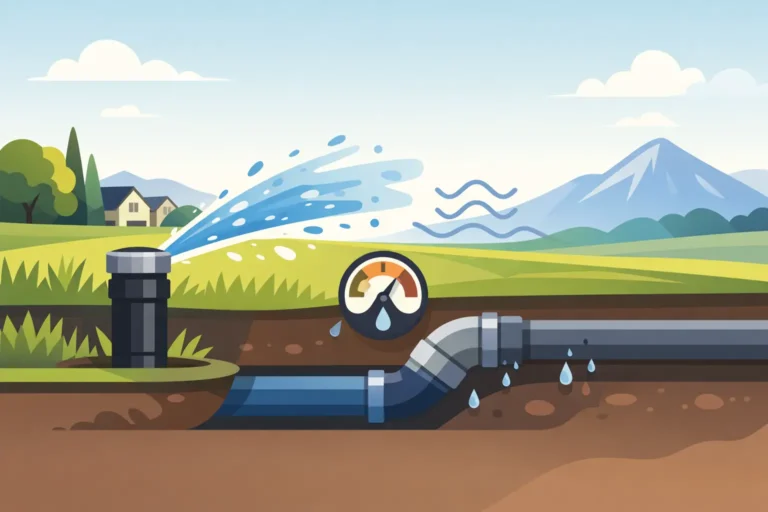
Sometimes the issue is not how often you water, but how evenly. Sprinkler heads clog, tilt, or miss sections of turf. One zone may run fine while another falls short. In windy conditions, spray patterns can shift enough that narrow strips turn brown while the rest stays green. This is especially common in exposed yards where afternoon wind steals water before it reaches the root zone.
Shallow watering is another frequent culprit. Light daily watering encourages roots to stay near the surface, where they dry out faster in heat and dry air. A lawn with shallow roots can look acceptable in mild weather, then turn brown quickly during a hot stretch.
Soil problems also show up fast in Central Oregon. Sandy or rocky soil drains quickly, which sounds good until water and nutrients move past the root zone before the grass can use them. Compacted soil causes a different problem. Water may run off rather than soak in, and roots struggle to expand. In both cases, the lawn can brown even when you are technically irrigating.
Fertilizer mistakes can cause browning too. Too little fertility leads to weak, pale turf that cannot handle heat stress. Too much fertilizer, especially during hot weather, can burn the lawn and damage roots. With eco-friendly lawn care, the goal is steady health, not forced growth.
Pet spots are easy to mistake for disease. Dog urine often causes round brown patches with a darker green ring around the outside. That green ring happens because a small amount of nitrogen can feed the grass, while a concentrated dose burns it.
Then there is disease. Fungal issues can develop when watering schedules, thatch, temperature, and nighttime moisture line up the wrong way. Disease is less common than drought stress in our area, but it does happen, especially in lawns that are overwatered, cut too short, or struggling in compacted soil.
How to tell if brown grass is dead or dormant
This is the question most homeowners really want answered. Brown grass can often recover if the crowns and roots are still alive. Grab a handful of brown turf and tug lightly. If it pulls up easily with little resistance, the grass may be dead or severely damaged. If it stays anchored, the plant may simply be dormant or stressed.
You can also inspect the base of the plant. If the crown near the soil surface still has some pale green or off-white tissue, recovery is possible. If everything is brittle and gray down to the base, the area may need renovation or reseeding.
Timing matters here. Cool-season grasses commonly grown in Central Oregon can go dormant under heat and drought stress, especially if watering is inconsistent. That does not mean they will bounce back instantly. Recovery depends on root health, weather, irrigation correction, and whether the underlying issue gets fixed.
Why is my grass turning brown even though I water it?
If you are watering and the lawn is still browning, assume distribution or infiltration is the problem until proven otherwise. Run each irrigation zone and watch it. Look for dry arcs, blocked heads, misting instead of spray, pooling water, and overlap gaps. A simple catch-can test can reveal how uneven the system really is.
Next, check how deep the water is going. If the top inch is wet but the soil below is dry, the roots are not getting enough. Lawns need moisture in the root zone, not just a damp surface. In Central Oregon, that often means longer, less frequent watering rather than quick daily cycles.
The time of day matters too. Watering in the middle of a hot, windy afternoon is inefficient. Watering very late at night can increase disease pressure in some situations. Early morning is usually the best balance.
Finally, consider whether the lawn itself is suited to the site. Some grass varieties handle traffic, drought, and temperature swings better than others. If a lawn was installed with a generic seed mix rather than a blend chosen for High Desert conditions, it may struggle year after year no matter how carefully you water.
When soil is the real problem
A lawn only performs as well as the soil underneath it. In Central Oregon, poor soil structure is often the hidden reason behind chronic browning. If water runs through too quickly, roots dry out. If the soil is compacted, roots stay shallow and weak. If organic matter is low, the soil cannot hold moisture or nutrients effectively.
This is where aeration, topdressing, and soil amendments can make a bigger difference than another round of fertilizer. Aeration opens compacted soil and improves water movement into the root zone. Compost-based topdressing helps sandy soils hold moisture longer and supports healthier microbial activity. Balanced amendments can improve soil function without pushing soft, thirsty growth.
There is a trade-off, though. Soil improvement is not an overnight fix. It builds lawn resilience over time. If your grass browns every July, the real solution may be a better soil program in spring and fall, not just more summer irrigation.
What to do next if your lawn is brown
Start by identifying the pattern. Large irregular areas usually point to water stress. Sharp lines often indicate sprinkler coverage issues. Small circles may suggest pet damage or disease. Thinned areas near walkways or play zones often reflect compaction.
Then correct the basics first. Raise mowing height if you have been cutting too short. Check irrigation coverage and watering depth. Avoid heavy fertilizer applications during heat. If the soil is hard, dry, and difficult to wet evenly, plan for aeration and topdressing. If sections are dead, not dormant, overseeding or partial renovation may be the right next step.
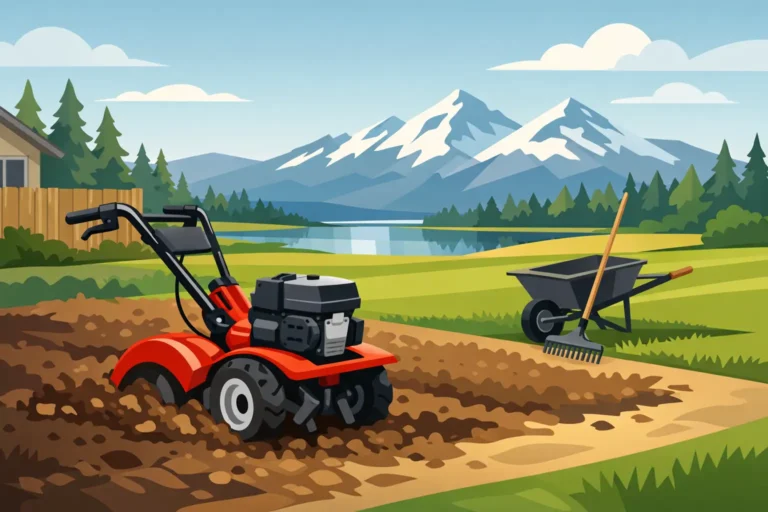
For severely damaged lawns, equipment can speed up the recovery process. Power raking, aerating, topdressing, or sod cutting each solve a different problem, and choosing the right approach depends on how far the damage has gone. At Central Oregon Lawn Center, we often see lawns improve fastest when homeowners stop chasing one product fix and start treating the lawn as a system – grass variety, soil, water, and maintenance all working together.
A brown lawn can be frustrating, especially when you have been putting in the effort. But in Bend, brown grass is often useful information. It tells you where the lawn is under stress and where a more region-specific approach can make all the difference. The best results usually come from small, smart corrections made early, before a stressed lawn turns into a full renovation project.