How to Measure Lawn pH for Central Oregon Yards
A lawn can receive the right seed, careful irrigation, and quality fertilizer yet still struggle because the soil chemistry is working against it. Learning how to measure lawn pH gives Bend-area homeowners and landscape professionals a clear starting point before adding products that may not address the real problem.
In Central Oregon, many lawns are established on sandy, low-organic-matter soils. Those soils drain quickly, hold fewer nutrients, and can vary significantly from one part of a property to another. A pH test will not diagnose every lawn issue, but it can help explain why turf is pale, thin, slow to respond to fertilizer, or inconsistent across the yard.
What Lawn pH Tells You
Soil pH measures whether soil is acidic or alkaline on a scale from 0 to 14. A reading of 7 is neutral. Below 7 is acidic; above 7 is alkaline. Most cool-season lawn grasses grow best when the soil is slightly acidic to nearly neutral, generally around pH 6.0 to 7.0.
That range matters because pH affects nutrient availability. Nitrogen, phosphorus, iron, and other essential nutrients may be present in the soil but difficult for grass roots to absorb when pH is too high or too low. In the High Desert, alkaline conditions are common, particularly in sites with native soil, construction fill, or frequent irrigation with mineral-containing water.
A pH result is a useful decision-making tool, not a reason to automatically apply a soil amendment. The right next step depends on the actual number, the broader soil test results, the grass type, and whether your lawn is showing symptoms.
How to Measure Lawn pH With a Representative Sample
The most accurate method is to collect several small soil samples and send a combined sample to a laboratory or have it evaluated by a qualified local resource. A lab test costs more than a simple home kit, but it provides a more dependable pH result and often includes nutrient levels, organic matter, and amendment recommendations.
Start when the soil is workable and not saturated, frozen, or freshly fertilized. Spring and early fall are good testing windows in Central Oregon, although you can collect a sample whenever you are planning a lawn renovation or trying to solve a persistent turf problem.
Use a clean trowel, soil probe, or shovel. Avoid galvanized containers, dirty tools, and buckets that have held fertilizer, lime, compost, or chemicals. Contamination can affect the result.
Sample Several Areas, Not One Spot
A single scoop from the greenest or thinnest patch rarely represents the entire lawn. Walk the area in a zigzag pattern and take 8 to 12 small cores from the same lawn zone. For established turf, sample the top 3 to 4 inches of soil after brushing aside the grass blades and surface debris.
Place the cores in a clean plastic bucket, break them apart, and mix them thoroughly. Remove rocks, roots, thatch, and mulch. Spread the mixed soil on clean paper or a tray and let it air-dry indoors if the lab instructions call for dry soil. Do not bake it, microwave it, or leave it in direct heat.
If your property has clearly different conditions, test those areas separately. A sunny front lawn with imported topsoil may test differently than a shaded side yard, a new sod area, or a section near a driveway where snow melt and de-icing materials collect. Label each sample carefully so the results remain useful.
Choosing a Home Kit, Meter, or Lab Test
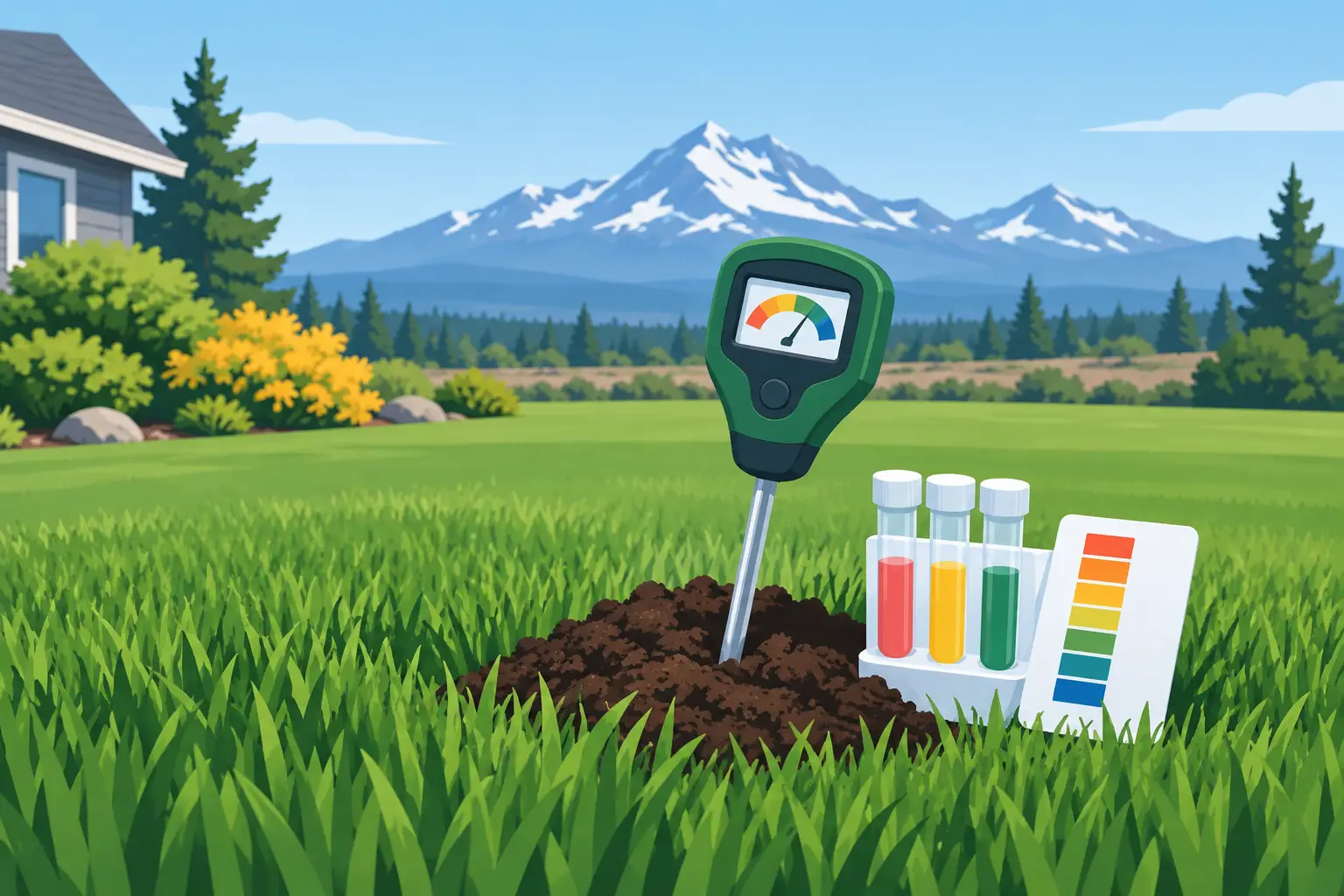
Home pH kits can be a practical first look, especially if you want to compare separate parts of your yard. Most use a color-changing solution or test strip. Follow the directions precisely, use distilled water when instructed, and repeat the test two or three times from the same mixed sample. Color kits are most helpful when they show a clear trend rather than a borderline reading.
Electronic soil meters are convenient, but their accuracy can be inconsistent. In sandy or dry Central Oregon soil, direct-insert meters may give misleading readings if the soil moisture is uneven or the probe is not clean. They can be useful for rough comparisons, but they should not be the sole basis for a major lime, sulfur, or fertilizer application.
A professional lab test is the better choice when you are renovating a lawn, establishing sod, correcting a recurring issue, or managing a larger property. It is also the best option if a home test suggests an extreme result. Ask for a standard soil analysis that includes pH, buffer pH when relevant, organic matter, and major nutrients. For a lawn that is yellowing despite regular care, micronutrient information can be useful as well.
Reading Your Result in Central Oregon Conditions
A pH around 6.0 to 7.0 is usually a comfortable range for most established lawns. If grass is performing well within that range, focus on good irrigation practices, appropriate mowing height, seasonal nutrition, and building soil health rather than chasing a perfect number.
A result between 7.1 and 7.5 is mildly alkaline. Many lawns can still perform well there, especially with balanced fertilization and enough organic matter. However, iron and phosphorus can become less available as alkalinity rises. If turf appears pale or weak, do not assume it needs more nitrogen. A complete soil test can show whether pH is contributing to the issue.
Readings above 7.5 deserve closer attention, particularly if you are establishing seed or trying to correct poor color and slow growth. High pH is common in arid regions, but it is not always easy or economical to change. In many cases, the most practical approach is gradual soil improvement, targeted nutrient applications, and grass varieties suited to local conditions rather than aggressive attempts to force a dramatic pH change.
A result below 6.0 is less common in many Central Oregon native soils, but it can occur where acidic organic materials have accumulated or where soil has been heavily amended over time. Low pH can reduce nutrient availability and may call for lime. Still, lime should be applied only after a reliable test and at the recommended rate. Too much lime is difficult to reverse.
Avoid Quick Fixes for High or Low pH
Lawn amendments work slowly because they must react with the soil. Adding lime to an already alkaline lawn can make nutrient problems worse. Applying sulfur without a test can lower pH unevenly, stress turf, and create unnecessary expense. The same caution applies to household remedies such as vinegar, baking soda, wood ash, or large amounts of coffee grounds. They are not reliable, lawn-scale pH management tools.
For many Central Oregon lawns, improving soil structure produces more lasting benefits than chasing a quick pH correction. Compost or other appropriate organic matter can help sandy soils retain moisture and nutrients while supporting beneficial soil biology. Core aeration can reduce compaction and create pathways for air, water, and amendments to move into the root zone. Topdressing after aeration is particularly helpful when a lawn has thin, low-quality soil near the surface.
If a lab recommends sulfur or lime, apply the stated amount evenly and avoid applying more than the recommended seasonal limit. Water according to label and soil-test guidance, then allow time for the change to occur. Retest in six to 12 months instead of assuming the amendment worked immediately.
Test Before Renovating or Changing Your Fertilizer Plan
A soil test is especially valuable before power raking, overseeding, laying sod, or starting a major lawn renovation. These projects create an opportunity to address soil conditions before new grass has to depend on them. If you are bringing in topsoil or compost, test the existing soil first and consider testing the imported material as well. Not all topsoil is the same, and a soil blend that performs well elsewhere may not be ideal for a dry, sandy site.
Testing also supports more responsible fertilizer use. When you know the pH and nutrient levels, you can choose products that support turf without adding nutrients your soil already has in excess. That helps protect water resources, avoids waste, and encourages steadier growth rather than a quick flush that demands extra water.
For established lawns, test every two to three years or sooner if turf performance changes significantly. Retest after major soil work, repeated amendment applications, or a renovation project. Keep a simple record of the date, location, result, fertilizers, and amendments used. Over a few seasons, that record becomes far more useful than trying to remember what was spread last spring.
Healthy turf in the High Desert starts below the grass blades. Bring a properly collected soil sample and your lawn observations to Central Oregon Lawn Center, and you can make the next step based on your actual conditions – not a guess from a bag label.