

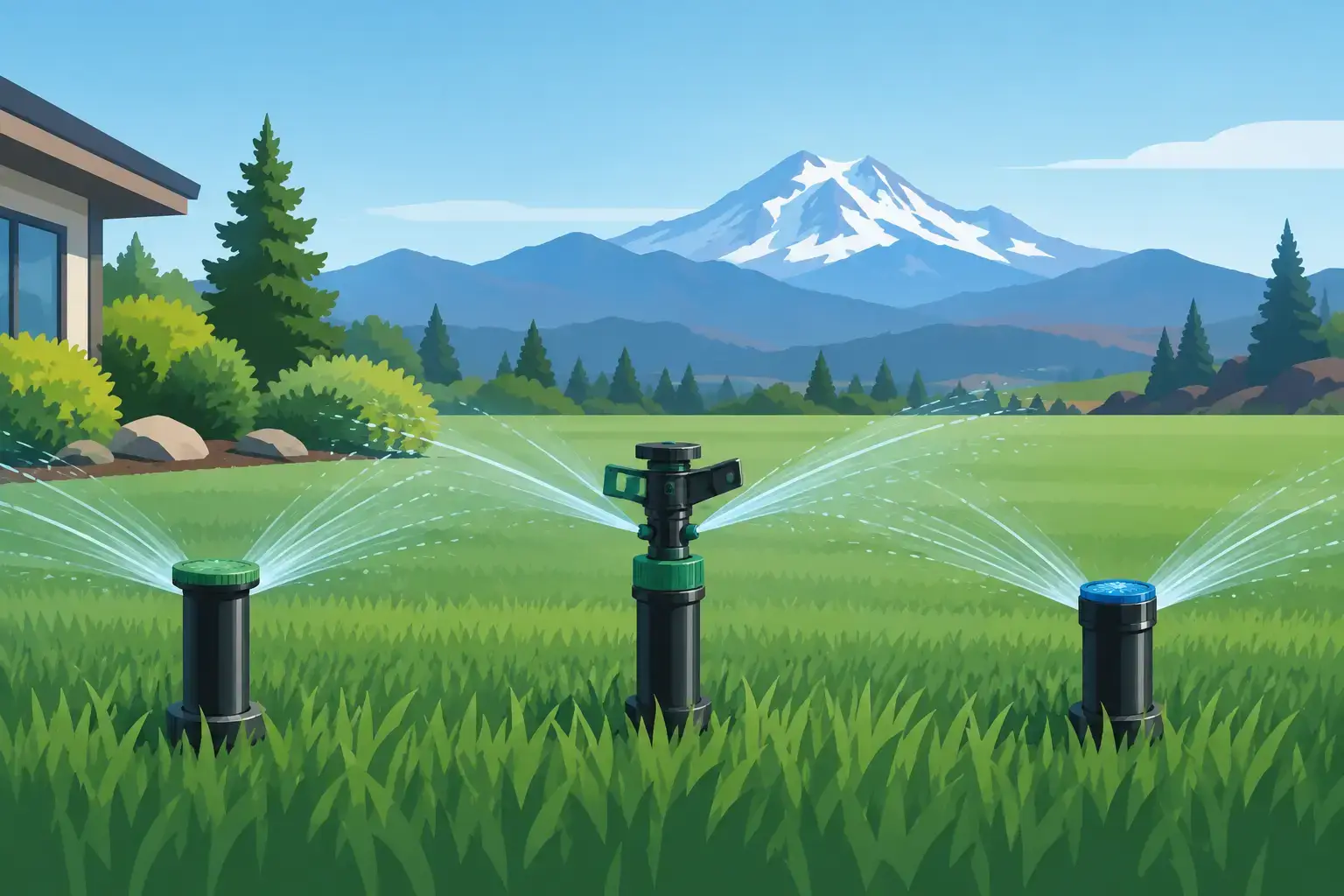
Best Lawn Sprinkler Heads for Central Oregon
A lawn in Bend can look evenly watered at 8 a.m. and show dry, stressed patches by dinner. Low humidity, sandy soils, wind, and intense summer sun leave little room for an inefficient irrigation system. The best lawn sprinkler heads are not simply the ones with the farthest throw or the lowest price. They are the heads that apply water evenly, match the shape of the turf, and work with your system’s real water pressure.
For Central Oregon homeowners and landscape professionals, sprinkler selection is a water-management decision. A well-designed system can help establish healthier turf with fewer wasted gallons, while a mismatched head can create runoff in one area and drought stress in another.
Start With Coverage, Not the Sprinkler Brand
Before replacing a sprinkler head, look at the lawn zone it serves. Measure the lawn shape, note narrow strips and curved borders, and identify areas exposed to regular afternoon wind. The goal is head-to-head coverage: water from one sprinkler should reach the next sprinkler. This overlap helps compensate for the lighter application that naturally occurs at the outside edge of a spray pattern.
A common mistake is choosing a larger-radius nozzle to avoid adding another head. On a small lawn, that often sends water onto walks, driveways, fences, or planting beds. It also makes it harder to apply water at a consistent rate across the zone. A smaller, properly placed nozzle is usually more efficient than an oversized one trying to cover too much ground.
Your sprinkler heads must also match the zone’s water source. If one area has low pressure because it is at the end of a long run, a high-output head may not perform as intended. Check the system while it is running rather than relying on the label alone. Weak streams, uneven rotation, misting, and dry wedges are all signs that pressure, nozzle choice, or layout needs attention.
The Best Lawn Sprinkler Heads by Yard Situation
There is no single best choice for every Central Oregon lawn. The right style depends on the size and geometry of the turf, the soil’s ability to absorb water, and how exposed the area is to wind.
Fixed spray heads for small, simple lawn areas
Fixed spray heads are a practical choice for small squares, front-yard patches, and other compact areas. They use a preset nozzle to deliver a fan-shaped pattern in a full, half, quarter, or adjustable arc. Because they generally apply water quickly, they work best where the soil can take in that rate without puddling or runoff.
In sandy Central Oregon soils, spray heads can be effective, but they require attention. Sandy ground absorbs water quickly at first, yet uneven grading, compacted spots, and thatch can still send water away from the root zone. Use short watering cycles and allow time for water to soak in before running a second cycle. This cycle-and-soak approach is often more useful than simply lengthening one irrigation run.
Avoid mixing fixed spray heads with rotors on the same valve. Spray heads and rotors apply water at very different rates. When they share a zone, one part of the lawn will almost always receive too much or too little water.
Multi-stream rotary nozzles for water-wise retrofits
Multi-stream rotary nozzles fit many standard spray-body pop-ups but apply water through slow, rotating streams rather than a fast spray. They are often an excellent upgrade for established lawns with slopes, irregular turf shapes, or wind exposure. Their slower precipitation rate gives water more time to enter the soil, which can reduce runoff and help encourage deeper roots.
These nozzles are especially useful when a lawn has conventional spray heads that mist in the wind or create wet sidewalks. They typically use less water per minute and have longer run times than fixed sprays. That trade-off matters: changing to rotary nozzles without adjusting the controller can leave the lawn under-watered. Plan to recalibrate each zone after the change.
For a Bend lawn with sandy soil and a sunny exposure, slower application is not automatically better if the watering schedule is too short. The benefit comes from applying water evenly and deeply enough to support the root zone, not from choosing a nozzle that merely sounds efficient.
Gear-driven rotors for larger turf zones
Gear-driven rotors are built for larger lawns, broad side yards, common areas, and commercial landscapes. They rotate slowly and throw water farther than typical spray nozzles. Quality rotors offer adjustable arcs and interchangeable nozzles, giving installers and homeowners more control over radius and flow.
Rotors are a strong option when the heads are spaced correctly and the zone has enough pressure to operate them. They are less suitable for narrow strips or small lawn islands. Trying to force a rotor into a confined space often leads to overspray and wasted water.
Wind is the main consideration in open High Desert settings. A rotor’s larger stream can be carried off target when the breeze picks up. Water early in the morning, before wind and heat increase, and use the lowest practical trajectory nozzle for the zone. A lower stream is often more likely to land where it belongs.
Strip-pattern nozzles for parkways and narrow side yards
Long, thin lawn strips are among the most difficult places to irrigate efficiently. Standard quarter-circle or half-circle nozzles do not fit their shape, so they frequently water concrete or adjacent beds. Strip-pattern nozzles are designed specifically for these narrow areas, throwing rectangular patterns that better match parkways, side yards, and lawn edges.
They can be a smart solution, but use them thoughtfully. Narrow strips tend to dry out faster because of reflected heat from pavement, roots from nearby trees, and wind exposure. Check moisture below the surface before increasing run time. Sometimes the problem is not the sprinkler head but compacted soil, shallow roots, or a poorly located head blocked by plants.
Pressure Regulation Makes a Real Difference
Even the right sprinkler head will not perform well outside its recommended pressure range. Too much pressure creates fine mist that drifts in the wind and evaporates before reaching the turf. Too little pressure shortens the throw, leaving dry gaps between heads.
Pressure-regulated spray bodies can help maintain more consistent performance, particularly in systems where pressure varies between zones. They are a practical consideration for water-wise irrigation because they can reduce misting and improve the intended distribution pattern. For larger rotor zones, correct pipe sizing and valve design are equally important. A pressure problem is not always solved at the head itself.
If you see fog-like spray, water collecting in low spots, or a sprinkler that barely clears the grass, do not assume the head is defective. Clean the nozzle, inspect the filter, make sure the riser is upright, and check for damaged pipes or a partially closed valve. These simple repairs often restore coverage without replacing the entire head.
Choose Nozzles That Match, Then Adjust for the Season
Matched precipitation is one of the most useful principles in lawn irrigation. Heads within the same zone should apply water at a similar rate, even when their arcs differ. A full-circle head covers more area than a quarter-circle head, so it generally needs a higher flow nozzle to keep application consistent across the lawn.
This is why replacing one broken nozzle with a random spare can create a lasting dry or soggy spot. Match the nozzle family, radius, arc, and flow to the rest of that zone. After installation, run the system and watch it. The lawn will tell you more than a controller setting can.
Seasonal adjustment is just as important. A system set for July should not run at the same schedule during cooler spring or early fall weather. During establishment, new seed and sod need frequent light irrigation, but mature turf benefits from less frequent, deeper watering that encourages roots to move down into the soil. Local water restrictions should always guide your schedule, along with current temperatures and rainfall.
Installation Details That Protect Performance
A sprinkler head should sit level with the finished soil grade, not buried under turf and not sticking high above it. A buried head can be blocked by grass and collect debris. A raised head is easily damaged by mowers and can create a trip hazard. In areas with heavy foot traffic or edging, check heads regularly throughout the growing season.
Also look for grass growing over nozzles, settled soil around risers, and shrubs that have expanded into the spray pattern. Irrigation systems change as landscapes mature. A head that worked well when installed may need an arc adjustment, a taller riser, or a new placement several years later.
The best irrigation choice is usually the one that puts water only where your lawn can use it. Bring a zone map, a few photos, or a damaged sprinkler head to Central Oregon Lawn Center for practical help matching components to your yard. A small adjustment now can mean healthier turf, less runoff, and a lawn that holds up better through Central Oregon’s dry summer weather.