Drip Irrigation Versus Spray in Central Oregon
A bluegrass lawn, a row of thirsty shrubs, and a vegetable garden do not use water the same way. That is why the drip irrigation versus spray decision matters so much in Bend and across Central Oregon. With sandy soils, low humidity, summer heat, and water-conscious landscapes, choosing the right delivery method can reduce waste while helping plants establish stronger roots.
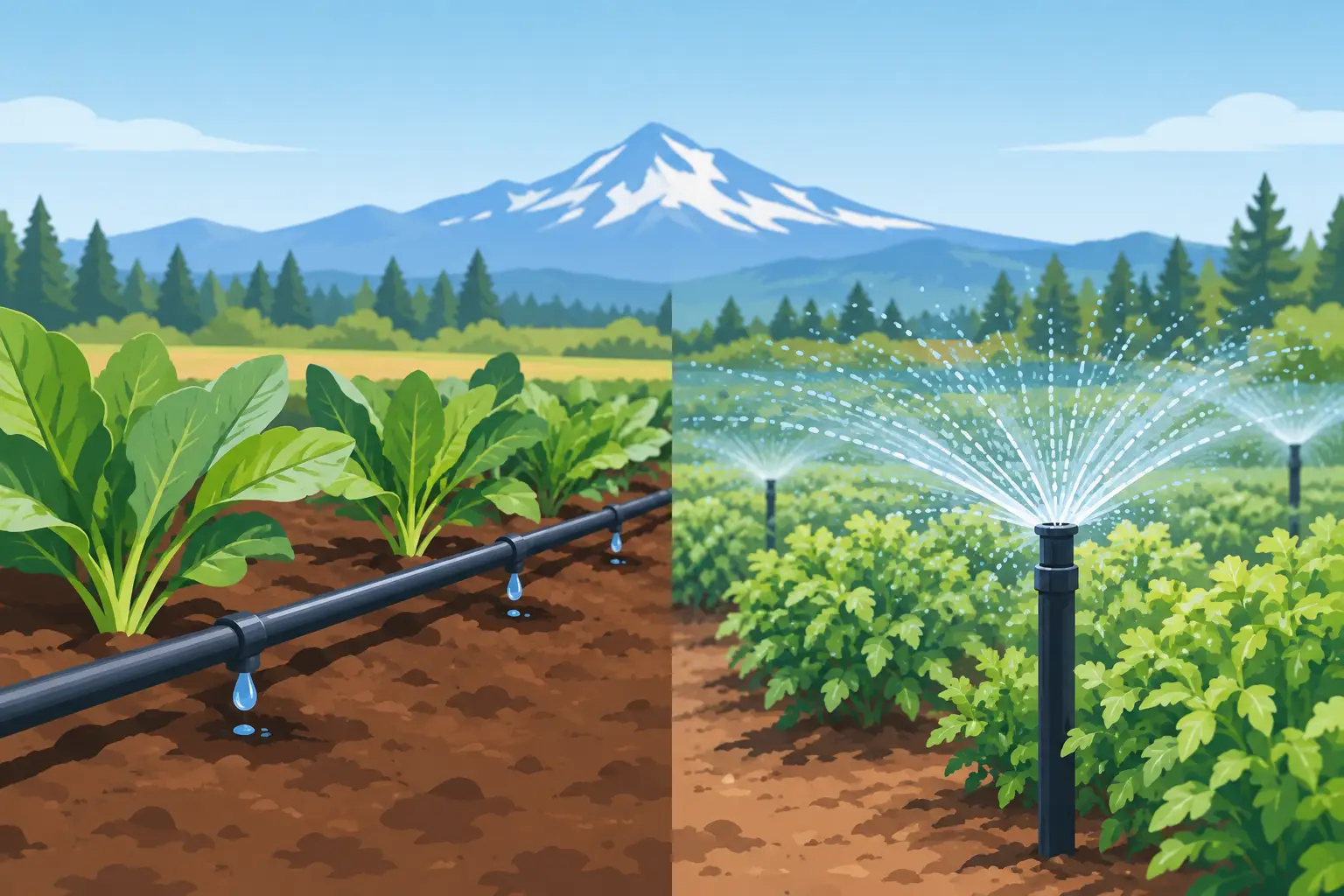
The best answer is rarely all drip or all spray. Most well-planned High Desert properties use each method where it performs best: spray irrigation for turf and drip for planting beds, trees, shrubs, and gardens. The details of your soil, slope, plant material, and existing system determine whether that standard approach needs adjustment.
Drip irrigation versus spray: the practical difference
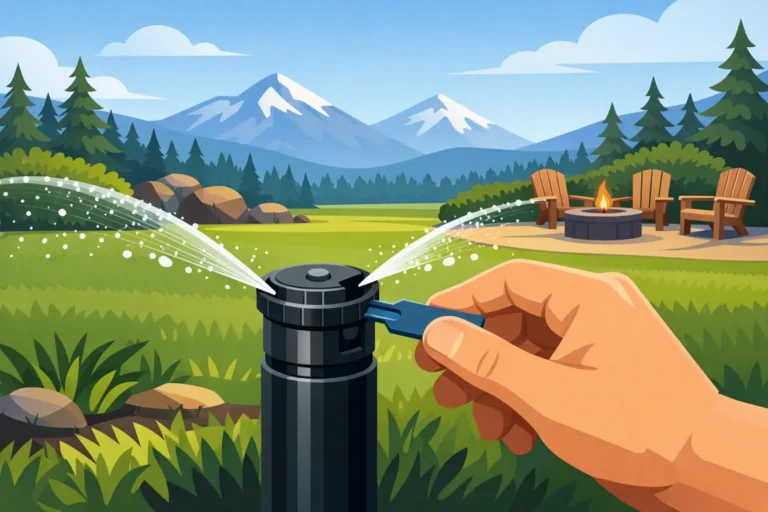
Spray irrigation sends water through pop-up spray heads or rotary nozzles that distribute it over an area. It is designed to cover a broad, uniform surface, which makes it a natural fit for lawns. A properly matched spray zone can apply water evenly across turf, reaching the full root zone when it runs long enough.
Drip irrigation applies water slowly near the base of the plant through tubing, emitters, or dripline. Instead of wetting an entire bed, it targets the soil where roots need moisture. That precision makes drip especially useful for trees, shrubs, perennials, vegetables, and native or water-wise plantings.
The distinction is not simply about water savings. A poorly designed drip system can leave dry pockets, clog, or run too briefly to support deep roots. An efficient spray system can serve a healthy lawn very well when the heads are properly spaced, pressure is correct, and the controller is adjusted with the weather.
Why Central Oregon conditions change the equation
Central Oregon landscapes ask more of irrigation than landscapes in milder, wetter regions. Our soils often drain quickly, so water can move below the active root zone before plants have a chance to use it. Dry air and wind also increase evaporation, particularly when spray irrigation runs during the middle of the day.
This does not mean spray irrigation is a mistake. It means timing and application rate matter. A lawn zone that puts out water faster than the ground can absorb it may create runoff on a slope or send water too deep in sandy soil. Dividing run times into shorter cycles with soak periods between them can help water move into the soil instead of past it.
Drip has a strong advantage in planting beds because it limits evaporation and keeps water off open soil, foliage, sidewalks, and mulch. It also helps reduce weeds between plants, since the entire bed surface is not routinely soaked. For a newer landscape, drip makes it easier to provide extra water to a young tree or shrub without overwatering established plants nearby.
When spray irrigation is the better choice
For conventional cool-season turf, spray is generally the right tool. Grass roots spread throughout the lawn, so they need moisture distributed across the entire surface. Trying to irrigate a lawn with point-source drip lines usually creates uneven growth and a more complicated maintenance problem.
Rotary nozzles or traditional spray heads can both work, but each zone should use compatible nozzles with similar precipitation rates. Mixing a high-output spray head with low-output rotary nozzles in the same zone often leads to one portion of the lawn being overwatered while another stays stressed.
Spray is also useful where plants are tightly spaced and coverage needs to be broad. Annual flower beds, fresh sod, and closely planted groundcovers may benefit from overhead watering during establishment. Once plants are rooted, converting beds to drip often provides more control and lower water use.
A healthy lawn is not necessarily a lawn watered every day. In Central Oregon, deeper, less frequent watering encourages roots to follow moisture downward. The exact schedule changes with soil type, shade, grass variety, temperatures, and restrictions, but frequent shallow watering usually produces weaker turf and more stress when heat arrives.
Make spray zones work harder
Inspect spray heads regularly. A tilted head, clogged nozzle, broken riser, or head blocked by grass can waste a surprising amount of water. Heads should pop up fully, throw water onto the lawn rather than pavement, and overlap enough to account for the lighter application at the edge of the spray pattern.
Run spray zones in the early morning, when wind is lower and water has time to soak in. If water begins flowing down the curb or pooling in low spots, shorten the cycle and add a second start time after the soil has absorbed the first application.
Where drip irrigation earns its keep
Drip is usually the smarter choice for landscape beds because it puts water where plants can use it. A line of shrubs, a vegetable garden, or a foundation planting does not need every inch of surrounding soil saturated. With emitters placed at the root zone, water can soak in gradually with less loss to wind and evaporation.
For trees, expand the watered area as the tree grows. New trees need moisture close to the root ball, but mature roots extend well beyond the trunk. A few emitters placed at the trunk may keep a tree alive without supporting the broad root system needed for long-term health. Move or add dripline farther from the trunk over time, focusing on the area under and beyond the canopy.
Vegetable gardens are another strong application. Dripline laid along rows keeps foliage drier than overhead watering, which can help limit disease pressure. It also makes it easier to water deeply and consistently during the short Central Oregon growing season, when tomatoes, squash, and other heat-loving crops need dependable moisture to produce well.
Drip still needs maintenance
Drip systems are efficient, not maintenance-free. Emitters can clog from sediment or mineral buildup, tubing can be damaged by tools or animals, and mulch can hide problems until plants begin showing stress. Filters and pressure regulators are essential components, not optional extras. Drip operates at lower pressure than most spray systems, and too much pressure can cause fittings to pop apart or make emitters apply water unevenly.
Check drip zones at least a few times each season. Look for wet spots that suggest a leak, dry plants at the end of a run, tubing that has shifted, and emitters covered by roots or debris. If you use organic mulch, pull it back occasionally to confirm water is reaching the soil rather than simply dampening the mulch layer.
Water efficiency depends on design, not labels
It is easy to call drip efficient and spray wasteful, but the real picture is more useful. Drip saves water when it is matched to plants, installed correctly, and operated long enough for water to reach the root zone. Spray is efficient when it is used for turf, maintained, scheduled for weather conditions, and kept off hard surfaces.
A common problem is installing one irrigation zone for plants with very different water needs. For example, placing a thirsty lawn, established juniper, and young hydrangeas on the same spray zone forces compromise. Someone will get too much or too little water. Separating hydrozones, or grouping plants with similar needs, gives you more control and makes seasonal adjustments simpler.
Smart controllers and rain sensors can help, but they cannot correct bad spacing, damaged components, or a zone designed around incompatible plants. Start with sound irrigation layout, then use scheduling technology as a helpful layer of control.
Choosing the right setup for your property
If you are planning a new landscape, begin with the plant plan rather than the irrigation product. Turf areas, vegetable gardens, tree zones, ornamental beds, and low-water native plantings should each be considered separately. This approach can prevent a costly retrofit later and gives every part of the landscape a more appropriate watering schedule.
For an existing property, look at what is struggling. Dry turf strips may point to poor spray coverage. Shrubs that look stressed despite frequent watering may have shallow drip placement, clogged emitters, or water moving too quickly through sandy soil. Brown patches are not always a signal to add more water. Compaction, poor soil structure, insects, disease, or sprinkler coverage can produce similar symptoms.
Central Oregon Lawn Center can help homeowners and landscape professionals assess irrigation needs alongside soil amendments, turf choices, and the realities of a specific site. A few practical adjustments before peak summer heat can protect your landscape and avoid weeks of trying to correct preventable stress.
The goal is not to install the most complicated system. It is to give each plant the water it needs, at a pace the soil can absorb, with as little waste as possible. When spray serves the lawn and drip serves the landscape beds, your property is better prepared for a dry Central Oregon summer.