Best Organic Weed Control for Bend Lawns
A dandelion pushing through thin turf in Bend is rarely just a dandelion problem. It is often a signal that the lawn is stressed, the soil is compacted, irrigation is uneven, or grass coverage is too thin to compete. The best organic weed control works by correcting those conditions first, then using targeted removal where it is needed. In Central Oregon, that approach matters because sandy soils, dry summers, cold winters, and water-conscious irrigation can make conventional one-size-fits-all advice fall short.
Organic weed control is not a single bottle or a weekend project. It is a practical system for helping desirable plants outcompete unwanted ones while reducing unnecessary chemical exposure around families, pets, pollinators, and waterways. Some weeds will still appear – especially after wind, construction, or a tough winter – but a healthier lawn makes them easier to manage each season.
Start With the Weed and the Growing Conditions
Before treating anything, identify what is growing and where it is growing. Broadleaf weeds such as dandelion, clover, plantain, and bindweed need different tactics than annual grassy weeds. A weed scattered through open turf calls for a different response than one persistent patch along a driveway, fence line, or dry irrigation zone.
Pay attention to the pattern. Weeds concentrated in hard ground may point to compaction. Weeds in low spots can indicate overwatering or poor drainage. Thin, pale grass near trees may need an adjustment in irrigation coverage, soil nutrition, or seed selection rather than more weed treatment. In the High Desert, bare soil is an open invitation for weeds, so the long-term goal is to keep productive turf, groundcover, or mulch in its place.
Timing also changes results. Pulling winter annuals before they set seed prevents a much larger problem next spring. Perennial weeds are generally easiest to weaken when they are actively growing and moving energy into their roots, often in spring or early fall. Do not expect a single treatment to erase established bindweed or deep-rooted dandelions. Consistent removal is what gradually exhausts them.
Build a Lawn That Crowds Out Weeds
The most effective organic program begins below the grass blades. Central Oregon soils are commonly sandy, low in organic matter, and quick to dry. They can also become compacted from traffic, pets, and normal lawn use. When roots cannot move easily through the soil or hold moisture efficiently, turf thins out and weeds take advantage.
Improve soil structure before adding more inputs
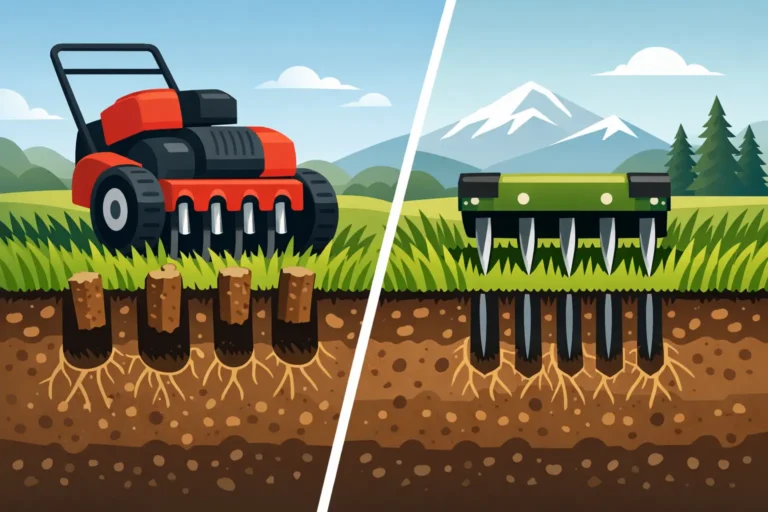
A light topdressing of quality compost can improve moisture retention, support beneficial soil biology, and help sandy ground hold nutrients longer. It should be applied as a thin layer, not buried under a heavy blanket that smothers grass. For compacted lawns, core aeration creates channels for air, water, and roots while giving topdressing material a place to work into the soil.
Aeration is particularly useful when water puddles briefly, runs off instead of soaking in, or turf struggles despite regular care. It is not a weed killer, but it can remove one of the conditions that favors weeds. For larger renovations or heavily thatched turf, the right rental equipment can make the work more effective and less frustrating than trying to force a small hand tool across a large lawn.
Feed grass at the right pace
Organic fertilizers support steadier growth and healthier roots rather than the quick surge sometimes associated with high-salt synthetic products. The exact product and rate should match the lawn, soil condition, and season. Overfeeding is not helpful in a short growing season, and a lawn stressed by heat or drought should not be pushed into excessive top growth.
A soil test is the clearest way to avoid guessing. It can show whether the problem is low fertility, pH, poor organic matter, or simply inconsistent watering. The goal is durable grass with a dense root system, not a dark-green lawn that requires constant water and mowing.
Overseed thin areas promptly
Overseeding is one of the most overlooked forms of weed prevention. Grass seed fills gaps before weed seeds can claim them. Use a blend selected for Central Oregon conditions and match it to the site: sun exposure, traffic, irrigation capacity, and how much summer color you expect from the lawn.
Late summer into early fall is often an excellent window for renovation and overseeding because soil remains warm while air temperatures begin to moderate. Spring seeding can also work, but young grass may face summer heat before its roots are fully established. Keep newly seeded areas evenly moist until they germinate and root in, then transition gradually to deeper, less frequent watering.
Use Water and Mowing as Weed-Control Tools
Many lawn weeds are better adapted to stress than turfgrass. That means shallow daily watering, close mowing, and dull mower blades can accidentally give weeds the advantage.
Water deeply enough to encourage roots to move down into the soil, then allow the surface to dry somewhat before the next irrigation cycle. The exact schedule depends on weather, soil, sun, and sprinkler output, but frequent light watering generally creates shallow roots and more vulnerable turf. Check coverage with simple catch cups or containers. A dry strip caused by poor sprinkler overlap can look like a weed problem until irrigation is corrected.
Mow at a sensible height for the grass type and season. Leaving grass slightly taller shades the soil, protects crowns from heat, and helps retain moisture. Avoid removing more than one-third of the blade at a time. If the lawn gets away from you during a busy week, raise the mower for the first pass and lower it gradually over subsequent mowings. Sharp blades matter too: clean cuts reduce stress and help grass recover faster.
Target Existing Weeds Without Damaging the Lawn
For isolated weeds, hand removal is still one of the best organic weed control methods available. Pull after irrigation or rainfall when soil is moist, and use a dandelion fork or narrow weeding tool to remove as much of the root as possible. This is especially worthwhile before flowering and seed production.
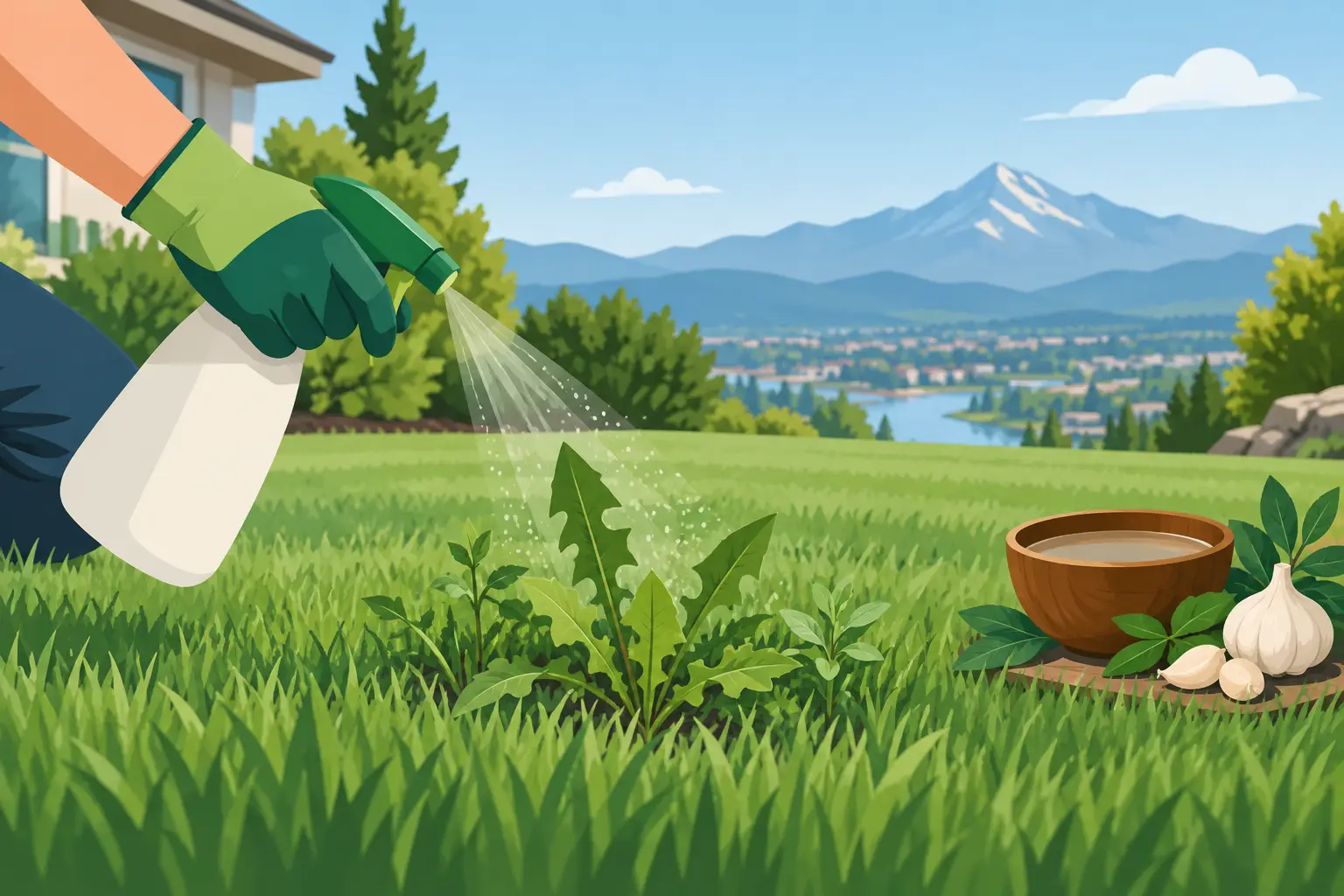
Some organic contact sprays can help on young weeds in gravel, cracks, patios, and other non-turf areas. They work by burning back green growth, so coverage is critical and repeat applications are common. They are nonselective, meaning they can damage lawn grass, ornamentals, and desirable groundcovers just as readily as weeds. Use them carefully, only on calm days, and never assume that “organic” means harmless to plants, skin, pets, or soil life.
Household vinegar is often presented as an easy answer, but it deserves caution. Strong horticultural vinegar can cause serious burns and kill any foliage it touches. Kitchen vinegar is usually too weak for reliable results on established weeds, while repeated acidic applications can affect soil conditions in small areas. Salt is even less suitable for landscape use because it can persist in soil and prevent desirable plants from growing. For most lawns, targeted pulling and turf improvement are safer, more durable choices.
Mulch is another useful organic tool where grass is not the right plant. Around shrubs, in vegetable beds, and along landscape edges, a two- to three-inch layer of clean mulch blocks light from reaching many weed seeds and helps soil hold moisture. Keep mulch pulled back from tree trunks and plant crowns, and replenish it as it breaks down.
A Seasonal Plan for Central Oregon Lawns
Spring is the time to inspect irrigation, pull young weeds, address compaction, and repair winter-damaged turf. Early action matters because annual weeds are easier to remove before they mature. If you plan to seed, choose products and weed-control tactics that will not interfere with germination.
During summer, prioritize irrigation efficiency, mowing height, and quick removal of flowering weeds. Avoid aggressive renovation during the hottest, driest stretches unless you can provide the water new seed needs. A stressed lawn does not benefit from being scalped, heavily fertilized, or repeatedly sprayed.
Early fall is a strong season for aeration, compost topdressing, overseeding, and organic fertility work. It gives grass time to establish roots before winter and helps close the gaps that weeds exploit next year. Continue pulling perennials while they are active, especially along borders where lawns meet gravel or native landscape areas.
When a Weed Problem Needs a New Plan
If the same weeds return in the same places every year, treat that as useful information. Repeated plantain may mean compacted soil. Persistent clover can be a sign of thin turf or low available nitrogen, though it also provides pollinator value in low-use areas. Bindweed spreading from an unmanaged edge may require repeated digging, barrier planning, and patience rather than a quick spray.
There is no benefit in forcing a thirsty, high-input lawn into every part of a property. In hot, exposed, low-traffic areas, converting troublesome patches to mulch, drought-tolerant plantings, or a more appropriate groundcover may be the most water-wise form of weed control. Central Oregon Lawn Center can help match seed, soil amendments, organic inputs, and equipment options to the conditions in your yard.
A few weeds do not mean you have failed at lawn care. Keep the focus on dense turf, living soil, efficient irrigation, and timely hand work, and each season should require less correction than the one before.