How to Calibrate Lawn Sprinklers in Bend
A sprinkler system can run every morning and still leave a Bend lawn thirsty in one area, soggy in another, and expensive to maintain everywhere. That is usually not a watering-schedule problem. It is an application-rate problem. Learning how to calibrate lawn sprinklers shows you how much water each zone actually delivers, so you can water deeply enough for healthy turf without sending a scarce High Desert resource down the curb.
Central Oregon lawns face a different set of conditions than lawns in wetter parts of the Northwest. Low humidity, wind, sandy or compacted soils, intense summer sun, and local watering restrictions all raise the cost of guessing. Calibration replaces guessing with a simple measurement you can use throughout the season.
Why sprinkler calibration matters in Central Oregon
Your irrigation controller may be set for 15 or 30 minutes, but minutes do not tell you how much water reaches the root zone. A rotor, fixed spray head, MP-style nozzle, drip conversion zone, and aging sprinkler system all apply water at different rates. Pressure changes, clogged nozzles, mismatched heads, and a sloped yard can make the difference even larger.
For most established cool-season lawns, the goal is generally to apply water slowly enough that it soaks in and deeply enough to support roots. The precise weekly total depends on your turf type, soil, shade, weather, and any local restrictions. A new lawn, a recently renovated lawn, and turf growing in very sandy soil may need a different approach than an established lawn with improved soil structure.
Calibration helps you make those decisions with evidence. It can reveal that a zone needs a shorter run time, that an area needs cycle-and-soak watering, or that one head is wasting water on pavement. It also makes seasonal controller adjustments far more accurate.
What you need before you calibrate lawn sprinklers
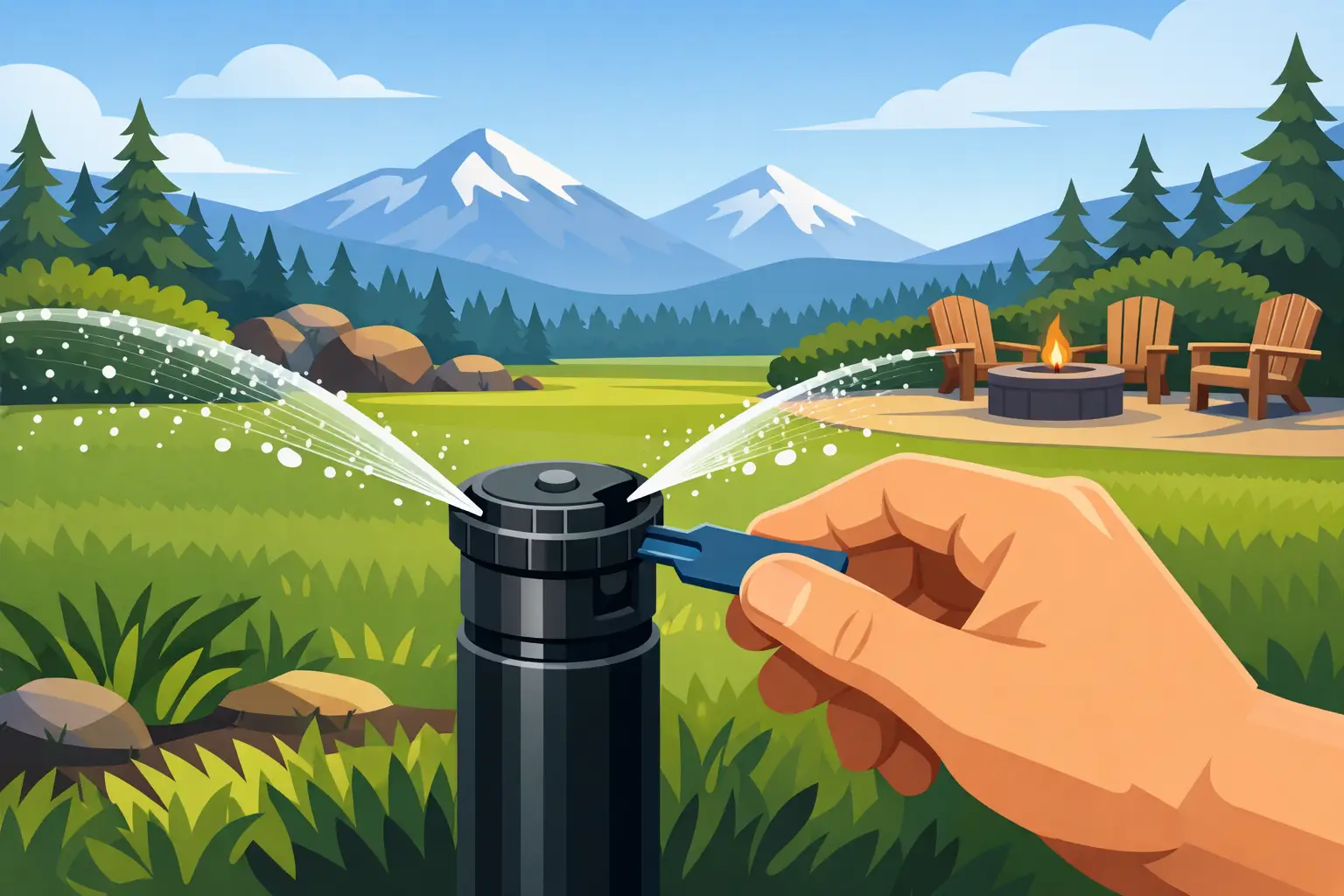
This is a straightforward test. Gather 8 to 12 identical, shallow, straight-sided containers. Empty tuna cans work well, as do commercial catch cups. Avoid containers with sloped sides because they make water-depth readings less reliable. You will also need a ruler marked in inches, a notepad or phone, and a screwdriver or small tool for adjusting sprinkler heads if needed.
Choose a calm morning or evening. Wind can push spray far enough to distort the results, particularly with fixed spray heads. Turn off mowing for the test day, and make sure each sprinkler zone is operating as it normally would. If you recently changed nozzles, repaired a line, or adjusted the controller, calibration is especially worthwhile.
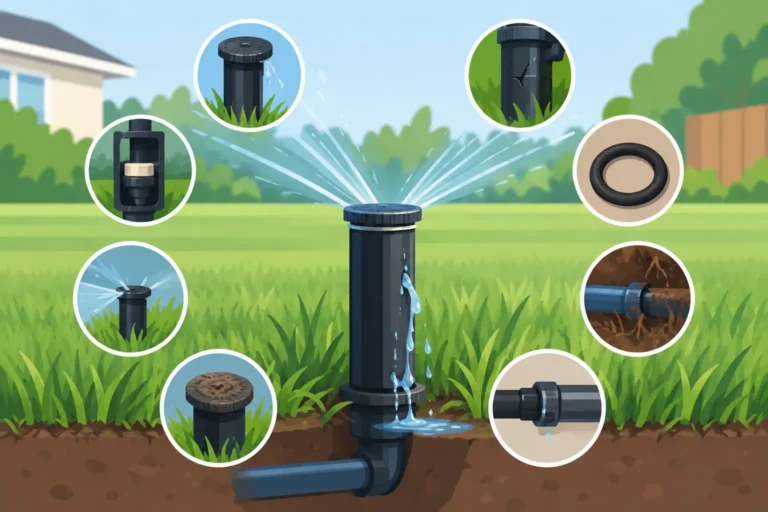
Before placing the cups, walk the zone while it is running for a minute or two. Look for obvious problems: a broken head, a nozzle spraying a sidewalk, a head buried in turf, a tilted riser, or one sprinkler blocked by plants. Correct the simple issues first. A catch-cup test is most useful when it measures a system that is reasonably functional.
Step-by-step sprinkler calibration with catch cups
Place cups across the zone
Set the containers throughout the area served by one zone. Place them near sprinkler heads, halfway between heads, at the far edges, and in areas that look dry or overly wet. For a rectangular lawn, distribute them in a loose grid. For an irregular lawn, make sure the cups represent the lawn’s different conditions rather than clustering them in one easy-to-reach spot.
Keep cups away from direct impact points where a strong stream hits the container. You are measuring the water applied across the turf, not the force of one nozzle. If a zone covers both lawn and a planting bed, measure the lawn section separately. Those areas often need different watering strategies.
Run the zone for a measured time
Run the zone for 15 minutes. This duration gives enough water to measure while keeping the math simple. If the system is applying water so quickly that runoff begins before 15 minutes, stop the test and note when runoff started. That is useful information: your soil may not be able to absorb water as fast as the sprinklers apply it.
After the run time, measure the water depth in every cup to the nearest 1/16 inch if possible. Write down each reading. Do not rely on a quick visual comparison. Small differences add up over a full irrigation season.
Find the average application rate
Add all cup measurements and divide by the number of cups. That result is the average amount applied in 15 minutes. Multiply the average by four to find the zone’s precipitation rate in inches per hour.
For example, if your cups average 0.15 inch after 15 minutes, your zone applies about 0.60 inch per hour. If you want that zone to receive 0.30 inch of water during an irrigation day, divide 0.30 by 0.60. The result is 0.5 hours, or 30 minutes of total run time.
The calculation is simple:
Desired water depth in inches ÷ sprinkler application rate in inches per hour = run time in hours
Multiply hours by 60 to convert the answer to minutes. Repeat this process for every zone. Do not assume the front lawn and backyard have the same rate just because both run for the same amount of time.
Check how evenly the zone waters
The average tells you how much water the zone applies overall. The individual cups tell you whether that water is distributed evenly. Compare the highest and lowest readings. If some cups hold twice as much as others, changing the controller run time alone will not solve the problem. Longer watering may drown the wet area before the dry area receives enough water.
A difference of roughly 20 to 30 percent can be common, particularly in older systems or windy locations. Larger variation deserves attention. Check that all heads are the same type within the zone, the nozzles are properly sized, and the sprinklers rise fully above the grass. Fixed spray nozzles should generally not be mixed with rotors on the same zone because their application rates are very different.
Set run times that match your soil
In the High Desert, sandy soils may absorb water quickly but hold less of it near the surface. Compacted or fine-textured soils can shed water if sprinklers run too long at once. Both situations can produce stressed turf, but the solution is not identical.
If water infiltrates well and the lawn has healthy roots, use your measured application rate to set a longer, less frequent irrigation schedule that fits your turf and local water rules. Deep, appropriately timed watering generally encourages roots to explore more soil than frequent light watering. Watch the lawn, not just the clock. A bluish-gray cast, lingering footprints, or folded leaf blades can indicate drought stress, while constantly soft ground, fungus, and yellowing may point to overwatering.
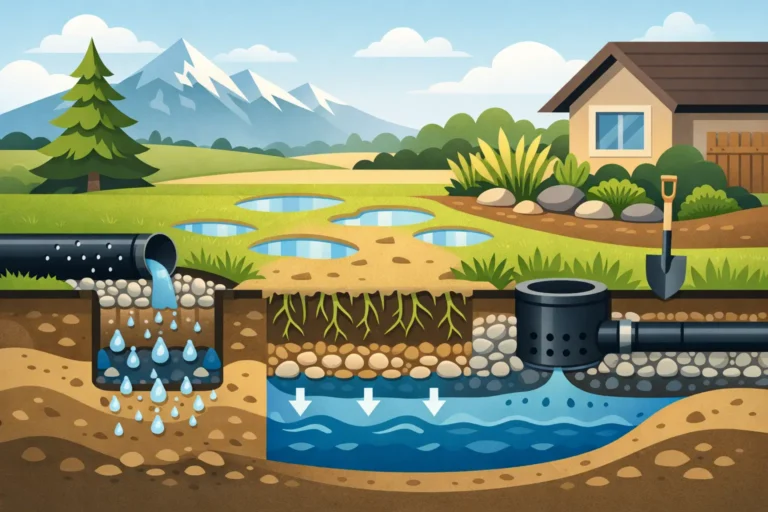
If runoff begins before the zone delivers its needed amount, use cycle-and-soak scheduling. Instead of running 30 minutes continuously, run three 10-minute cycles with 30 to 60 minutes between them. The pauses let water move into the soil rather than flowing into the street. The right cycle length depends on slope, soil condition, sprinkler output, and how quickly runoff begins.
A lawn with hard, compacted ground may also benefit from core aeration and appropriate soil amendments. Better soil structure improves water infiltration and root growth, which can reduce the pressure to water more often. Irrigation efficiency and soil health work together.
Adjust for weather, shade, and seasonal change
Calibration gives you a baseline, not a permanent controller setting. Spring conditions in Bend are not the same as July heat, and a shaded side yard does not use water at the same rate as an exposed south-facing lawn. Start with the measured run time, then adjust gradually as temperatures, daylight, and natural rainfall change.
Inspect your system monthly during the irrigation season. Clean clogged nozzles, straighten leaning heads, trim grass that blocks spray, and look for leaks or low-pressure zones. Recheck catch-cup results after major repairs, nozzle changes, landscaping changes, or if the lawn begins showing uneven color.
It is also wise to run irrigation early in the morning, when evaporation and wind are usually lower. Watering in the heat of the day wastes more water, while regular late-evening watering can leave turf damp longer than necessary. Local restrictions and neighborhood rules should always guide the days and hours you choose.
Common calibration mistakes to avoid
The most common mistake is setting every zone to the same number of minutes. Zones with rotors often need substantially more run time than zones with fixed sprays, and shaded areas may need less water than sunny ones. Another is measuring only one cup. One cup cannot show whether the system is watering evenly.
Do not calibrate immediately after a rainstorm or when the soil is already saturated. That can hide runoff issues and make it harder to judge what the lawn actually needs. Finally, do not solve poor coverage by simply adding minutes. Repairing a nozzle, correcting sprinkler spacing, or separating incompatible heads may save more water than any controller adjustment.
A properly calibrated system is one of the most practical improvements you can make for a healthier Central Oregon lawn. If your readings point to runoff, uneven coverage, stubborn dry spots, or compacted soil, bring your results to Central Oregon Lawn Center. A local conversation can help turn those numbers into a watering plan, irrigation repair approach, and soil-care strategy that fits your property.