Irrigation Supplies for Central Oregon Lawns
A lawn can look thirsty even when its sprinkler system runs every morning. In Central Oregon, that often comes down to uneven coverage, wind-blown spray, sandy soil that drains faster than expected, or irrigation supplies that were selected for a different climate. A water-wise lawn does not require more water by default. It requires water delivered evenly, at the right rate, and deep enough to support healthy roots.
For Bend-area homeowners and landscape professionals, irrigation is not a set-it-and-forget-it system. Dry air, intense sun, seasonal wind, short growing windows, and water restrictions all make the details matter. The right components help protect your investment in grass seed, soil improvements, and regular lawn care while reducing runoff and wasted water.
Start With Coverage, Not Runtime
The most common irrigation mistake is adjusting the controller before checking the system itself. If one area receives twice as much water as another, adding more minutes only overwaters the wet section while the dry section continues to struggle.
Walk the lawn while each zone is running. Look for heads that do not rise fully, sprays blocked by grass or shrubs, misting nozzles, leaking fittings, and dry wedges between sprinklers. Sprinkler patterns should overlap enough that each part of the lawn receives water from more than one head. This is especially important on windy High Desert days, when fine spray can drift well beyond the turf.
A simple catch-can test gives a clearer picture. Place straight-sided containers across the zone, run it for a set amount of time, and compare the water collected. Large differences point to a coverage problem, not a scheduling problem. Correcting that problem can lower water use while making the lawn look more consistent.
Irrigation Supplies That Fit High Desert Conditions
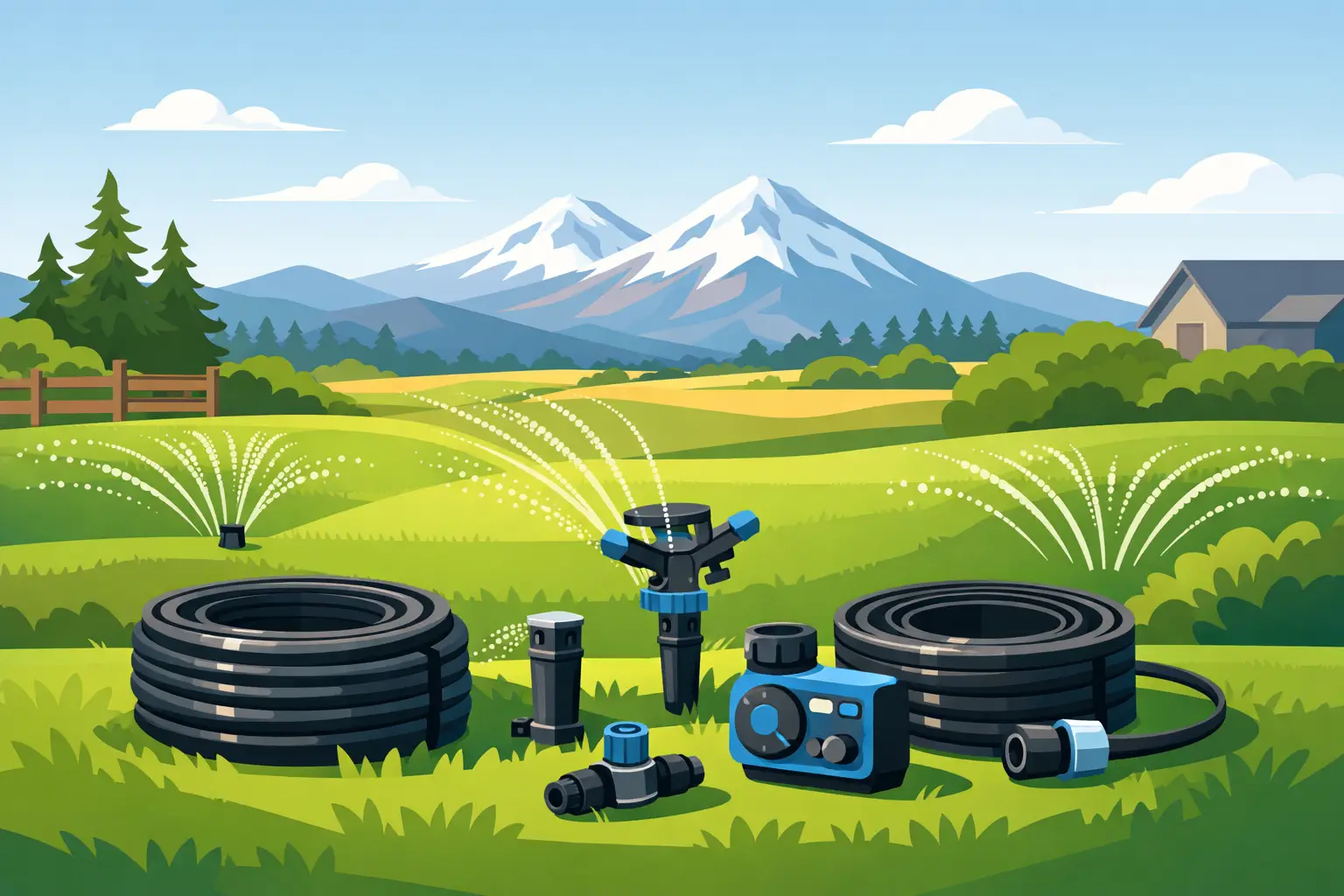
Not every sprinkler part or hose accessory performs the same way in Central Oregon. Choosing the right irrigation supplies begins with understanding what the zone needs: broad turf coverage, targeted plant watering, a repair to an existing line, or a more efficient way to manage pressure.
Sprinkler heads and nozzles
For lawn zones, matched precipitation rate nozzles are worth considering. They are designed so different arc settings – full-circle, half-circle, and quarter-circle – apply water at a similar rate. Without that match, corners can receive far more water than the center of the lawn simply because a quarter-pattern nozzle runs at the same time as a full-circle nozzle.
Rotary nozzles can also be a smart option for certain lawns. They apply water more slowly than conventional spray nozzles, giving sandy or compacted soils more time to absorb it. That can reduce puddling and runoff on slopes or in hard, dry soil. The trade-off is that these nozzles need longer run times and appropriate spacing. They are not automatically the best choice for every existing system.
Spray nozzles still have a role, particularly in small or irregular lawn areas. The key is selecting the correct pattern and radius, then keeping pressure within the nozzle’s recommended range. When spray becomes fog-like mist, too much water is blowing away before it reaches the ground.
Drip irrigation for beds and trees
Drip irrigation is often the better choice for shrubs, perennials, vegetable gardens, and trees. Rather than spraying water into the air, drip tubing and emitters deliver it at or near the soil surface. That makes it easier to water root zones without feeding weeds between plants or wetting sidewalks and driveways.
For newly planted trees and shrubs, use enough emitters or distribution points to wet the developing root area rather than concentrating all water at the trunk. As plants mature, expand the watering zone outward. Tree roots extend well beyond the base of the tree, and a small, constantly wet spot near the trunk is not a long-term watering plan.
Drip systems need filtration and pressure regulation to work properly. Skipping those parts can lead to clogged emitters, split tubing, and uneven delivery. In a landscape with both lawn sprinklers and drip, separate zones are usually the practical solution because the two systems operate at different pressures and application rates.
Valves, fittings, and repair essentials
A small leak can become a major waste point over a full irrigation season. Keeping compatible repair fittings on hand saves time when a mower clips a head, a fitting cracks after winter, or a line is damaged during landscape work. The best repair starts with identifying the pipe type and size before buying parts. Polyethylene pipe, PVC, drip tubing, and swing pipe use different fittings and installation methods.
For professionals managing multiple properties, standardizing commonly used parts can make service calls faster and reduce mismatched repairs. For homeowners, it is often worth bringing in a damaged sprinkler head or a photo of the pipe and fitting. A correct match is less expensive than several return trips.
Backflow protection is another essential component, not an optional accessory. It helps keep irrigation water from moving back into the household water supply. Local requirements can vary, and installation or testing may require a qualified professional. If you are updating an older system, confirm what applies before beginning work.
Pressure Is the Detail Many Systems Miss
Water pressure affects nearly every part of irrigation performance. Too little pressure can leave heads short of their intended radius. Too much pressure creates misting, uneven patterns, excess wear, and water loss to wind.
A pressure-regulated sprinkler body or a regulator installed for drip can make a noticeable difference when incoming pressure is high. It keeps the system closer to the operating range intended for its nozzles or emitters. This is one of those upgrades that may not look dramatic from the curb, but it can improve distribution and reduce waste each time the system runs.
Pressure problems can also come from design limitations. A zone with too many heads, undersized pipe, or mixed nozzle types may never water evenly just by changing parts. In that case, dividing the zone or revisiting the layout may be the more durable fix. A localized assessment is valuable before investing in a major overhaul.
Program for the Lawn You Have
A healthy Central Oregon lawn typically benefits from deeper, less frequent watering than shallow daily irrigation. Deep watering encourages roots to follow moisture farther into the soil, which supports better drought tolerance. But the exact schedule depends on soil conditions, sun exposure, turf type, slope, and the output of each zone.
Sandy soils absorb water quickly but may not hold it as long as soils with more organic matter. A lawn in full sun near reflected heat from pavement can dry far faster than a shaded lawn on the same controller. Newly seeded or newly sodded areas are also different from established turf. They need more frequent, lighter watering until roots are established, then should transition to a deeper routine.
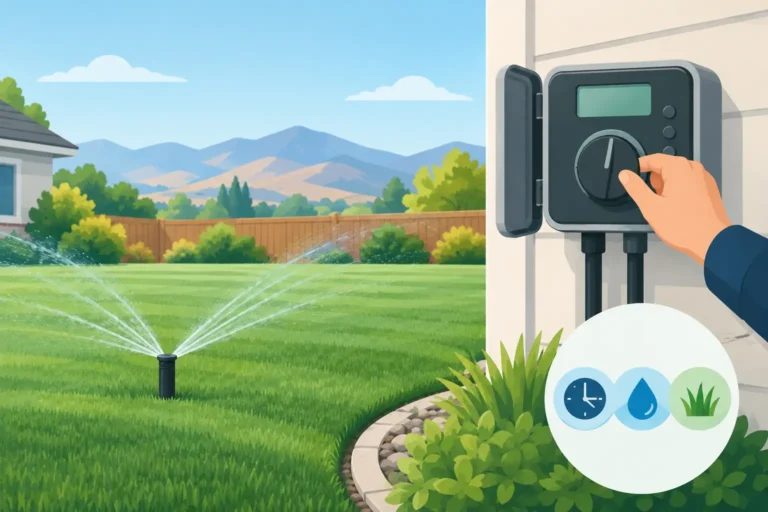
Use seasonal adjustment rather than relying on one summer schedule all year. Spring and fall commonly require less irrigation than July and August, and rainy periods may call for a pause. A rain sensor, soil-moisture sensor, or smart controller can help, but no device replaces occasional observation. Check the soil a few inches below the surface and watch for signs of stress such as dull color, folded blades, or footprints that remain visible after walking across the lawn.
Winterization Protects More Than Pipes
Freezing temperatures can turn a small amount of trapped water into cracked pipe, broken valves, and damaged backflow assemblies. Proper winterization is a practical part of owning an irrigation system in Central Oregon, not a task to postpone until the first hard freeze is already in the forecast.
Shutoff procedures vary by system, and compressed-air blowouts need to be done carefully. Excessive pressure can damage components, while incomplete winterization can leave vulnerable low spots in the line. If you are uncertain about the setup or do not have the right equipment, professional winterization is a sensible safeguard.
In spring, inspect the system before asking it to carry the lawn through another dry season. Replace damaged heads, clear nozzles, repair leaks, and test each zone before heat arrives. Starting with efficient coverage gives every other lawn-care effort a better chance to succeed.
Central Oregon Lawn Center can help homeowners and landscape professionals sort through the parts, tools, and practical choices behind a more efficient system. Bring in your questions, a zone layout, or a worn component. The right irrigation decision is usually the one that fits your actual soil, turf, water pressure, and landscape – not the one-size-fits-all option on a big-box shelf.