
How to Plant a Lawn in Central Oregon
A lawn that looks easy in Portland or the Willamette Valley can struggle fast in Bend, Redmond, or Sisters. If you want to know how to plant a lawn in Central Oregon, the real answer starts with the region itself – dry air, sandy soil, intense sun, cold nights, and limited water all shape what works and what fails.
That is why lawn installation here is less about throwing down seed and hoping for rain, and more about building the right foundation. In Central Oregon, a successful lawn comes from smart timing, better soil, the right seed blend, and irrigation that is set up to support young grass without wasting water.
How to plant a lawn in Central Oregon starts with timing
The best time to seed a new lawn in Central Oregon is late spring or late summer to early fall. Both windows can work, but they do not perform the same way every year.
Late spring gives seed warming soil and a full growing season ahead. The trade-off is that young grass may run into summer heat before roots are fully developed. If you seed in spring, you need to stay consistent with irrigation and avoid letting the surface dry out.
Late summer and early fall are often ideal because soil is still warm, evaporation begins to ease, and new grass gets established before winter dormancy. This timing usually reduces stress on seedlings and can improve germination, but the window is shorter. If you wait too long and temperatures drop hard, establishment slows down.
For most homeowners and landscapers, the safest approach is to plant when daytime conditions are steady and you can commit to watering several times a day during germination. The calendar matters, but your ability to keep the seedbed evenly moist matters more.
Start with soil, not seed
One of the most common lawn mistakes in the High Desert is skipping soil preparation. Central Oregon soils often drain quickly, lack organic matter, and do not hold nutrients or moisture well enough to support dense new turf on their own.
Before seeding, remove construction debris, old roots, and heavy weed pressure. Then loosen the top few inches of soil. If the area is compacted from equipment, foot traffic, or new construction, tilling or mechanical loosening can make a major difference in early root growth.
This is also the time to improve the soil profile. Compost and region-appropriate soil amendments help increase water retention and create better seed-to-soil contact. That does not mean you want a spongy surface or rich garden soil dumped on top. Turf does best when the soil is evenly blended and graded, not layered.
A basic soil test is worth considering, especially on larger projects. In Central Oregon, pH, low organic matter, and nutrient imbalance can all affect establishment. If the site has been scraped, built up, or disturbed during construction, testing removes a lot of guesswork.
Choosing the right grass seed for Central Oregon
If you are planting a lawn here, generic big-box seed is rarely the best fit. High Desert lawns need grasses that can handle dry conditions, temperature swings, and regular wear while still looking good with responsible water use.
A custom or region-specific blend usually performs better than a single grass type. The right mix depends on how the lawn will be used. A backyard with pets and kids may need more wear tolerance, while a front lawn may prioritize finer texture and appearance. Sun exposure matters too. Full-sun sites near reflected heat call for tougher selections than partially shaded areas.
Cool-season turfgrasses are still the standard in Central Oregon, but not every cool-season blend is equal. Some establish quickly but need more water. Others are slower to fill in but offer better long-term efficiency and durability. That is where local guidance really pays off. Central Oregon Lawn Center helps homeowners and pros match seed blends to the site instead of pushing a one-size-fits-all solution.
Grade the site before you seed
Once the soil is improved, grade the area so water moves evenly and the lawn surface is smooth enough to mow. This part is easy to rush and hard to fix later.
The finished grade should direct water away from the house, avoid low spots where puddling can occur, and eliminate ridges that scalp under a mower. In new construction, allow for the finished height of the lawn so the seeded surface does not end up too low against sidewalks or too high over irrigation heads.
Rake out rocks and break up clods until the surface is fine and uniform. You do not need powdery soil, but you do want a consistent top layer where seed can settle and germinate evenly.
Seeding the lawn the right way
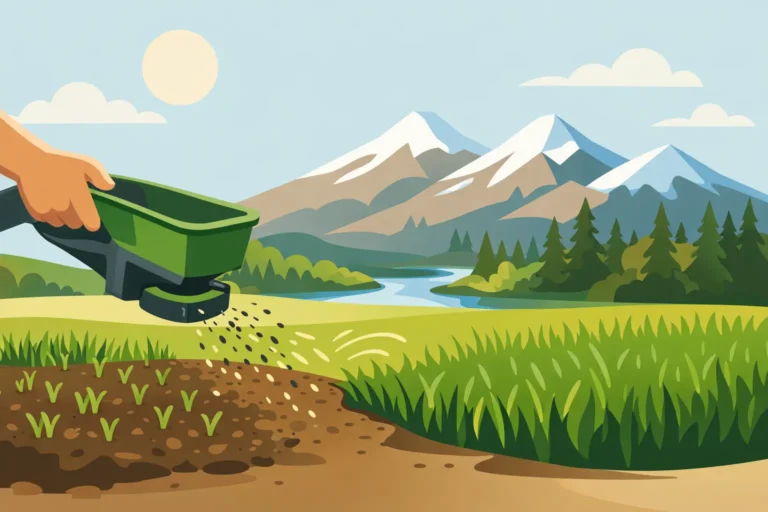
When it is time to seed, uniform coverage matters. Spread seed in two passes at right angles to each other for better consistency. That helps reduce striping and thin areas.
After spreading, lightly rake the seed into the top quarter-inch of soil. Grass seed should not be buried deeply. Most varieties need light and close soil contact to germinate well. Rolling the area with a lawn roller can help firm the surface, but avoid packing the soil too tightly.
Topdressing with a thin layer of compost or other appropriate material can help protect seed and improve moisture retention. Keep it light. If you bury the seed under too much material, germination drops.
A starter fertilizer may also be appropriate at seeding, especially where soils are low in phosphorus or other key nutrients. The exact product depends on your soil and your preference for conventional or organic inputs. In this climate, the goal is steady establishment, not a flush of weak top growth.
Watering a new lawn in the High Desert
This is where many new lawns are won or lost. Freshly seeded turf in Central Oregon needs frequent, light watering at first because the top layer dries fast in sun, wind, and low humidity.
During germination, the seedbed should stay consistently moist, not muddy. That often means watering lightly two to four times per day depending on weather, sprinkler output, and soil type. Sandy soils dry faster and usually need shorter, more frequent cycles.
Once most of the seed has germinated, start reducing frequency and increasing depth. The goal is to move the roots downward. A lawn that stays on shallow, frequent irrigation too long becomes weaker and more vulnerable to drought stress.
Irrigation coverage matters as much as schedule. If some zones miss corners or overlap poorly, new lawns emerge unevenly and never fully catch up. It is worth checking sprinkler distribution before seeding, especially on larger areas or newly installed systems.
What to expect in the first 6 to 8 weeks
New grass does not all come up at once, and that is normal. Different species germinate at different speeds. Some areas may fill quickly while others lag a bit, especially where sun, wind, or soil depth varies.
Stay off the lawn as much as possible during establishment. Foot traffic can displace seed and damage tender seedlings. Pets and kids are often the reason a lawn ends up patchy before it ever gets started.
Your first mow should happen when the grass is tall enough that removing a small portion will not stress it, usually around 3 to 4 inches depending on the blend. Use a sharp blade and avoid mowing when the soil is soft. Tearing young grass slows recovery.
If some thin areas remain after the first round of growth, overseeding is often a better fix than waiting for them to fill on their own. In Central Oregon, density matters because open space invites weeds and increases moisture loss from the soil surface.
Common mistakes when planting a lawn in Central Oregon
The biggest mistake is underestimating the site. A lawn may fail because the seed was poor, but more often it struggles because the soil was never improved, irrigation was uneven, or planting happened during a difficult weather window.
Another common problem is choosing a grass solely for appearance. A fine-textured lawn can look great, but if it cannot handle the available water, the amount of sun, or the level of traffic, it becomes expensive to maintain.
Overwatering is also more common than people think. During germination, frequent watering is necessary. After that, keeping the lawn constantly wet can encourage shallow roots and disease pressure, even in a dry climate.
Finally, many people skip equipment that would make the job better and faster. On renovation or larger install projects, tools like tillers, power rakes, aerators, and top dressers can improve results significantly. Good lawn establishment is part product choice and part preparation.
A better lawn here is built, not guessed at
Planting turf in Central Oregon is not about chasing a picture-perfect lawn from a different climate. It is about creating a healthy, durable lawn that fits the High Desert and stays attractive with sensible water use and better soil stewardship.
If you start with the site, choose a seed blend that matches local conditions, and stay disciplined through the first several weeks, your odds improve dramatically. And if you are unsure what your yard actually needs, getting local advice before you seed is usually cheaper than fixing a failed lawn later.