
Best Amendments for Alkaline Lawns in Bend
A lawn can receive plenty of fertilizer, regular irrigation, and careful mowing yet still look thin, pale, or stubbornly slow to establish. In Central Oregon, alkaline soil is often part of that story. The best amendments for alkaline lawns are not simply the products labeled for green grass. They are the materials that improve soil function, make nutrients available, and fit the realities of High Desert water, weather, and sandy native soils.
Before adding anything, start with a soil test. It is the fastest way to avoid spending money on an amendment that solves the wrong problem. A pH number matters, but so do organic matter, nutrient levels, salinity, and soil texture. In Bend and surrounding communities, the right plan is often less about dramatically changing pH and more about building a better root zone that performs well within local conditions.
Why alkaline lawn soil causes trouble
Alkaline soil has a pH above 7.0. Many Central Oregon lawns test moderately to strongly alkaline, particularly where soil is sandy, low in organic matter, or influenced by mineral-rich irrigation water. Turfgrass can grow in mildly alkaline conditions, but higher pH can tie up nutrients that grass needs, especially iron, manganese, phosphorus, and zinc.
That is why a lawn may show yellow or pale new growth even after fertilizer has been applied. The nutrient may be present in the soil, but the grass cannot access enough of it. Poor soil structure can compound the issue. Coarse, low-organic-matter soil drains quickly, holds fewer nutrients, and makes irrigation less efficient. A short growing season leaves little time for turf to recover from these stresses.
The goal is not to chase a perfect pH number at all costs. Large pH changes are slow, difficult, and sometimes impractical in calcareous soils. The better goal is to create a soil environment where roots can use water and nutrients more effectively.
The best amendments for alkaline lawns
Compost: the foundation amendment
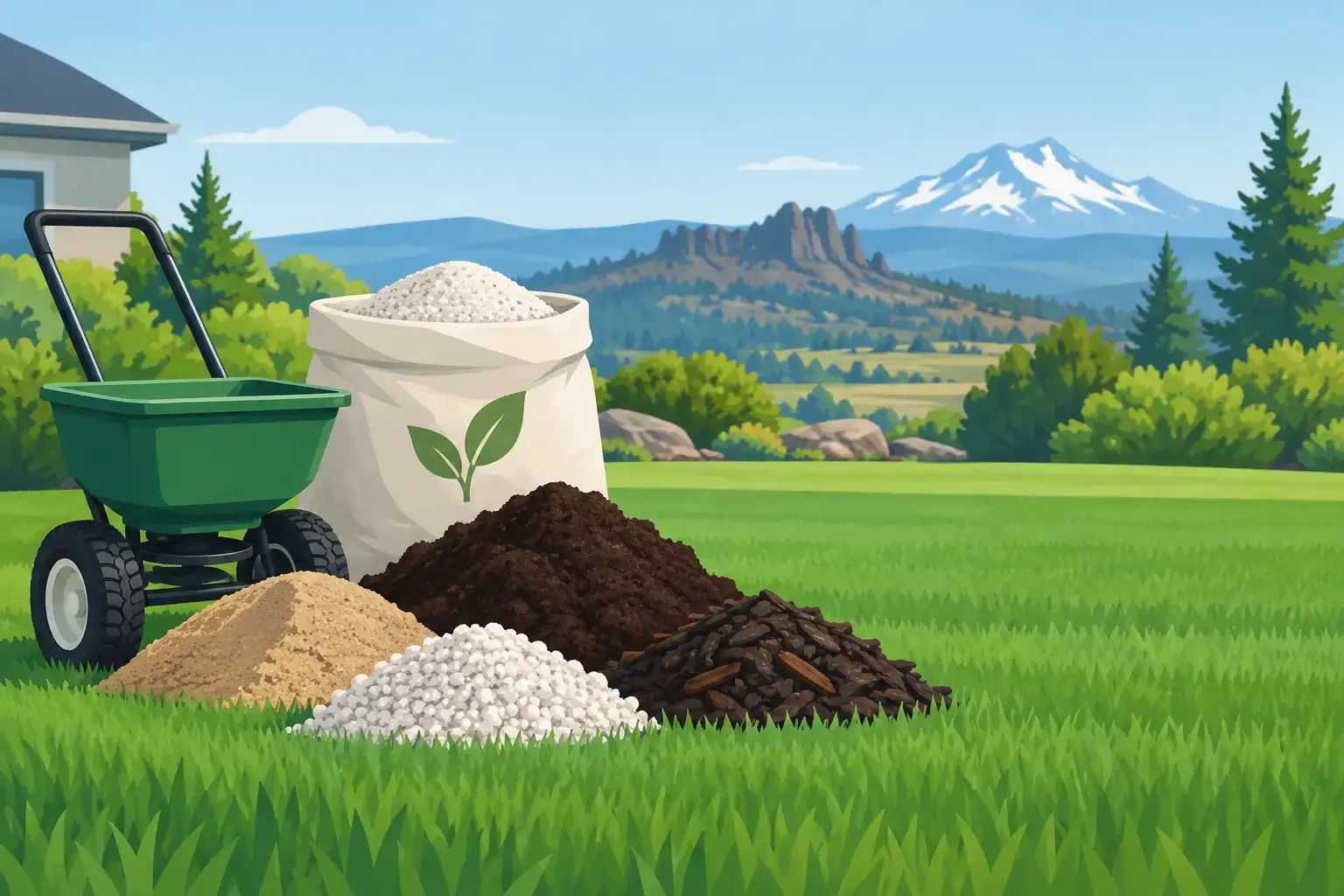
Quality finished compost is usually the most valuable starting point for an alkaline lawn. It does not produce an overnight pH correction, nor should it be treated as one. Its real value is broader: compost adds stable organic matter, supports beneficial soil biology, improves moisture retention in sandy ground, and helps nutrients remain available near the root zone.
For an established lawn, a light topdressing is generally more effective than dumping on a thick layer. Apply a thin, even layer of screened compost after core aeration, then rake or brush it so grass blades remain exposed. Aeration creates openings for air, water, and organic material to move into the soil rather than sit at the surface.
This combination is especially useful for lawns that dry out quickly or feel compacted despite having sandy soil. Sandy ground can still develop surface compaction from foot traffic, irrigation patterns, and thatch. Compost and aeration address the conditions roots actually experience.
Elemental sulfur: useful, but only with a test
Elemental sulfur is the amendment most commonly used to lower soil pH. Soil microbes convert it over time, creating a mild acidifying effect. It can be appropriate when a soil test confirms that pH is high enough to limit turf performance and the soil has the biological activity and moisture needed for sulfur to work.
The trade-off is patience. Sulfur is not a quick fix, particularly in Central Oregon’s cool spring and fall conditions. It works gradually, and the needed amount depends on soil texture, current pH, target pH, and the product formulation. Applying too much can damage turf, create uneven results, and waste product.
Use the soil test recommendation and follow the label. In many cases, split applications over time are safer and more realistic than trying to force a major correction in one season. Re-test before repeating an application. If the root-zone soil contains significant free lime, aggressive pH reduction may not be cost-effective. Focus instead on organic matter, targeted nutrition, and irrigation management.
Acidifying fertilizer: a practical maintenance tool
An acidifying fertilizer can support turf in alkaline conditions, particularly when soil testing shows a need for nitrogen. Products containing ammonium-based nitrogen sources may gradually acidify the immediate root zone as they are used by soil organisms and grass roots. This effect is modest, but it is useful as part of an ongoing program.
Choose fertilizer based on the lawn’s actual nutrient needs, not just its acidifying potential. Overfertilizing creates weak, thirsty growth and increases the chance of nutrient loss through sandy soil. Slow-release or organic-based fertility programs are often a better fit for Central Oregon lawns because they feed more steadily and help avoid the flush-and-fade cycle.
Organic fertilizers also contribute small amounts of organic matter over time. They will not replace compost, but paired with sound mowing and irrigation practices, they can help build a more resilient lawn.
Iron: for green color when pH limits availability
If grass is yellowing while leaf veins remain somewhat greener, iron availability may be part of the problem. Iron products can improve color when alkaline soil makes naturally occurring iron difficult for turf to use. Chelated iron is often more effective in high-pH soils than basic iron products because the chelate helps keep iron available longer.
Iron is a color and deficiency-management tool, not a substitute for proper fertility or soil improvement. It will not fix shallow roots, compacted soil, poor irrigation coverage, or a lawn planted with grass varieties that are poorly suited to the site. Some iron products can stain concrete, stone, and equipment, so apply carefully and sweep hard surfaces promptly.
Gypsum: helpful in specific situations, not a pH reducer
Gypsum is frequently recommended for hard soil, but it is often misunderstood. Gypsum supplies calcium and sulfur, yet it does not meaningfully lower soil pH. For many Central Oregon lawns, it is not the first amendment to reach for simply because the soil is alkaline.
Gypsum can be useful when a soil test identifies a calcium or sulfur need, or where sodium-related soil structure problems are confirmed. Sodium can interfere with soil aggregation and water movement, but that diagnosis requires testing. Applying gypsum without a clear reason may add expense without improving the lawn.
Use caution with biochar and wood ash
Biochar can improve water and nutrient holding capacity in some soils, but many biochar products are alkaline themselves. In an already alkaline lawn, it should be used only after reviewing the product’s pH and the soil test. Wood ash is even less suitable for this purpose because it can raise pH substantially.
Peat moss may be acidic, but it is not a lasting pH strategy for an established lawn and is difficult to distribute effectively through intact turf. Locally appropriate compost is usually the more practical, durable choice for topdressing.
Apply amendments where they can work
A soil amendment spread across a lawn will have limited effect if it cannot reach the root zone. For established turf, core aeration followed by compost topdressing is one of the most productive ways to improve soil over time. The removed plugs can remain on the lawn and break down naturally.
Early fall is often an excellent window for aeration, topdressing, overseeding, and measured fertility in Central Oregon. Soil is still warm enough for root activity, temperatures are less punishing, and evaporation is lower than mid-summer. Spring can also work, but avoid heavy work on saturated ground or during periods when a late freeze is likely.
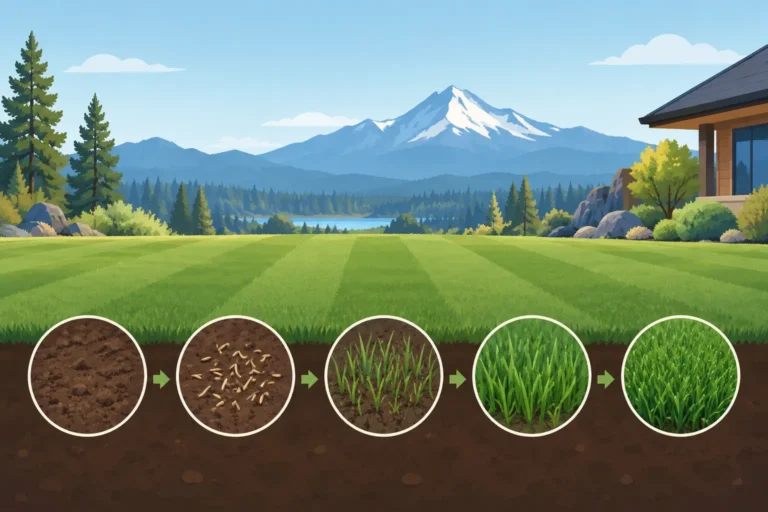
New lawns and renovation projects offer an even better opportunity. Incorporate compost and test-recommended sulfur into the top few inches of soil before seeding or laying sod. This is far more efficient than attempting to alter soil beneath established grass later. A custom grass seed blend suited to sun exposure, traffic, and irrigation capacity gives those improved soils a better chance to perform.
Do not overlook irrigation water and mowing
Sometimes the soil test looks reasonable, but the problem continues because irrigation water contributes bicarbonates or salts over time. A water test can reveal whether this is likely. It also helps determine whether a lawn needs longer, less frequent watering to encourage roots or shorter cycles to prevent runoff on compacted areas.
Mow high enough to shade the soil and reduce water loss, usually around 3 inches for many cool-season lawns. Keep mower blades sharp, return reasonable clippings to the lawn, and avoid removing more than one-third of the blade at a time. These practices will not lower pH, but they reduce stress while the soil improvement plan takes effect.
For a lawn that has been struggling for years, expect progress rather than a one-week transformation. A soil test, screened compost, appropriately timed aeration, and targeted fertility can make a meaningful difference over one or two growing seasons. Central Oregon Lawn Center can help homeowners and landscape professionals match amendments, seed, and equipment to the conditions in their own yard, so every application has a clear purpose.