
Organic Soil Conditioner Guide for Bend Lawns
A lawn can receive the right seed, careful mowing, and consistent irrigation yet still struggle because the soil beneath it cannot hold water or nutrients. This organic soil conditioner guide is built for that common Central Oregon problem: dry, sandy ground that drains quickly, low-organic-matter soils, and turf that has to perform through heat, cold, and water-conscious summers.
A soil conditioner is not a shortcut or a substitute for sound irrigation. It is the material that helps your soil do its job better. Used correctly, organic conditioners can improve moisture retention, encourage healthier root growth, and make fertilizer applications more effective without asking you to pour more water onto the lawn.
What an Organic Soil Conditioner Does
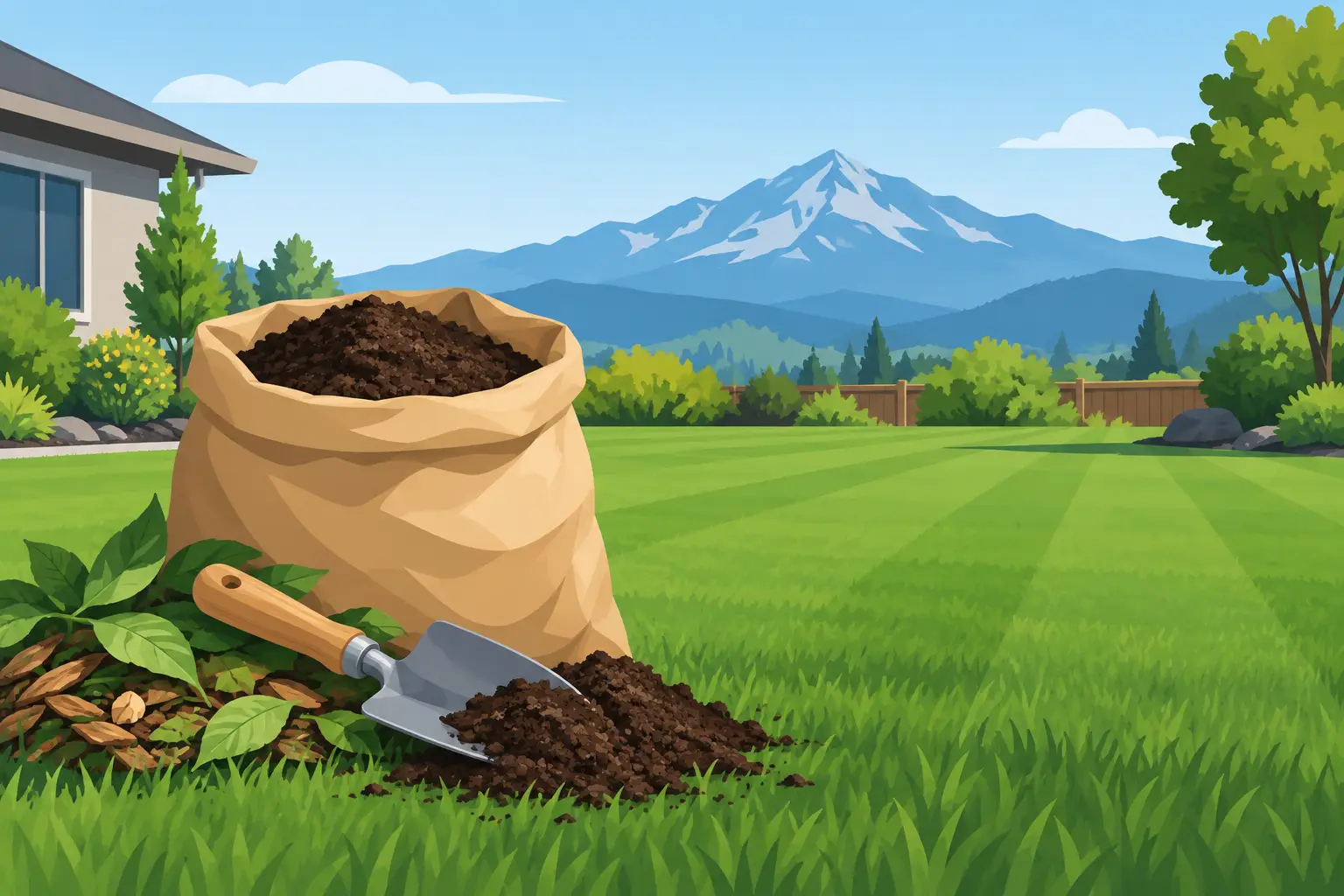
Organic soil conditioners are natural materials added to improve soil structure and biological activity. Finished compost is the most familiar example, but quality conditioners may also include aged bark fines, plant-based composts, humus-rich materials, or other stable organic matter.
For Central Oregon lawns, the key benefit is not simply adding nutrients. Sandy or disturbed soils often have large pore spaces, so water moves through them before turf roots have time to use it. Organic matter helps create a more balanced soil structure. It holds moisture and nutrients while still allowing oxygen to reach the root zone.
That balance matters. Soil that drains too fast can leave grass thirsty even when irrigation seems frequent. Soil that is dense or compacted can shed water at the surface and limit root depth. A well-chosen conditioner can help address either issue, but the application method should match the problem.
Organic conditioners also feed soil biology over time. Beneficial microbes help break down organic material and cycle nutrients into forms plants can use. In a High Desert landscape, where native soil may have little organic matter, building that living system is part of building a more durable lawn.
Organic Soil Conditioner Guide: Start With Your Soil
Before choosing a product, take a practical look at the lawn. Dig a small hole 4 to 6 inches deep in a few areas. If the soil falls apart like dry sand and will not form a loose ball when damp, it likely needs help retaining moisture. If it is hard to penetrate, layers tightly, or pools after irrigation, compaction may be the larger issue.
A soil test is even better, especially before a major renovation or when turf repeatedly underperforms. It can identify pH concerns, nutrient levels, and potential salt issues. Central Oregon soils vary by neighborhood, construction history, and past landscape use, so a test is more useful than guessing based on a bag label.
Conditioners are especially valuable when you are establishing a new lawn, repairing thin turf, or renovating an older lawn. It is easier to incorporate material into bare soil than to correct deep problems after grass is established. Still, established lawns can benefit from regular topdressing with screened compost.
Match the Material to the Job
For most lawns, screened, mature compost is a dependable choice. It should have an earthy smell and a consistent texture, not look like unfinished wood waste or contain large chunks that sit on top of the turf. Fine material moves more easily through grass blades during topdressing and reaches the soil surface where it can do useful work.
Compost blends with woody material can be useful for improving structure in new landscape beds, but they are not always the best fit for a finished lawn. Fresh or poorly aged wood products can temporarily tie up nitrogen as they decompose. That can leave turf pale and slow-growing when it needs support most.
Manure-based composts deserve a closer look. Properly composted material can be useful, but nutrient content and salt levels vary. In Central Oregon, where irrigation water and dry conditions can already contribute to salt accumulation, avoid applying high-salt products without understanding what is in them. More organic material is not automatically better.
If you are selecting a commercial conditioner, ask whether it is fully composted, screened for lawn use, and appropriate for your soil test results. A local recommendation is valuable because products that work in wetter regions may not address the water-holding needs of Bend-area soils.
How to Apply Conditioner to an Established Lawn
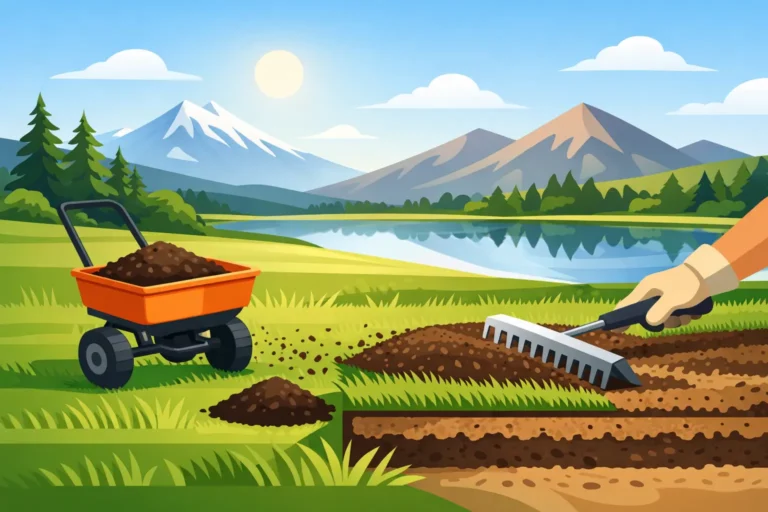
For an established lawn, topdressing is usually the least disruptive and most effective approach. Apply a light, even layer of fine compost over actively growing turf, then work it down through the grass canopy with a rake, broom, or appropriate topdressing equipment. You should still be able to see most of the grass blades after application.
A layer of roughly one-quarter inch is a practical target for many lawns. Heavy applications can smother turf, block light, and create uneven surfaces. A modest application repeated over seasons is more useful than one oversized attempt to transform the soil overnight.
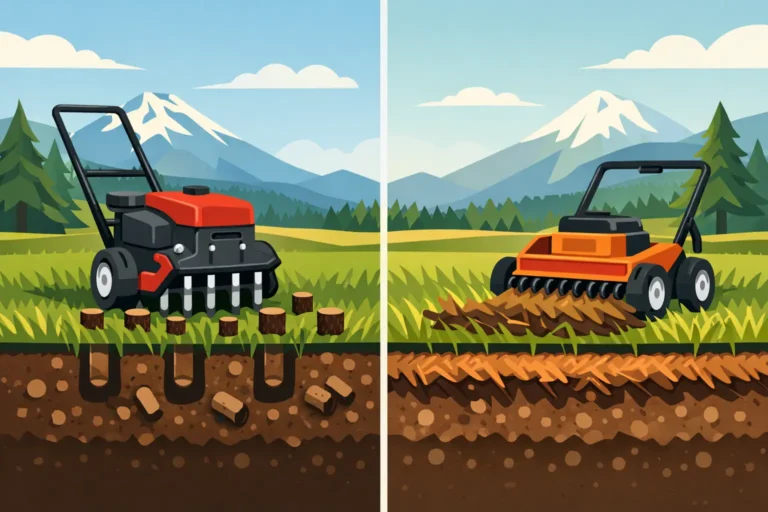
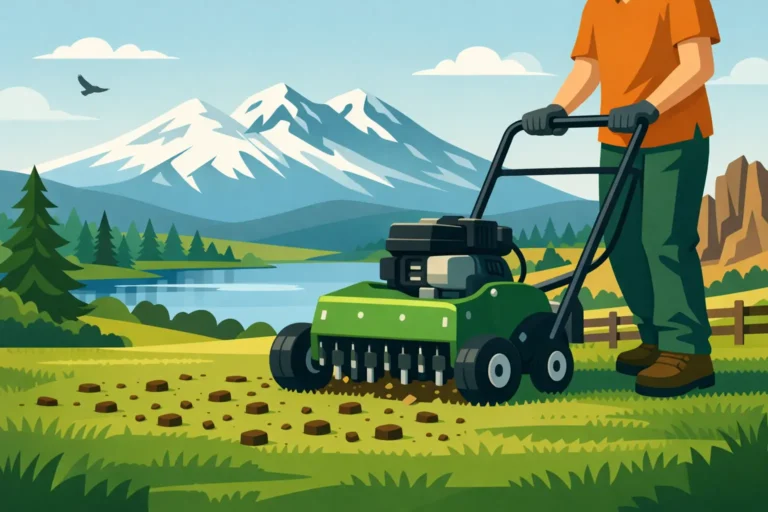
Aeration and topdressing work especially well together. Core aeration removes small plugs of soil and creates channels that improve air and water movement. Applying conditioner afterward allows fine organic material to reach the openings and begin improving the root zone, not just the surface.
Water the lawn lightly after topdressing to settle the material into the canopy. Then return to a thoughtful irrigation schedule. Do not assume a conditioner eliminates the need to water deeply and consistently during establishment. Its role is to help the soil hold onto more of what you apply.
Using Organic Conditioner During Lawn Renovation
Renovation gives you the best opportunity to make meaningful changes below the surface. After removing old turf or power raking thin, worn-out grass, spread conditioner across the exposed area and incorporate it into the upper few inches of soil. This is where a tiller can help, though it should not be used excessively.
Over-tilling can break down soil structure and create a fine, powdery layer that crusts after watering. Work the amendment in only as deeply as needed, then level the area before seeding or installing sod. The goal is a firm, receptive seedbed with enough organic matter to support new roots.
For a new lawn, conditioner should be part of a complete plan that includes appropriate seed, grading, irrigation coverage, and realistic expectations for the season. Central Oregon’s short shoulder seasons can make timing important. Spring and early fall are generally more forgiving for soil improvement and establishment than the hottest part of summer.
Avoid These Common Mistakes
The most common mistake is treating a soil conditioner like fertilizer. Compost may contain nutrients, but it is not designed to provide a precise fertility program for turf. Use it to improve soil function, then choose fertilizer based on grass needs and soil test results.
Another mistake is applying material over severe compaction without aerating or addressing drainage. If water stands on the lawn after a normal irrigation cycle, a thin compost layer alone may not solve the underlying issue. Compacted soil, grading problems, and damaged irrigation patterns may need attention first.
It is also easy to overlook irrigation. A healthier soil profile can improve water efficiency, but frequent shallow watering still encourages shallow roots. Longer, less frequent cycles that wet the root zone are generally a better match for established turf, provided the system is not producing runoff.
Finally, avoid using unfinished compost or unknown fill material. Weed seeds, inconsistent nutrient content, and poor texture can create problems that take seasons to correct. Quality matters because soil improvement is a long-term investment.
Make Soil Improvement Part of Annual Lawn Care
A lawn does not need a complete renovation every year. For many Bend-area properties, an annual or every-other-year light topdressing, paired with aeration as needed, steadily improves the soil without disrupting the yard. Watch for practical signs of progress: irrigation soaking in more evenly, turf staying greener between cycles, and roots becoming denser when you lift a small section of sod.
The right plan depends on your lawn’s history, soil texture, irrigation system, and how the space is used. A high-traffic family yard may need compaction relief more often than a lightly used front lawn. A new construction lot may need more initial soil work than a mature property with years of careful care.
Central Oregon Lawn Center can help homeowners and landscape professionals match organic conditioners, seed, fertilizer, and rental equipment to the job at hand. Bring in soil test results, photos, or a clear description of what your lawn is doing. A few minutes of local guidance can prevent a season of wasted water and guesswork.
Healthy turf starts below the blades. Give the soil a reason to hold water, grow roots, and support the lawn you want to keep.