

Can Grass Survive Drought? A Bend Lawn Guide
A Bend lawn can go from green to blue-gray in a few hot, dry days, especially when wind, sandy soil, and irrigation limits all show up at once. So, can grass survive drought? Often, yes. But survival and a lawn that looks good through summer are two different things. The outcome depends on the grass type, how long the soil stays dry, root depth, heat exposure, and what you do before the lawn reaches a true crisis.
In Central Oregon, drought stress is rarely caused by low rainfall alone. Our High Desert conditions combine low humidity, intense sun, quick-draining soils, cool nights, and a relatively short growing season. Turf can recover from a period of dormancy, but repeated shallow watering, compacted soil, or drought that continues into fall can leave it thin enough for weeds, bare patches, and winter damage to take over.
Can Grass Survive Drought in Central Oregon?
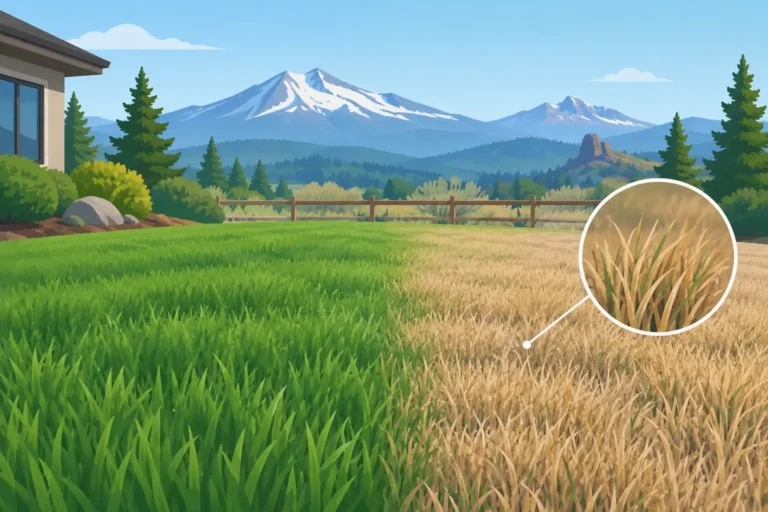
Cool-season grasses, which are common in Bend-area lawns, have a built-in response to dry conditions: dormancy. As moisture becomes scarce, the grass slows growth and may turn tan or straw-colored. The plant is conserving resources rather than necessarily dying.
A healthy, established lawn can usually tolerate several weeks of drought dormancy if the crowns, the growing points at the base of the plants, remain alive. Once temperatures moderate and moisture returns, it may green up again. That recovery is more likely when the turf had deep roots and good soil conditions before the drought began.
The trade-off is that dormancy is not a free pass. Grass is more vulnerable when drought coincides with extreme heat, reflected heat from driveways or walls, foot traffic, pet traffic, mowing too low, or a lawn already weakened by thatch and poor soil structure. Newly seeded lawns, sod installed within the last year, and lawns with thin root systems need more protection than mature turf.
A simple test can help. Tug gently on a few browned blades in several locations. If they resist and the crowns near the soil surface are firm, the turf may simply be dormant. If plants pull out easily, crowns are brittle, or large areas remain brown after cooler weather and proper watering return, some renovation may be needed.
Know the Difference Between Dormancy and Damage
Drought stress usually starts as a dull blue-green cast, followed by footprints that remain visible after you walk across the lawn. Blades may fold inward to reduce moisture loss. These are early warnings, not signs to wait on.
As stress continues, the lawn turns tan. That can still be dormancy. Permanent damage is more likely when the soil becomes dry several inches down for an extended period, particularly in exposed areas where irrigation coverage is uneven. Edges along pavement, south- and west-facing slopes, and spots under trees are often the first places to fail.
Do not expect every brown area to recover at the same speed. A lawn may green up in the center while thin strips near the sidewalk remain dormant or dead. Those patterns are useful clues. They often point to irrigation gaps, shallow soil, compaction, or heat stress rather than a problem with the entire lawn.
Water for Roots, Not for Daily Color
When water is limited, the goal is to keep the root zone alive, not to make the lawn look freshly watered every day. Frequent light irrigation keeps moisture near the surface and encourages shallow roots, which makes turf less resilient during the next hot spell.
For established turf, water deeply enough to moisten the soil roughly 4 to 6 inches below the surface, then allow the upper layer to dry somewhat before the next cycle. The exact schedule depends on soil texture, sun exposure, sprinkler output, and local watering guidance. Sandy Central Oregon soils may require shorter runtimes more often than heavier soils, but the principle remains the same: water should reach the roots, not run off or evaporate from the blades.
Check your system rather than trusting the clock. Place a few straight-sided containers around a zone to see whether sprinklers apply water evenly. Then use a screwdriver or soil probe after watering to confirm how deeply moisture has moved. If one area is dry while another is soaked, adjusting heads or repairing coverage can save far more water than simply increasing runtime.
Water in the early morning whenever possible. Midday irrigation loses more water to evaporation and wind, while evening watering can leave foliage wet longer than necessary. If restrictions require a reduced schedule, prioritize young turf, high-traffic areas, and the hottest exposures. A mature lawn can be allowed to go partially dormant if it receives enough occasional moisture to protect the crowns.
Mowing Habits Matter More During Drought
Drought-stressed grass needs leaf area to shade the soil and support root growth. Raise your mowing height during hot, dry periods. For many cool-season lawns, keeping the mower around 3 to 3 1/2 inches is a practical target, provided it fits the turf type and site conditions.
Avoid removing more than one-third of the blade at a time. Cutting a neglected lawn very short during a heat wave is one of the fastest ways to turn temporary stress into long-lasting damage. Keep mower blades sharp as well. A clean cut loses less moisture and is easier for the plant to recover from than a torn, ragged blade.
Grass clippings can stay on the lawn when they are not clumped. They return small amounts of nutrients and help protect the soil surface. What they do not do is create harmful thatch on their own. True thatch is a dense layer of stems and roots that may need separate management.
Build Drought Tolerance Before Summer Arrives
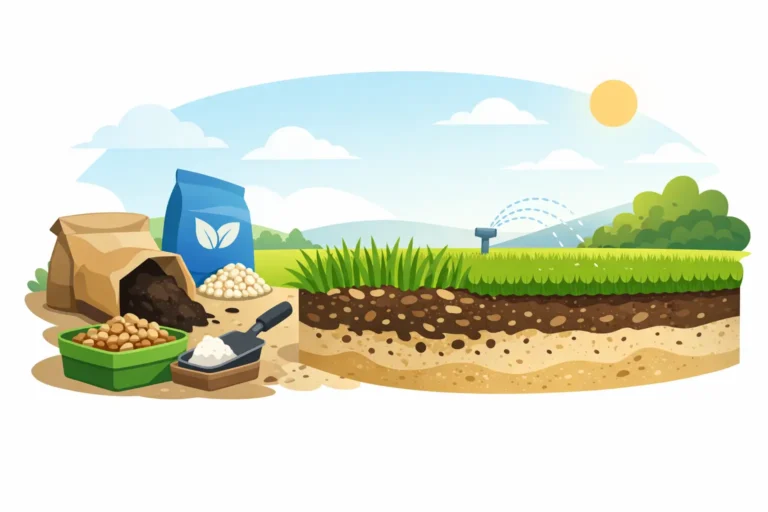
The best time to improve drought tolerance is spring and early fall, not the hottest week in August. Healthy soil stores more moisture and allows roots to explore deeper. That is especially valuable in Central Oregon, where many properties have sandy, low-organic-matter soil or compacted new-construction ground.
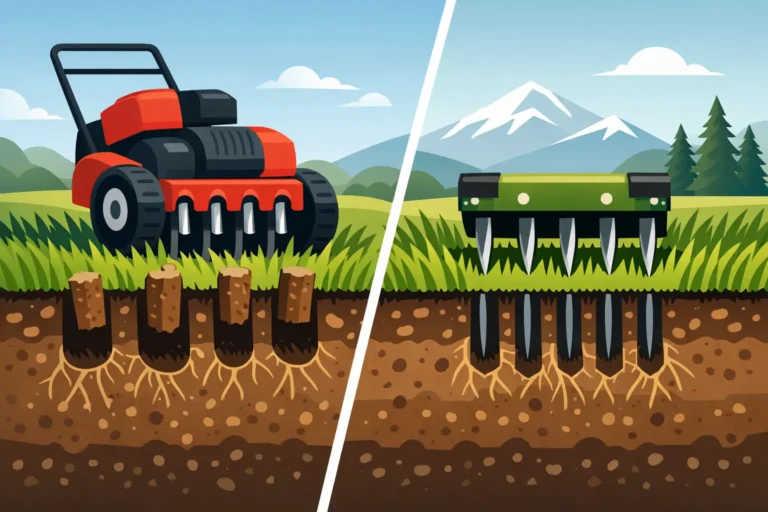
Core aeration can relieve compaction and open channels for water, air, and roots. Topdressing with appropriate organic material after aeration helps improve the soil profile over time without smothering the turf. A soil test is also worthwhile before adding fertilizer or amendments. More fertilizer is not automatically better. Excess nitrogen can create tender top growth that demands more water and may add stress during heat.
Overseeding in late summer or early fall is another practical way to strengthen thin turf. The right drought-tolerant seed blend can improve density and reduce the likelihood that bare areas become weed patches. Species selection matters. Turf-type tall fescue generally develops deeper roots and handles dry periods better than many traditional Kentucky bluegrass lawns, while fine fescues can work well in lower-input or lightly shaded areas. A locally selected blend balances drought tolerance, wear resistance, winter recovery, and appearance for the site.
New seed is not drought-proof, however. It needs consistent moisture until germination and establishment. Plan renovation work around the ability to water responsibly, and avoid starting a major seeding project when prolonged heat or restrictions are expected.
When to Let a Lawn Go Dormant
For some homeowners, keeping every square foot green through a High Desert summer is not the best use of water. Allowing an established lawn to enter controlled dormancy can be a reasonable water-wise choice, particularly in low-traffic areas.
If you choose this approach, do it deliberately. Avoid heavy traffic and mowing stress, keep weeds from setting seed, and provide occasional deep watering as conditions require to help the crowns survive. Do not stop watering abruptly on newly planted grass, recently laid sod, or lawns already showing signs of severe decline. Those areas may not have the root reserves needed to rebound.
Consider where turf truly earns its place. A durable green area near a patio, play space, or front entry may be worth prioritizing, while a difficult strip beside pavement might be better renovated with a lower-water landscape approach. Thoughtful changes can reduce irrigation demand without giving up the parts of a lawn your household actually uses.
Help a Stressed Lawn Recover
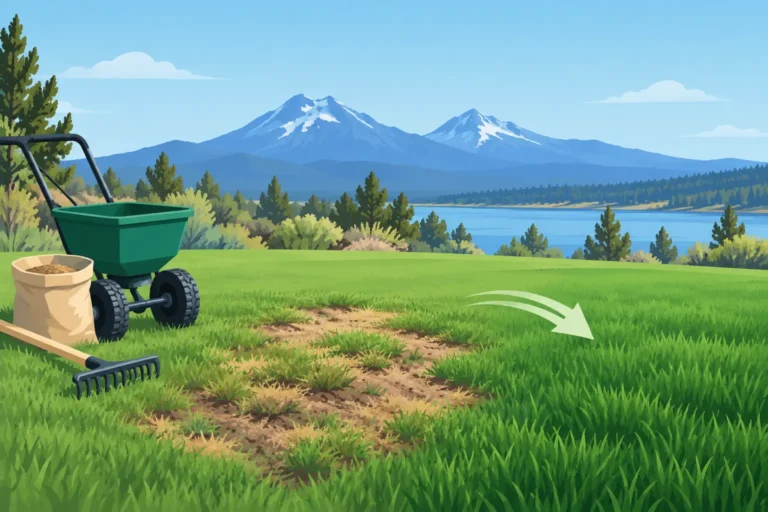
When cooler weather returns, resist the urge to force a brown lawn green overnight with heavy fertilizer. Start by restoring even, deep irrigation and giving the turf time to respond. Inspect for dead areas, irrigation issues, compaction, and thatch. Once active growth resumes, a seasonally appropriate fertilizer program, aeration, and targeted overseeding can help rebuild density.
If a large section does not recover, renovation may be more efficient than repeated patching. Removing failed turf, improving the soil, correcting irrigation coverage, and reseeding with a suitable blend can create a lawn that needs less intervention next summer. For larger projects, equipment such as aerators, power rakes, topdressers, and sod cutters can make the work more accurate and manageable.
A drought does not have to decide the future of your lawn. Bring in a soil sample, photos of problem areas, or details about your irrigation schedule, and Central Oregon Lawn Center can help you choose a practical path that respects both your property and the water it depends on.