Soil Conditioner for Central Oregon Lawns
A lawn can receive the right grass seed, fertilizer, and irrigation schedule and still struggle if the soil cannot hold water or support healthy roots. That is a familiar problem across Bend and Central Oregon, where sandy ground, low humidity, and a short growing season put turf to the test. The right soil conditioner changes the ground beneath your lawn, helping it retain moisture, cycle nutrients, and grow stronger grass with less waste.
A conditioner is not a quick green-up product. It is a long-term investment in the part of the lawn most people never see. Used thoughtfully, it can make watering more effective, improve the results of fertilizer, and help a lawn recover from summer stress or renovation work.
What a Soil Conditioner Actually Does
Soil conditioner is a broad term for materials added to improve soil structure and biological health. Unlike fertilizer, which primarily supplies nutrients, a conditioner helps soil function better. It can improve how soil holds and drains water, how easily roots move through it, and how effectively the soil stores nutrients for plants to use.
In Central Oregon, many lawns sit on coarse, sandy, or disturbed soils with limited organic matter. Water can move through these soils quickly, taking dissolved nutrients with it. A lawn may look thirsty again shortly after irrigation, even when the sprinkler system is working properly.
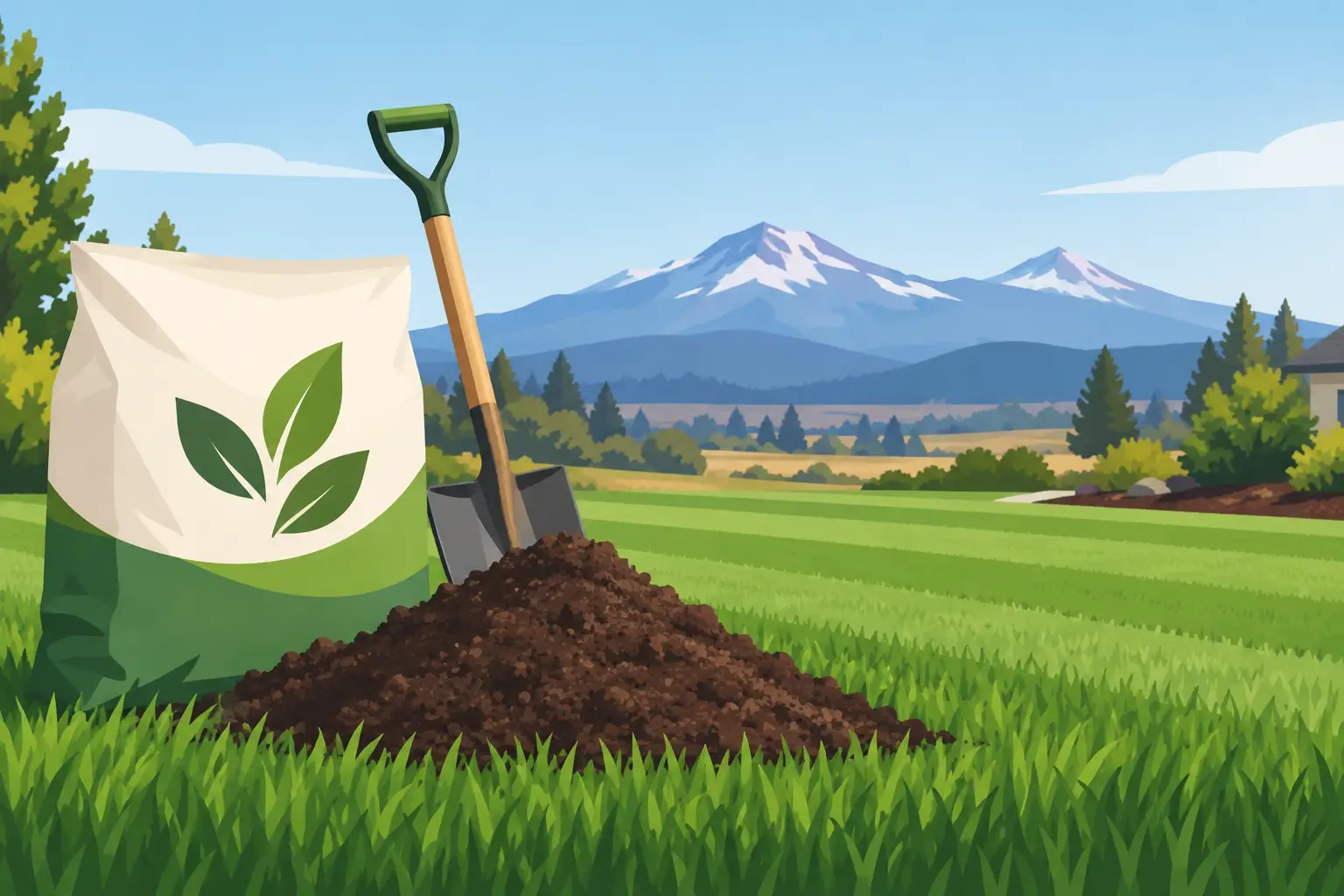
Organic matter is especially valuable in that situation. Compost-based conditioners, aged manures, and other quality organic amendments help sandy soil hold more moisture and nutrients around the root zone. They also support beneficial soil organisms that break down organic material and contribute to healthier soil over time.
That does not mean every lawn needs the same product or application rate. A compacted new-construction yard, an established lawn with thin spots, and a vegetable garden converted from native ground can each call for a different approach.
Why Central Oregon Lawns Benefit From Conditioning
The High Desert creates a specific set of lawn-care challenges. Our dry air increases evaporation, summer heat can stress shallow roots, and irrigation water is too valuable to lose below the root zone. Soil conditioning addresses these conditions at the source.
Better moisture retention without overwatering
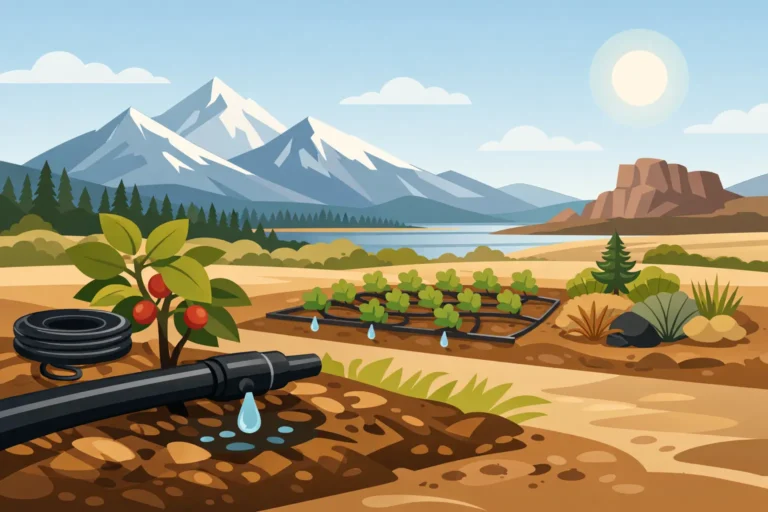
When soil contains adequate organic matter, it acts more like a sponge. It can absorb irrigation water and hold a portion of it where grass roots can access it later. This does not eliminate the need for regular watering, but it can reduce the cycle of watering heavily, seeing rapid dry-out, and watering again before the lawn has used what it received.
The practical goal is not to keep soil constantly wet. Turf roots need oxygen as well as water. Good conditioning helps create a balance: enough pore space for air movement, enough organic matter for moisture retention, and enough structure to prevent water from racing through sandy ground.
Stronger rooting and improved recovery
Healthy roots make a lawn more durable. They help turf tolerate heat, foot traffic, mowing, and periods of limited water. In compacted soil, roots often remain near the surface, where conditions change quickly. Aeration combined with an appropriate conditioner can open the soil and give roots a better environment to move deeper.
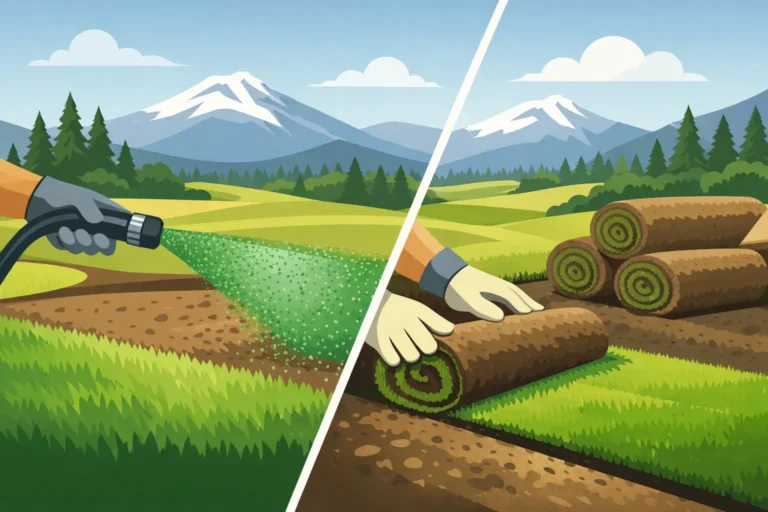
This is particularly useful when renovating a worn lawn. After power raking, aerating, or overseeding, a topdressing of quality compost can help seed-to-soil contact while improving the growing environment for new seedlings.
More efficient fertilizer use
Fertilizer works best when the soil can retain nutrients and make them available to roots. In very sandy soil, nutrients may leach below the active root zone before turf uses them. Building organic matter helps improve nutrient-holding capacity, which supports steadier growth and can reduce the temptation to overapply fertilizer.
For homeowners and landscape professionals focused on environmentally responsible care, that is a meaningful benefit. A healthier soil profile supports a healthier lawn without treating fertilizer as the answer to every problem.
Choosing the Right Soil Conditioner
The best soil conditioner depends on what is happening below the surface. Compost is often an excellent starting point for Central Oregon properties because it adds stable organic matter and improves moisture retention. However, compost quality matters. Material should be fully processed, free of large debris, and suitable for lawn or landscape use.
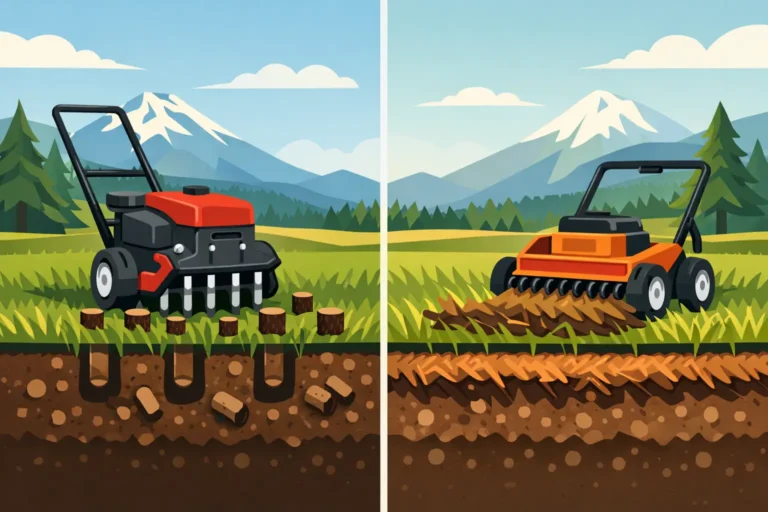
For a lawn with heavy compaction, conditioner alone will not solve the problem. Core aeration should come first, followed by a light topdressing that can work into the holes and soil surface. This combination improves air and water movement while adding organic material where roots need it.
If soil is extremely sandy and drains almost immediately, repeated light applications of compost over several seasons are generally more effective than one oversized application. Soil improvement is gradual. Adding too much material at once can smother existing grass, create an uneven surface, or interfere with irrigation coverage.
Some products are marketed as soil conditioners but serve a narrower purpose. Humic materials may support nutrient availability and soil biology. Gypsum is sometimes useful in soils with specific sodium-related issues, but it is not a universal fix for compaction or poor sandy soil. The right choice should be based on your soil conditions, not a one-size-fits-all label.
How to Apply Soil Conditioner to an Existing Lawn
For established turf, topdressing is the most practical method. The goal is a thin, even layer – typically about one-quarter inch – spread across the lawn surface. Grass blades should remain visible after application. A layer that is too deep can block light and stress the turf underneath.
Start by mowing the lawn slightly shorter than usual, without scalping it. If thatch or compaction is an issue, power rake or core aerate before applying the material. Spread the conditioner evenly with a topdresser, shovel, or landscape rake, then work it gently into the canopy with the back of a rake or a broom.
Water lightly afterward to settle the material and move fine particles into the soil surface. Continue normal irrigation, adjusting for weather and the needs of new seed if you are overseeding at the same time. Avoid applying heavy topdressing immediately before a major heat event, when already-stressed turf may need simpler care.
For large lawns or renovation projects, rental equipment can make the work more consistent and far less time-consuming. A topdresser provides a more even application than piles distributed by hand, while a core aerator helps the conditioner reach below the surface rather than sitting on top of it.
Timing Matters in the High Desert
Late spring and early fall are usually the most favorable windows for lawn conditioning in Central Oregon. In spring, wait until the turf is actively growing and the ground is no longer excessively cold or wet. In fall, apply early enough for grass to recover before hard freezes arrive.
Early fall is often an especially productive time to aerate, topdress, and overseed. The cooler temperatures reduce stress, while soil can remain warm enough for root activity. A conditioned soil profile gives new grass seed a better chance to establish before winter.
Summer applications are possible, but they require care. A thin layer of compost and consistent irrigation may be appropriate for a healthy lawn, but a major renovation during peak heat demands closer attention. If water restrictions are in place or the lawn is already struggling, it may be wiser to address irrigation efficiency first and schedule extensive work for a more forgiving season.
Avoid These Common Mistakes
The most common mistake is expecting conditioner to replace proper irrigation. Even improved soil needs water, especially during Central Oregon summers. Review sprinkler coverage and run times so water reaches the root zone evenly rather than pooling in one area and missing another.
Another mistake is treating every yellow or thin lawn as a fertility problem. Poor coverage, compacted soil, insect activity, mowing too short, and weak roots can all create similar symptoms. Adding more fertilizer to a lawn that cannot use it efficiently often increases expense without fixing the cause.
Finally, avoid bringing in unknown fill dirt or unfinished compost. Fresh or poorly processed materials can contain weed seeds, create unpleasant odors, tie up nitrogen as they break down, or introduce uneven texture into the lawn. Quality materials and the right application rate matter just as much as the decision to amend the soil.
Build Better Soil One Season at a Time
A thriving Central Oregon lawn is not built by forcing quick top growth. It comes from grass with room to root, soil that makes better use of irrigation, and a maintenance plan suited to the High Desert. At Central Oregon Lawn Center, local guidance can help you match the right conditioner, seed, fertilizer, and equipment to the conditions in your own yard.
Start with the ground you have, improve it in manageable layers, and let each season build on the last. Your lawn will be better prepared for dry spells, busy weekends, and the next Central Oregon summer.