Lawn Establishment Methods for Central Oregon
A new lawn in Bend can look promising for two weeks, then thin out when hot afternoons, wind, sandy soil, and uneven watering catch up with it. That is why lawn establishment methods deserve more thought here than simply spreading seed and turning on the sprinklers. The right approach depends on your timeline, budget, soil condition, irrigation coverage, and how much work you can put into the first critical weeks.
Central Oregon lawns are established in a short growing window and often on soil that drains too quickly to hold enough moisture around young roots. A successful project starts with matching the method to the site, then building healthy soil and consistent irrigation beneath the turf. Whether you are starting from bare ground, replacing a worn-out lawn, or building a landscape for a client, durable results come from preparation as much as the grass itself.
Choosing Among Lawn Establishment Methods
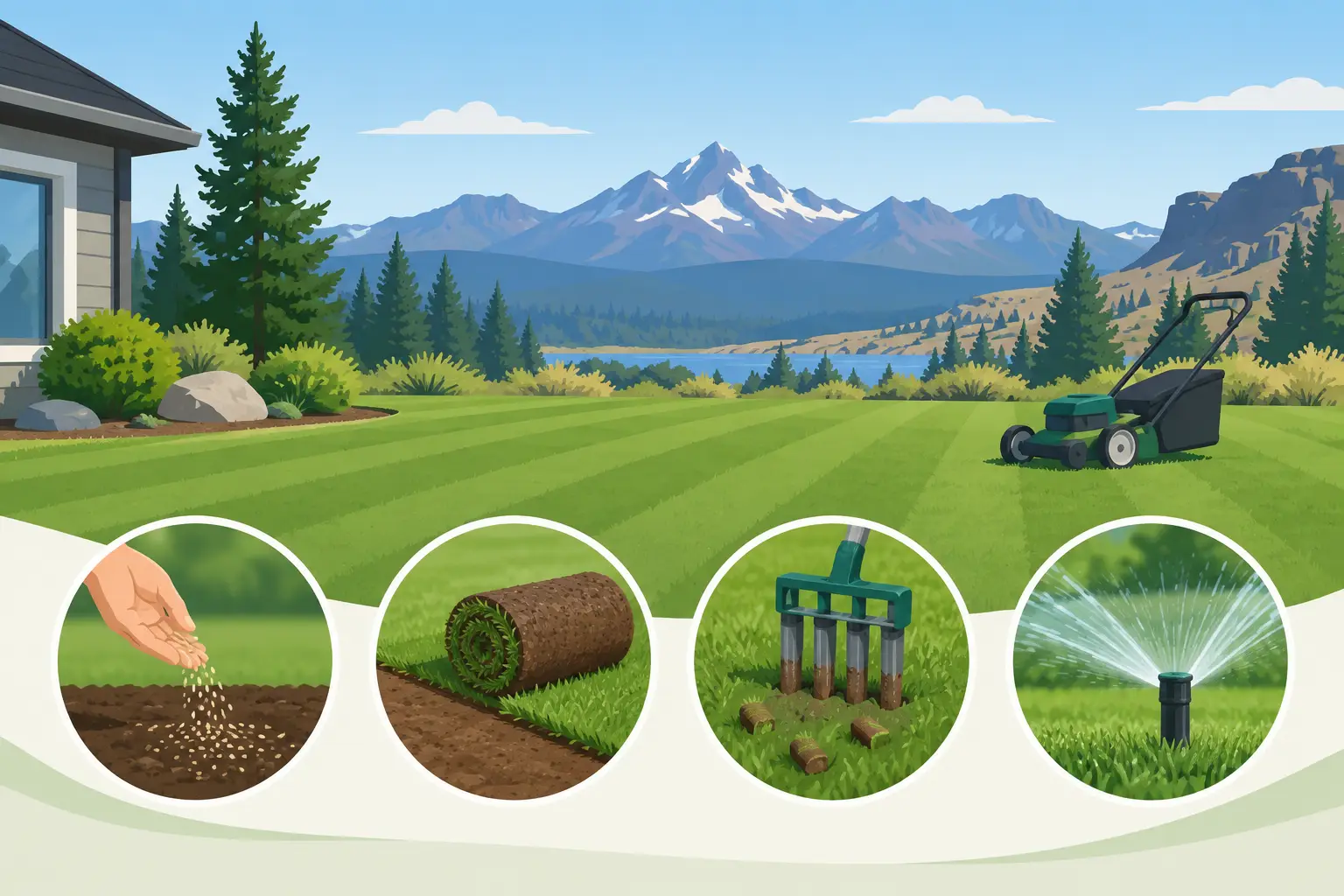
Seeding, sod, hydroseeding, and renovation each have a place in Central Oregon. No one method is automatically best. Seed is economical and offers the widest choice of turf varieties, while sod provides immediate coverage but has a higher material cost. Hydroseeding can cover a large area efficiently, but it still needs careful moisture management and is generally most practical for broad, accessible sites. Renovation is often the smarter choice when an existing lawn has good areas worth saving.
Before choosing, look honestly at the site. A small front lawn with a tight deadline may justify sod. A larger backyard where homeowners can water consistently is often an excellent seed project. A commercial property, acreage, or new construction site may benefit from hydroseeding, especially when crews need to establish broad coverage efficiently. If the problem is compaction, thatch, poor soil, or patchy turf rather than total failure, renovation can restore the lawn without the cost and waste of a full replacement.
Seed: The Most Flexible, Budget-Conscious Option
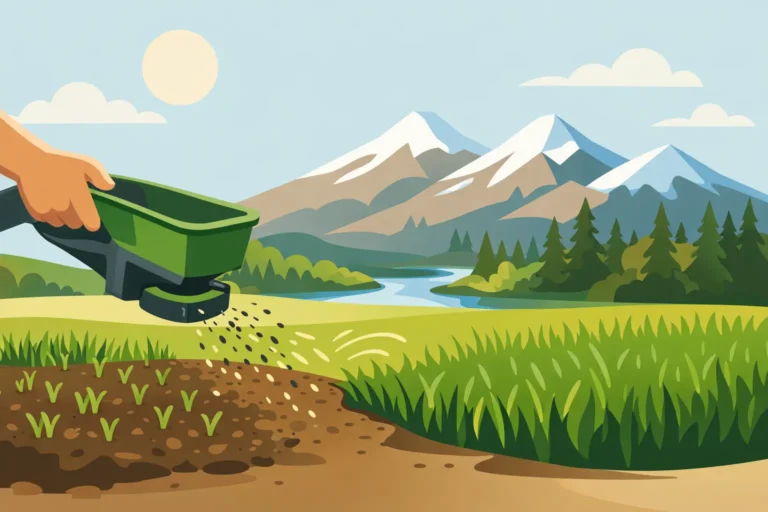
Seeding is the method that gives homeowners and landscape professionals the most control over grass selection. That matters in the High Desert, where a generic mix may not be suited to dry air, cool nights, traffic, shade, or a water-wise maintenance plan. A quality blend selected for Central Oregon can provide better drought tolerance, color, and long-term durability than whatever seed happens to be on a big-box shelf.
Seed also costs less per square foot than sod, making it practical for larger areas. The trade-off is patience. Germination is not the finish line. New seedlings need frequent, light watering until they establish, then a gradual transition to deeper, less frequent irrigation. They also need protection from foot traffic, pets, and aggressive weed competition.
Late summer through early fall is often the most forgiving seeding period in Central Oregon. Soil is still warm enough for germination, while cooler air reduces stress and moisture loss. Spring seeding can work, but it may require more attention as summer heat arrives before roots are fully developed. Avoid seeding into cold soil or during a stretch of hot, windy weather when possible.
Sod: Fast Results With a Higher Upfront Cost
Sod is the quickest way to create a finished-looking lawn. It is a strong choice for entry areas, small spaces, erosion-prone slopes, homes nearing move-in, or properties where bare soil is not acceptable for long. Since sod arrives as mature turf, it can also get ahead of some annual weed pressure that affects a newly seeded lawn.
The speed comes with conditions. Sod must be laid on properly prepared, level soil and watered immediately. Edges and seams dry out first, particularly in Central Oregon’s low humidity. For the first couple of weeks, the goal is to keep the soil beneath the sod consistently moist enough to encourage rooting, without creating runoff or constantly saturated ground. Lift a corner after several days to check for root attachment rather than relying only on how green the surface looks.
Sod can be a poor investment if the underlying problem is ignored. Installing it over compacted ground, construction debris, poorly graded soil, or weak irrigation coverage may produce an attractive lawn briefly, followed by the same thin areas and dry spots. Preparation still determines whether the lawn lasts.
Hydroseeding: Efficient Coverage for Larger Sites
Hydroseeding applies seed, mulch, water, and often soil-supporting amendments as a slurry. The mulch helps protect seed from drying wind and can improve seed-to-soil contact across a large area. For open lots, new developments, large residential properties, and some commercial projects, it can be a practical alternative to installing extensive sod.
It is not a shortcut around site preparation or watering. Hydroseeding needs a smooth, properly amended seedbed and irrigation that reaches the full area. It is also less suited to tiny lawns or sites where access and overspray are concerns. On slopes, the mix and application plan should account for erosion, runoff, and the need to keep seed in place during establishment.
Renovation: Keep What Is Worth Keeping
A lawn that looks tired is not always a lawn that needs removal. If desirable grass remains across much of the area, renovation can improve density and soil performance with less disruption. Core aeration relieves compaction and creates openings for air, water, and seed. Power raking can remove excess thatch and expose soil for overseeding. Topdressing with appropriate compost or soil amendment can improve moisture-holding capacity in sandy ground.
The sequence matters. Address irrigation issues first, aerate or power rake as needed, apply amendments, overseed with a locally appropriate blend, and keep the surface consistently moist until seedlings are established. Equipment rental can make this work more effective on larger lawns than trying to force results with a hand rake and a bag of seed.
Soil Preparation Makes Every Method Work Better
Central Oregon’s native soils can be sandy, rocky, low in organic matter, and variable from one neighborhood to the next. They may drain quickly but still have compacted layers that restrict roots. A basic soil test is useful before adding fertilizer or amendments because it replaces guesswork with a clear starting point.
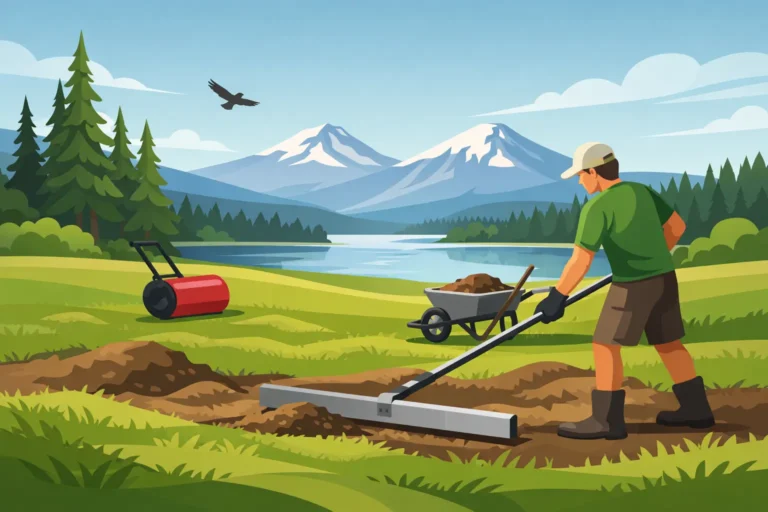
Remove construction debris, weeds, and large rocks before grading. Aim for a finished surface that slopes gently away from buildings, without low areas that collect water. Then incorporate the needed soil amendment into the upper root zone rather than simply scattering it on top. Organic matter can help improve water retention and nutrient cycling, but too much or the wrong material can create drainage problems. The goal is better soil structure, not a deep layer of imported material sitting apart from the native soil.
A starter fertilizer or organic fertility plan should support early root development without pushing excessive, weak top growth. Use products and rates that fit the soil test and the grass type. More fertilizer is not better, especially where water is limited and nutrient runoff is a concern.
Irrigation During Establishment and Beyond
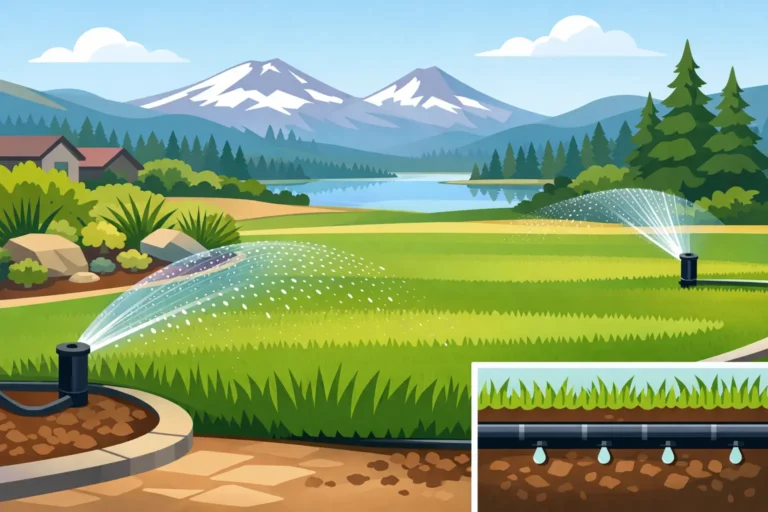
New turf needs more frequent watering than established turf, but frequency should change as roots grow. Seeded lawns generally need light, frequent irrigation to keep the top layer of soil moist through germination. Once seedlings are up and beginning to root, gradually reduce frequency and water longer so moisture moves deeper into the profile.
Sod needs thorough watering at installation and regular moisture below the rolls while roots knit into the soil. Check beneath the sod rather than watering by the calendar. When roots hold firmly and the lawn resists a gentle tug, begin transitioning toward deeper cycles.
Irrigation uniformity is often the hidden reason one section succeeds while another fails. Run each zone long enough to observe dry gaps, overspray, runoff, and sprinkler heads blocked by plants or edging. Fixing coverage early saves seed, sod, water, and frustration. Water early in the day whenever possible, and adjust for rain, heat, wind, and seasonal restrictions.
The First Season Sets the Long-Term Standard
Do not mow new grass too soon or too short. Wait until it reaches the recommended mowing height for the variety, then remove no more than one-third of the blade length. Keep mower blades sharp so young plants are cut cleanly rather than torn. Delay heavy play, pets, and equipment traffic until the lawn has rooted and filled in.
Weeds are common during establishment, especially where soil has been disturbed. Hand removal is often the safest early response. Avoid rushing into broad herbicide applications on tender new turf, and follow all product label timing requirements. A dense, properly irrigated lawn is the best long-term defense against weeds.
Central Oregon Lawn Center can help match seed blends, soil amendments, organic fertility options, irrigation supplies, and rental equipment to the condition of your site. Bring in photos, measurements, or a soil test, and get a plan built around the lawn you actually have.
The most water-wise lawn is not the one that receives the least care on day one. It is the lawn established with healthy soil, appropriate grass, even irrigation, and enough patience to build roots before asking it to handle a Central Oregon summer.