Best Soil Conditioners for Central Oregon Lawns
A Bend lawn can look thirsty again only a day or two after watering, even when the irrigation system is working properly. Often, the problem is not the sprinkler or the grass seed. It is the soil beneath the turf. Choosing the best soil conditioners for lawns helps sandy High Desert soil retain moisture, supports deeper roots, and makes every gallon of irrigation work harder.
Central Oregon lawns face a different set of conditions than lawns west of the Cascades. Many local sites have coarse, low-organic-matter soils, alkaline conditions, intense summer sun, low humidity, and a short window for active growth. A soil conditioner should address those realities, not simply add a quick green-up that fades when hot weather arrives.
What a Lawn Soil Conditioner Should Do
A soil conditioner improves the physical or biological condition of soil. Fertilizer feeds the lawn. A conditioner helps create the root zone that allows grass to use water and nutrients more effectively. Some products do both, but they are not interchangeable.
For most Central Oregon lawns, the priorities are improving water-holding capacity, encouraging soil biology, reducing surface crusting, and building a deeper, more resilient root system. The right choice depends on whether your lawn is established, newly seeded, compacted, patchy, or struggling with irrigation runoff.
Start with a soil test when possible. It is the clearest way to avoid applying materials your soil does not need. High pH is common locally, but a test can also reveal low organic matter, nutrient imbalances, or salinity concerns that change the recommendation.
The Best Soil Conditioners for Lawns Here
Quality compost for broad soil improvement
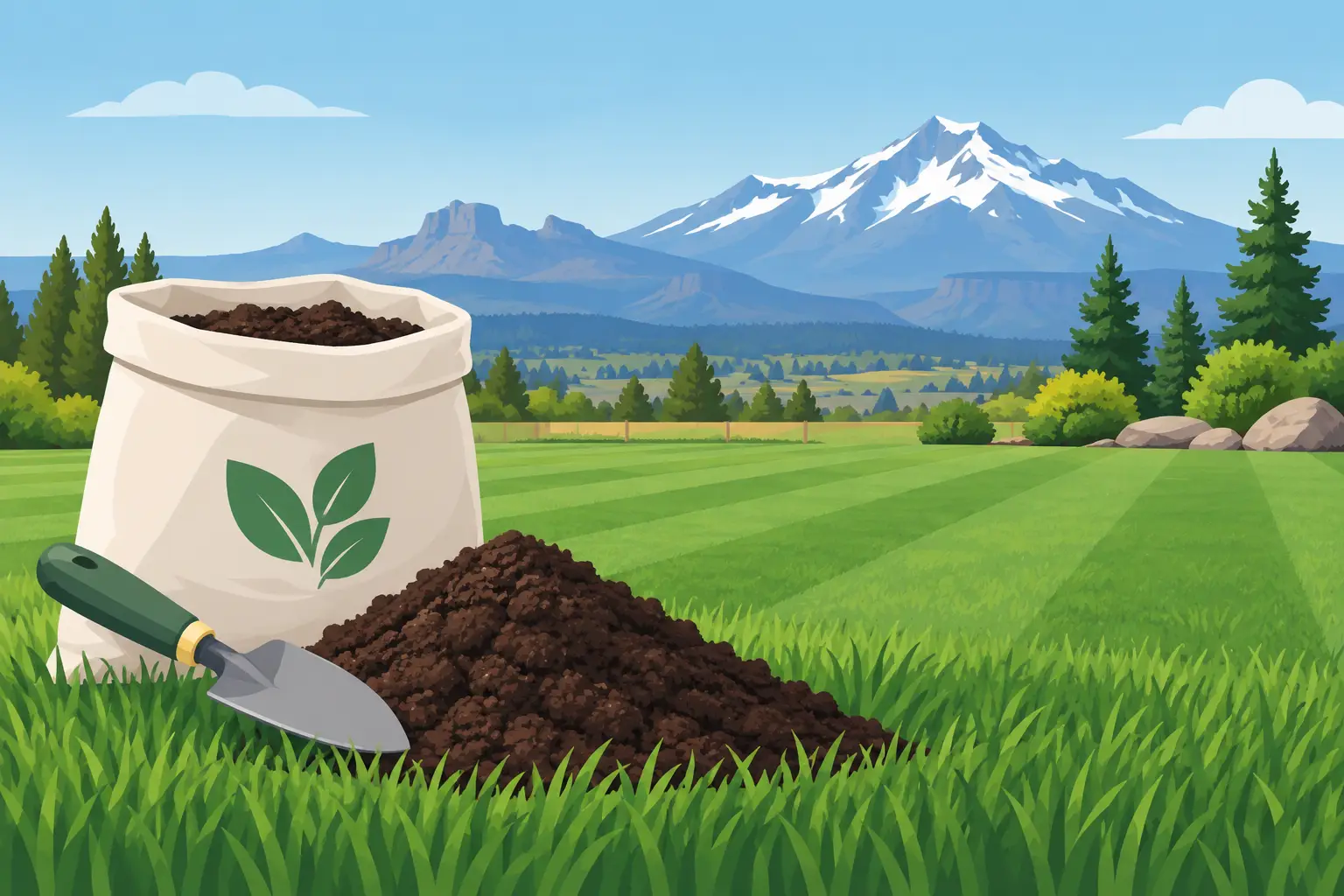
Finished, screened compost is often the most useful all-around conditioner for Central Oregon turf. It adds stable organic matter that helps sandy soil hold water and nutrients rather than letting them move quickly below the root zone. It also supports beneficial soil organisms and improves the feel and workability of soil over time.
For an established lawn, apply compost as a light topdressing, generally about one-quarter inch at a time. A heavier layer can smother grass or create a soft, uneven surface. Spread it evenly after core aeration, then rake or brush it into the holes and canopy. This places organic matter where roots can benefit from it instead of leaving it sitting on top of the lawn.
Compost quality matters. Use material that is mature, fine-textured, and appropriate for turf. Poorly finished compost can contain oversized debris, weed seed, or excess salts. For a lawn renovation or new seedbed, compost can be incorporated into the upper few inches of soil, but avoid creating a rich, shallow layer over untouched native soil. Roots need a gradual transition into the soil below.
Humic materials for sandy or tired turf
Humic acid and humate-based soil conditioners are concentrated organic compounds that can be useful where lawns need improved nutrient efficiency without adding a thick layer of material. They are especially practical for established turf, where incorporating compost is not possible.
These products can help soil hold onto nutrients and may support root activity when used alongside sound watering and fertility practices. They are not a substitute for compost if organic matter is very low, but they can be a helpful part of a seasonal program for lawns growing in lean, sandy ground.
Look for a product designed for turf and follow label rates carefully. More is not necessarily better. Humic products work best as part of a larger plan that includes proper mowing height, irrigation adjustments, and periodic aeration.
Biochar for long-term organic matter support
Biochar is a stable, carbon-rich material that can improve moisture and nutrient retention in coarse soils. Its value is long-term. Unlike a fast-release lawn product, it does not produce an overnight visual change, but it can contribute to a more functional root zone over repeated applications.
For turf use, choose a fine-grade product that has been charged or blended with compost, nutrients, or other organic materials. Fresh, uncharged biochar can temporarily tie up nutrients in some situations. It is generally most effective during lawn installation, renovation, or aeration and topdressing work, when it can be moved into the soil rather than left on the surface.
Biochar is a good fit for homeowners and landscapers focused on long-term soil stewardship. Its trade-off is cost and slower visible results. If a lawn has severely compacted soil or poor irrigation coverage, those issues need attention first.
Gypsum when a test or soil condition supports it
Gypsum is commonly promoted as a cure-all soil amendment, but it is not automatically one of the best soil conditioners for every lawn. It supplies calcium and sulfur and can help improve structure in certain sodium-affected soils. In the wrong situation, however, it may add expense without solving the real problem.
Central Oregon lawns can have alkaline soil, but alkalinity alone does not mean gypsum is needed. A soil test and a clear diagnosis matter. If water infiltration is poor because of compaction, core aeration may be more useful. If irrigation water or soil has sodium concerns, gypsum may have a legitimate role in a broader corrective plan.
The practical lesson is simple: use gypsum with a reason, not as an annual habit. Local guidance can save you from treating the symptom while the underlying problem remains.
Soil penetrants for dry, water-repellent spots
Some lawns develop dry patches that resist water even while nearby turf is moist. This can happen when soil becomes hydrophobic, especially under thatch, in sandy areas, or after extended dry conditions. A soil penetrant or wetting agent can help water move into the root zone more evenly.
These products are not permanent soil builders like compost, but they can be valuable tools when irrigation runs off, puddles, or bypasses dry soil. They are most effective when paired with a careful watering schedule. Apply enough water to move moisture into the soil, then allow the area to dry slightly between cycles rather than watering lightly every day.
Match the Conditioner to the Problem
A lawn that dries out quickly and feels loose underfoot usually benefits from compost, humic materials, and improved irrigation scheduling. A lawn with hard soil, weak roots, and poor water entry may need core aeration followed by a light compost topdressing. Bare areas being renovated can benefit from compost and charged biochar mixed into the seedbed before planting.
If the lawn is green but growing thin, do not assume a conditioner is the answer. Shade, mowing too short, poor seed selection, insect damage, and uneven sprinkler coverage can all produce thin turf. Soil improvement supports lawn health, but it cannot compensate for a grass type that is poorly suited to the site.
This is where a site-specific approach pays off. A sunny, exposed lawn in southeast Bend may need a different blend of seed, soil inputs, and irrigation adjustments than a shaded lawn near the Deschutes River or a heavily used commercial property.
Timing and Application Matter
Early fall is usually an excellent time for soil conditioning and lawn renovation in Central Oregon. Warm soil encourages root activity while cooler air reduces stress on the turf. Spring can also work, especially after the soil has dried enough to avoid compaction, but spring weather can shift quickly and weed pressure is often greater.
Core aeration makes topdressing substantially more effective on established lawns. The holes create pathways for air, water, and organic material to reach deeper into the root zone. For compacted lawns, one pass may be enough; heavily used turf may benefit from multiple passes in different directions.
After applying a conditioner, keep irrigation consistent but sensible. The goal is to encourage roots to move down into the soil, not to keep the surface constantly wet. Mow with a sharp blade and avoid removing more than one-third of the grass height at a time while the lawn recovers.
Build Better Soil a Little at a Time
The healthiest High Desert lawns are not built with one oversized application. They improve through repeated, measured steps: aerating when compaction is present, adding quality organic matter, using water wisely, and correcting specific problems based on actual soil conditions.
If you are unsure whether your lawn needs compost, humic materials, gypsum, or a full renovation, bring in photos, soil test results, and a clear description of how the area behaves after watering. Central Oregon Lawn Center can help match the soil conditioner and equipment to the job, so your lawn has a better foundation for every season ahead.