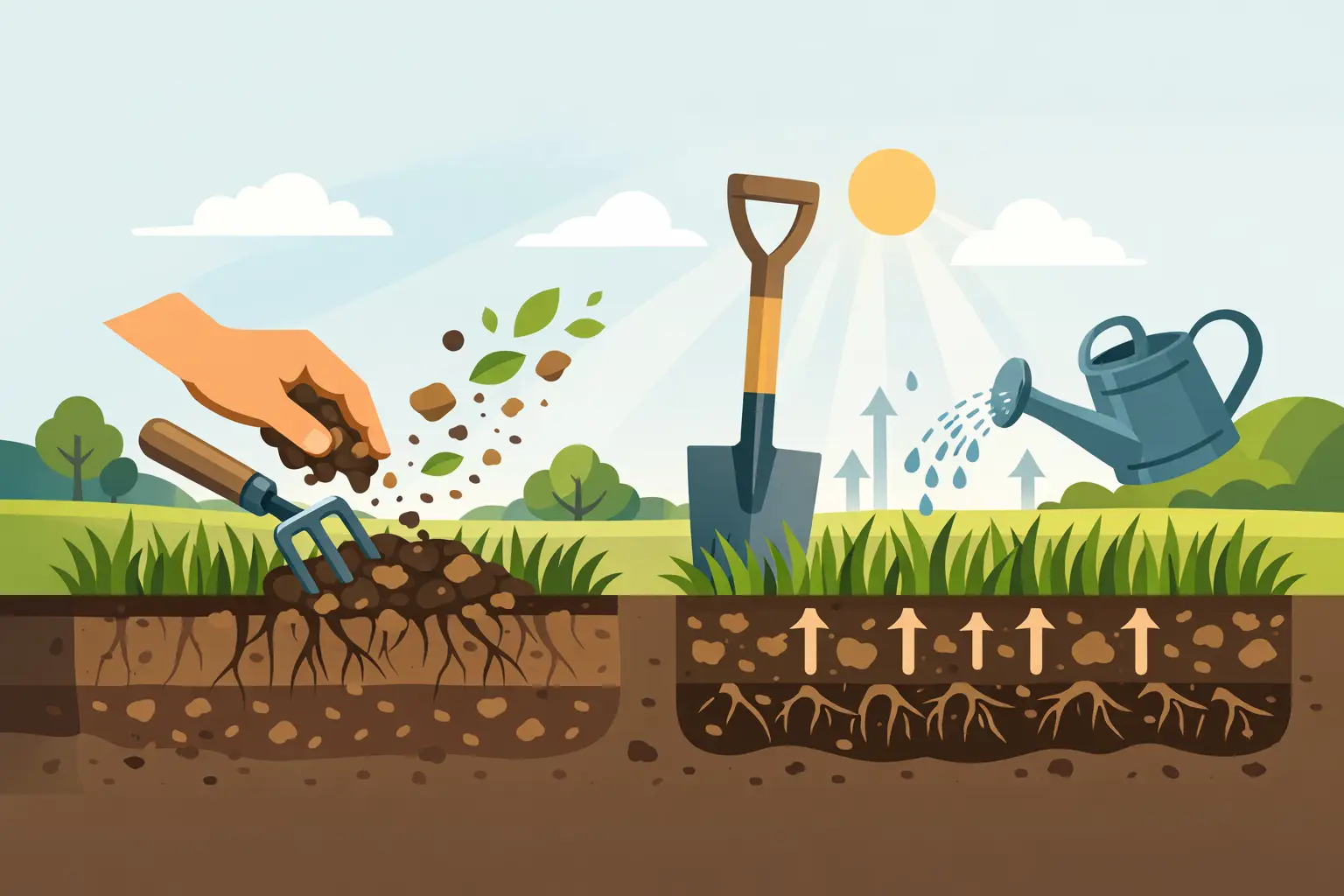
How to Fix Compacted Lawn Soil Naturally
A lawn can look thirsty even when the sprinklers are running on schedule. In Central Oregon, that often points to compaction: water sits on the surface or runs off, grass roots stay shallow, and turf thins out during heat or drought. To fix compacted lawn soil naturally, focus on rebuilding the soil’s pore space rather than simply adding more water or fertilizer.
Compacted soil is not always heavy clay. Bend-area lawns may have sandy native ground, rocky fill, or construction-disturbed soil that has been packed down by equipment, foot traffic, and dry conditions. A healthy lawn needs tiny air pockets between soil particles so roots, water, oxygen, and beneficial soil life can move where they are needed.
Know Whether Compaction Is the Problem
Before treating the lawn, take a quick look at what it is telling you. A screwdriver or long soil probe that is difficult to push a few inches into moist ground is a useful first clue. So is water puddling after irrigation, especially where the lawn is otherwise level.
Other common signs include grass that browns faster than surrounding areas, thin turf along walkways or play areas, and roots that are short when you lift a small plug of sod. If water runs off a slope or collects in one low spot, compaction may be part of the issue, but grading and irrigation coverage could also need attention.
Check the soil when it is moist, not saturated. Dry High Desert soil can feel hard simply because it needs a deep watering, while soggy soil can be damaged further by traffic or equipment. This distinction matters because the right solution depends on what is happening below the surface.
The Best Natural Way to Loosen Lawn Soil
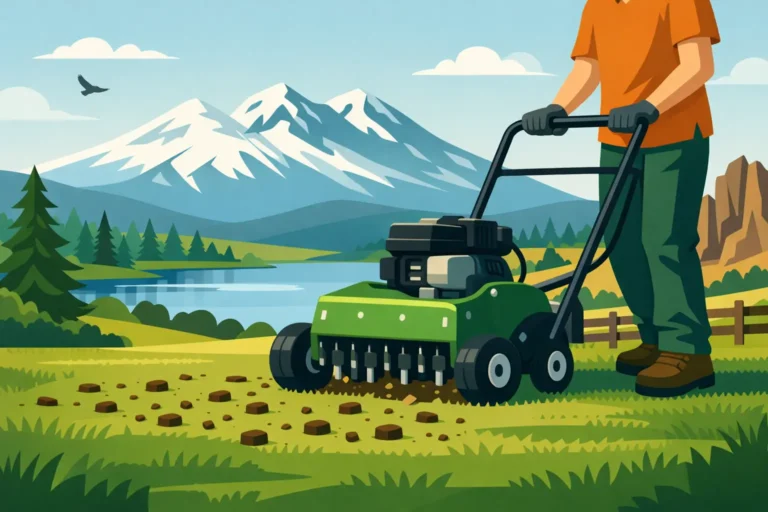
For most established Central Oregon lawns, core aeration is the most effective starting point. A core aerator removes small plugs of soil instead of merely poking holes in the ground. Those openings relieve surface pressure, allow air and water downward, and create channels where roots can expand.
Skip spike shoes and rolling spike aerators for serious compaction. They can make holes, but they also press surrounding soil tighter. Core aeration does more meaningful work, particularly in high-traffic lawns and soil that was compacted during construction.
Aerate when the grass is actively growing and the soil is slightly moist. In Central Oregon, late spring after the lawn has greened up or early fall while soil temperatures are still workable are often the best windows. Avoid aerating drought-stressed turf, frozen ground, or soil that is wet enough to smear.
For a lawn with moderate compaction, one thorough pass is usually enough. Heavily used lawns, new construction sites, and areas where water repeatedly puddles may benefit from two passes in different directions. This is a practical job for a rental core aerator, especially when the lawn is larger than a small patch. Central Oregon Lawn Center can help match equipment and timing to the condition of your lawn.
Leave the soil plugs on the surface. They break down quickly with irrigation and mowing, returning soil and organic material to the lawn. Raking them up removes part of the benefit.
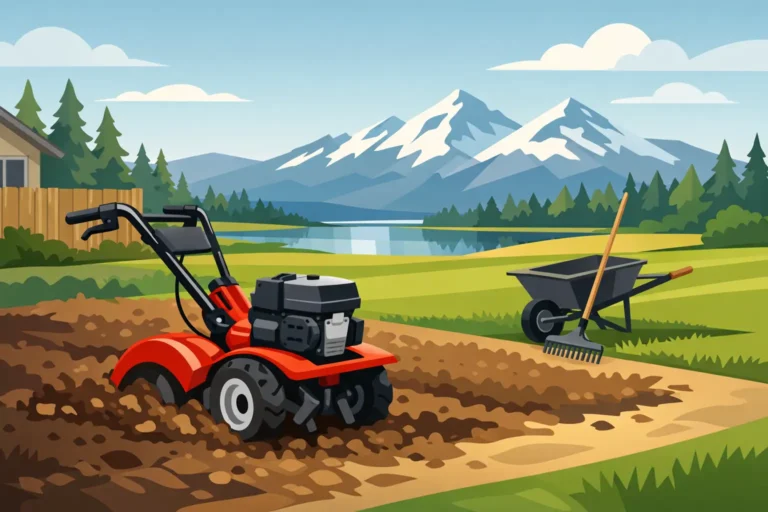
Do not till an established lawn
Tilling seems like a fast answer, but it is rarely the right choice for an existing lawn. It tears up turf, brings dormant weed seeds closer to the surface, and can disrupt soil structure. Tilling has a place during a full renovation, when old turf is being removed and the entire root zone needs rebuilding. For a lawn you want to keep, core aeration is less disruptive and more targeted.
Top-Dress With Compost, Not Just Sand
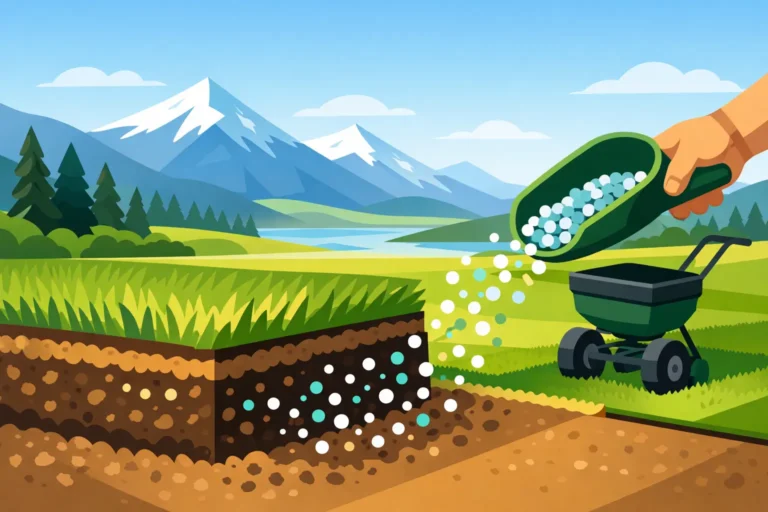
Aeration opens the door, but compost helps change the soil over time. Apply a thin, even layer of quality screened compost after aerating, then work it gently into the holes with a rake or drag mat. A quarter-inch layer is enough for most lawns. Going much deeper can bury grass crowns and slow recovery.
Compost is especially valuable in Central Oregon because it improves more than one soil type. In sandy soil, it helps hold moisture and nutrients that would otherwise move through too quickly. In tighter soil or imported fill, organic matter encourages better aggregation – the crumbly structure that creates room for roots and water.
Choose finished compost with a consistent texture and no large woody pieces. Fresh or poorly composted material can tie up nitrogen as it decomposes, and an overly thick application can create a soft, spongy surface rather than a stronger root zone. The goal is gradual improvement, not a one-time overhaul.
Adding straight sand is usually not the natural fix homeowners hope for. Sand can help in a carefully designed soil blend, but mixing a small amount into dense soil may make it harder, not looser. Compost is the more dependable amendment for ongoing lawn care because it supports soil biology as well as physical structure.
Use Grass Roots as Soil-Building Tools
A dense, well-rooted lawn naturally resists compaction better than thin turf. After aerating and top-dressing, overseed bare or weak areas with a grass blend suited to Central Oregon’s dry climate and short growing season. New roots grow into the aeration channels, helping hold the improved structure in place.
This is also the right time to evaluate whether the current grass is asking too much of the site. Turf in full sun, sandy soil, and exposed areas needs varieties selected for drought tolerance and recovery. A locally appropriate blend can reduce the cycle of stress, thinning, and repeated soil damage.
Use an organic or slow-release fertilizer only if the lawn needs it. Fertilizer will not cure compaction, and pushing a stressed lawn with excess nitrogen can create fast top growth without solving shallow roots. A soil test is the best way to know whether nutrients or pH are contributing to poor performance.
Water Deeply Without Sealing the Surface
Compacted soil and irrigation problems often feed each other. Short, frequent watering keeps roots near the surface. Then, when heat arrives, the lawn needs more water but has little ability to use moisture deeper in the soil.
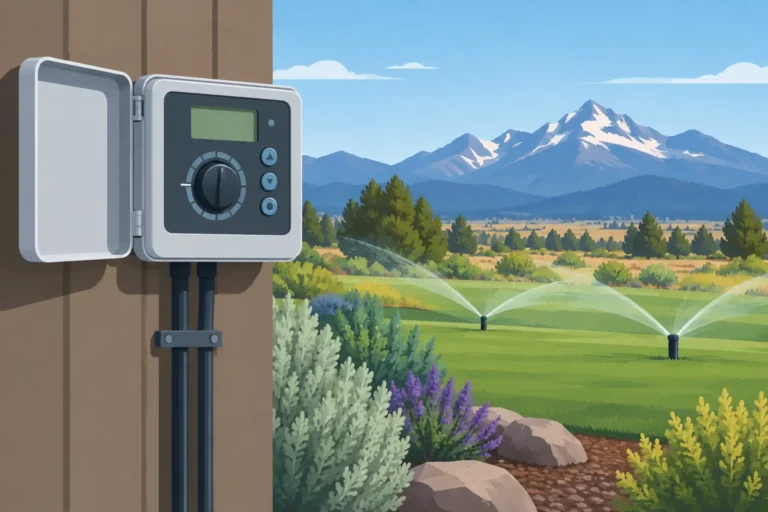
After aeration and compost top-dressing, water slowly enough for moisture to soak in. If water begins to run off, use cycle-and-soak watering: run a shorter cycle, let the ground absorb it, then return for another short cycle. This is particularly useful on slopes and in dry, hard areas where the soil has become water-repellent.
The exact schedule depends on the weather, soil, turf type, and local water restrictions. Rather than watering by the clock alone, check how deeply moisture has moved with a screwdriver or soil probe. The aim is to encourage roots to follow water down, not keep the lawn constantly wet near the surface.
Keep Compaction From Returning
Once the soil begins to recover, small habits make a real difference. Keep repeated foot traffic off the same narrow route when possible, especially during wet weather. Redirect dog runs, use stepping stones through high-use spots, and avoid parking equipment on the lawn.
Mow with sharp blades and avoid cutting more than one-third of the grass height at a time. Taller turf shades the soil, protects crowns, and generally develops a more resilient root system. Leaving short clippings on the lawn also returns a modest amount of organic matter without creating thatch when mowing is done regularly.
Thatch is different from compost-rich soil. A thin layer of decomposing organic material can be beneficial, but a thick, dense thatch layer can block water and air from reaching the soil. If thatch is excessive, a power rake may be appropriate before aeration. It depends on the lawn’s condition: do not remove material just because the surface feels springy.
When a Natural Repair Needs More Help
Some lawns have more than ordinary compaction. If a screwdriver stops at the same shallow depth across the yard, the property may have a hard construction layer, buried debris, or poor-quality fill. If standing water persists after aeration and compost, drainage or grading may need correction before turf can improve.
For those situations, consider a focused renovation rather than repeating surface treatments year after year. Removing a failed section, improving the root-zone soil, and reseeding with an appropriate blend can save water and frustration over the long term. The most sustainable solution is the one that addresses the actual limitation in the soil.
A healthier lawn does not come from forcing more inputs into hard ground. Give the soil air, add organic matter gradually, establish strong roots, and water with purpose. With a little patience and the right local approach, compacted ground can become a living root zone that supports greener turf with less waste.