
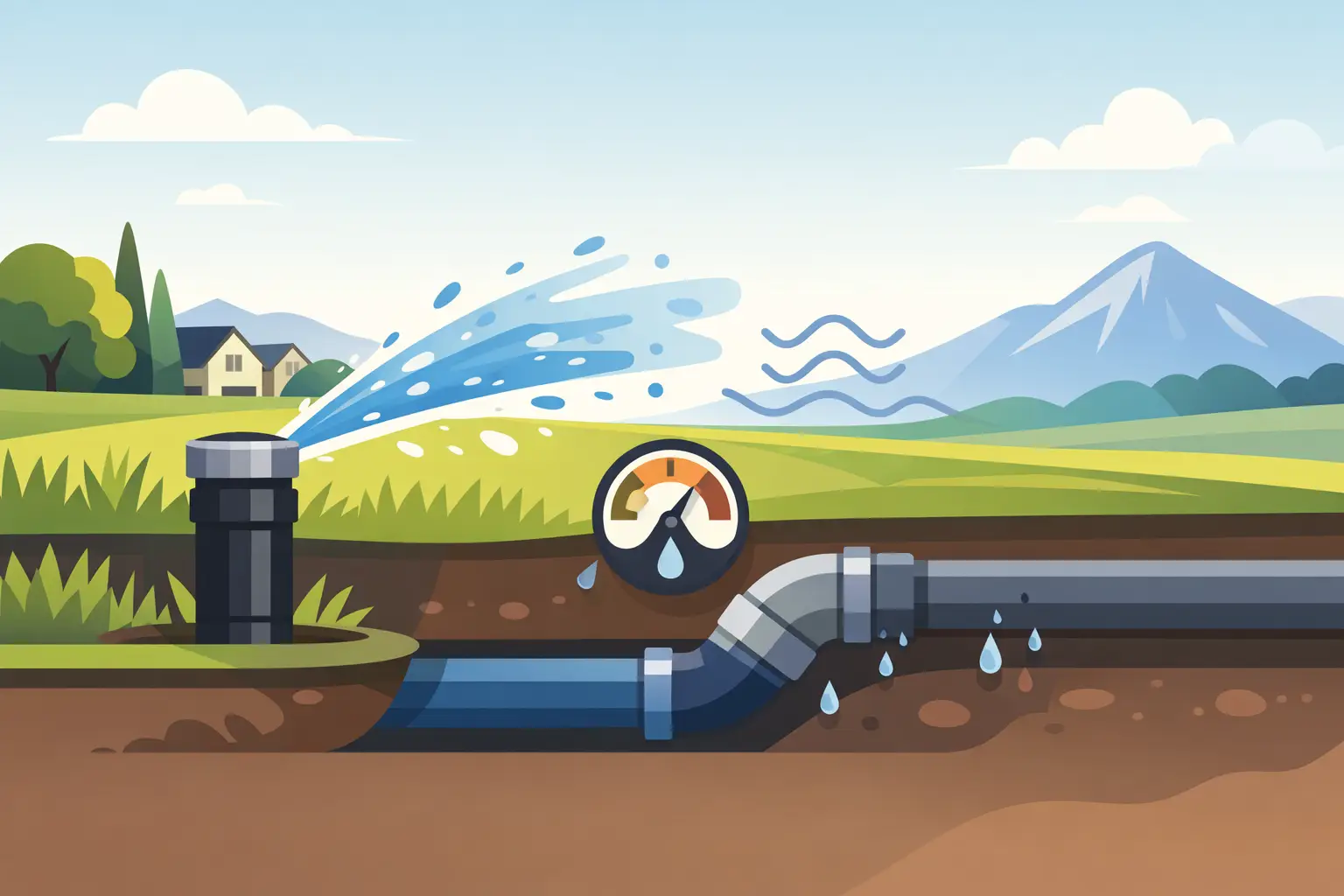
What Causes Sprinkler Pressure Loss in Bend?
A lawn can look fully watered at a glance while one side stays thin, dusty, and stressed. In Central Oregon, where sandy soils drain quickly and every irrigation minute matters, understanding what causes sprinkler pressure loss can prevent wasted water and a struggling lawn. Low pressure is not always a major repair, but it is a signal worth following before hot, dry weather turns a small coverage problem into turf damage.
Pressure loss usually shows up as weak spray, heads that no longer pop up, uneven arcs, dry strips between sprinklers, or a zone that takes much longer to water than it used to. The best fix depends on whether the issue affects one head, one zone, or the entire irrigation system.
What Causes Sprinkler Pressure Loss?
Sprinkler systems need enough water pressure and flow to operate as designed. Pressure pushes water through the pipes and out of each nozzle. Flow is the volume of water available. They are related, but they are not interchangeable. A system can have adequate pressure at the water source yet lose performance when too many heads run at once, a valve is restricted, or water escapes through a leak.
For Bend-area properties, the most common causes are clogged sprinkler nozzles, damaged or leaking pipes, partially closed valves, pressure-regulator issues, undersized irrigation lines, and changes to the household water supply. Seasonal damage also plays a role. A line that was nicked by a shovel, stressed by freezing conditions, or disturbed during landscaping may not fail all at once. It may first reveal itself through a noticeable drop in sprinkler performance.
A clogged nozzle or sprinkler head
If one sprinkler head sprays weakly while nearby heads work normally, start there. Fine sand, mineral debris, mulch, and lawn clippings can block a nozzle or filter screen. A head that does not rise fully from the ground can also have dirt packed around its riser.
Turn off the zone, lift the riser carefully, and inspect the nozzle and screen. Rinse parts with clean water rather than enlarging the nozzle opening with a pin or wire. Altering the opening can change the spray pattern and cause even more uneven watering. If the head is cracked, worn, or repeatedly jammed, replacement is generally the better choice.
Leaks in pipes, fittings, or sprinkler connections
A leak reduces the water available to every head downstream. In Central Oregon’s light, fast-draining soils, underground leaks can be harder to spot than they are in heavier clay. Watch for a patch of unusually green grass, soft soil, a persistently damp area, water bubbling up during a cycle, or water running from a valve box.
A broken swing pipe or fitting near a sprinkler often causes a single head to perform poorly. A larger mainline or lateral-line leak may weaken an entire zone. Do not ignore a leak simply because it is underground. Besides increasing water use, it can erode soil around pipes, shift sprinkler alignment, and create a soft spot in turf.
A valve that is partly closed or failing
Manual shutoff valves, backflow assemblies, zone valves, and control valves can all restrict water when they are not fully open or functioning correctly. A handle that looks open may not be positioned correctly, especially after winterization, repairs, or a contractor visit. A valve may also have internal debris, a damaged diaphragm, or a solenoid problem that keeps it from opening completely.
If an entire zone has suddenly lost pressure, compare it with other zones. When the other zones operate normally, the zone valve is a likely place to investigate. If every zone is weak, look upstream at the main shutoff, backflow device, pressure regulator, or water supply.
Too many sprinklers on one zone
This is a common design issue, particularly on lawns that have been expanded over time. Adding a garden bed, a new strip of sod, or several extra heads to an existing zone can push the system beyond the available flow. The first heads may seem acceptable while the last heads barely spray.
Each nozzle has a flow demand. Add enough demand to one zone, and pressure drops across the system while it runs. Replacing heads with high-output nozzles can create the same problem. The solution is not always bigger nozzles or longer run times. It may mean selecting lower-flow, matched-precipitation nozzles, reducing the number of heads on the zone, or separating an addition into its own zone.
Pressure Loss Can Come From the Water Source
Not every irrigation problem begins in the yard. Municipal supply pressure can vary by neighborhood, time of day, and demand. A system that runs well in the early morning may struggle when household use, neighborhood irrigation, or other demand is high. If pressure drops when someone showers, runs a washing machine, or fills a tub, the irrigation system may be competing with indoor plumbing.
A pressure regulator that is failing or set too low can also limit supply. On properties using wells, a worn pressure switch, tank issue, clogged filter, or pump limitation may affect both the house and the sprinklers. These situations call for a qualified irrigation or plumbing professional, especially when backflow equipment or potable-water connections are involved.
Filters, backflow devices, and regulators
Filters and backflow preventers protect the system, but they also need periodic attention. Sediment can collect in filters. A backflow device can become restricted by debris or internal wear. Pressure-regulating sprinkler heads and drip components can fail as well.
Before disassembling anything connected to the water supply, shut off water and follow local requirements. Backflow devices should be tested and serviced by appropriately qualified professionals when required. The goal is to restore irrigation performance without compromising drinking-water protection.
How to Find the Source of Low Sprinkler Pressure
A simple, methodical check is more useful than replacing random parts. Run one zone at a time and observe it for a full cycle. Note whether the problem occurs at one head, throughout one zone, or across all zones. This pattern narrows the search quickly.
If only one head is weak, inspect for a clogged nozzle, low head position, broken riser, or damaged connection. If several heads at the end of a zone are weak, suspect excessive flow demand, a partially closed valve, or a leak upstream. If every zone is weak, check supply-side valves, filters, regulators, and whether the property is experiencing a broader water-pressure issue.
It also helps to check coverage, not just spray strength. Place a few straight-sided containers around the zone and run it long enough to collect measurable water. Uneven amounts point to poor nozzle performance, incorrect spacing, misalignment, or pressure variation. A strong-looking spray is not proof that the turf is receiving water evenly.
Central Oregon Factors That Make Pressure Problems More Noticeable
Our High Desert climate magnifies irrigation mistakes. Low humidity and intense summer sun allow moisture to leave turf quickly. Sandy soils may not hold much extra water in reserve, so dry areas become visible fast when a head loses its arc or a zone loses pressure.
At the same time, increasing run time is not always the right response. Watering longer with low pressure can send excess water into areas that are already covered while leaving dry zones short. It can also encourage runoff on compacted ground or slopes. Correcting the pressure or distribution issue first is usually the more water-wise choice.
Winter is another consideration. Proper blowouts and seasonal inspection reduce the risk of freeze-related cracks, but spring startup is still the time to look for broken fittings, tilted heads, and valves that did not reopen fully. A few minutes spent checking zones early can save water through the rest of the season.
Fix the System Before the Lawn Shows the Damage
Once pressure is restored, adjust heads so water reaches turf without soaking sidewalks, driveways, or walls. Keep sprinkler heads level with the finished grade, trim grass that blocks spray, and use nozzle types that match within each zone. Spray heads, rotors, and drip irrigation generally should not share a zone because they apply water at different rates.
If you are renovating a lawn, installing new turf, or changing planting areas, consider the irrigation design alongside seed and soil improvements. Healthy soil with better structure can help turf use water more effectively, but it cannot compensate for a zone that never delivers water evenly. Central Oregon Lawn Center can help homeowners and landscape professionals match irrigation supplies and practical lawn-care decisions to local conditions.
A sprinkler system does not need to be complicated to be efficient. Pay attention when the first weak head appears, test the zone before changing your watering schedule, and address small losses while the repair is still simple. Your lawn, water bill, and local water supply all benefit from that care.