

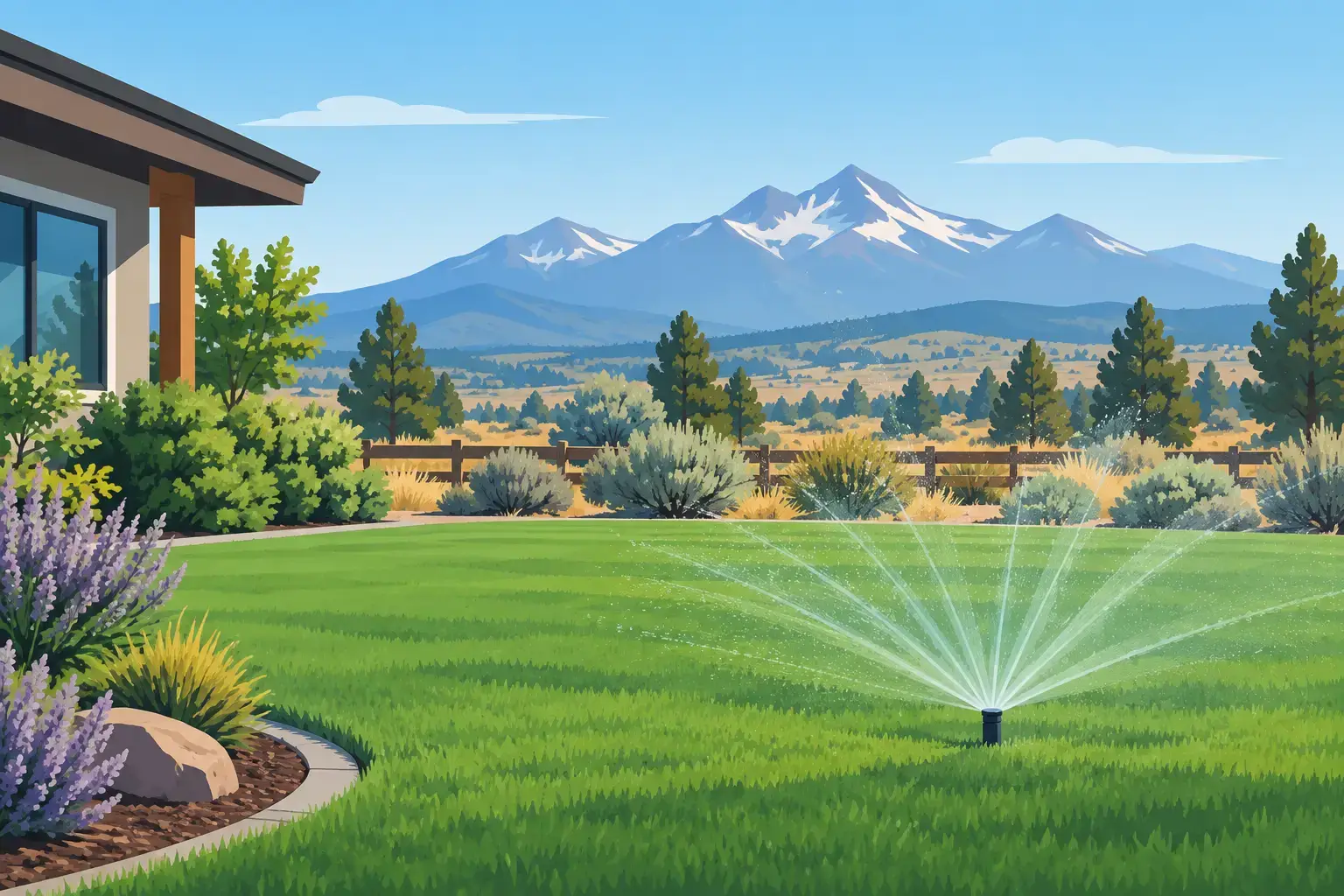
Summer Lawn Watering for Central Oregon
A Bend lawn can look perfectly healthy on Monday and stressed by Friday after a stretch of hot afternoons, wind, and low humidity. That is why summer lawn watering in Central Oregon is less about running sprinklers more often and more about getting water into the root zone at the right time. With sandy soil, intense sun, and a short growing season, the habits that work in wetter parts of Oregon can waste water here or leave turf struggling.
A healthy High Desert lawn does need consistent moisture in summer, especially when children, pets, or regular foot traffic are part of the picture. But a water-wise lawn is not a lawn that receives a little water every day. It is one with deeper roots, properly adjusted irrigation, soil that can hold moisture, and a mowing plan that protects the turf when temperatures rise.
Summer Lawn Watering Starts Below the Surface
Most established cool-season lawns in Central Oregon need roughly 1 to 1.5 inches of water per week during the hottest part of summer, including any meaningful rainfall. That is a starting point, not a fixed rule. A newer lawn, a lawn growing in sandy fill, or a south-facing area next to pavement may need more attention than a mature lawn with healthy soil and afternoon shade.
The goal is to wet the soil about 6 to 8 inches deep, where most active turf roots should be growing. Frequent, shallow watering keeps roots near the surface, where they are more vulnerable to heat and dry wind. Deep, less-frequent irrigation encourages a lawn that can better handle a missed watering day and recover from normal summer stress.
Sandy soils common around Bend absorb water quickly but do not hold it for long. If water begins running down a slope or pooling along a curb, longer watering is not necessarily the answer. Use cycle-and-soak watering instead. Run each zone for a shorter period, let water move into the soil for 30 to 60 minutes, then run it again. This approach limits runoff while giving water time to reach the root zone.
Measure What Your Sprinklers Actually Deliver
Irrigation run times are often based on guesswork, and sprinkler systems rarely apply water evenly. A simple catch-can test gives you useful information. Place several straight-sided containers across one irrigation zone, run it for 15 minutes, and measure the water in each container. The average tells you how much that zone applies, while major differences between containers reveal coverage problems.
For example, if a zone applies one-quarter inch in 15 minutes, it will take about an hour to deliver one inch. If the front lawn gets one inch in 60 minutes but the backyard gets it in 35, those zones need separate schedules. Adjusting by zone is one of the fastest ways to reduce waste without sacrificing lawn health.
Water Early, Before Wind and Heat Take Their Share
The best time to water is early morning, ideally between about 4 a.m. and 9 a.m. Temperatures are lower, wind is usually calmer, and the lawn has time to dry after watering. That means more water reaches the soil instead of evaporating into Central Oregon’s dry air.
Evening watering can work when schedules or local restrictions make mornings difficult, but it has trade-offs. Moist grass overnight can increase disease risk, particularly in shaded areas or lawns that are already overwatered. Midday watering is the least efficient option because sun and wind can carry away a surprising amount of water before it reaches the roots.
Pay attention to your local watering schedule and any seasonal restrictions. A smart controller can help, but it still needs oversight. Weather-based systems may reduce run times after rain, yet they cannot see a broken sprinkler head, a dry spot caused by wind, or a zone blocked by shrubs that have grown over time.
Let the Lawn Tell You When It Needs Water
A lawn does not always need irrigation simply because it is Tuesday or Thursday. Learn to look for early drought stress between scheduled watering days. Grass that has a blue-gray cast, footprints that remain visible after walking across it, or leaf blades that begin folding inward are all signs that turf is short on moisture.
Do not confuse drought stress with every brown area. A round patch that stays dry while surrounding grass is green may point to a coverage issue. A strip near the street may be stressed by reflected heat, compacted soil, or sprinkler overspray that never quite reaches the turf. Increasing the entire system’s run time to fix one dry area usually creates other problems. Correct the coverage, improve the soil, or hand-water that small area as needed.
Some summer browning is also a reasonable choice. If a lawn is being maintained primarily for appearance rather than active use, allowing it to slow down during peak heat can reduce water demand. The turf may lose some color, but it can recover when temperatures ease if it is not completely dried out. This approach is less suitable for newly seeded lawns, newly laid sod, or high-traffic turf that needs to remain actively growing.
Keep Water in the Soil With Better Lawn Practices
Irrigation works best when the lawn has help from the soil and from day-to-day maintenance. Central Oregon’s sandy ground often benefits from organic matter and quality soil amendments that improve moisture retention without creating a soggy root zone. Topdressing with compost can gradually improve soil structure, particularly after aeration opens channels for air, water, and nutrients.
Mowing height matters more than many homeowners realize. During summer, keep cool-season grass around 3 to 3.5 inches tall, depending on the grass type and lawn conditions. Taller blades shade the soil, reduce evaporation, and support deeper roots. Avoid removing more than one-third of the blade in a single mowing. Cutting a stressed lawn too short can turn a manageable dry spell into a patchy recovery project.
Leave short grass clippings on the lawn when possible. They return nutrients and add a light layer of protection at the soil surface without causing thatch. Dull mower blades, however, tear grass rather than cutting it cleanly, making turf look gray or brown at the tips and increasing stress during hot weather.
Fertilizer requires the same restraint. Heavy nitrogen applications in summer can push tender top growth that demands more water and is more vulnerable to heat. A locally appropriate, slow-release or organic fertilizer program supports steady growth instead of forcing it. If the lawn is already stressed, focus first on irrigation coverage and soil moisture rather than trying to fertilize it back to green.
Check Your System Before the Hottest Week
A five-minute irrigation inspection can prevent weeks of uneven color. Run each zone and watch it operate. Look for tilted sprinkler heads, clogged nozzles, misting sprays, broken risers, and water hitting sidewalks or fences. Spray heads should generally throw water low enough to resist wind, while rotor zones need enough overlap to cover the full lawn area.
Mixed sprinkler types in one zone are a common source of trouble. Rotors apply water slowly, while spray heads apply it much faster. When they operate together, one part of the lawn is usually under-watered or over-watered. Separating incompatible heads into appropriate zones is a more durable fix than endlessly changing run times.
For lawns with recurring dry patches, compaction may be part of the problem. Water cannot move effectively into tightly packed soil, even when sprinklers are delivering enough moisture. Core aeration, followed by a light topdressing, can improve infiltration and root growth. Central Oregon Lawn Center can help homeowners and landscape professionals match soil amendments, seed, and rental equipment to the condition of the lawn rather than applying a one-size-fits-all fix.
Adjust for New Seed, Sod, and Extreme Heat
Newly seeded lawns and fresh sod follow different watering rules. Their roots are shallow and need consistently moist surface soil until they establish. That often means light, frequent watering at first, followed by a gradual transition to deeper, less-frequent irrigation as roots grow. Letting new seed dry out during germination can set the project back quickly, while keeping it saturated can invite disease and poor rooting.
During a heat wave, do not make dramatic changes all at once. Add a small amount of water or an extra cycle where the lawn shows genuine stress, then reassess. If your system is already watering deeply and evenly, more water may not solve a problem caused by compacted soil, poor coverage, or a grass variety poorly suited to the site.
A greener lawn in a dry climate is built one practical adjustment at a time. Measure your output, water early and deeply, protect the soil, and respond to what the turf is showing you. Those habits give your lawn the best chance to stay healthy through a Central Oregon summer while treating every gallon of water with care.