

Best Mulch for Water Conservation in Bend
A hot July afternoon can pull moisture from Central Oregon soil faster than many irrigation schedules can replace it. Choosing the best mulch for water conservation is one of the most practical ways Bend-area homeowners and landscape professionals can protect plants, reduce watering demand, and build healthier soil over time.
Mulch is not a substitute for sound irrigation, appropriate plant selection, or soil improvement. It is the protective layer that helps all three work better. In our High Desert climate, where sandy soils drain quickly, humidity stays low, and wind can dry exposed ground, the right mulch can make a noticeable difference between stressed plants and a landscape that holds up through the season.
The Best Mulch for Water Conservation: Wood Chips
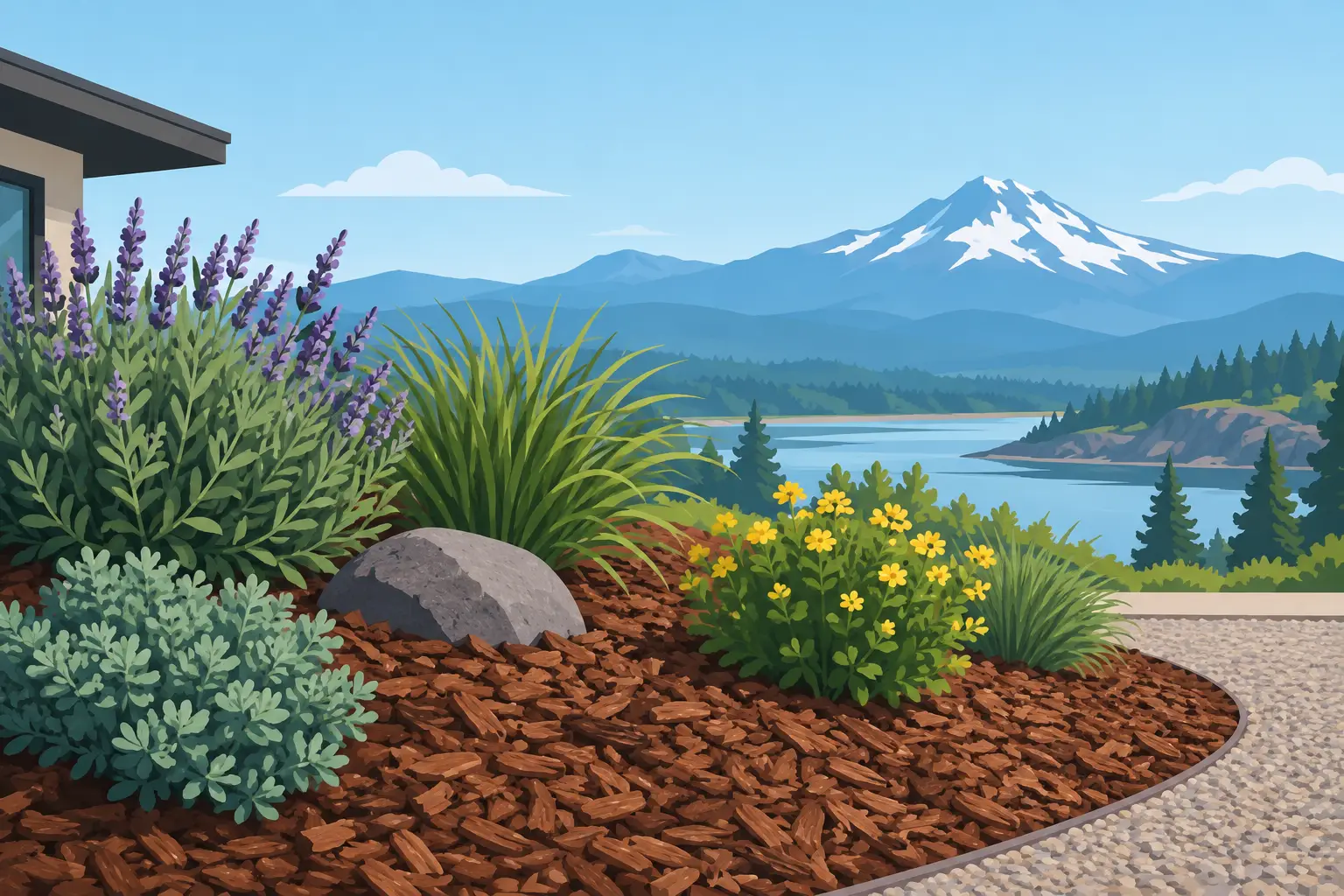
For most Central Oregon landscape beds, trees, shrubs, and perennial areas, coarse natural wood chips are the best all-around mulch for conserving water. A 2- to 4-inch layer shades the soil, slowing evaporation and keeping root zones cooler during hot weather. It also reduces the soil-crusting that can make water run off instead of soaking in.
Wood chips do more than save water at the surface. As they gradually break down, they add organic matter to Central Oregon’s often sandy, low-organic soils. That improves soil structure, helping it hold moisture longer while still allowing air to reach plant roots. The change is gradual, but it is meaningful, especially around established shrubs, young trees, and planting beds that receive regular irrigation.
Choose chips with a mix of particle sizes rather than very fine material. Coarser chips stay in place better in wind, allow water through, and break down at a useful pace. They also create a more natural finish in a water-wise landscape. Fresh arborist chips can be a good option where available, while screened landscape wood chips offer a more uniform appearance for visible beds.
Keep wood mulch a few inches away from trunks, woody stems, and the crowns of perennials. Mulch piled against a tree can trap excess moisture at the bark, encourage decay, and create hiding places for pests. The goal is a broad, level blanket over the root zone, not a mulch volcano.
Why Mulch Matters So Much in High Desert Landscapes
Central Oregon’s growing conditions ask a lot of plants. Summer sun is intense, rainfall is limited, and the combination of dry air and wind can strip moisture from exposed soil quickly. A bare planting bed may look tidy after weeding, but it is also an open invitation for water loss.
A properly mulched bed helps in several ways at once. It limits direct sun on the soil, buffers temperature swings, suppresses weeds that compete for irrigation, and softens the impact of water from sprinklers or drip systems. Less surface disturbance also means better infiltration over time.
For newly planted trees and shrubs, mulch is particularly valuable. Their roots have not yet spread into surrounding soil, so they rely on a relatively small, vulnerable moisture zone. Extending mulch several feet beyond the planting hole gives roots a cooler, more stable environment as they establish.
When Bark Mulch Is the Better Choice
Bark mulch is also effective for water conservation, especially in formal landscape beds where a finished, consistent appearance matters. Medium or large bark nuggets are generally better suited to Central Oregon than fine bark dust. They break down more slowly and are less likely to compact into a dense layer that sheds water.
Bark mulch works well around evergreen shrubs, foundation plantings, and ornamental beds. It provides many of the same evaporation-reducing benefits as wood chips, although it typically contributes less to soil improvement over time because it decomposes more slowly.
Fine bark can be useful in sheltered beds, but it deserves closer attention. In exposed sites, wind may move it around, and a heavy application can form a water-resistant surface if it dries out. If you prefer a finer texture, apply it lightly and check after irrigation to make sure water is reaching the soil rather than running across the mulch.
Compost Mulch for Vegetable Gardens and Annual Beds
Compost is an excellent moisture-holding material, but it fills a different role than wood chips. In vegetable gardens, raised beds, and annual flower areas, a 1- to 2-inch layer of finished compost can reduce surface drying while adding nutrients and organic matter directly to the root zone.
Because compost breaks down quickly, it will need replenishing more often than wood mulch. It is best used where you are actively planting, harvesting, and improving soil each season. For a vegetable garden, compost can be followed with a light layer of clean straw to provide longer-lasting shade over the soil.
Avoid using unfinished compost as a thick mulch around young plants. It can be uneven in texture, may contain weed seeds if it was not properly processed, and can temporarily affect nitrogen availability as it finishes decomposing.
Straw Can Work, With a Few Caveats
Clean straw is a practical mulch for vegetable rows, berry patches, and some informal garden beds. It shades soil well, reduces splash onto leaves and fruit, and is easy to move aside when planting or checking drip lines. Its light color can also reflect heat, which may help cool the soil during the hottest part of summer.
The drawback is durability. Central Oregon wind can scatter straw, and it decomposes quickly. Hay is not the same thing as straw and is usually a poor mulch choice because it often carries weed seeds. If you use straw, choose clean, weed-free material and keep it out of areas where appearance and wind resistance are priorities.
What About Rock Mulch?
Rock, gravel, and decorative stone are often used in drought-tolerant Central Oregon landscapes, but they are not usually the best mulch for water conservation around living plants. Unlike organic mulch, rock does not improve soil or add moisture-holding organic matter. It can also absorb and radiate heat, increasing stress around some plants during summer.
That does not mean rock has no place. It is useful in drainage swales, pathways, fire-conscious design areas, and landscapes built around plants that prefer hot, dry, mineral soils. It can be a durable finish around cacti, native dryland species, and hardscape features. Just avoid treating gravel as a universal answer for irrigated trees, shrubs, and perennial beds.
Landscape fabric beneath rock also creates long-term maintenance challenges. Soil, needles, and windblown debris collect on top, weeds eventually germinate in that layer, and the fabric makes future planting or soil improvement more difficult. In many planted areas, a well-maintained organic mulch is the better long-term choice.
Apply Mulch at the Right Depth
Even the right material can cause problems when it is applied incorrectly. Too little mulch offers limited protection from heat and evaporation. Too much can keep the soil overly wet near crowns, limit oxygen exchange, and create a favorable environment for pests or disease.
For most wood chip and bark applications, 2 to 4 inches is the useful range. Use closer to 2 inches around smaller perennials and in heavier soils. Use up to 4 inches around established trees and shrubs in sandy, exposed ground. Compost is generally applied more thinly, usually 1 to 2 inches.
Before adding mulch, pull existing weeds and make sure irrigation emitters are functioning. Mulch should sit on moist soil, not dry ground that has been neglected for weeks. After application, water slowly enough to confirm that moisture is moving through the mulch and into the root zone.
Match Mulch to Your Irrigation System
Drip irrigation and mulch are a strong combination for water-wise landscapes. Drip delivers water near plant roots, while mulch slows the evaporation that occurs after each watering. Cover drip tubing with mulch when practical, but keep emitters accessible enough to inspect and repair.
Spray irrigation can also benefit from mulch, although overspray onto bark or wood chips is less efficient than watering directly at the soil. If spray heads are hitting sidewalks, fences, or large areas of mulch, adjusting the system may save more water than changing mulch alone.
A simple seasonal check is worthwhile. Pull back the mulch in one or two spots after a normal irrigation cycle. If soil is dry beneath the surface, the issue may be run time, clogged emitters, or water-repellent soil. If it is soggy well below the mulch, reduce irrigation before assuming plants need more water.
Build a Mulch Plan That Fits Your Site
The best material depends on the planting area, wind exposure, irrigation method, and the look you want. Wood chips are the dependable choice for most trees, shrubs, and naturalized beds. Bark is a polished option for formal landscapes. Compost and straw are useful where food crops or seasonal planting call for frequent soil work. Rock belongs in specific low-water designs, not automatically around every plant.
If you are unsure which material suits your soil and landscape goals, Central Oregon Lawn Center can help you evaluate the planting area, irrigation setup, and maintenance needs before you haul in material. A few inches of the right mulch, applied well and renewed as needed, can help every gallon of irrigation do more work where it matters most.