
Why Are Sprinkler Zones Uneven in Bend?
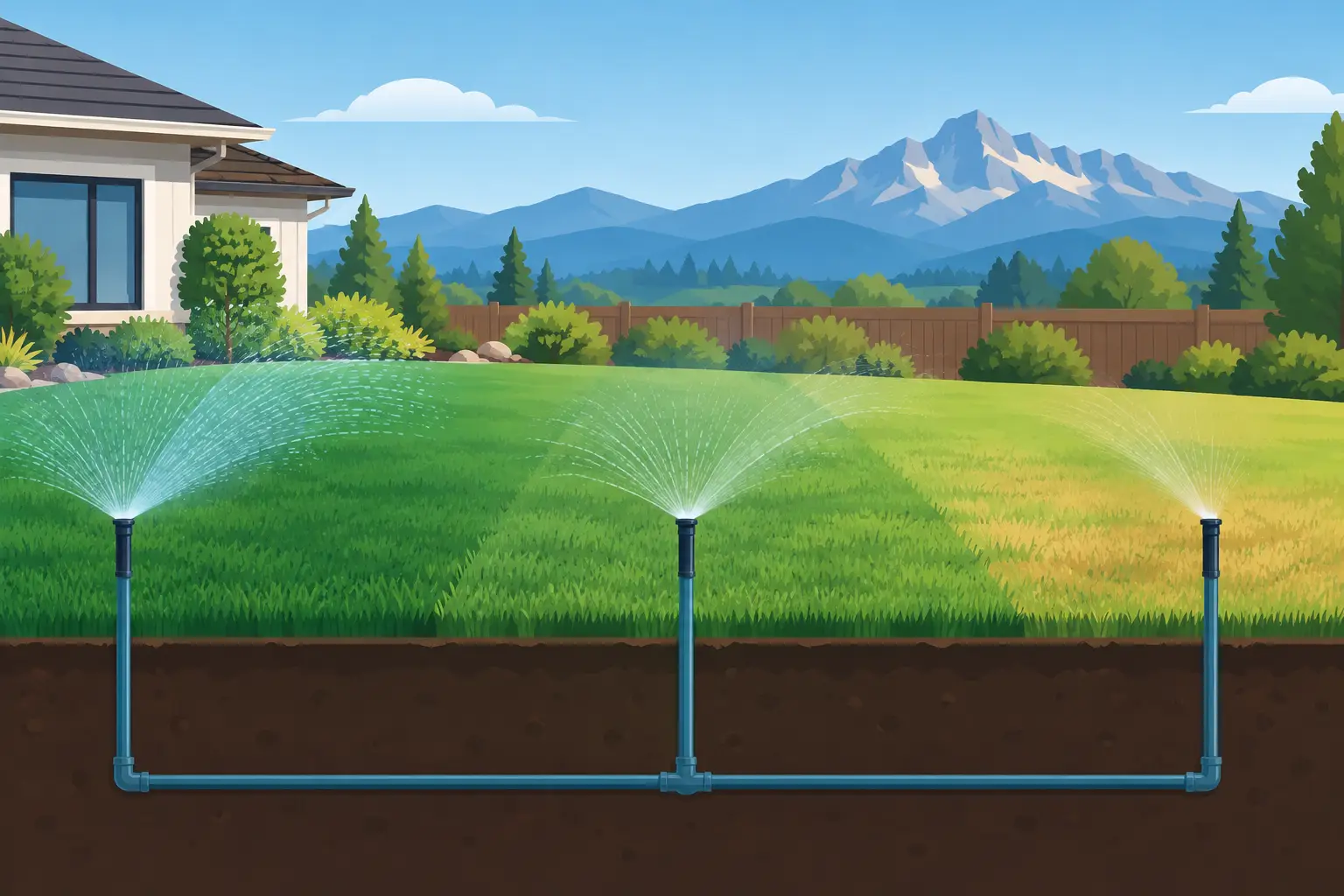
A lawn can look healthy near the sidewalk and stressed just 15 feet away, even when every sprinkler zone runs on schedule. If you are asking, “why are sprinkler zones uneven,” the answer is rarely just that one area needs more water. In Bend and across Central Oregon, uneven coverage often comes from a combination of nozzle performance, pressure changes, soil conditions, slope, wind, and irrigation scheduling that does not match the High Desert.
The good news is that most uneven-zone problems can be diagnosed without replacing an entire system. Start by watching the water, measuring what reaches the lawn, and correcting the underlying issue before simply adding more run time.
Why Are Sprinkler Zones Uneven? Start With Coverage
A sprinkler zone is only as even as the water distribution from each head. Pop-up spray heads, rotors, and drip components all have designed spacing, precipitation rates, and pressure ranges. When one of those variables changes, the lawn shows it quickly.
Run the problem zone in daylight and watch it through a complete cycle. Look for heads that do not pop up fully, streams blocked by grass or mulch, misting nozzles, weak arcs, and water landing on pavement while a section of turf stays dry. A single tilted or clogged head can create a noticeably brown patch, especially during Central Oregon’s hot, dry afternoons.
Head spacing matters too. Most lawn sprinklers are designed for head-to-head coverage, meaning the spray from one head should reach the next. If heads are too far apart, the middle area receives less water than the edges. This is common in lawns that were expanded after the original irrigation system was installed.
Clogged, Damaged, or Mismatched Nozzles
Fine sand, mineral deposits, debris, and ordinary wear can affect nozzle output. A clogged nozzle may throw a narrow, weak stream. A damaged nozzle can produce a fog-like mist that blows away before it reaches the turf. In a windy location, that mist can leave one side of the zone thirsty while the other side is overwatered.
Mismatched nozzles are another frequent problem. A rotor nozzle and a spray nozzle should not operate on the same zone because they apply water at very different rates. Even two spray nozzles may apply unevenly if one is a standard nozzle and the other is a high-efficiency model with a different precipitation rate. Replace nozzles with compatible models and make sure each nozzle matches its intended arc.
Check Pressure Before Extending Run Times
Low pressure prevents sprinklers from reaching their intended distance. High pressure creates misting, which wastes water and reduces coverage. Both problems can make a zone look uneven, and both are easy to misread as a scheduling issue.
If several heads in the same zone have weak throws, look for a partially closed valve, a failing zone valve, a leak, a crushed pipe, or too many heads operating on one zone. If only the heads farthest from the valve are weak, pressure loss along the line may be the cause. A professional-grade pressure gauge can help confirm what is happening, but visual signs are valuable: low pressure produces short, defined streams, while excessive pressure produces clouds of mist.
Pressure can also change when another large water demand starts. Avoid running irrigation while household water use is high, and do not expect consistent coverage if multiple irrigation zones run together when the system was designed to run one at a time.
Your Soil May Be Creating the Uneven Look
Central Oregon soils are often sandy, rocky, low in organic matter, or variable across the same property. Water moves through sandy soil quickly, sometimes faster than turf roots can use it. Compacted areas, on the other hand, can shed water across the surface rather than absorb it. That means a zone may distribute water evenly while the lawn still grows unevenly.
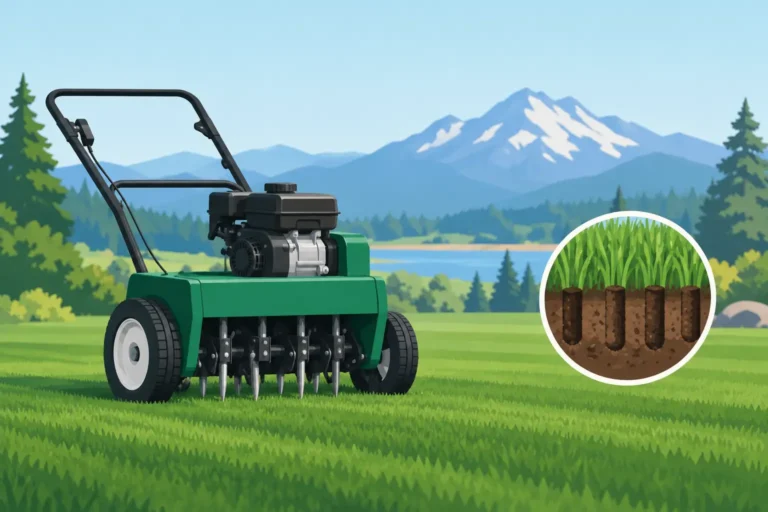
Check the soil in both green and dry areas. If the dry area is powdery and water disappears almost immediately, it may need improved water-holding capacity. Compost and appropriate soil amendments can help build healthier root-zone structure over time. If water pools or runs off, compacted soil may benefit from core aeration and a lighter, slower irrigation approach.
Thatch can complicate the picture as well. A thick thatch layer can repel water or hold moisture near the surface, leaving roots shallow and vulnerable to heat. Aeration, dethatching, and topdressing are not automatic fixes for every lawn, but they can make a substantial difference when poor infiltration is part of the problem.
Slopes and Low Spots Need Different Expectations
Water does not remain where it lands on a sloped lawn. On even a modest grade, water can run downhill before it soaks in, leaving upper areas dry and lower areas overly wet. Low spots may also stay greener because they collect runoff, not because their sprinklers are performing better.
For sloped zones, use cycle-and-soak watering. Instead of running a zone for 20 straight minutes, run shorter cycles with time between them so water can infiltrate. The correct cycle length depends on soil texture, slope, sprinkler type, and how quickly runoff begins. Watch the lawn during a test run rather than relying on a generic timer setting.
Measure What Each Area Actually Receives
The most practical way to diagnose uneven sprinkler zones is a simple catch-can test. Place identical straight-sided containers around the zone, including dry-looking areas, green areas, edges, and spaces between heads. Run the zone for a normal cycle, then compare the water depth in each container.
This test separates an irrigation coverage problem from a soil or turf problem. If the containers vary significantly, adjust the system: clean nozzles, correct arcs, level heads, replace damaged parts, or address pressure. If the containers are relatively even but the lawn is not, focus on soil, compaction, shade, root health, or turf variety.
Do not judge a zone by the amount of water at one sprinkler head. The goal is even water across the entire root zone. It is also worth checking precipitation rates between zones. A rotor zone may need a much longer run time than a spray-head zone to deliver the same amount of water.
Scheduling Matters More in High Desert Conditions
A schedule that worked in May may be inadequate in July, and a July schedule can waste water in September. Central Oregon’s low humidity, summer sun, wind, and cool nights create conditions where turf can dry quickly, particularly in exposed areas.
Water early in the morning when evaporation and wind are lower. Avoid daily shallow watering whenever possible. It encourages shallow roots, which makes turf less resilient during hot, dry stretches. Instead, water deeply enough to reach the active root zone, then allow the upper soil to dry somewhat before the next cycle.
There is no single correct run time for every Bend lawn. Mature turf in amended soil may need far less water than newly seeded grass in sandy ground. Shade, tree roots, lawn orientation, sprinkler type, and local watering restrictions all matter. Adjust based on observed soil moisture and lawn response, not simply on what a neighboring property is doing.
Do Not Overlook Shade, Roots, and Turf Health
When water measurements are even but color remains uneven, irrigation may not be the primary issue. Turf under trees competes with roots for water and nutrients. Dense shade reduces turf vigor, while reflected heat from driveways and walls can intensify drought stress nearby. Pet damage, insects, disease, and poor soil fertility can also resemble irrigation problems.
A screwdriver is a useful diagnostic tool. Push it into the soil after watering in healthy and stressed areas. If it penetrates easily in one area but stops quickly in another, compaction or dry soil is likely involved. If both areas are similarly moist, look beyond irrigation coverage.
For a lawn that needs renovation, choose seed suited to Central Oregon conditions rather than relying on a generic mix. The right blend can improve durability, drought tolerance, and recovery in areas where heat, sandy soil, or traffic make uniform turf difficult.
A Practical Order for Fixing Uneven Zones
Work from the simplest correction to the more involved one. First, inspect heads and clean or replace faulty nozzles. Next, verify arc adjustment, head height, spacing, and pressure. Then run a catch-can test before changing the controller. Once water distribution is working properly, address soil compaction, runoff, poor infiltration, or turf health.
This order protects water and prevents an expensive mistake: increasing run times to compensate for a mechanical issue. More water will not correct a clogged nozzle or a poorly spaced head. It may only create runoff, disease pressure, and higher water bills in the areas already receiving enough.
If the diagnosis points to renovation, drainage work, trenching, or aeration, Central Oregon Lawn Center can help match your project with practical supplies, region-appropriate lawn inputs, and rental equipment. A few careful observations now can turn a patchy irrigation system into a healthier, more water-wise lawn all season.