How to Revive Patchy Turf in Central Oregon
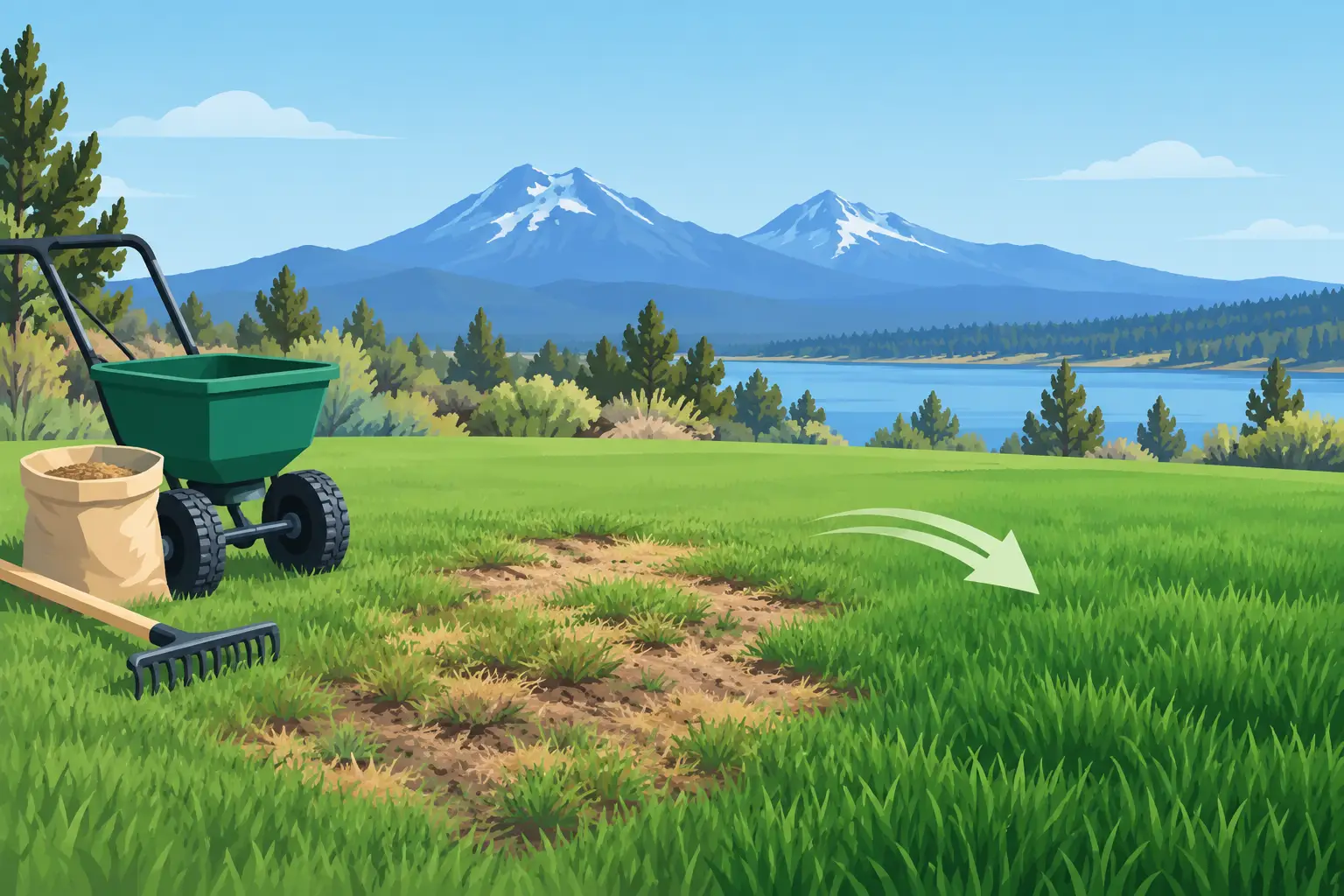
A thin spot beside the driveway, bare ground under a thirsty sprinkler zone, or turf that disappears after winter is rarely just a seed problem in Central Oregon. Learning how to revive patchy turf starts with identifying what caused the lawn to thin in the first place. In Bend and across the High Desert, sandy soils, dry air, short growing windows, compacted ground, and uneven irrigation can all work against healthy turf.
The good news is that patchy lawns can recover without wasting water or relying on a generic fix. A successful renovation pairs the right grass seed with better soil conditions and a watering plan that supports roots, not just green color. Start with the cause, then give new turf the conditions it needs to establish.
Find Out Why the Turf Is Patchy
Before spreading seed, look closely at the pattern of the damage. Random thin areas across the lawn often point to poor soil fertility, shallow rooting, or inconsistent watering. A single dry strip along a fence, sidewalk, or slope usually signals an irrigation coverage issue. Bare areas beneath trees may be dealing with shade and root competition, while high-traffic paths can become compacted enough that water and air no longer move easily into the soil.
Central Oregon’s native soils are often sandy or rocky, which means they drain quickly and may not hold enough moisture or nutrients near the root zone. That can leave grass green for a short time after watering but stressed between irrigation cycles. Compaction is also common in newer landscapes, where construction activity has compressed the soil beneath a thin layer of topsoil.
Check the irrigation before assuming the grass is failing. Run each zone and watch where the water lands. Heads that are tilted, clogged, blocked by grass, or poorly spaced can leave dry pockets even when the controller is set correctly. If one section is receiving too little water, adding more runtime to the whole zone can create waste and encourage disease in the areas already getting enough.
Also rule out pests, pet damage, and chemical injury. Pull gently on damaged grass. If it lifts easily and roots are missing, inspect the root zone for insect activity. If spots are concentrated where pets repeatedly visit, the repair plan needs to include changing that traffic pattern, flushing affected areas, or using a durable overseeding mix.
How to Revive Patchy Turf: Repair the Soil First
Seed needs direct contact with loose, moist soil to germinate. Tossing it over dead grass or hard-packed dirt is one of the most common reasons a patch repair fails. Prepare each damaged area before seeding, even if the bare spots are small.
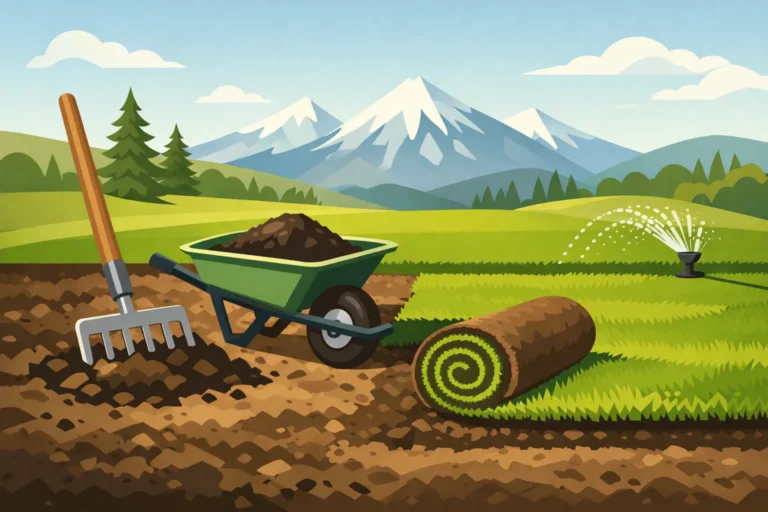
Rake out dead material, weeds, and loose debris. For patches with hard soil, break up the top inch or two with a hand cultivator. In larger thin areas, a power rake can remove thatch and open the surface so seed reaches the soil. If the ground is compacted, core aeration is usually more useful than simply poking holes because it removes plugs and creates channels for air, water, and roots.
Topdressing can make a meaningful difference in High Desert lawns, especially where soil is sandy, shallow, or low in organic matter. Apply a light layer of quality compost or a soil amendment suited to turf, then work it into the surface without burying existing grass. The goal is not to create a thick new layer of soil. It is to improve moisture retention, nutrient availability, and seed-to-soil contact over time.
For heavily worn or uneven lawns, a broader renovation may be more efficient than repairing one spot at a time. A rented aerator, power rake, or top dresser can help homeowners and landscape crews complete the work evenly across larger areas. The right equipment matters because a lawn renovation should improve the growing environment, not simply cover up the symptoms.
Choose Seed That Fits the High Desert
A lawn in Central Oregon needs more than a quick-germinating grass that looks good for a few weeks. It needs a blend selected for dry summers, cold winters, irrigation realities, traffic, and the amount of sun the site receives. The best choice depends on the yard.
Fine fescues can be useful in lower-water areas and partial shade, while turf-type tall fescues are valued for deeper roots and durability. Kentucky bluegrass can provide attractive density and recovery, but it generally needs more consistent moisture than some fescue-heavy options. Many local lawns perform best with a carefully balanced blend rather than a single grass type.
Use a regionally appropriate seed blend for the specific conditions in your yard. A sunny, active lawn has different needs than a shaded side yard or a low-input landscape. Matching the seed to the site helps reduce future patchiness and avoids the frustration of trying to maintain grass that is not suited to the location.
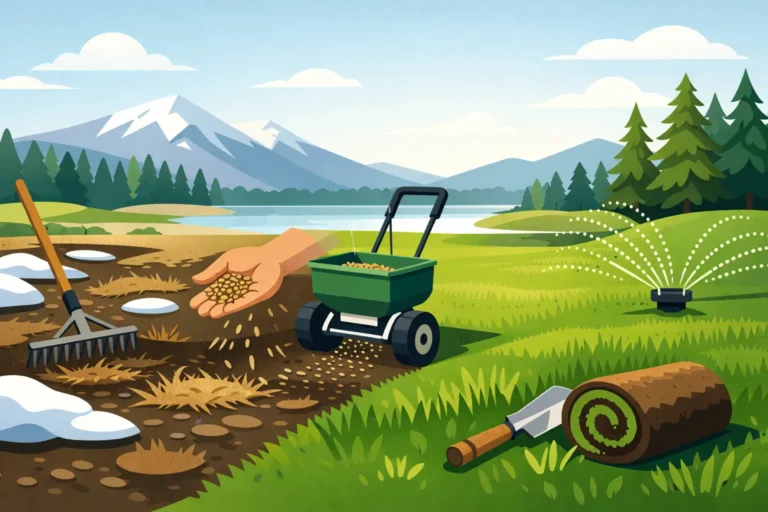
Spread seed evenly over prepared soil, then lightly rake it in. The seed should be covered only enough to protect it and keep it in contact with the soil. If birds are a concern, a very light compost topdressing can help. Avoid smothering seed under a heavy layer of mulch or soil.
Time Seeding Around Central Oregon Weather
Late summer into early fall is often the best time to overseed or repair patchy turf in Central Oregon. Warm soil helps germination, while cooler air reduces stress on young seedlings. Fall seeding also gives roots time to develop before the next summer’s heat and dry conditions.
Spring can work, particularly when a lawn needs immediate attention after winter. The trade-off is that new grass must establish as temperatures rise and irrigation demand increases. Spring projects may require closer attention to moisture and weed competition. Avoid seeding during the hottest stretch of summer whenever possible, unless you can provide very consistent irrigation and protect the area from traffic.
If you are repairing only a few small patches, you can often work within a wider range of dates. The key is keeping the seedbed consistently moist during germination, not saturated and not allowed to dry out.
Water New Seed Differently Than Established Grass
New seed needs frequent, light watering until it germinates. Depending on temperatures, sun exposure, and the seed blend, that may mean short irrigation cycles once or twice a day. The surface should remain damp, but puddling is a sign that water is being applied faster than the soil can absorb it.
Once seedlings are up and becoming established, gradually reduce frequency and increase the depth of watering. This transition encourages roots to grow down instead of staying near the surface. Established turf in Central Oregon generally performs better with deeper, less frequent irrigation than with daily shallow watering.
Watch the lawn rather than relying only on a calendar. Grass that turns dull bluish-green, folds its leaf blades, or shows footprints that remain visible may be asking for water. On the other hand, constantly wet soil can weaken roots and waste a limited resource. Proper irrigation is about coverage, timing, and soil moisture – not simply adding more minutes to every zone.
Feed for Root Growth, Not a Fast Green-Up
A balanced, region-appropriate fertilizer can help repaired turf fill in, but more fertilizer is not better. Heavy applications can push soft top growth before the root system is ready, especially in warm weather. Use an organic or slow-release option when it fits your lawn goals, and apply it according to the product’s recommended rate.
If a lawn repeatedly thins despite regular watering and fertilizer, a soil test is worth considering. It can reveal whether the issue is low organic matter, nutrient imbalance, pH concerns, or another condition that a standard fertilizer application will not solve. Correcting the actual limitation is more efficient and environmentally responsible than applying products blindly.
Mow new grass only after it has rooted well enough that it does not pull out easily. Keep mower blades sharp and avoid removing more than one-third of the grass height at a time. Slightly taller mowing heights help shade the soil, conserve moisture, and support deeper roots during dry periods.
Protect the Repair While It Fills In
Freshly seeded areas need a little patience. Keep foot traffic, pets, and play off the patches until seedlings are established. If the damaged area is on a regular path, consider a temporary walkway or a more durable landscape solution. Turf will continue to fail if the original compaction or traffic problem remains unchanged.
For larger projects, Central Oregon Lawn Center can help match seed, soil amendments, irrigation supplies, and rental equipment to the conditions in your yard or job site. Local guidance can save time when a patchy lawn is really an irrigation, soil, or grass-selection problem in disguise.
A fuller lawn does not come from one quick application. It comes from building healthier soil, choosing grass that belongs in the High Desert, and giving it enough water to root deeply without asking it to live like a lawn in a wetter climate.