
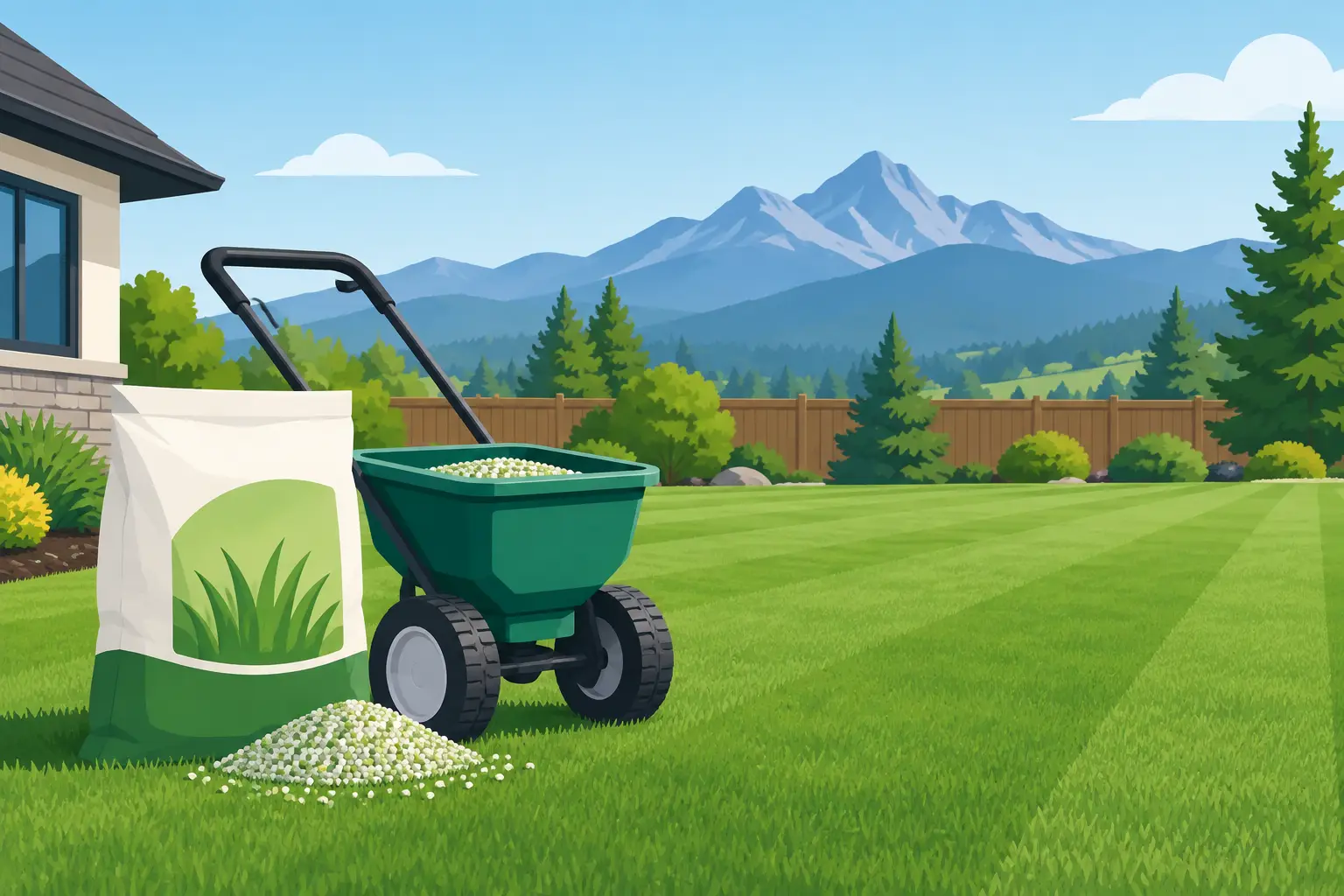
New Lawn Starter Fertilizer Guide for Bend Yards
A new lawn in Central Oregon can look promising for a week, then thin out quickly when seedlings meet sandy soil, dry wind, cool nights, and uneven irrigation. The right start is less about forcing fast green growth and more about building roots that can handle High Desert conditions. This new lawn starter fertilizer guide explains how to feed fresh seed or sod without wasting water, fertilizer, or effort.
Why New Lawns Need a Different Fertilizer Strategy
Established turf has a root system that can search deeper for moisture and nutrients. New grass does not have that advantage. Whether you are seeding a bare yard, repairing a lawn after renovation, or installing sod, young turf needs accessible nutrition close to the root zone while it establishes.
Starter fertilizer is designed for that early stage. It typically provides nitrogen for initial leaf growth, phosphorus to support rooting where appropriate, and potassium for overall plant function and stress tolerance. The ratio on the bag matters less than applying the correct product at the right rate for your soil and the grass you are growing.
In Bend and throughout Central Oregon, soil is often sandy, low in organic matter, and quick to drain. That can be helpful when spring moisture lingers, but it also means nutrients and irrigation water can move through the root zone faster than expected. A generic high-nitrogen lawn fertilizer may create a burst of top growth without giving young roots the balanced support they need. It can also increase mowing, water demand, and the risk of stressing a lawn during hot, dry weather.
New Lawn Starter Fertilizer Guide: Start With the Soil
A soil test is the most practical first step before choosing fertilizer, especially if you are establishing a larger lawn or working with a landscape professional. It tells you what is already available, including phosphorus, pH, and organic matter. That information helps prevent unnecessary applications and gives you a clearer plan for amendments.
Many Central Oregon properties need more than fertilizer alone. Compost or other appropriate organic amendments can improve moisture-holding capacity and soil structure, while a soil conditioner may help create a better seedbed in compacted or depleted areas. Fertilizer feeds the turf plant. Good soil preparation helps the plant use that nutrition and hold onto the water it receives.
For a new seeded lawn, work needed amendments into the upper few inches of soil before final grading. The goal is a firm, smooth surface, not a fluffy bed that settles unevenly after irrigation. After raking and leveling, apply starter fertilizer according to the label rate, then lightly incorporate it or water it in as directed. Keep fertilizer from collecting in piles, where concentrated salts can injure tender roots.
Sod is different. It needs a level, moist soil surface with good soil-to-sod contact. Apply the recommended starter fertilizer before laying sod, then water immediately after installation. Lift a corner after a few days. If the soil below is drying out or roots are not beginning to knit into the ground, correct the watering schedule before adding more fertilizer.
Choose a Product That Fits the Job
There is no single best starter fertilizer for every yard. A soil test, the season, irrigation setup, and whether you are planting seed or sod all influence the choice. For example, a phosphorus-containing starter fertilizer may make sense when a test shows a need or when establishing turf in soil with limited available phosphorus. If your soil already has adequate phosphorus, a lower-phosphorus option may be the better environmental choice.
Organic and conventional products can both establish healthy turf when used correctly. Organic fertilizers generally release nutrients more gradually and can support soil biology, which is valuable in low-organic-matter soils. They may require patience in cool weather because microbial activity drives nutrient release. Conventional starter fertilizers offer more immediately available nutrients and can be useful when conditions call for a precise response. The best fit depends on your soil, timing, and maintenance plan, not on a one-size-fits-all label claim.
Avoid using weed-and-feed products on a newly seeded lawn. Herbicides can interfere with establishment, and a new lawn needs consistent germination and rooting before it can compete with weeds. Address weeds through proper site preparation, clean seed, mowing at the right height, and selective control only after the lawn is established.
Apply Carefully, Not Heavily
More fertilizer does not create a better lawn. In High Desert conditions, overapplication can lead to weak, fast growth that requires more water and is less prepared for temperature swings. It can also damage seedlings and send nutrients beyond the active root zone.
Use a properly calibrated spreader and make two lighter, crossing passes rather than one heavy pass if that helps you distribute material evenly. Sweep or blow any granules off pavement, patios, and driveways back onto the lawn. Water after application when the product label calls for it, but do not irrigate so heavily that water runs off or drains well below the root zone.
A reliable new-lawn routine includes these five practices:
- Apply the fertilizer rate listed for new turf, not the rate for an established lawn.
- Water lightly and frequently during germination so the surface stays consistently moist.
- Shift to deeper, less frequent watering as roots grow into the soil.
- Mow only when grass is tall enough, using a sharp blade and never removing more than one-third of the leaf blade.
- Wait to make a second fertilizer application until seedlings are actively growing and the lawn has been mowed several times.
That last point matters. A follow-up feeding is often useful, but timing should be based on establishment, weather, and the product used. Early fall is often an excellent establishment window in Central Oregon because soil remains warm while daytime heat eases. Spring planting can work, too, but it may require closer attention as summer dryness arrives before roots are fully mature.
Watering Makes Fertilizer Work
Starter fertilizer cannot compensate for inconsistent irrigation. Seed needs moisture near the surface to germinate, so light, frequent watering is usually necessary at first. The exact schedule changes with sun exposure, wind, soil texture, and temperatures. A south-facing sandy lawn may dry much faster than a shaded area only a few feet away.
Once grass has germinated and begun to root, gradually reduce the frequency of irrigation while increasing the depth of each watering. This encourages roots to follow moisture farther into the soil. Frequent shallow watering for too long keeps roots near the surface, where they are vulnerable to heat and drought stress.
Watch the lawn rather than relying only on a timer. Footprints that remain visible, a dull blue-green color, or grass blades that do not spring back can signal water stress. On the other hand, constantly wet soil, algae, or soft footprints may indicate overwatering. Both extremes make establishment harder.
Common Mistakes That Set Back New Turf
One of the most common problems is fertilizing before correcting major grading or irrigation issues. If water pools in one area and misses another, fertilizer will not solve the uneven growth that follows. Check coverage before seed goes down, and make sure irrigation reaches edges, slopes, and narrow side yards without excessive runoff.
Another mistake is planting the wrong grass for the site. Central Oregon lawns benefit from seed blends selected for drought tolerance, durability, and local growing conditions. A blend suited to a sunny, actively used yard may differ from one intended for partial shade or a lower-maintenance landscape. The seed, soil preparation, and starter fertilizer should work as one plan.
Finally, resist the urge to judge success by color alone. Fresh turf can be bright green yet poorly rooted. Gently tug a few seedlings or a sod edge after establishment. Resistance to lifting, even growth across the lawn, and a gradual reduction in watering frequency are better signs that your lawn is building a lasting foundation.
For a new lawn that can handle Bend’s dry summers and short growing season, bring in your soil test results, measurements, and a few details about sun and irrigation. Central Oregon Lawn Center can help match the seed, fertilizer, amendments, and equipment to the way your yard actually grows – because a healthy, water-wise lawn begins with a plan built for this place.