Starter Fertilizer for New Sod in Central Oregon
A pallet of fresh sod can make a Bend yard look finished in an afternoon. The harder work happens below the surface, where roots must cross the seam between the sod and Central Oregon’s often sandy, low-organic-matter soil. The right starter fertilizer for new sod can support that transition, but it is not a substitute for sound soil preparation or careful watering.
New sod has roots, unlike seed, but those roots have been cut during harvest. For the first few weeks, the lawn is relying on consistent moisture and favorable soil conditions to establish new roots in its permanent home. A measured fertility plan helps, especially where native soil drains quickly and nutrients do not stay put for long.
Why New Sod Needs a Different Fertility Plan
Starter fertilizers are generally formulated with phosphorus, the middle number in the fertilizer analysis. Phosphorus supports early root development, which is the priority after sod is installed. Nitrogen still has a role in establishing green, growing turf, while potassium can support overall plant health and stress tolerance. The best balance depends on the sod variety, soil test results, and the product being used.
That last point matters in Central Oregon. A generic “more fertilizer is better” approach can create a lawn that grows top growth quickly without solving the underlying rooting challenge. It can also waste product, raise the risk of nutrient runoff, and demand more mowing and water than a newly installed lawn can comfortably handle.
Sod farms sometimes apply fertilizer before harvest, so fresh sod may arrive with some nutrients already available. That is why the timing and amount of starter fertilizer should be based on the product label, the condition of the sod, and ideally a soil test. If the soil already has adequate phosphorus, a lower-phosphorus product may be the more responsible choice.
Start With the Soil Under the Sod
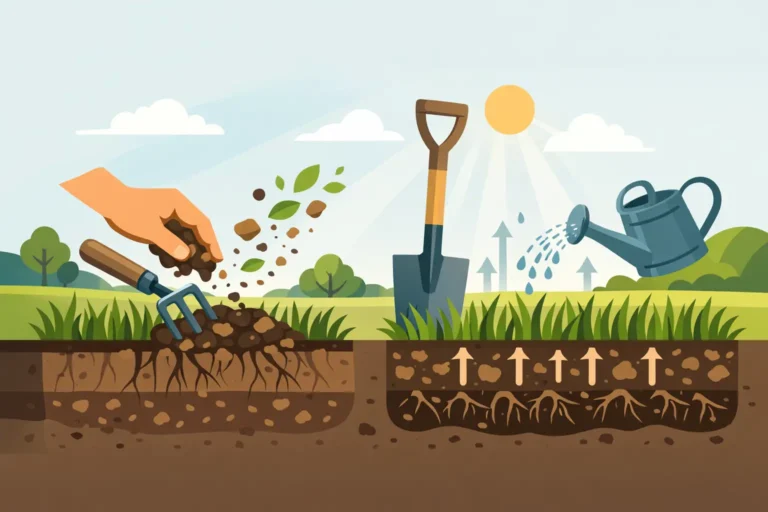
Fertilizer works best when roots have a welcoming place to grow. In many Central Oregon properties, soil can be compacted, rocky, sandy, or low in organic matter. Water may drain through it fast, carrying soluble nutrients below the active root zone before turf can use them.
Before sod arrives, remove construction debris and perennial weeds, then loosen compacted soil where practical. Grade the area so water moves away from foundations but does not rush off the lawn. A properly prepared surface should be smooth and firm enough for sod contact, not fluffy or deeply tilled right before installation.
If a soil test indicates low organic matter or poor nutrient-holding capacity, incorporate an appropriate compost or soil amendment before final grading. This is one of the most useful long-term investments in a new lawn. It improves moisture retention and gives nutrients a better chance of remaining available near the roots. Avoid assuming every soil needs the same amendment or the same quantity. Central Oregon soils vary widely, even from one neighborhood to the next.
When to Apply Starter Fertilizer for New Sod
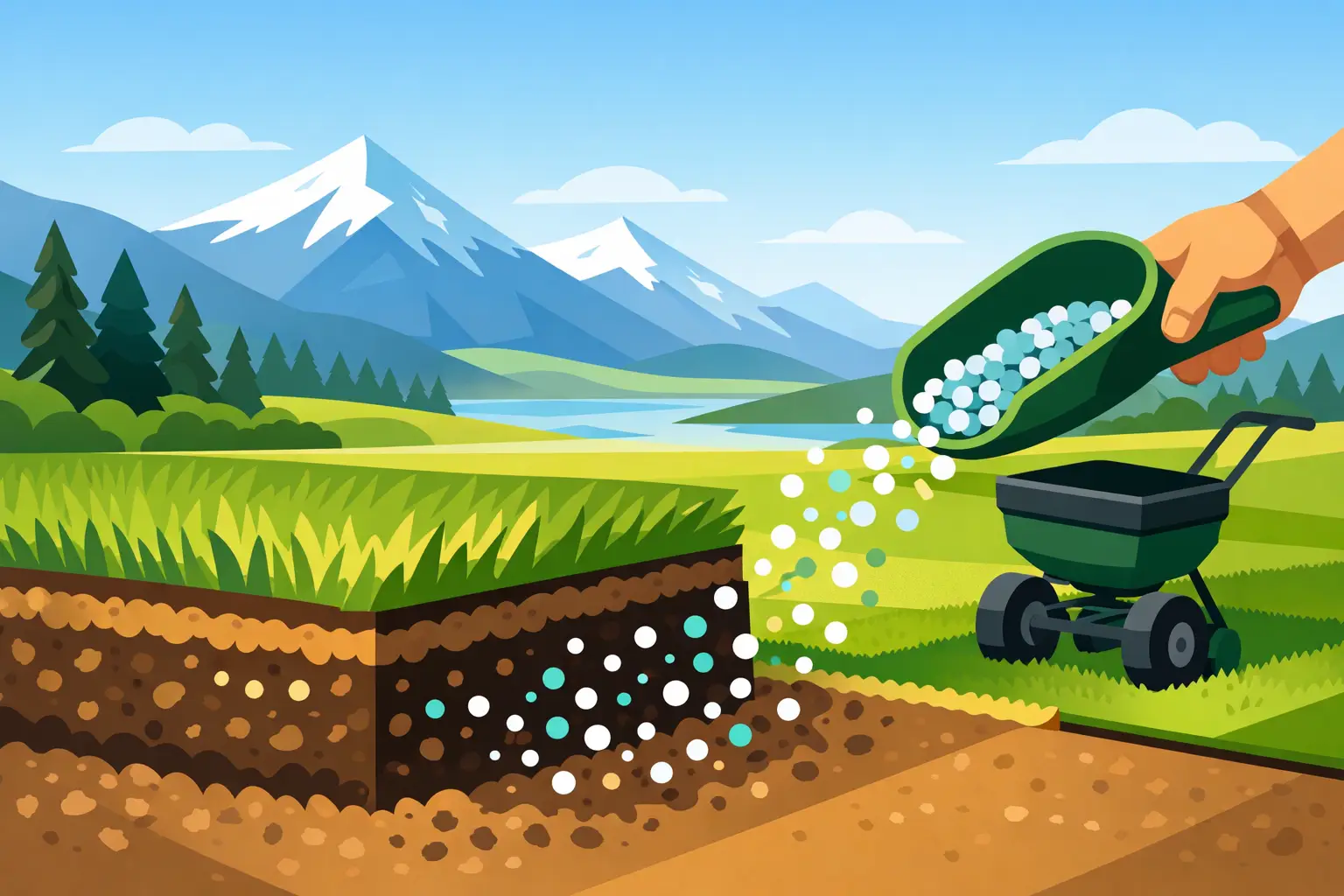
For most installations, apply starter fertilizer to the prepared soil shortly before laying sod, following the labeled application rate. Lightly rake it into the top inch or two of soil if the product directions allow. This places nutrients in the root zone rather than sitting on top of the sod.
Do not apply fertilizer onto dry, stressed sod and hope irrigation will correct the problem. Lay sod on moist, prepared soil and begin watering immediately after installation. If the turf is already down and no fertilizer was applied beforehand, a suitable starter product can often be applied afterward, then watered in thoroughly. Use care around driveways, sidewalks, drainage areas, and waterways. Sweep any granules off hard surfaces rather than washing them away.
Spring and early fall are generally the friendliest sod-installation windows in Central Oregon. Spring sod needs protection from surprise heat and wind, while fall sod needs enough growing time to root before hard freezes. Summer installation can succeed, but it requires closer irrigation management and more attention to heat stress. Fertilizer cannot compensate for sod that dries out during a hot, windy afternoon.
Apply Only What the Lawn Can Use
The bag label is the authority for product-specific rates. Measure the lawn area first, then calibrate a spreader before treating the entire yard. This prevents the common problem of applying too much product near edges, turns, and overlapping passes.
Choose a product intended for new turf establishment, and consider an organic or slow-release option when it fits the soil test and installation plan. Slow-release nitrogen can provide steadier feeding and reduce the rush of tender top growth that can occur with quick-release products. Organic-based fertilizers can also contribute to a more soil-centered approach, though they still need to be applied at the proper rate and watered according to directions.
More phosphorus is not automatically better. Excess phosphorus can build up in soil and move with runoff, where it can contribute to water-quality concerns. A soil test takes the guesswork out of this decision and helps preserve the High Desert landscapes and waterways our community values.
Watering Is What Makes the Plan Work
A new sod lawn needs water often enough to keep the sod and the top layer of soil consistently moist while roots knit into the ground. In the first several days, check the sod daily by lifting a corner. The soil underneath should be damp, not muddy, and the sod should feel cool and hydrated rather than dry or brittle.
The exact schedule depends on sun exposure, wind, soil texture, temperatures, and irrigation coverage. Sandy soil may need shorter, more frequent cycles because it drains quickly. Shady areas may need less water than open, windy exposures. Adjust zones individually instead of treating every part of the lawn the same.
After the sod begins to root, gradually shift toward deeper, less frequent watering. This encourages roots to grow down into the soil rather than staying near the surface. A lawn that receives shallow daily watering for too long can become dependent on it, which is especially challenging during Central Oregon’s dry summer months and under water restrictions.
Check irrigation coverage while the sod is new. Dry strips along edges, missed corners, and overspray onto pavement are easier to correct now than after a lawn develops uneven color and shallow roots. If one area dries faster, investigate sprinkler spacing, nozzle performance, slope, and soil conditions before adding extra fertilizer.
What to Do After Installation
Avoid heavy traffic until the sod is firmly rooted. Depending on weather and conditions, that may take a couple of weeks or longer. When the sod resists a gentle tug, it is beginning to establish. Mow only when needed, and use a sharp blade set high enough to avoid scalping. Never remove more than one-third of the grass blade in a single mowing.
The first follow-up feeding is usually not immediate. Wait until the lawn has rooted and is actively growing, then evaluate its color, growth, and soil test recommendations. A pale lawn can result from low nutrients, but it can also signal uneven watering, poor soil contact, cold conditions, compacted soil, or a root system that has not yet developed. Fertilizing a watering problem rarely fixes it.
Watch for signs that call for a closer look: sod seams separating, gray-blue leaf color, curled blades, footprints that remain visible, or corners that dry out faster than the rest of the lawn. These are often moisture or establishment issues first. Correcting them promptly gives new turf a much better chance of becoming durable and water-wise.
For Bend homeowners and landscape professionals, local recommendations are worth seeking before choosing a bag off the shelf. Central Oregon Lawn Center can help match fertilizer, soil amendments, irrigation supplies, and practical application guidance to the conditions in your specific yard or project. A new lawn does not need a complicated program – it needs roots, even moisture, and a fertility plan that respects the soil beneath it.